Executive Overview
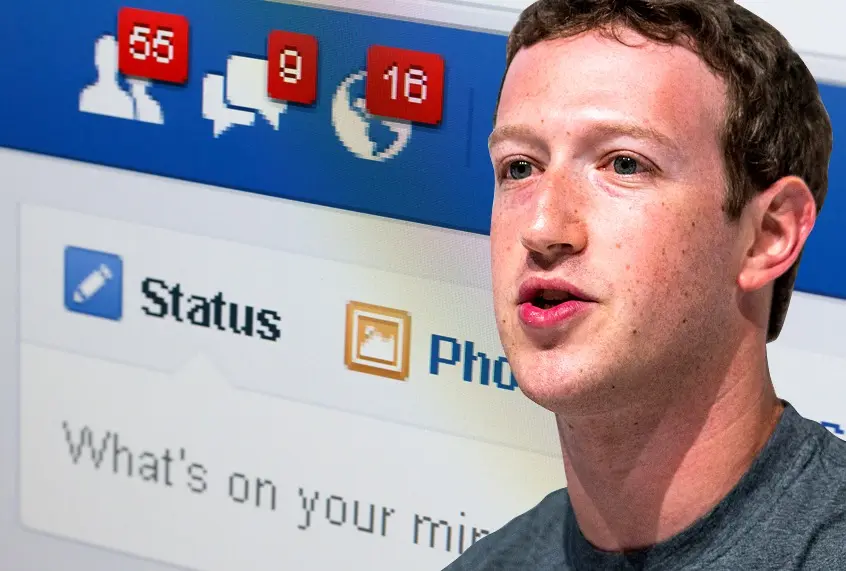
In January 2018, Facebook co-founder and Chief Executive Officer Mark Zuckerberg introduced what he framed as a monumental shift in philosophy for the world’s most dominant social media platform. Vowing to "fix" Facebook, Zuckerberg announced a sweeping algorithmic overhaul of the coveted News Feed. The core mission, as stated, was to prioritize "meaningful social interactions" among friends and family over the passive consumption of public content produced by brands, businesses, and media organizations.
While Zuckerberg’s high-minded rhetoric framed the change as a public health initiative designed to combat user depression, information overload, and digital alienation, the practical fallout revealed a much darker reality for the global media ecosystem. Legitimate news outlets, which had spent years and millions of dollars cultivating audiences on the platform, suddenly found their reach sharply de-prioritized.
Conversely, an analysis of the new mechanics reveals that purveyors of sensationalized, low-quality, and fake news were left largely unscathed. Thanks to lenient advertising policies, low operating overhead, and the ability to financially exploit promotional loops, bad-faith actors easily adapted to the new parameters. Furthermore, Facebook’s subsequent reliance on user-credibility surveys—a method intended to shield the platform from accusations of political bias—threatened to upend the information landscape further, alienating mainstream journalism while inadvertently empowering hyper-partisan, insular media ecosystems. This restructuring laid bare the staggering, unchecked power of a single technology titan to arbitrarily reshape the distribution of global information.
Detailed Chronology: The Rollout of the 2018 News Feed Overhaul
The transformation of the Facebook News Feed did not occur in a vacuum; it followed a tumultuous period marked by massive scrutiny over election interference, psychological manipulation, and the proliferation of disinformation.
The New Year’s Day Manifesto
On January 4, 2018, Mark Zuckerberg published a reflective New Year’s post outlining his personal challenge for the year: to fix Facebook. He acknowledged that the platform made too many errors in enforcing policies and preventing its tools from being misused. Just a week later, on January 11, Zuckerberg followed up with the operational blueprint for this grand apology, announcing that the News Feed—the central artery of information for billions—would undergo its most radical architectural redesign in history.
Under the new directives, public content from brands, non-profits, and media outlets would be systematically suppressed. Instead, the algorithm was programmed to boost content that sparked conversations and meaningful interactions between real people. Zuckerberg cited academic literature arguing that passive consumption of social media leaves users feeling isolated and depressed, whereas direct social interaction yields positive psychological benefits.
The Technical Adjustments: Wired Interview and Industry Panic
On January 13, Adam Mosseri, Facebook’s Vice President running the News Feed, detailed the mechanical execution of the update in an interview with Wired. Mosseri confirmed that published videos would face lower priority because watching them is inherently a "passive" activity. Furthermore, he noted that posts generating long-winded, comment-driven discussions would receive higher visibility than those merely accumulating quick "likes."
The reaction from the digital publishing industry was swift and catastrophic. Online media outlets, which had spent the better part of a decade turning over their distribution pipelines to the Silicon Valley giant, realized their business models were hanging by a thread. Industry trade sites like Digiday declared that "the end is nigh," while anonymous publishing executives voiced deep frustration over years of wasted capital spent building audiences on rented land.
Zuckerberg’s Acknowledgment of Short-Term Losses
In his initial announcement, Zuckerberg conceded that the structural adjustments would negatively impact user engagement metrics in the short term. "I expect the time people spend on Facebook and some measures of engagement will go down," he wrote. However, he maintained that the long-term health of the community and the business would benefit from interactions that felt more "valuable." Critics, however, pointed out a glaring loophole: while organic publisher reach was slashed, the changes explicitly did not apply to paid advertising.
The "Trust" Survey and Campbell Brown’s Damage Control
Realizing the policy lacked a coherent mechanism for vetting news quality, Zuckerberg posted a follow-up statement on January 19, decrying the prevalence of "sensationalism, misinformation and polarization." To address this without appointing Facebook as an arbiter of truth, he announced a crowdsourced initiative: user surveys designed to determine the perceived credibility of news sources based on public trust rather than expert consensus.
By January 12, Campbell Brown, Facebook’s head of news partnerships and a former NBC reporter, was deployed to calm panicked media executives. In messages sent to publishers, Brown conceded that the company itself did not yet know how the strategy would fully play out, offering vague assurances that trusted journalism would still find a way into user feeds while failing to provide concrete guarantees.
Supporting Context & Metrics: The Asymmetry of the Algorithmic Impact
To fully grasp the gravity of Zuckerberg’s 2018 redesign, one must examine the staggering dominance Facebook held—and continues to hold—over the modern media diet.
According to data compiled by the Pew Research Center, roughly 47 percent of all Americans relied on Facebook as a primary news source, with fully half of those individuals using no other social media platform whatsoever. This near-monopoly on attention meant that any tweak to the platform’s underlying code was not merely a product update; it was a seismic event that could bankrupt media companies overnight.
The Paradox of Fake News Economics
While legitimate publishers suffered under the weight of organic de-prioritization, low-quality clickbait sites and partisan junk-news operations adapted with ruthless efficiency. Investigative reporting during the 2016 U.S. Presidential Election revealed a disturbing reality: low-quality and fake news sites frequently outperformed mainstream institutions like Fox News on Facebook engagement metrics. A landmark study by Harvard University’s Berkman Klein Center demonstrated that hyper-partisan right-wing blogs wielded more influence on the platform than traditional conservative powerhouses.
The resilience of these bad actors stemmed from a fundamental flaw in Facebook’s enforcement model. While Google successfully choked off the ad-revenue streams of spam publishers by barring them from programmatic ad networks, Facebook placed almost zero restrictions on the types of content that could be advertised using cash.
- Low Overhead: Junk news sites operated with minimal staff and virtually no journalistic overhead, allowing them to amass millions of dollars annually through sensationalized clickbait.
- Ad-Spend Loopholes: Because Facebook routinely permitted promotional spending from these networks as long as specific individual stories hadn’t been explicitly flagged by underfunded third-party fact-checkers, bad actors could easily afford to pay for visibility.
- Human Botnets: Investigations revealed that junk operators simply paid low-wage workers to manually share and paste spam content into comments sections, ensuring compliance with Facebook’s push for "meaningful interactions." As one industry insider bluntly told Salon: "Expect to see a lot more profiles featuring boobalicious 50-year-old women who love Jesus and Donald Trump… The margins will be smaller, but ultimately, nothing will change."
The Problem of Media Polarization and Name Recognition
Zuckerberg’s proposed solution—surveying users to rank news sources based on whether they were "broadly trusted across society"—unmasked a profound disconnect regarding political media consumption habits.
Data from the Pew Research Center’s media polarization studies exposed a glaring structural bias in a crowdsourced trust model. In a 2014 study:
- Only 45 percent of respondents recognized the name Sean Hannity, despite his decades-long tenure anchoring prime-time programming on Fox News.
- Only 35 percent recognized the conservative aggregation site the Drudge Report.
- Only 15 percent had ever heard of Breitbart News.
Because conservative media consumers frequently rely on specialized, insular networks and aggregators that lack universal name recognition outside their demographic bubbles, a broad-trust survey model was guaranteed to penalize them. This created a binary dilemma for Facebook: either the platform would be flooded with unvetted, exaggerated stories from obscure right-wing outlets, or conservatives would viciously revolt against the platform, accusing it of systemic censorship against their preferred viewpoints.
Official Statements and Industry Reactions
The collision between Silicon Valley social engineering and the fourth estate generated intense friction, characterized by public corporate messaging contrasted with private panic.
- Mark Zuckerberg (Facebook CEO): Framing the changes around psychological well-being, Zuckerberg stated in his manifesto: "We feel a responsibility to make sure our services aren’t just fun to use, but also good for people’s well-being… The research shows that connecting with friends brings more well-being than passively reading public content." Later, addressing trust metrics, he added: "The idea is that some news organizations are only trusted by their readers or watchers, and others are broadly trusted across society even by those who don’t follow them directly."
- Adam Mosseri (VP of News Feed): Explaining the logistical downgrading of media assets to Wired, Mosseri noted: "Watching a video is often a passive experience… There’s no back-and-forth, there’s no conversation. So we’re going to de-prioritize video relative to other types of updates."
- Anonymous Digital Publishing Veteran: Speaking anonymously to Salon, a veteran of the digital publishing space expressed deep cynicism regarding Zuckerberg’s altruistic narrative: "The goal of Facebook for a very long time has been to keep users on its pages as long as humanly possible. These changes are really about forcing publishers to pony up… People spend lots of money to build these operations. At some point it grows tiresome. You start thinking, over time, is this really worth it?"
- David Chavern (CEO of the News Media Alliance): Offering a more measured industry perspective to Poynter, Chavern emphasized the sheer, unchecked gravity of the platform’s authority: "I think that news is going to remain highly popular on Facebook because people will always want to know about the world and their communities. This change does highlight, however, the power of Facebook to decide (and alter) the kinds of information that people are exposed to. It is an incredible power that carries incredible responsibilities."
Future Outlook: The Unresolved Crisis of Platform Governance
The 2018 restructuring of the Facebook News Feed stands as a pivotal watershed moment in the history of digital media, casting a long shadow over contemporary debates concerning content moderation, algorithmic accountability, and platform governance.
By attempting to engineer human happiness and social connection through code, Facebook demonstrated that it could fundamentally alter the economic viability of independent journalism overnight. Yet, the policy’s glaring inability to curb the proliferation of bad-faith disinformation exposed the limits of algorithmic paternalism. Fake news networks, fortified by automated cash flows and organized networks of authentic-looking fake profiles, easily bypassed the friction introduced by the update.
Ultimately, Zuckerberg’s reliance on user-trust surveys highlighted an uncomfortable truth: technology companies are perpetually unequipped to govern the informational public square neutrally. By delegating the definition of "truth" and "trust" back to a polarized user base, Facebook managed to alienate traditional media organizations while failing to excise the malignant tumors of sensationalism and hyper-partisanship from its ecosystem.
As digital media continues to evolve under the shadow of artificial intelligence and shifting social algorithms, the lessons of 2018 remain stark. When a single corporate entity holds unilateral power to dictate what information reaches billions of people, the collateral damage is borne not just by publishers’ bottom lines, but by the shared factual foundation of democratic society itself.