Executive Overview
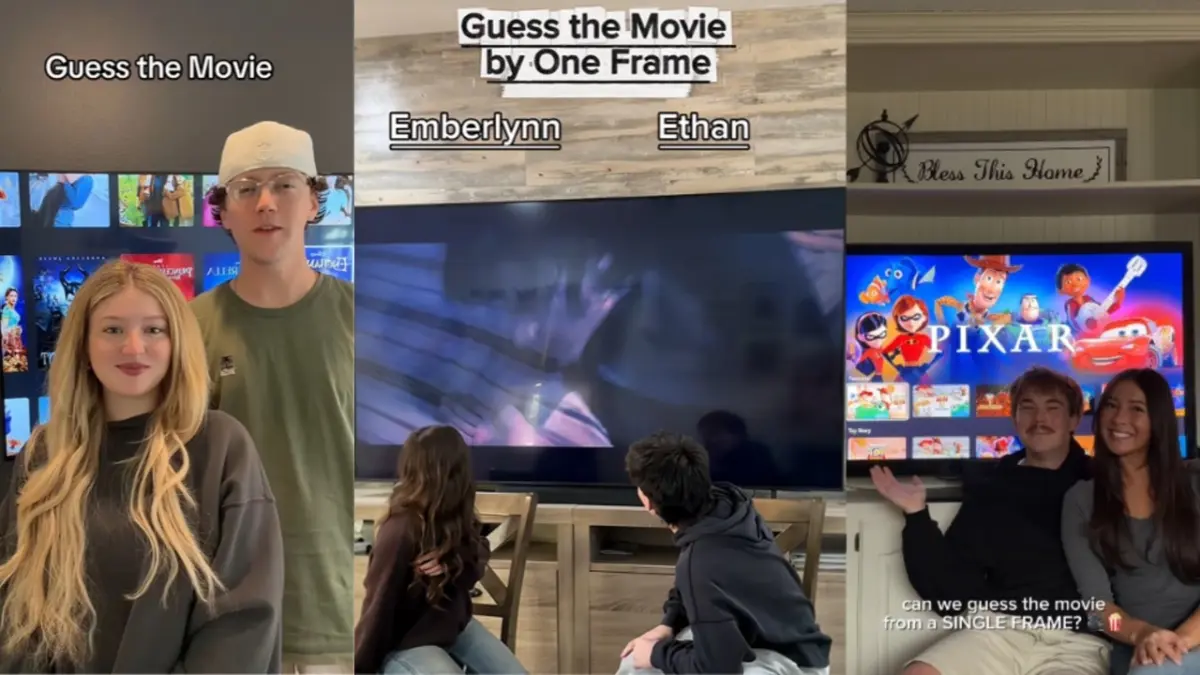
In the fast-paced ecosystem of modern social media, viral trends rise and fall in a matter of days. However, occasionally a format strikes a unique chord with internet users, bridging the gap between passive consumption and active, participatory entertainment. Enter "Guess the Movie By the Frame"—alternatively known simply as "Time Stamp"—a social media game that has taken TikTok and Instagram Reels by storm.
The premise of the game is deceptively simple yet brilliantly engaging: one participant selects a film, a second participant (or opposing player) randomly chooses a specific time stamp within that film’s runtime, and the first player must display the exact single frame corresponding to that exact second. The goal for the guesser is to correctly identify the movie from that isolated visual alone.
What began as a modest, organic concept hatched by independent content creators in August 2026 has rapidly metastasized into a global multi-platform phenomenon. By late October and early November 2026, the trend had broken containment from niche movie-trivia circles
, accumulating tens of millions of views, inspiring countless thematic variations (ranging from classic Disney animations to obscure cinematic art-house pieces), and proving that analog-style parlor games can be successfully digitized for the short-form video era.
This in-depth investigative report explores the origins of the "Time Stamp" challenge, tracks its explosive viral spread across major social networks, analyzes the metrics and psychological drivers behind its success, and examines the future outlook of interactive cinematic gaming on social media.
Detailed Chronology: From Humble Beginnings to Global Virality
To understand the sudden cultural ubiquity of "Guess the Movie By the Frame," one must look back at the precise sequence of events that transformed a casual recording into an internet sensation.
August 17, 2026: The Spark
The phenomenon traces its roots back to mid-August 2026. On this date, the enterprising content creators and TikTok duo known as The Kaiser Boys—operating under the handle @kaiserboysgames—uploaded a video outlining a brand-new parlor-style game they dubbed "Time Stamp!"
The rules demonstrated in the foundational video were straightforward:
- Player One chooses a feature-length film.
- Player Two selects an arbitrary time code (e.g., 01:14:22).
- Player One fast-forwards the digital media player to that precise frame.
- The guesser is shown the singular, context-free frame and must deduce the title of the movie solely based on the visual composition, lighting, character placement, or subtle background cues.
While the original video did not immediately shatter internet records, it laid the structural groundwork for what was to come. Over a span of three months, that initial post steadily accumulated over 316,000 views, quietly seeding the concept into the collective subconscious of the platform’s film-loving communities.
Late October 2026: The Tipping Point
For more than two months, the game remained a relatively low-profile curiosity. However, the ecosystem of short-form video is primed for sudden, exponential growth when the right creators adopt a format. That critical mass was achieved during the final week of October 2026.
On October 23, 2026, popular TikTokers operating under @soellegirls published their own rendition of the Time Stamp game. Benefiting from an established follower base and algorithms primed for engaging, interactive content, the video struck an immediate nerve. Within roughly two weeks, the post surged past 2.6 million views, serving as the definitive catalyst that popularized the trend across the broader TikTok community.
October 29 – 30, 2026: Niche Diversification and Cross-Platform Expansion
Once the core mechanic was validated by millions of viewers, content creators began iterating on the formula to capture specific demographic interests.
On October 29, 2026, TikTok user @miarace_ posted a variation of the game focused exclusively on Disney feature films. By narrowing the cinematic pool to globally recognized animated classics, the creators lowered the barrier to entry for casual viewers while ratcheting up the nostalgia factor. The video exploded, pulling in over 3.5 million views in a fortnight.
Recognizing the cross-platform potential, the same creators ported the concept to Instagram Reels just one day later on October 30. The Pixar-themed adaptation performed exceptionally well on Meta’s infrastructure, securing upwards of 110,000 likes within two weeks and cementing the trend’s multi-platform footprint.
November 5, 2026: Peak Saturation and Parody
By early November, "Guess the Movie By the Frame" had reached peak cultural saturation, characterized by massive view counts and the inevitable emergence of satirical parodies.
- The Blockbuster Hit: On November 5, 2026, TikToker @neeniesteenie uploaded a Disney-focused iteration of the game. Tapping perfectly into the algorithm, the video catapulted to an astonishing 8.6 million views in a mere five days, establishing itself as one of the most-watched individual entries in the trend’s history.
- The Satirical Pivot: Simultaneously, the internet’s tendency toward self-aware humor manifested on Instagram. On that same day, user @brosaidcinema published a comedy sketch poking fun at the frustration of difficult movie trivia. In the video, the creator intentionally and absurdly misidentifies a complex frame, confidently guessing the comedy sequel Grown Ups 2. The dry, self-deprecating humor resonated with audiences, generating over 14,700 views in under a week and highlighting how deeply ingrained the game’s tropes had become in online film culture.
Supporting Context & Metrics: Why the Trend Works
The meteoric rise of "Guess the Movie By the Frame" is not a statistical anomaly; it is the result of carefully aligned psychological triggers, algorithmic preferences, and user-experience design native to platforms like TikTok and Instagram Reels.
1. The Power of Active Participation
Traditional movie recommendation or review videos rely on passive consumption—the viewer sits back and listens to an influencer talk. In contrast, "Time Stamp" transforms the audience from passive spectators into active participants. The moment a single frame flashes on screen, the human brain instinctively attempts to solve the puzzle before the video reveals the answer. This creates an involuntary psychological hook, dramatically increasing average watch time and completion rates—two critical metrics heavily favored by modern social media recommendation algorithms.
2. High Replay Value and Loopability
Because the frames are often obscure, blurry, or captured during transitional moments (such as a character blinking, a panning background, or an out-of-focus prop), viewers frequently need to re-watch the video multiple times to inspect every pixel. This natural looping behavior signals to the algorithm that the content is exceptionally engaging, triggering wider distribution to "For You" and "Explore" feeds globally.
3. Infinite Scalability Through Niche Variations
The format’s structural simplicity allows for infinite content generation. Creators have adapted the game across dozens of sub-genres, including:
- Era-Specific Rounds: 1990s blockbusters vs. 2020s indie cinema.
- Studio-Exclusive Challenges: Pixar, A24, Marvel Cinematic Universe, and Studio Ghibli.
- Difficulty Scaling: Ranging from iconic opening shots (The Matrix, Titanic) to single-frame close-ups of inanimate objects or background extras.
Official Statements and Industry Reception
While major Hollywood studios have not officially endorsed or sponsored the "Time Stamp" trend, industry analysts and digital marketing experts have taken note of the organic promotional value the game provides to the entertainment sector.
Dr. Elena Vance, a digital media sociologist and professor of internet culture at New York University, notes that the trend reflects a broader cultural desire for collective, low-stakes play:
"We are witnessing a shift away from cynical, highly polished influencer content toward interactive, parlor-style entertainment. ‘Guess the Movie By the Frame’ succeeds because it strips away the ego of the creator and places the focus on shared cultural literacy. It turns movie history into a cooperative, global trivia night."
Furthermore, independent film distributors have observed an interesting correlation between viral frame-guessing videos and a spike in streaming searches for older or overlooked catalog titles. When a difficult frame from a cult classic goes viral, thousands of viewers head to search engines and video-on-demand platforms to verify the answer, inadvertently driving fresh engagement to decades-old cinematic properties.
Future Outlook: Where Does the Trend Go From Here?
As "Guess the Movie By the Frame" matures past its initial explosive growth phase, industry observers are pondering its long-term viability. Will it fade away like countless other short-lived TikTok dances, or is it evolving into a permanent fixture of digital entertainment?
1. Institutionalization and App Adaptations
Several independent developers have already begun exploring the transition of short-form video trends into standalone interactive applications. Much like how viral word games evolved into phenomena like Wordle, concepts like "Time Stamp" possess the structural integrity to be spun off into dedicated daily browser games, mobile apps, and interactive streaming channel segments.
2. Brand Partnerships and Promotional Integration
Entertainment marketing agencies are actively looking at how to harness the format for upcoming theatrical releases. It requires very little imagination to envision major studios partnering with prominent creators to launch exclusive "Time Stamp" challenges featuring frames from highly anticipated blockbuster releases weeks ahead of their premiere, using organic curiosity as a guerrilla marketing tool.
3. The Limits of Complexity
The primary threat to the trend’s longevity is exhaustion of material and over-saturation. As more creators flood the market with increasingly obscure frames (such as a single shade of blue from a background wall in an avant-garde foreign film), the barrier to entry becomes too high for casual viewers. To survive, creators will need to maintain a delicate balance between accessibility and challenge.
Conclusion
"Guess the Movie By the Frame" stands as a masterclass in modern digital game design. By leveraging the inherent human love for trivia, the psychological compulsion to solve visual puzzles, and the lightning-fast distribution networks of TikTok and Instagram Reels, a simple conversation between friends was successfully transformed into a global cinematic pastime. Whether you are a casual moviegoer guessing The Lion King or an obsessive cinephile parsing a single-frame lighting cue from a 1970s psychological thriller, the Time Stamp trend has firmly secured its place as one of the defining viral phenomena of late 2026.