Executive Overview
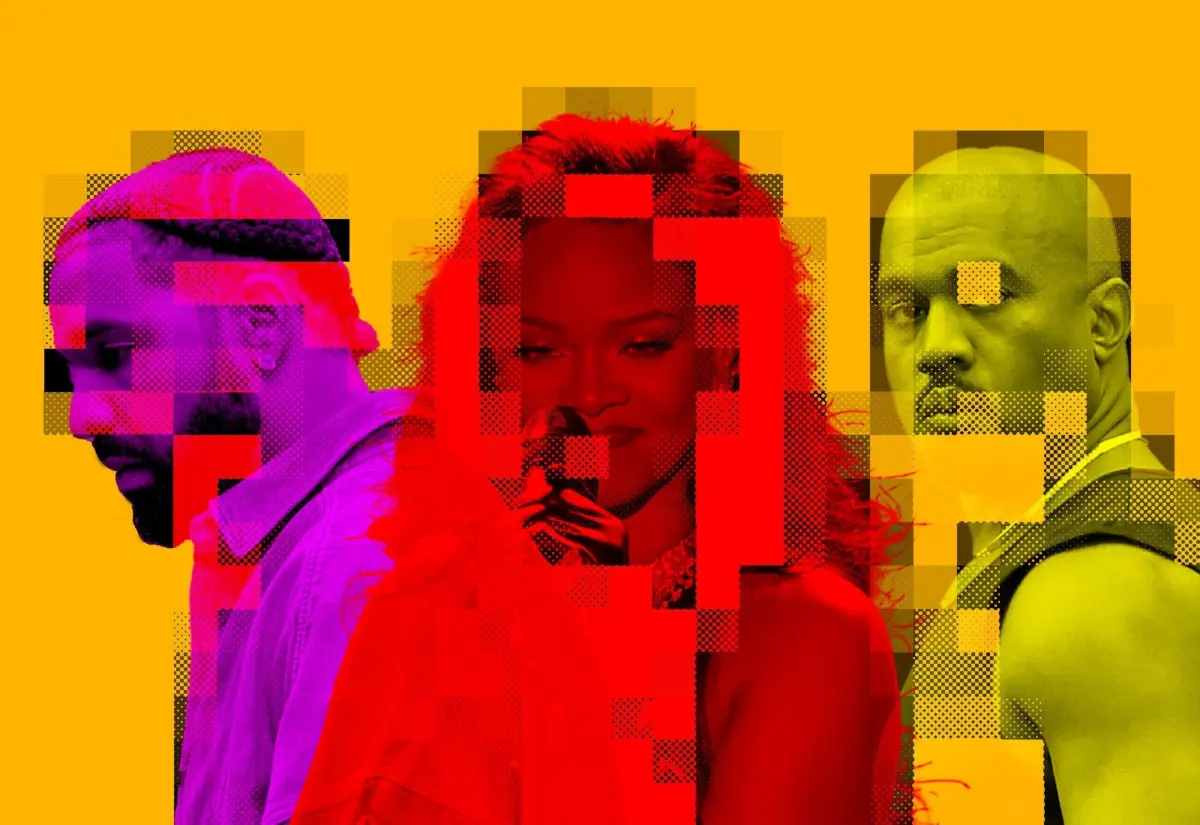
The modern soundscape is undergoing a silent, seismic shift. Thanks to the rapid democratization of powerful generative artificial intelligence (AI) tools, listeners browsing YouTube, Instagram, and TikTok are increasingly unable to determine whether their favorite recording artists are actually performing the tracks they hear. What once required million-dollar recording studios, elite mixing engineers, and the explicit consent of the performers can now be replicated in a bedroom using consumer hardware and open-source code.
From superstar DJ David Guetta dropping an unauthorized, AI-generated Eminem vocal live in concert to viral sensations like "Heart on My Sleeve"—a hyper-realistic collaboration between simulated versions of Drake and The Weeknd—synthetic music has broken out of niche tech forums and crashed straight into the mainstream.
This technological leap has sparked an existential crisis within the traditional music business. While hobbyists and digital creators revel in a creative Wild West of limitless mashups, uncanny cover songs, and reanimated vocal models, major record labels and industry executives are sounding the alarm. Universal Music Group (UMG) and other industry titans are actively lobbying streaming platforms to block unauthorized content scraping, viewing generative AI not merely as a novelty, but as a disruptive and potentially illegal threat to their revenue models.
As legal scholars grapple with untested questions regarding copyright, right of publicity, and intellectual property, a central tension emerges: Can the law adapt fast enough to govern a technology that allows anyone to clone a voice, put words in an artist’s mouth, and distribute the results globally in a matter of hours?
Detailed Chronology: From Novelty Mashups to Mainstream Panic
The rapid evolution of voice-cloning technology has transformed AI music from a futuristic concept into a daily reality in remarkably little time. Understanding how we arrived at this juncture requires tracing the technological milestones and viral moments that accelerated the trend.
Early 2023: The AI Breakthrough and Live Surprises
The friction between traditional artists and AI-generated music intensified in February 2023, when superstar DJ and producer David Guetta uploaded a video clip from a live performance. In front of thousands of fans, Guetta played a track featuring a sharply rendered, AI-generated Eminem vocal created entirely without the Detroit rapper’s knowledge or permission. While framed by Guetta as a technological experiment, the stunt signaled a troubling reality: performers could now have their sonic likenesses hijacked in real time on global stages.
Around the same time, the French hip-hop duo AllttA released “Savages,” a track incorporating an AI-generated vocal performance of Jay-Z. As cultural critics noted, the familiar, weathered timbre of Jay-Z’s voice lent the track an eerie, ineffably compelling gravity.
Spring 2023: The Proliferation of Faux Covers and the "Munch" Breaking Point
As open-source voice-conversion tools grew more sophisticated, the internet flooded with faux cover songs produced by amateur creators. Unsigned artists began using generative AI to transpose the vocal styles of major stars onto unexpected tracks.
The tipping point for many marquee artists arrived in April 2023. An AI-generated track surfaced featuring a hyper-realistic simulation of Drake rapping over Ice Spice’s viral hit "Munch (Feelin’ U)." Upon discovering the track online, a frustrated Drake took to Instagram to declare it "the final straw."
Shortly thereafter, the internet was captivated—and unsettled—by "Heart on My Sleeve," a sophisticated, seamless collaboration featuring AI-generated vocals mimicking both Drake and The Weeknd. The track generated millions of streams and intense social media speculation before industry investigators and music journalists began questioning whether the viral sensation was actually a sophisticated marketing stunt cooked up by an early-stage tech startup.
While artists like Drake drew a hard line in the sand, other stars found themselves swept up in the wave without immediate public comment. Rihanna, for instance, became the unwitting featured vocalist on a slate of AI-generated tracks spanning catalogs by Beyoncé, Katy Perry, and Maroon 5.
Mid-2023 to Present: The Crackdown and Counter-Culture
Faced with a rising tide of unauthorized tracks, major music conglomerates shifted from passive observation to aggressive defense. Universal Music Group initiated direct appeals to major streaming services—including Spotify and Apple Music—demanding that they block AI developers from scraping copyrighted catalogs to train their voice models. Concurrently, digital rights management systems began issuing automated copyright takedowns across YouTube and SoundCloud, targeting channels dedicated to hosting synthetic pop music.
Supporting Context & Metrics: Inside the Underground AI Communities
To understand the mechanics of this disruption, one must look past the boardroom battles and into the decentralized internet subcultures where these tools are developed, shared, and refined.
The Rise of So-Vits-SVC
At the heart of the consumer AI music boom is So-Vits-SVC, an open-source, singing-voice conversion tool hosted on GitHub. Originally designed for voice-acting and minor audio manipulation, the software quickly caught the attention of internet hobbyists looking to experiment with musical likenesses.
The tool’s popularity exploded across social media. On TikTok, the hashtag #So-vits-svc amassed over 2 million views as creators shared tutorials on how to feed vocal models into generative software.
Case Study: YeezyBeaver and the "Kanye Unreleased" Community
Consider the case of YeezyBeaver, a 22-year-old creator based in Oklahoma. Operating through YouTube and Discord fan servers, YeezyBeaver utilized shared voice models of Kanye West ("Ye") to produce bizarre yet astonishingly competent covers. His most popular experiment—a charming, melancholic AI-generated rendition of the Plain White T’s acoustic classic "Hey There Delilah" sung in the distinct cadence of Kanye West—amassed hundreds of thousands of views.
According to YeezyBeaver, the process began simply by following instructions found in a Ye-centric Discord community dedicated to sharing unreleased audio stems.
Similarly, an American college student operating under the online pseudonym "pieawsome" became an active participant in the internet’s "Kanye unreleased community"—a faction dedicated to archiving and completing unfinished work by the visionary producer. Recognizing that the community possessed a vast library of isolated a cappella recordings, pieawsome chopped up the audio fragments and fed them into So-Vits-SVC.
After a few days of local training, the resulting voice model yielded startlingly accurate results. Pieawsome pushed his model back onto Discord, where it quickly circulated among digital creators. Within weeks, the model was used to produce a cover of Ice Spice’s "Munch" performed by a synthetic Kanye West—a track that notably received a public "like" on Instagram from superstar Travis Scott, bridging the gap between underground hobbyists and the A-list elite.
The Anime Crossover and the Comedy Defense
Other creators are pushing the boundaries of genre and medium. Jered Chavez, a 19-year-old student at the University of South Florida, gained traction on Instagram by publishing mind-bending AI music videos featuring synthetic likenesses of Drake, Kanye West, and Kendrick Lamar collectively singing "Fukashigi no Karte," the closing theme song to the popular anime series Rascal Does Not Dream of Bunny Girl Senpai.
Chavez acknowledges the ethical gray area of his work, noting that adopting a comedic approach is a deliberate strategy to insulate himself from backlash. "With this area of AI, there’s a lot of controversy and ethical concerns," Chavez notes. "Obviously, people that make this music and use this AI are taking someone’s likeness and, most of the time without permission, creating something that’s essentially putting words in people’s mouths."
Official Statements & Industry Perspectives
The collision between open-source generative technology and entrenched intellectual property law has created a fractured landscape of opinions among industry analysts, legal professionals, and creators.
The Financial Threat Assessment
Financial institutions have begun factoring artificial intelligence into their valuation of major entertainment conglomerates. An influential market analyst for BNP Paribas Exane recently published a report designating generative AI music as a "new disruptive threat" to the traditional operational models of major record labels.
Universal Music Group echoed this sentiment in private communications with streaming platforms, arguing that unrestricted AI training models undermine the foundational economic framework of the recorded music industry.
The Legal Vacuum and the Identity Theft Debate
Despite the urgency felt by corporate entities, legal consensus remains virtually nonexistent. Intellectual property experts note that copyright law was never designed to anticipate instantaneous digital voice cloning.
Jonathan Bailey, former chief technology officer of the music technology firm Soundwide, offers a blunt assessment of the practice:
"I think you can make a persuasive argument that using AI to reanimate Jay-Z’s voice to have him rap or sing something he never created is kind of a form of identity theft."
However, traditional legal avenues remain untested. Donald Passman—a legendary entertainment attorney at Gang, Tyre, Ramer, Brown & Passman, Inc., who has spent decades representing elite artists such as Adele and Taylor Swift—declined to offer definitive predictions on how courts will rule. Citing the need to protect future litigation strategies, Passman stated simply: "It’s way too new."
The Hobbyist Defense: Modding and Fan Fiction
For creators like pieawsome, the legal uncertainty does not diminish the cultural validity of their work. He draws a direct parallel between AI voice cloning and existing, accepted forms of internet subculture:
"I think of what I do as the equivalent of modding a video game or producing fan fiction based on a popular book. It’s our version of that. That may be a good thing. It may be a bad thing. I don’t know. But it’s kind of an inevitable thing that was going to happen."
Future Outlook: Navigating Uncharted Territory
As the initial wave of novelty settles, the music industry stands at a critical crossroads. The genie cannot be put back into the bottle; open-source models are widely distributed, and consumer hardware is now powerful enough to run local voice-training algorithms in minutes.
Record labels are likely to pursue a dual-track strategy: aggressively wielding copyright law and automated takedowns to purge unauthorized commercial tracks from mainstream streaming platforms, while simultaneously exploring proprietary, licensed AI partnerships. By licensing official voice models directly from their roster of stars, labels hope to monetize synthetic collaborations legally rather than ceding the market to underground creators.
At the same time, creators and fans are forced to confront deep ethical questions regarding posthumous digital resurrection—such as the viral choir projects recreating Freddie Mercury—and the psychological impact of hearing deceased or living artists perform lyrics they never authored or endorsed.
Ultimately, as Jered Chavez points out, the evolution of this medium will rely heavily on individual responsibility within a framework that currently lacks clear guardrails:
"I guess automated takedowns are one way of tackling it. But honestly, now this technology is out there, I don’t think people are ever going to stop using it. The responsibility lies in the judgment of the people that are making [AI-generated music]. I try to use my best judgment. This is kind of new territory for everyone."
As the courts, labels, and creators collide, the boundaries of authorship, identity, and art are being rewritten in real time—proving that the future of music will not only be heard, but artificially synthesized.