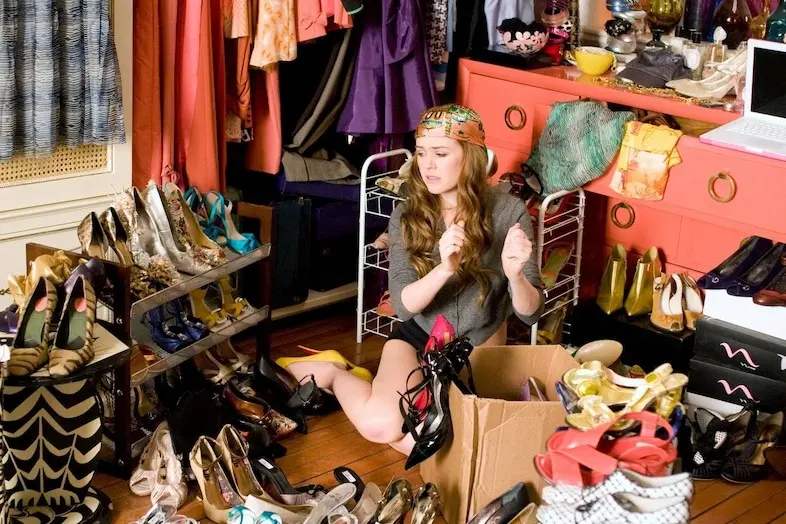
In the modern landscape of digital consumption, the battle for human attention has long since expanded past social media feeds and streaming platforms. Today, it has infiltrated the realm of personal wardrobe management.
Vinted—the Lithuanian-born secondhand fashion platform that has rapidly scaled into a $9 billion global phenomenon—has fundamentally altered how a generation interacts with retail. In the United Kingdom alone, approximately 17.4 million people (roughly one in four citizens) actively use the app, propelling it past traditional high street heavyweights like Zara, H&M, and ASOS to become the country’s third-largest fashion retailer.
Yet, as Vinted’s cultural footprint expands, a counter-narrative is quietly taking root. What began as an ethical, economically sound alternative to fast fashion is increasingly drawing comparisons to addictive social media platforms. Millions of users report falling into cyclical, compulsive scrolling habits. Far from the mindful, intentional consumption traditionally associated with buying pre-owned goods, platforms like Vinted are cultivating a digital architecture engineered to spark psychological cravings, immediate pleasure loops, and, ultimately, overconsumption.
This deep dive investigates the psychological mechanics, consumer behavioral shifts, and broader sustainability paradoxes driving the Vinted phenomenon.
Detailed Chronology: From Garage Startup to Global Juggernaut
To understand how Vinted captured the collective consciousness—and compulsive scrolling habits—of millions, it is necessary to examine the trajectory of the platform from its grassroots origins to its current corporate dominance.
2008–2020: The Utopian Genesis
Vinted was launched in Lithuania in 2008 by 22-year-old Milda Mitkute, who teamed up with a software engineer friend to solve a remarkably mundane problem: she had too many clothes and needed an easy way to sell them off before moving. What started as a modest local peer-to-peer web forum steadily evolved into a dedicated mobile application designed to democratize wardrobe liquidation.
For years, Vinted operated in the shadow of rivals like Depop. However, as Depop became increasingly commercialized—populated by professional resellers sourcing vintage items from charity shops at heavily marked-up prices and burdened by selling fees—Vinted emerged as a breath of fresh air. It promised a genuinely democratic marketplace: a space where everyday consumers could unearth unique bargains and offload their unwanted garments without absorbing prohibitive listing fees. By the time the COVID-19 pandemic catalyzed a global boom in digital commerce and home-based decluttering, Vinted was primed to capture the zeitgeist.
2021–2024: The Algorithmic Pivot and Market Dominance
As the user base scaled into the tens of millions, Vinted underwent a quiet structural evolution. To sustain exponential revenue growth, the platform leaned heavily into sophisticated data analytics, hyper-personalized recommendation algorithms, and frictionless user-interface design.
Features that originally defined addictive social platforms—infinite scrolling, real-time push notifications, and behavioral tracking—were seamlessly integrated into Vinted’s interface. The introduction of streamlined shipping options, digital wallets, and automated buyer-seller protections removed every remaining friction point standing between a consumer’s impulse and a completed transaction. By 2024, Vinted had secured its status as a European retail titan, cementing a valuation of approximately $9 billion through secondary share transactions.
2025–Present: The International Expansion and the Overconsumption Crisis
In its latest phase of expansion, Vinted has pushed beyond regional European borders, rolling out international shipping pathways connecting Europe, the UK, the US, and Australia. While this expansion has unlocked unprecedented liquidity for sellers, it has simultaneously triggered intense scrutiny from environmental watchdogs and consumer psychologists alike.
As academic research begins to document the dark side of circular fashion platforms, the narrative surrounding Vinted has shifted. The pressing question is no longer whether secondhand shopping is better than buying brand-new fast fashion, but rather whether the digital infrastructure of modern resale apps is manufacturing artificial demand where none previously existed.
Supporting Context & Metrics: The Anatomy of an Addiction
The psychological hold that platforms like Vinted exert over their users is not accidental; it is the calculated byproduct of modern interface design married to ancient human neurobiology.
The Behavioral Parallels to Social Media
For many users, opening Vinted has eclipsed intentional shopping entirely, morphing into a nervous tick. "I use Vinted in the same way that other people scroll on TikTok or Reels," explains Flossie, a 25-year-old user who admits to opening the app absentmindedly during office hours. "It’s habitual… I think I’m addicted."
This sentiment is echoed across digital forums from Reddit to TikTok, where users swap stories of spending hundreds—or even thousands—of pounds on garments they neither planned for nor particularly needed. Anusha, a 31-year-old user, draws direct parallels between her app usage and compulsive screen habits. "I’ll be on the phone with my mum, or watching a show or movie, and just mindlessly scrolling and liking things," she notes. "I feel addicted to Vinted like I do with social media."
The Neuroscience of the Bargain Hunt
To understand why secondhand shopping platforms can be more psychologically potent than traditional retail, consumer psychologists point to the chemical reward systems activated within the human brain.
"When people see a good price, the part of the brain that deals with pleasure is activated." — Dr. Cathrine Jansson-Boyd
According to Dr. Cathrine Jansson-Boyd, a professor of consumer psychology at Anglia Ruskin University, discovering a perceived bargain triggers a genuine adrenaline rush. Functional MRI (fMRI) scans consistently demonstrate that encounters with marked-down prices light up the brain’s neural pathways associated with reward and pleasure. On Vinted, this phenomenon is supercharged by the platform’s peer-to-peer nature, which often permits direct price haggling. Securing an item well below its retail price point delivers a high that can linger for days.
Furthermore, unlike traditional e-commerce sites where stock is seemingly infinite, the vast majority of items on Vinted are unique, one-off pieces. This scarcity introduces a powerful psychological lever: the fear of missing out (FOMO).
"If there is the possibility of someone else beating you to it, that will instill this idea that you have to purchase it immediately, because we don’t like to miss out on good bargains," Dr. Jansson-Boyd explains. Flossie confirms this dynamic: "There’s an urgency because things can sell so quickly. When you buy something that got uploaded ten minutes ago, you get this serotonin boost."
The Mastery Loop: Tailored Algorithms
Vinted’s interface relies on advanced recommendation engines that parse user behavior—every search query, tapped photo, and saved item—to refine the homepage feed. Rather than feeling intrusive, many users experience this hyper-personalization as a reward.
Consumer psychologist Kate Nightingale notes that this plays directly into human psychology: "When people begin to feel like they are getting better at finding the best treasures, it increases their sense of mastery, which can motivate them to return to the platform. The more commitment you put into it, the better the result. That is psychologically rewarding."
Official Statements & Expert Insights: The Contradictions of Circular Fashion
The cultural reckoning facing platforms like Vinted has attracted the attention of researchers aiming to untangle the complex ethics of modern resale economies.
The Overconsumption Paradox
A landmark 2025 study by French researcher Marie Boudi cast a critical eye on the booming resale sector. The study concluded that secondhand shopping platforms—frequently marketed and perceived as unalloyed tools of responsible, sustainable consumption—frequently foster overconsumption by encouraging a repetitive buying cycle fueled by excitement and immediate gratification.
This paradox creates a deep internal conflict for conscious consumers. On one hand, keeping garments in circulation prevents them from reaching landfills prematurely. For many users, participating in the Vinted ecosystem acts as a psychological justification for ongoing consumption.
"Because I sell on Vinted as well, it’s like a circular process: I can buy and wear new clothes without feeling guilty about it," Flossie reasons. "I definitely purchase a lot from Vinted, but at least it’s not from Shein."
The Mental Health Toll and the Illusion of a Fresh Start
However, for vulnerable consumers or those navigating mental health challenges, the frictionless nature of app-based shopping can have severe financial and emotional consequences. Jenna, a 30-year-old user who characterizes clothing as her "kryptonite," recalls spiraling into a £500 spending spree during a week characterized by personal stress.
"I felt like I’d lost the battle to its algorithm," Jenna reflects. "New clothing offers the possibility of a new life—or at least the appearance of one—and that in itself is intoxicating, never mind all the other algorithmic incentives thrown into the mix."
The Carbon Footprint of Convenience
Beyond the psychological dimensions, the green credentials of peer-to-peer marketplaces are facing rigorous re-evaluation. While purchasing a pre-owned garment undoubtedly bypasses the intensive resource extraction required to manufacture a brand-new item from virgin polyester or cotton, the logistics network supporting digital resale carries a distinct environmental cost.
The proliferation of parcel deliveries—particularly direct-to-door courier options—generates significant carbon dioxide emissions. The recent introduction of international shipping options spanning Europe, the UK, the US, and Australia has intensified these concerns. Environmental critics frequently question the arithmetic of shipping low-value, second-hand items across thousands of miles, arguing that it undercuts the foundational eco-friendly ethos that built the platform’s reputation.
"I would like to be a little more intentional about the things that I’m buying—not only for money reasons, but for climate reasons too," admits Anusha.
Future Outlook: Navigating the Algorithmic Wardrobe
Vinted’s meteoric rise is a testament to changing consumer values. A generation of shoppers, acutely aware of the devastating environmental and humanitarian abuses perpetuated by ultra-fast-fashion giants, rightly gravitated toward resale as a viable alternative to the linear "take-make-dispose" economic model.
Yet, as Vinted matures into a multi-billion-dollar enterprise, it finds itself caught at a fascinating crossroads. The platform has successfully eliminated the guilt traditionally associated with retail therapy by wrapping transactions in the virtuous cloak of sustainability. But in doing so, it has occasionally replicated the very mechanisms it sought to disrupt: infinite loops, algorithmic manipulation, and the commodification of dopamine.
Moving forward, the challenge for both the platform and its millions of users lies in intentionality. While Vinted remains objectively preferable to purchasing virgin garments from exploitative fast-fashion sweatshops, consumers are increasingly recognizing the necessity of interrogating their underlying motivations.
Is a late-night purchase driven by a genuine appreciation for a garment’s design and utility, or is it merely an emotional band-aid designed to trigger a temporary chemical rush in the postbox? As Anusha discovered after impulsively purchasing a fuzzy black scarf while feeling low on her way to meet friends—only to realize upon leaving the pub that "maybe I just needed a pint with my friends"—the distinction matters.
As digital resale continues to dominate the retail landscape, learning to pause before hitting "buy" may prove to be the ultimate sustainable fashion trend of the future.