Executive Overview
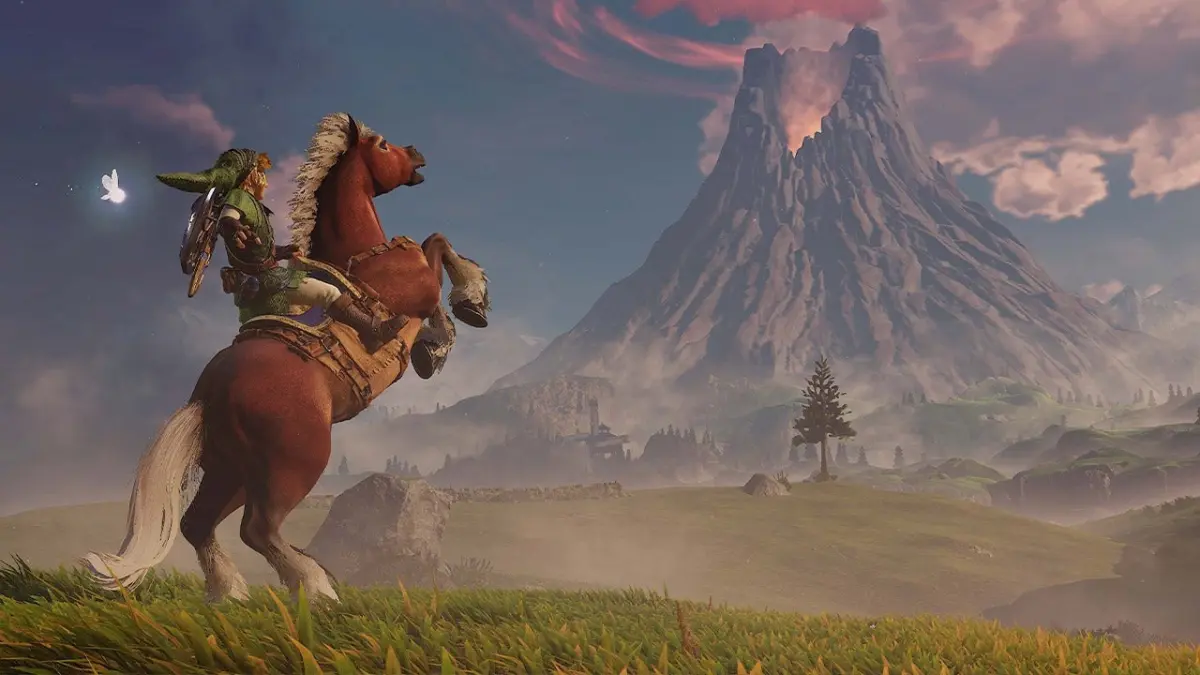
Few video games occupy as revered a space in interactive history as The Legend of Zelda: Ocarina of Time. Originally released in 1998 for the Nintendo 64, the title fundamentally reshaped 3D game design, establishing cinematic conventions, control paradigms, and environmental storytelling mechanics that developers still study today. Now, decades after its initial debut, the legendary epic has returned in a meticulously crafted remake tailored for modern hardware—specifically launching alongside the cultural momentum surrounding Nintendo’s successor platform.
Behind the triumphant return of Link’s defining adventure lies an immense web of institutional memory, cross-generational creative collaboration, and fastidious localization work. During a high-profile midnight launch event at Nintendo’s flagship New York retail store, industry leaders and high-profile fans converged to celebrate the enduring impact of Hyrule. Among them was Nate Bihldorff, Senior Vice President of Product Development and Publishing at Nintendo of America, who offered a rare, behind-the-scenes look at the monumental task of localizing some of gaming’s most elusive, hidden dialogue.
This comprehensive report examines the meticulous craft of preserving gaming history, the unique generational synergy driving Nintendo’s modern development studios, the severe challenges of maintaining absolute corporate secrecy, and the profound, cross-industry cultural footprint left by Koji Kondo’s timeless musical compositions—highlighting reflections from high-profile artists like multi-award-winning musician Jon Batiste.
Detailed Chronology: From the Nintendo 64 to Modern Hardware
The journey of The Legend of Zelda: Ocarina of Time from a groundbreaking 1998 cartridge to a state-of-the-art modern release is a testament to Nintendo’s philosophy of iterative preservation. Series producer Eiji Aonuma spearheaded the concept of remaking the title with a distinct pedagogical and creative objective: allowing younger, contemporary developers at Nintendo to immerse themselves directly in the foundational architecture of one of the medium’s most influential works.
As teams in Japan bridged decades of design philosophies, an equally compelling cross-generational dynamic unfolded across the Pacific Ocean within Nintendo of America’s localization wing. Veterans who guided the original localization sat side-by-side with early-career staff members experiencing the sprawling adventure for the very first time. This blend of seasoned institutional knowledge and fresh perspectives established an optimal creative crucible—what Bihldorff aptly characterizes as an "estuary water mix" of ideas that continually revitalizes Nintendo’s internal culture.
The culmination of these multi-year development cycles reached a fever pitch at retail storefronts. As eager fans braved the elements to form winding queues outside Nintendo’s New York retail location, internal staff members balanced the profound relief of a completed project with the electric anticipation of witnessing a new generation of players step onto the plains of Hyrule for the very first time.
Supporting Context & Metrics: The Art of the Hidden Line
For dedicated explorers, the true magic of Ocarina of Time has never lived solely in its mandatory critical path. Instead, it thrives in the marginalia of its world—the fleeting pieces of dialogue tucked away behind hyper-specific chronological triggers, sequence breaks, and unorthodox item management.
The Testing Nightmare and the Rewarding Payoff
While players marvel at stumbling upon dialogue variants on their third or fourth playthroughs, those same lines represent an intricate logistical challenge for global publishing teams. According to Bihldorff, crafting and verifying these micro-interactions is famously demanding on quality assurance and testing divisions.
- Elusive Triggers: Lines of text mapped to precise temporal moments or rare sequence-breaking conditions require exhaustive, targeted QA runs.
- Low Readership Metrics: A vast majority of players will never encounter these specific narrative breadcrumbs during a standard playthrough.
- The "Wink" Dynamic: Knowing that only a fraction of the player base will experience a specific line imbues the interaction with an intimate, conspiratorial weight, signaling a direct creative handshake between the development team and the hyper-dedicated player.
This dedication to hidden depth fuels a lingering, romantic notion within the community: are there secrets buried within Ocarina of Time that remain entirely undiscovered after more than twenty-five years? While studio developers remain predictably tight-lipped, internal leaders like Bihldorff lean into the wonder, expressing a personal belief that Nintendo’s foundational design ethos naturally fosters enduring mysteries waiting indefinitely for their eventual finders.
Official Statements: Behind the Veil of Nintendo Secrecy
Operating within the upper echelons of Nintendo of America requires navigating a culture of absolute confidentiality. The timeline for bringing classic franchises forward is fraught with internal excitement matched only by the strict professional discipline required to keep unannounced projects under wraps.

"I think it’s not me pulling the curtain too far back to be able to say that every single one of these games is met with tremendous enthusiasm the second we hear about them," shared Bihldorff during the New York launch event. "It’s a tough job sometimes, being behind the scenes when you can’t talk to anybody. We don’t talk to our spouses and stuff like that about it. It’s a lot of secret stuff. And yet we’re also passionate about the work and, of course, making sure that we bring the developers’ visions to market in a way that makes it proud. Everybody takes it very seriously, but they’re also huge fans."
This protective stewardship extends beyond corporate compliance; it is rooted in deep reverence for the original creators’ intent. Translating text, adapting cultural nuances, and ensuring that emotional beats land with identical resonance across distinct linguistic and cultural boundaries demands an elite tier of editorial precision.
Furthermore, the integration of young talent into legacy projects prevents institutional stagnation. By pairing industry veterans who shaped the nineties landscape with twenty-something digital natives experiencing the N64 masterpiece with fresh eyes, Nintendo ensures its historical touchstones are interpreted through a lens that honors the past while speaking fluidly to the present.
Cultural Legacy and Musical Resonance
The cultural shockwaves generated by The Legend of Zelda franchise extend far beyond traditional gaming demographics, embedding themselves deeply into the broader entertainment landscape. At the New York launch celebration, Grammy, Oscar, and Emmy-winning musician Jon Batiste reflected on how the series—and Ocarina of Time in particular—served as his earliest compositional catalyst.
Recounting childhood memories shared with his older sister passing a Game Boy running Link’s Awakening back and forth until the hardware’s batteries drained completely, Batiste noted how those formative moments dictated the trajectory of his creative life.
"And then when I started to play Nintendo 64, that’s when I started with Ocarina of Time and the music captured me," Batiste explained. "And I started to actually play those scores on instruments. And I played tons of scores from Nintendo games on the piano. My cousin and I actually, we have a video of us as a band when we first started playing, and our repertoire was probably 50% Nintendo franchise themes. So then we started to research who were the composers of the scores and we started to really pick favorites, like Koji Kondo. The sound of those melodies, I would say, was an early compositional influence."
Batiste’s testimony underscores a broader truth about Nintendo’s output: the audio-visual tapestry woven by composers like Koji Kondo functions as foundational classical music for generations of modern artists, proving that interactive entertainment holds an equal, if not superior, capacity to inspire cross-disciplinary artistic mastery.
Future Outlook
As The Legend of Zelda: Ocarina of Time finds a fresh lease on life for contemporary hardware generations, its triumphant resurgence offers a masterclass in how intellectual property can be managed with reverence, care, and forward-thinking institutional health.
By prioritizing the invisible details—from the hardest-to-find localization dialogue to the multi-generational mentorship thriving inside publishing offices—Nintendo has engineered more than a simple nostalgia trip. They have reinforced an ongoing dialogue between past creators and future visionaries. Whether veteran fans are unearthing long-rumored secrets for the first time, or world-class musicians are tracing their compositional roots back to Koji Kondo’s timeless melodies, the legend of Hyrule continues to evolve, proving that true masterworks never truly age—they merely find new generations ready to answer the call.