Executive Overview
The web development landscape stands at a critical juncture of modernization, characterized by an aggressive push toward native browser capabilities that once required complex JavaScript frameworks or heavy external libraries. Amidst this technological renaissance, one of the industry’s most storied institutions—CSS-Tricks—is undergoing a profound structural evolution. Following its recent, highly publicized acquisition and subsequent resuscitation, the platform is bidding farewell to an era while simultaneously laying the groundwork for its next chapter.
This transition is anchored by the release of the final web-hosted edition of "What’s !important," the community-favorite editorial digest that has long served as a compass for front-end engineers navigating the shifting tides of Cascading Style Sheets, HTML, and browser capabilities. While this specific iteration concludes its run on the main CSS-Tricks portal, the publication is far from dead. Instead, it is migrating into an expanded, hand-curated weekly newsletter format officially launching on November 10th. This move marks the end of a four-year hiatus for the property’s direct-to-inbox communications channel.
Far from being a quiet sign-off, this "final" web edition serves as a massive compendium of cutting-edge front-end engineering techniques, experimental CSS functions, upcoming layout specifications, and advanced tooling. From Rockstar Games
’ sophisticated (and Firefox-straining) Grand Theft Auto VI scroll effects to the standardization horizon of 2D mesh gradients, the state of the web platform in late 2026 is faster, more expressive, and more natively powerful than ever before. This report provides a comprehensive, deep-dive examination of the final edition’s technical disclosures, contextualizing them within the broader evolution of modern web standards, developer ergonomics, and design systems.
Detailed Chronology: The Rebirth and Realignment of CSS-Tricks
To fully appreciate the significance of this final installment of "What’s !important," one must understand the tumultuous chronology that brought CSS-Tricks to this precise moment. For over a decade, CSS-Tricks operated as an independent beacon of frontend knowledge under the stewardship of Chris Coyier, before being acquired by DigitalOcean in 2022. The acquisition triggered a period of uncertainty and institutional quietude, leaving the frontend community anxious about the platform’s long-term viability and editorial independence.
However, the tide turned dramatically in late October 2026. Following a new ownership transition that "brought the site back to life," the editorial team immediately moved to restructure how technical content is delivered to developers. The strategy relies on a hybrid model: retaining the core archival and community-driven tutorials on the web domain while migrating high-value, curated roundups and deep editorials to an exclusive newsletter format.

The Newsletter Revival
The decision to resurrect the newsletter after a four-year hiatus represents a strategic pivot toward owned media channels in an era dominated by algorithmic feeds. Scheduled for its official rollout on November 10th, the revitalized newsletter promises a strictly hand-written and hand-curated editorial experience. According to the publication’s editors, readers who subscribe to the newly minted CSS-Tricks mailing list will receive exclusive editorials, early-access links, and performance roundups that bypass traditional web scraping and social media distribution channels.
This final web issue of "What’s !important" acts as a bridge across this timeline. It synthesizes backlog material accumulated during the site’s transitional slumber alongside fresh developments in browser engines, setting an authoritative benchmark for what front-end developers can expect from the platform moving forward.
Supporting Context & Metrics: Decoding the Technical Frontiers of Late 2026
The technical contents of this transitional issue read like a wishlist of long-sought web standards finally transitioning from experimental flags into mainstream developer tools. Below is an exhaustive breakdown of the architectural shifts, performance metrics, and syntax innovations highlighted in the digest.
1. Advanced Scroll Mechanics and the GTA VI Effect
Interactive storytelling on the web has reached new heights of complexity. Demonstrating the raw power of modern CSS and hardware-accelerated composition, Rockstar Games released the promotional website for Grand Theft Auto VI. The site features an intricate, fluid scrolling effect that synchronizes complex geometric transformations and layout shifts with user scroll depth.
As detailed in a technical walkthrough by prominent educator Kevin Powell, recreating these effects no longer necessitates heavy JavaScript libraries like GSAP or custom scroll-jacking listeners. Instead, modern browsers handle these transitions via optimized layout engines. Interestingly, the GTA VI promotional portal encountered compatibility anomalies in Mozilla Firefox, sparking community discussions regarding browser-specific rendering pipelines and the ongoing necessity of cross-browser testing for bleeding-edge interactive features.
2. Modern Scrollspy Implementation via Modern CSS
Historically, building a functional "scrollspy"—a navigation UI component that dynamically highlights active section links based on the user’s current viewport position—required synchronous scroll event listeners and heavy intersection calculations executed via JavaScript.
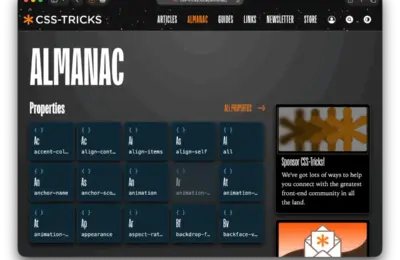
In a breakthrough demonstration by Mojtaba Seyedi, developers can now build native, performant scrollspies using modern CSS features. By leveraging container queries, advanced viewport units, and native state management selectors, the computational overhead of tracking scroll coordinates is offloaded entirely to the browser’s native rendering engine, drastically reducing main-thread blocking and improving Core Web Vitals metrics.
3. Embracing Playful Imperfection with the random() CSS Function
For years, achieving organic, hand-drawn, or naturally chaotic UI aesthetics required pre-processing styles through SASS, Less, or complex build-time JavaScript scripts. Brecht De Ruyte showcased a series of stunning visual demos utilizing the emerging random() CSS function.
As explored in depth within design engineering circles, random() allows developers to introduce controlled stochastic variability directly into style sheets. Whether applied to border-radius properties, rotation angles, or positioning offsets, this native function eradicates the rigid, clinical uniformity traditionally associated with digital interfaces, ushering in an era of playful imperfection.
4. The Future of Web Icons (2026 and Beyond)
Iconography implementation has undergone continuous evolution, transitioning from image sprites and icon fonts to Inline SVGs and SVG symbols. In a definitive architectural deep dive, Lea Verou mapped out the future of web icons, analyzing how upcoming CSS capabilities will streamline asset pipelines.
Verou’s analysis highlights several forthcoming proposals:
- Linked Parameters: Allowing external stylesheets or container queries to dynamically alter internal SVG attributes (such as
strokeandfill) without requiring complex DOM manipulation. - The
ident()Function: Improving custom property scoping and identifier generation. @mixinand@applyDirectives: Bringing native modularity and style reuse directly into vanilla CSS, reducing the reliance on preprocessors.@propertyShorthand: Expanding type-safe custom properties to allow smooth animations and transitions on complex graphical data.
5. Universal Pseudo-Selectors: Proposing ::*
Kilian Valkhof addressed a long-standing developer frustration regarding CSS specificity and global resets. Currently, the universal selector (*) targets all element nodes in the DOM tree, but it inherently fails to target pseudo-elements like ::before and ::after. Consequently, millions of production codebases rely on repetitive, verbose rule sets to apply structural box models:
*,
::before,
::after
  box-sizing: border-box;
With the proliferation of modern pseudo-elements—such as ::backdrop for modal dialogs and ::details-content for native interactive containers—Valkhof proposed the introduction of a universal pseudo-selector: ::*. This syntax would natively capture all pseudo-elements in a single declaration, streamlining CSS architecture and reducing boilerplate code across enterprise design systems.
6. Design System Scalability: New HTML and CSS Primitives
Declan Chidlow’s architectural audit of design systems highlighted several native platform primitives that are reshaping how teams build scalable component libraries. Among the most impactful features are:
text-box: Offering unprecedented control over font metrics, baseline alignments, and vertical rhythm without relying on manual padding hacks.sibling-index()andsibling-count(): Empowering components to self-adjust their styling based on their precise DOM position within a parent container, eliminating the need for complex JavaScript loops.@scope: Providing true encapsulation boundaries in native CSS, preventing style leakage without resorting to BEM naming conventions or shadow DOM encapsulation.@custom-media: Standardizing media query variables for cleaner, more maintainable responsive design systems.
7. Native Content-Adaptive Textareas
Field sizing has historically been a persistent usability hurdle for form design. Adam Argyle demonstrated a clean, zero-JavaScript technique using CSS anchor positioning and the field-sizing: content property to make <textarea> elements automatically expand and contract based on user input. This native behavior, which mirrors the natural fluidity of contenteditable regions, enhances user experience while eliminating complex auto-resize scripts.
8. Mathematical Wavy Dividers via random() and shape()
Temani Afif expanded the boundaries of geometric web design by illustrating how to construct complex, organic wavy dividers utilizing a combination of the random() function and the shape() module. By leveraging these mathematical primitives, developers can generate intricate clipping paths and vector-like separators directly within CSS, cutting down asset requests and improving rendering efficiency.
9. Next-Generation Color Contrast Validation
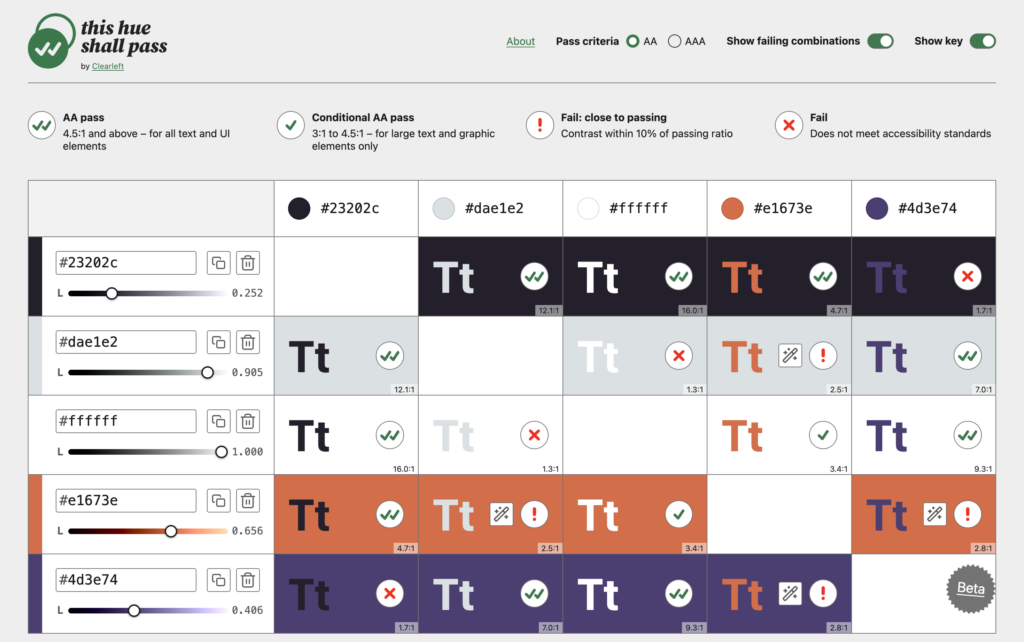
Accessibility compliance (WCAG standards) remains a cornerstone of professional web engineering. Clearleft introduced This hue shall pass, a specialized color contrast analysis tool. Unlike legacy checkers that deliver binary Pass/Fail verdicts, this utility introduces granular evaluations—distinguishing between absolute failures and "close to passing" states—while providing interactive lightness adjustments to achieve AA and AAA compliance ratios dynamically.
10. Visualizing Complex Gradients and the Advent of 2D Gradients
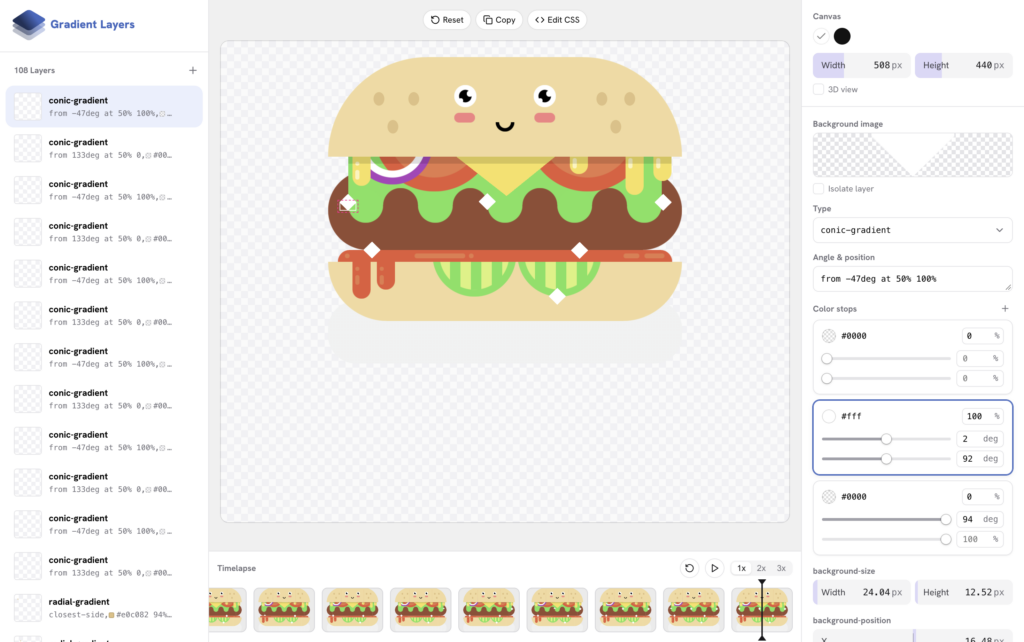
Gradient tooling has likewise matured. Ahmad Shadeed unveiled Gradient Layers, a visual debugging and authoring environment designed to simplify multi-layered gradient construction.

Building upon this momentum, Josh Tumath detailed the W3C CSSWG draft specifications for two groundbreaking gradient types currently making their way through the standards pipeline:
- Mesh Gradients (
mesh-gradient): Allowing complex, multi-point color interpolation across a grid coordinate system. - Freeform Gradients (
freeform-gradient): Enabling organic color distributions anchored to arbitrary points within a bounding box (e.g.,background-image: freeform-gradient(red top left, yellow bottom right);).
These specifications represent a monumental leap forward, bridging the visual fidelity gap between rasterized graphic design tools (such as Adobe Illustrator or Figma) and native browser rendering engines.
Official Statements and Industry Perspective
The transition of "What’s !important" from a web-hosted archive column into an exclusive newsletter format underscores a broader industry shift toward curated, signal-heavy developer education.
In statements accompanying the final publication, editorial leads emphasized that the core mission of CSS-Tricks remains unchanged: demystifying the web platform and empowering engineers with practical, elegant solutions to complex architectural challenges. However, the medium must adapt to the modern information ecosystem. By funneling deep-dive curation into a dedicated newsletter format, the publication aims to foster a more intimate, focused reading experience free from the noise of programmatic advertising and social media algorithms.
Industry analysts have praised the revitalization of CSS-Tricks under its new ownership structure, viewing the return of its newsletter as a positive indicator of renewed institutional investment in foundational web education resources.
Future Outlook: What Lies Ahead for CSS-Tricks and the Web Platform
As the industry looks toward late 2026 and beyond, the trajectory of front-end development is defined by an overarching philosophy: let the browser do the heavy lifting.

The features cataloged in this final web issue—ranging from native scrollspies and anchor-positioned textareas to mesh gradients and universal pseudo-selectors—signal the systematic deprecation of third-party JavaScript dependencies in favor of powerful, standardized browser primitives. Developers are no longer forced to hack around platform limitations; instead, they are witnessing the realization of a truly expressive, capable web standard.
For CSS-Tricks, the road ahead is bright. While the web domain will continue to serve as an indispensable reference library, the upcoming November 10th launch of the revamped newsletter marks the true beginning of its next era. Developers seeking to stay on the cutting edge of CSS architecture, HTML semantics, and web platform updates are strongly encouraged to join the mailing list, ensuring they remain part of the community conversation as the web continues to evolve.