Executive Overview
Capcom has officially kept its cards close to its chest regarding the exact release date for Monster Hunter Wilds: Ascendance, the massive, Sunbreak-scale expansion originally announced earlier this year in February. Destined to arrive sometime in 2027, the expansion promises to inject a fresh wave of high-tier challenges, master-rank mechanics, and fearsome new fauna into the critically acclaimed action-RPG. However, eagle-eyed PC players searching for early signs of a hands-on preview may not have to wait until launch day to sample what’s next.
Recent, quiet updates to Steam backend databases strongly suggest that a public beta test for Ascendance is on the horizon. Changelogs unearthed via SteamDB reveal that the application entry for the original 2024 Monster Hunter Wilds public beta test has been systematically rebranded and visually refreshed to spotlight the upcoming expansion.
While Capcom has yet to make a formal announcement regarding a playable public build, the circumstantial evidence points toward an upcoming playtest—potentially timed to leverage major industry showcases like upcoming end-of-year gaming awards. This report breaks down the SteamDB telemetry, what players can expect from the potential build based on prior trade show demos, and how Capcom is navigating optimization following the rocky technical rollout of the base game’s 2024 beta.
Detailed Chronology of the Leak
The trail leading to the suspected Ascendance beta began with standard backend maintenance on Valve’s digital distribution platform, a space where persistent data trackers and data-miners routinely find clues weeks or months before official marketing cycles catch up.
The SteamDB Changelog Shift
According to tracking data from SteamDB, the Steam app entry historically dedicated to the original Monster Hunter Wilds beta test underwent a significant nomenclature change. Early in the morning on the day of discovery, the listing’s title transitioned seamlessly from "Monster Hunter Wilds Beta test" to "Monster Hunter Wilds: Ascendance Beta test."
Beyond the textual amendment, the metadata update included refreshed promotional and visual assets. The listing’s core art was swapped out, replacing legacy base-game imagery with promotional key art depicting a custom-armored hunter squaring off against the Arateka—one of the marquee large monsters scheduled to debut within the Ascendance expansion.

Verification Through Steam Libraries
For skeptics questioning whether the database change was merely a leftover testing placeholder or an isolated glitch, personal library verification provided immediate confirmation.
While the initial Wilds beta was automatically purged or locked out of public player libraries following the conclusion of its operational window, users who participated in the original 2024 playtest retained a historical footprint of the application within their Steam profiles. By navigating to their personal "Games Played" or hidden software histories, users were able to verify that the application title had dynamically updated to reflect the Ascendance moniker across individual client logs.
This level of direct asset and string replacement strongly implies that Capcom intends to repurpose the existing beta application ID rather than spinning up a completely new store page, a common practice utilized by developers to streamline pre-release testing and leverage existing wishlists or library histories.
Supporting Context & Metrics: What the Beta Will Likely Entail
If the backend alterations do indeed forecast a functional public playtest, what will hunters actually be able to play? Looking at Capcom’s historical playbook for massive expansions like Monster Hunter World: Iceborne and Monster Hunter Rise: Sunbreak, public demos typically serve a dual purpose: stress-testing backend server infrastructure while offering a vertical slice of new gameplay systems.
Content Expectations
Based on hands-on builds previously showcased to attendees at the Tokyo Game Show (TGS), an Ascendance public beta would likely deliver a curated, multi-tiered hunt structure:
- The Beginner/Intermediate Hunt: A returning or baseline monster tuned to ease returning players back into the saddle.
- The Expansion Flagship or Signature Beast: An encounter with a new or returning threat, such as the aforementioned Arateka, testing players’ mastery of high-tier spacing and elemental management.
- Master Rank Integration: A taste of the scaled difficulty curves that define the "G-Rank/Master Rank" tier of Monster Hunter expansions.
Showcasing the Boost Bracer and Weapon Mechanics
Perhaps the most enticing draw for a potential public beta is the opportunity to test out Ascendance’s signature combat innovations. Foremost among these is the newly introduced Boost Bracer mechanic, alongside sweeping adjustments to weapon move-sets.
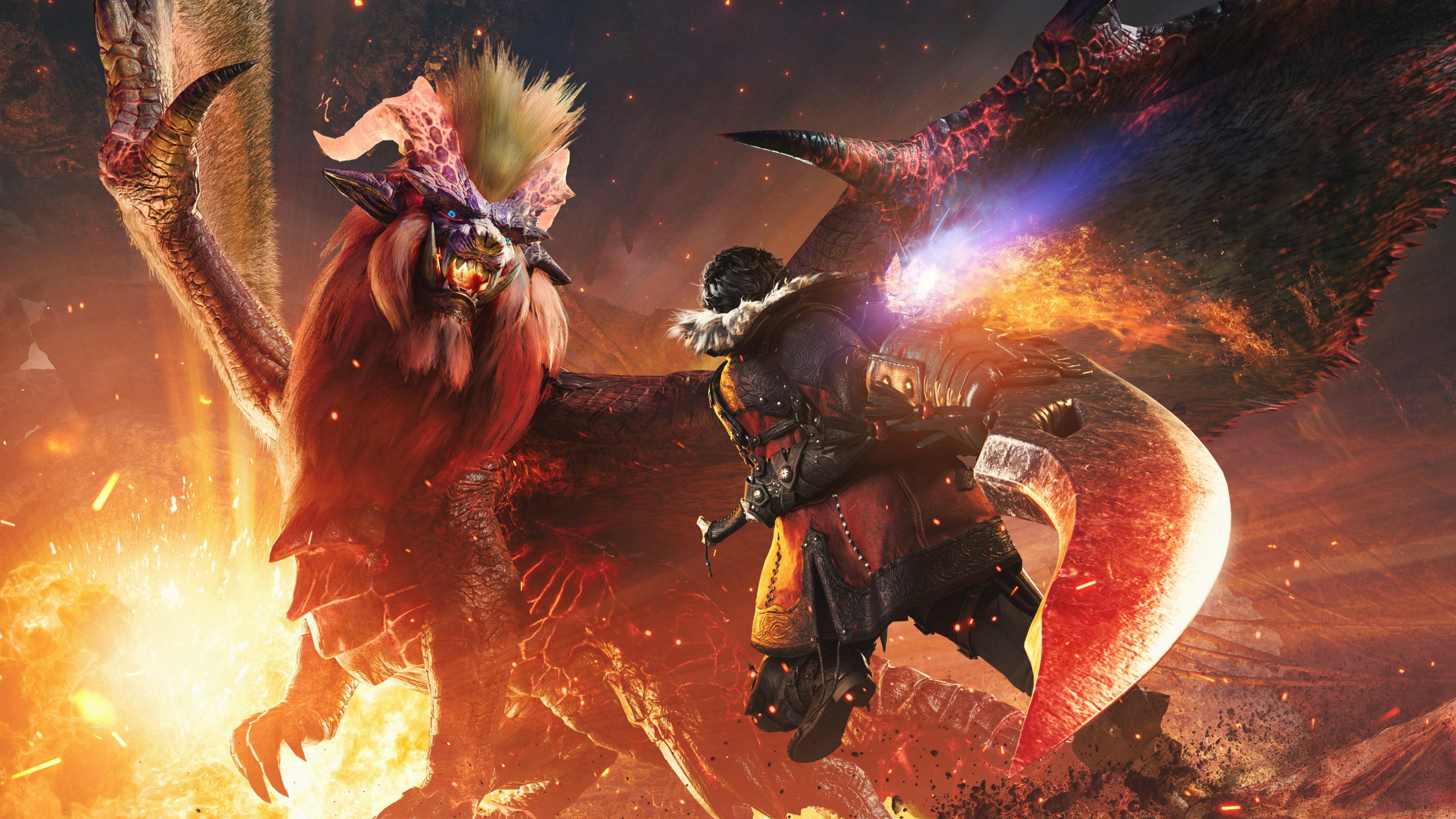
Early impressions from trade show attendees noted that the Boost Bracer introduces a high-octane, almost Devil May Cry-esque flair to traditional heavy-weapon combat—allowing for aggressive momentum-shifting impacts when dealing heavy blows to massive fauna. Giving the broader community hands-on access to these mechanics ahead of 2027 is crucial for gathering player telemetry regarding weapon balance, input responsiveness, and hit-box fidelity.
Technical Legacy: Learning from the 2024 Beta Stumbles
While the prospect of diving back into the field early is undeniably exciting, the community’s enthusiasm is naturally tempered by memories of the base game’s turbulent technical rollout.
The "Origami Monster" Phenomenon
When the original Monster Hunter Wilds public beta went live in 2024, it marked the first time many PC players experienced the title’s performance hurdles firsthand. The playtest quickly became infamous across social media and forums for generating severe optimization bugs, prominently featuring low-fidelity texture streaming issues that transformed majestic wildlife into jagged, polygonal "origami monsters."
These severe graphical and frame-rate instabilities significantly impacted initial community sentiment. Although Capcom maintained that the full launch build was already operating in a considerably more stable state, the lingering effects of those optimization challenges shadowed the title’s performance discussions for over a year following its official launch, requiring a steady cadence of post-launch hotfixes and performance patches to fully stabilize the PC ecosystem.
Expectations for the Ascendance Playtest
Given this history, Capcom faces immense pressure to ensure that an Ascendance beta puts its best technical foot forward. If the playtest serves as a stress test for the expansion’s newly optimized engine pipelines, it will need to demonstrate a marked improvement over the 2024 trial run. A smooth, well-optimized beta period will be vital to reassuring the PC player base that the technical gremlins of the base game’s infancy have been thoroughly exorcised ahead of the expansion’s Master Rank demands.
Official Statements & Future Outlook
As of press time, Capcom has maintained strict official silence regarding the leaked SteamDB alterations. No press releases have been issued, and community managers have declined to comment on the renaming of the beta application package.

Speculating on the Announcement Window
With no official word from the publisher, analysts and fans are left reading the industry tea leaves to predict when an official reveal might drop.
Given Capcom’s long-standing partnership with industry showcase producer Geoff Keighley, a high-profile public playtest announcement tied to an upcoming digital showcase—such as a surprise trailer debut at The Game Awards—fits industry precedent neatly. Historically, major publishers love to couple a cinematic trailer with a "play it this weekend" or "coming very soon" beta call-to-action to maximize viewer engagement and concurrent user spikes.
The Road to 2027
Monster Hunter Wilds: Ascendance represents the definitive evolution of Capcom’s current generation hunting flagship, promising to carry the torch of legendary expansions like Iceborne. While players must remain patient for official confirmation from Capcom regarding the exact timing of the beta and the final release date in 2027, the backend machinations on Steam make one thing abundantly clear: the gears are turning, and the call of the wild will soon be calling hunters back to the field.