Executive Overview
Nearly three decades after its original Nintendo 64 debut, The Legend of Zelda: Ocarina of Time remains a sacred text in the canon of interactive entertainment. For 28 years, generations of players have mentally cataloged its iconic iconography: the sharp angles of the Gorons, the piercing blue gaze of Ganondorf, and, above all, the luminous, ethereal glow of Navi and her fellow Kokiri Forest fairies.
However, the release of The Legend of Zelda: Ocarina of Time Remake for the Nintendo Switch 2 has thoroughly upended the collective memory of the global gaming community.
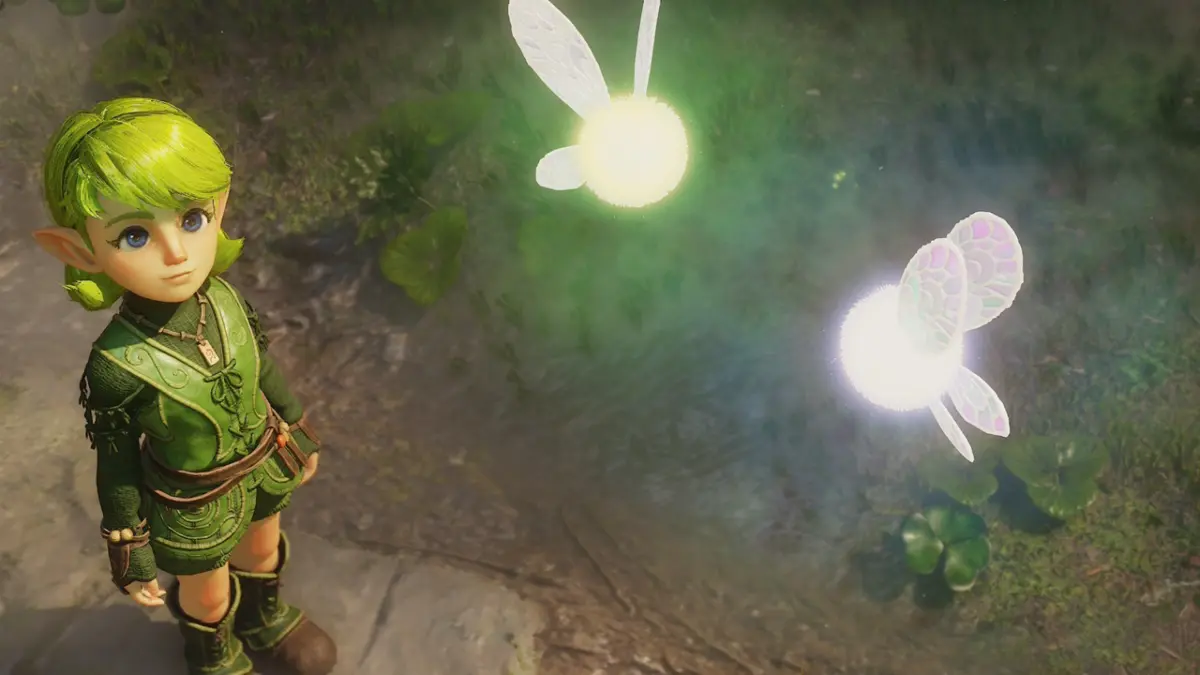
Powered by modern hardware and a meticulous artistic overhaul, the Switch 2 iteration brings micro-details into crystal-clear focus that were previously obscured by the low-resolution polygonal constraints of 1998. Far from being simple orbs of pure, disembodied light, the fairies of Kokiri Forest are, upon close inspection, startlingly fuzzy. Meanwhile, Hyrule’s stoic royal guards are sporting aggressively cut-off denim shorts—colloquially known as "jorts"—and the terrifying ReDeads hide fully modeled, unsettling human skulls beneath their masks.
These revelations have transformed a standard graphical remaster into a cultural moment. Social media feeds are alight with disbelief, and dataminers are aggressively tearing the code apart to see what else Nintendo’s artists have hidden in plain sight. This report explores the cultural impact of these unexpected design choices, the technical realities that bridged a 28-year gap in fidelity, and how the gaming community is processing the rewriting of their childhood memories.
Detailed Chronology: From N64 Limitations to Switch 2 Revelation
The 1998 Paradigm: Imagination Fills the Gaps
When Nintendo launched Ocarina of Time on the Nintendo 64 in November 1998, the industry was in the tumultuous early days of true 3D graphics. Developers were forced to lean heavily on abstraction. A fairy was represented by a low-poly sprite or a rudimentary glowing sphere because texture memory and rendering power simply could not support biological realism, nor was it expected to.
Players relied on their imaginations to fill in the blanks. Navi was universally perceived as a sentient spark of magic—a guiding star. The Hyrule Castle guards wore stylized plate armor that fit a high-fantasy medieval aesthetic, while the terrifying mummified ReDeads were simply faceless, paralyzed horrors designed to induce genuine panic in impressionable young players.
The Remake Arrives: The Switch 2 Breakthrough
Fast forward to late 2026. Nintendo’s release of The Legend of Zelda: Ocarina of Time Remake on the Switch 2 promised updated lighting, modern frame rates, and polished assets. Yet, nobody anticipated the sheer level of granular re-examination the new engine would provoke.
Within hours of the game’s launch, players exploring the early tutorial zones began utilizing the updated photo mode and free-camera tools. By zooming past normal gameplay thresholds, fans made a collective, internet-wide double-take.
- The Kokiri Forest Fairies: Rather than magical plasma or energy orbs, high-definition close-ups revealed a soft, tactile layer of fine fuzz coating a light-emitting core.
- The Guard Uniforms: As players inspected the royal guards with modern clarity, the traditional greaves and trousers gave way to an unmistakable garment: form-fitting denim jorts.
- The ReDead Horror: Content creators using out-of-bounds exploration tools peered beneath the tattered wrappings and wooden masks of the subterranean ReDeads, discovering unsettlingly detailed human skull structures hidden in the shadows.
Supporting Context & Metrics: The Internet Breaks Down Hyrule
The juxtaposition of a revered masterpiece with unexpected, hyper-realistic micro-textures sparked an immediate viral phenomenon across platforms like X (formerly Twitter), Reddit, and YouTube.
The Puffball Phenomenon
The revelation that fairies are essentially glowing, sentient dust-bunnies sent shockwaves through the fandom. Reddit threads dedicated to the discovery garnered tens of thousands of upvotes within days.
"It appears Fairies are just… Fluffy Balls that emit a light!" noted one viral Reddit user. "It’s neither a ball of pure light nor a humanoid lil person hidden under a glow. Just… Fluff! Interesting 😀 And cute!"
This sentiment was echoed across the globe, transforming a minor artistic asset into an overnight mascot for the remake’s launch week. For a fanbase accustomed to decades of rigid, lore-abiding consistency, the concept of a "fluffy fairy" introduced a delightfully bizarre organic reality to Hyrule’s ecosystem.
The Royal Guard Jort Controversy
If the fairies were a cute surprise, the royal guards’ wardrobe choice was nothing short of an internet meme goldmine. For years, low-resolution textures created the illusion of standard medieval legwear. With the Switch 2 upgrade, the reality of the fabric texture and tailoring became undeniable.

Social media platforms flooded with humorous commentary regarding the Hyrule military dress code:
- “So far my favorite part of the Ocarina of Time Remake is that the guards are wearing booty jorts,” posted user ChillboBagginz on X, accompanied by high-res screenshots.
- Another user speculated on the sociopolitical climate of Hyrule: "I like to believe that all the guards are forced to wear jorts under penalty of death, purely because Zelda decrees it so. It’s a really nice detail they added in the remake."
While some players playfully debated whether Nintendo intentionally updated the armor into denim or if the original N64 hardware simply obscured the texture’s true nature, the consensus was clear: the internet embraced the jorts wholeheartedly.
Pushing Boundaries with Shesez
The pursuit of these hidden details quickly moved from casual exploration to systematic investigation. Noted content creator and Boundary Break host Shesez turned his camera toward the game’s darker corners. By hacking the camera angles of the Switch 2 version, he exposed the horrifying anatomical depth of the ReDeads.
While the N64 version left the interior of their masks to the imagination, the remake revealed fully rendered eye sockets, teeth, and skeletal structures. Fan reactions ranged from terrified awe to morbid appreciation for the developers’ attention to unseen atmospheric horror.
Official Statements & Industry Impact
While Nintendo has historically maintained a veil of quiet mystique regarding granular design choices, the artistic direction of the Ocarina of Time Remake speaks volumes about modern game preservation and reinvention.
Industry analysts point out that remaking a classic title for modern hardware presents a unique philosophical dilemma: Should developers preserve the exact visual ambiguities of the past, or should they lean into modern fidelity to realize what hardware limitations once prevented?
In the case of the Ocarina of Time Remake, Nintendo’s development teams chose the latter, injecting vibrant, tactile realism into every corner of the world. By doing so, they have achieved something rare: they made a 28-year-old game feel genuinely surprising to veterans who thought they knew every blade of grass in Hyrule.
Furthermore, the game’s launch week metrics have proven monumental for the Switch 2 platform. Beyond the viral art discussions, dataminers have uncovered deep code references hinting at potential Majora’s Mask and Master Quest DLC expansions. Simultaneously, speedrunners have already dismantled the remake’s physics engine, discovering new sequence breaks and adjusting to the removal of auto-jump—a change that has left Link taking more than a few accidental tumbles into ravines.
Future Outlook: A New Era for Classic Reboots
As the initial shock of fuzzy fairies and royal jorts begins to settle, the long-term impact of The Legend of Zelda: Ocarina of Time Remake on the industry becomes increasingly clear.
The game has established a new benchmark for how legacy titles can be modernized. Rather than simply applying a coat of high-resolution paint and calling it a day, Nintendo’s artists re-envisioned the texture of Hyrule’s daily life, inviting players to look closer, question their assumptions, and engage with a nostalgic world in an entirely new way.
With comprehensive community walkthroughs expanding daily—covering early heart pieces, Gold Skulltulas, and inventory bag expansions—players are diving back into the classic adventure with unprecedented fervor. Whether they are hunting for secrets in the dungeons or simply admiring the unexpected softness of Kokiri Forest’s resident spirits, fans are proving that even the most thoroughly explored video game worlds still hold secrets beneath the surface.
As Ocarina of Time enters this modern era, one thing is certain: Hyrule will never look the same again.