Executive Overview
In the fast-evolving landscape of enterprise cloud computing, the boundary between threat disclosure and active exploitation has effectively vanished. This stark reality anchors the latest cycle of infrastructure upgrades, security architectures, and machine learning announcements from Amazon Web Services (AWS).
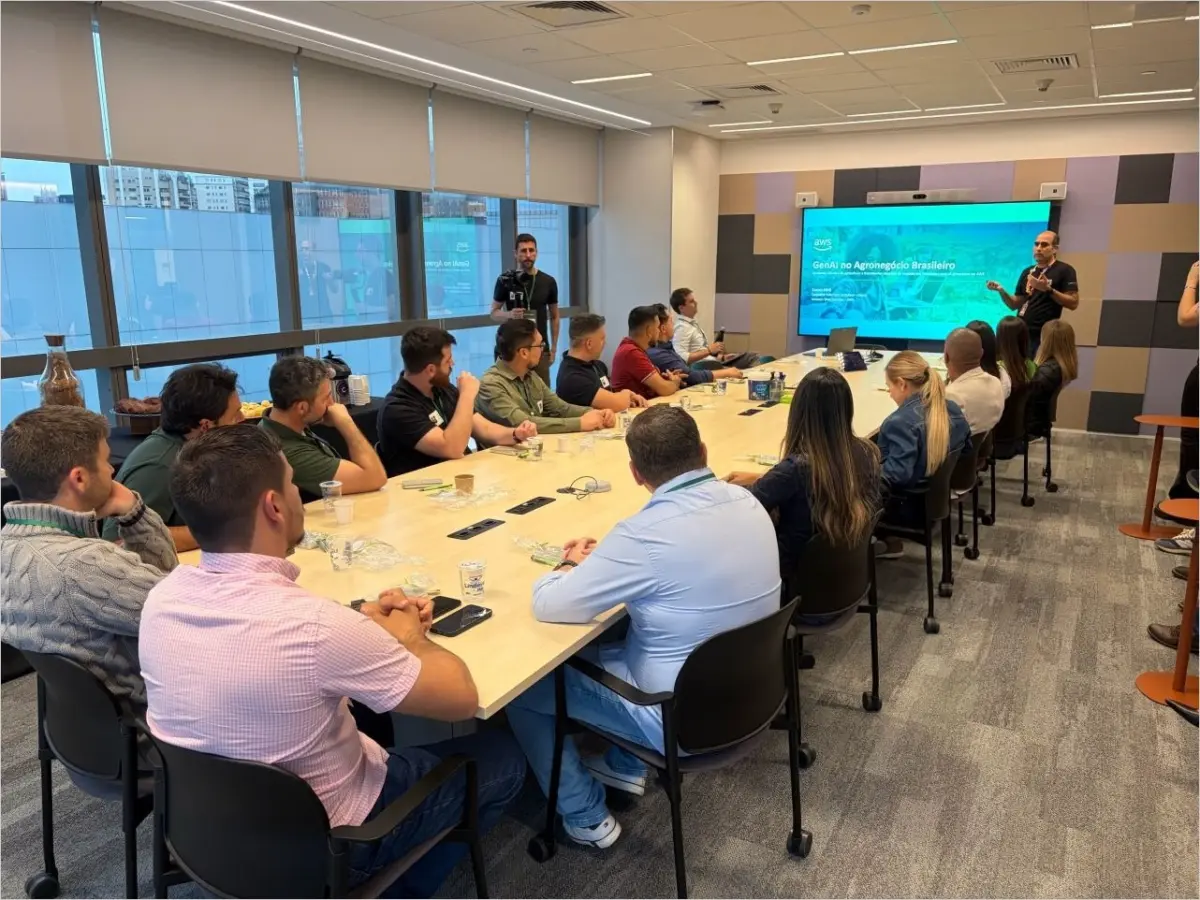
Speaking to commercial and technology leaders from Brazilian agribusiness at the AWS office in São Paulo, the recurring theme was not whether generative AI belongs in traditional sectors, but rather how to deliver its outputs effectively. When an operator is driving between farms with both hands on the steering wheel, the user interface is a voice. This practical challenge underscores why updates like the expansion of the Amazon Polly Generative engine—including new voices in Brazilian Portuguese—matter just as much to industrial edge operations as deep backend orchestration improvements do.
Yet, alongside these leaps in human-computer interfaces, the broader technology landscape demands an aggressive shift in enterprise posture. Recent telemetry from Amazon Threat Intelligence highlights that vulnerabilities are actively exploited in the wild days before official public disclosures or patched deployments.
To meet this compressed vulnerability lifecycle, AWS has introduced AWS Continuum, a general-availability service designed to automate end-to-end vulnerability management and code remediation. Alongside Continuum, developers and platform architects gain powerful new orchestration tools, including Amazon ECS Gateway, native PyTorch support for Trainium via TorchNeuron, serverless database migrations for Valkey, and advanced model customization loops on Amazon SageMaker AI.
This report provides a comprehensive, investigative breakdown of these developments, detailing how modern cloud architectures are adapting to the speed of adversarial threats and the expanding demands of generative workloads.
Detailed Chronology & Core Announcements
1. Security & Vulnerability Management: AWS Continuum
The defining technical challenge of modern software maintenance is the velocity of exploitation. Historically, security teams operated under a window of weeks between a CVE disclosure and the weaponization of a flaw. Recent telemetry shatters that assumption.
Amazon Threat Intelligence recently uncovered a PHP2Shell exploitation attempt within its MadPot telemetry network dating back to October 17. This was four days prior to the public disclosure of CVE-2026-109618 and CVE-2026-109619. Furthermore, on the exact day of public disclosure, functional proof-of-concept exploits were circulating on public channels by 02:00 UTC—a full twelve hours before the official embargo lifted at 14:00 UTC.
Recognizing that manual triage cycles are fundamentally obsolete against this timeline, AWS has made AWS Continuum generally available in the US East (N. Virginia) and US West (Oregon) regions.
- Context Graphs and Evidence Levels: Rather than presenting security engineers with a static list of Common Vulnerabilities and Exposures (CVEs), Continuum constructs an exhaustive context graph connecting application repositories directly to the active AWS operational environment.
- Isolated Sandbox Reproduction: Findings are no longer accompanied merely by severity labels; Continuum reproduces exploitable vulnerabilities inside an isolated sandbox using proof-of-concept code, delivering empirical evidence of risk.
- Automated Remediation Workflows: Issues are ranked by how closely their potential attack path approaches business-critical systems. Once a path is identified, the system automatically opens a fix as a pull request.
- The Control Boundary: Crucially, remediation currently mandates human-in-the-loop oversight. Engineers must review and merge every pull request, establishing a strict governance barrier while laying the groundwork for autonomous, confidence-gated fixes in future iterations.
Simultaneously, AWS released comprehensive AWS WAF mitigations to protect web applications facing the PHP2Shell Remote Code Execution (RCE) vectors.
2. Networking & Microservices: Amazon ECS Gateway
Managing ingress traffic across sprawling containerized architectures has traditionally required intricate coordination between networking groups and application developers. Amazon ECS Gateway fundamentally re-architects this relationship by cleanly splitting operational responsibilities:
- Platform Team Controls: Platform administrators define a single gateway specifying organization-wide subnets, security groups, Transport Layer Security (TLS) certificates, listener configurations, and AWS WAF web ACLs.
- Application Team Opt-In: Developers consume these boundaries simply by attaching a gateway connector to their service definition. Amazon ECS automatically provisions an ACM certificate, a unique DNS hostname, listener rules, a dedicated target group, and a security group restricting ingress strictly to the Application Load Balancer (ALB).
Architectural Economics and Scale
The economic efficiency of the ECS Gateway model is striking:

- Resource Sharing: Up to 25 discrete microservices can securely share a single ALB.
- Elastic Provisioning: ECS dynamically provisions the first ALB upon initial connection and deprecates and removes load balancers when workloads scale down.
- Cluster Density: A single gateway can associate with up to 10,000 clusters, with a maximum of five gateways permitted per cluster.
- Incremental Adoption: Existing infrastructures do not require radical rewrites; teams can adopt the gateway incrementally via
UpdateServicewhile legacy load balancers remain fully operational.
Amazon ECS Gateway is available at no additional charge in all commercial regions where Amazon ECS is supported.
3. Machine Learning Hardware & Software: TorchNeuron
Software lock-in has long been a structural friction point in enterprise machine learning strategy. To decouple model architecture from specialized hardware dependencies, AWS announced the public beta of TorchNeuron, an open-source PyTorch backend designed for AWS Trainium.
- Frictionless Integration: Developers can execute existing models on Trainium hardware simply by changing an instantiation call to
.to('neuron'). This avoids architectural rewrites while preserving eager execution andtorch.compileoptimizations. - Custom Operators: TorchNeuron integrates deeply with the Neuron Kernel Interface, allowing advanced teams to write and execute custom operators seamlessly.
- Hardware Compatibility: The framework natively supports both Trainium2 and Trainium3 silicon generations, arriving alongside the broader rollout of AWS Neuron 2.33.
4. Model Customization & Generation: SageMaker AI & Bedrock
Managing distributed training clusters, handling fault recovery, and provisioning heavy GPU fleets have historically created high operational overhead for teams fine-tuning foundational models.
- SageMaker AI Training Sessions: Generally available today, training sessions give engineers absolute control over the post-training loop—including custom loss functions and reward signals—while Amazon SageMaker AI entirely abstracts GPU allocation, distributed cluster execution, checkpoint storage, and automatic fault recovery. Billing is metered exclusively by processed tokens, pausing entirely while reward functions evaluate evaluation batches. Support has also expanded to include models such as Muse Glimmer, Qwen 3.8, and Ministral 3.
- Claude Structured Outputs on Amazon Bedrock: Enterprise automation relying on Large Language Models often struggles with unpredictable output formatting. Anthropic Claude models on Amazon Bedrock now support native, schema-compliant JSON returns across both
bedrock-runtimeandbedrock-mantleendpoints. This eliminates custom parsing routines, brittle retry logic, and complex post-processing pipelines, rendering workflows like financial statement ingestion and clinical note parsing vastly more reliable.
5. Database Modernization: Zero-Downtime Valkey Migrations
Migrating high-throughput caching layers without dropping client connections or experiencing data loss has traditionally required third-party replication scripts and careful maintenance windows.
Amazon ElastiCache Serverless for Valkey now supports online migration with zero downtime. Organizations can seamlessly transition self-managed Valkey or Redis OSS instances running on Amazon EC2 directly into ElastiCache Serverless. The process involves preparing the migration target, initiating background data synchronization, and executing either manual or automated cutovers. Crucially, this transition incurs zero errors returned to the client during the cutover phase, backed by the standard ElastiCache availability SLA. The feature is available immediately across all commercial, China, and AWS GovCloud regions.
Supporting Context & Metrics
The convergence of security vulnerabilities, multi-tenant container gateways, and agentic machine learning workflows forces a re-evaluation of enterprise cloud economics.
1. The Realities of Modern Threat Timelines
The disclosure gap has closed. When threat telemetry indicates active exploitation four days prior to public vulnerability publication—and functional exploits circulate within hours of embargo drops—traditional security postures fail. Organizations transitioning to automated remediation pipelines like AWS Continuum reduce their exposure window from days or weeks to the minutes required to review and merge a pull request.
2. Tokenomics for Coding Agents
As organizations deploy autonomous coding assistants and agentic workflows, economic models shift dramatically. Unlike traditional request-response inference calls, coding agents frequently replay growing conversation transcripts on every turn.
Recent AWS open-source benchmarking tools allow engineering teams to model their internal "tokenomics." In sample evaluations exploring cost-and-quality frontiers, dynamic model routing strategies achieved a 44.7% reduction in operational cost while incurring only a 4.8% decrease in mean output quality. For high-volume development environments, tuning these routing boundaries yields compounding financial savings.
3. Enterprise Migration Scale: U.S. Bank Case Study
Demonstrating the viability of large-scale infrastructure migrations, U.S. Bank recently migrated 119 terabytes of production data from Oracle Exadata to Amazon RDS for Oracle.
Utilizing a configuration-driven pipeline built on Oracle XTTS, AWS DataSync, and Amazon EFS over a bandwidth-capped Direct Connect link, the initial baseline copy completed in approximately 7 days with zero data loss. Final production cutovers averaged roughly four hours per database, proving that massive enterprise legacy systems can modernize to cloud-native managed relational databases with minimal operational disruption.

Official Statements & Industry Perspectives
The philosophical underpinnings of this week’s releases reflect an industry moving past theoretical experimentation toward rigorous operational execution.
Discussing the intersection of artificial intelligence and traditional industrial sectors during his presentation in São Paulo, AWS technical leaders emphasized:
"When your user has both hands on a steering wheel, the interface is a voice."
This sentiment explains the ongoing refinement of natural language interfaces like the Amazon Polly Generative engine, which expanded its catalog to 57 generative voices across 11 languages and 25 locales—including two new Brazilian Portuguese voices (Leo and Carolina). Delivered as a drop-in upgrade, the underlying API calls, voice naming conventions, and pricing structures remain unchanged while delivering substantially more natural cadence and inflection.
On the security front, the release of automated remediation architectures like Continuum highlights a profound shift in trust boundaries:
"Every remediation currently requires human approval, so you review and merge the pull request, with autonomous classes of fix gated behind confidence thresholds for the future."
This balance ensures that while machines accelerate the identification and proof of code vulnerabilities, human expertise retains ultimate governance over production deployments.
Future Outlook & Upcoming Events
As the cloud ecosystem matures toward autonomous operations, zero-day threat response, and multi-cloud architectural flexibility, the venue for industry consensus is shifting toward upcoming global gatherings.
- AWS re:Invent 2026: Scheduled for November 30 to December 4 in Las Vegas, this year’s conference features over 2,200 specialized technical sessions. With the session catalog now live and reserved seating open, cloud architects and engineering leaders are actively mapping their schedules around deep dives into autonomous security, agentic orchestration, and specialized silicon architectures.
- AWS Community Days: Regional community engagement continues to expand, culminating in events like AWS Community Day Brasil Norte in Belém, closing out the 2026 Brazilian community season.
Summary Takeaway
The overarching lesson from this week’s announcements is clear: enterprise cloud architecture is no longer just about provisioning raw compute and storage; it is about operational velocity and defense-in-depth. Whether mitigating zero-day vulnerabilities through automated sandbox code reproduction, decoupling application networks with ECS Gateway, or shifting machine learning workloads to optimized silicon like Trainium, organizations that embrace automated, context-aware cloud services will decisively stay ahead of the curve.