Executive Overview
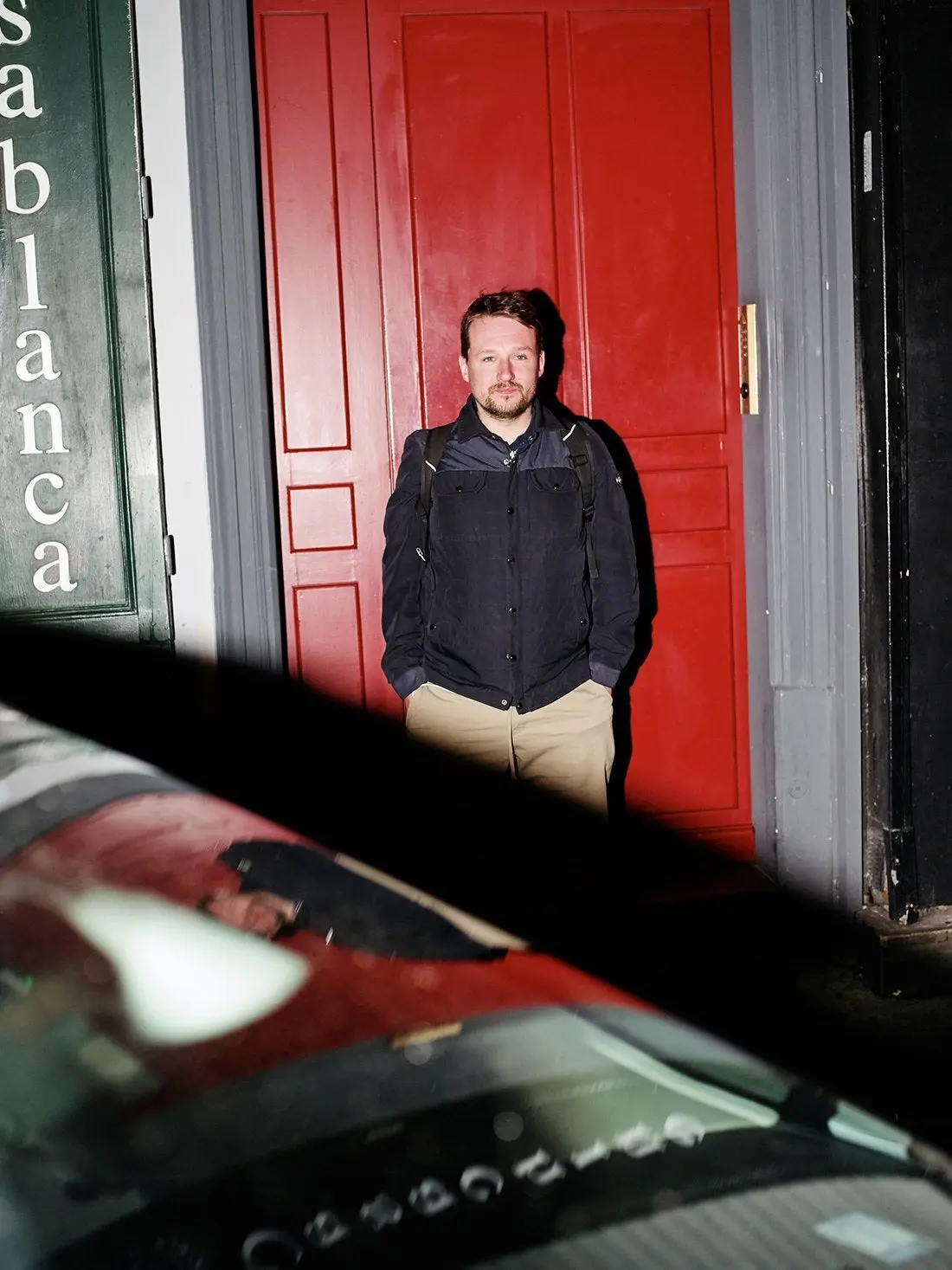
In an era defined by media fragmentation and plummeting public trust in traditional institutions, the gold standard of breaking news is increasingly forged not in corporate newsrooms, but on the shifting, tear-gas-hazed frontlines of social media. No one embodies this paradigm shift more completely than Rémy Buisine. A 32-year-old video journalist for the French digital-native media outlet Brut, Buisine has become an international phenomenon, serving as the definitive, unmediated window into the civil unrest that has repeatedly paralyzed contemporary France.
From the anti-establishment "Yellow Vests" (Gilets Jaunes) movement of 2018 to the fiery, youth-led pension reform protests of spring 2023, Buisine’s marathon livestreams have transfixed millions. Armed with little more than a smartphone, a relentless work ethic, and a gas mask, he routinely broadcasts uninterrupted for up to eight hours straight, capturing the raw, chaotic energy of urban warfare from the immediate crossfire of protesters and riot police.
This in-depth investigative feature explores the mechanics of Buisine’s digital dominance, tracing his improbable journey from a working-class rural upbringing to the epicenter of European socio-political upheaval. It examines the structural evolution of mobile journalism, the transformative impact of platforms like TikTok on civic engagement, and the profound personal toll exacted by a life lived entirely on-air, in real-time.
Detailed Chronology: A Day on the Frontlines with Rémy Buisine
To understand the hypnotic pull of Buisine’s broadcasting style is to experience the rhythm of a modern French protest. On April 6, amid mass demonstrations opposing President Emmanuel Macron’s controversial decision to force through pension reforms—specifically raising the retirement age from 62 to 64—the scale of civic opposition was staggering. Estimates of crowd sizes ranged wildly between the police department’s figure of 57,000 and union organizers’ claims of 400,000.
Yet, amid this sea of humanity near Montparnasse, Buisine initially blended in seamlessly. Wearing a navy puffer jacket and blue jeans, devoid of his neon-yellow press armband at first glance, he looked indistinguishable from the thousands of young, digital-native citizens who flooded the Parisian boulevards. Within moments of rendezvous, however, his hyper-focused professionalism took over. Directing a colleague to capture the tail end of the march, Buisine seamlessly juggled his responsibilities: managing dual mobile devices, monitoring incoming viewer metrics, and snapping photographs of satirical protest signs for Brut’s Instagram account.
As the march converged near Montparnasse station at mid-afternoon, the atmosphere rapidly deteriorated. Pausing to pull a hermetically sealed pair of goggles and a military-grade gas mask from his backpack—supplemented by a can of tear gas decontaminant spray in his pocket—Buisine signaled the transition from casual observer to frontline reporter.
At 3:29 p.m., a loud, concussive explosion echoed down the boulevard, drawing jeers and chanting of "ACAB" from the crowd. Moments later, near the historic Café de la Rotonde, a line of militarized gendarmerie materialized with riot shields locked. When official warning shots rang out at 3:37 p.m., sending tremors of panic through the crowd, Buisine did what few conventional journalists dare to do: he surged forward toward the kinetic energy, camera rolling.
What followed was a masterclass in endurance-based immersive reporting. While this author retreated per pre-arranged safety protocols, Buisine plunged deeper into the chaos. Over the next seven hours, his camera captured:
- Protesters breaching a building after a resident threw objects from a window.
- The iconic awning of the Café de la Rotonde catching fire amidst escalating skirmishes.
- Hours of being kettled alongside defiant demonstrators near the Place d’Italie metro station, where the trapped crowd broke into a spontaneous, rhythmic chant honoring the reporter: "Ah Rémy, allez, allez, allez!"
- Impromptu, unscripted interviews with French parliamentary deputies who had joined the demonstrators.
When Buisine finally terminated his livestream at 10:54 p.m., he had logged over 28,000 steps, endured seven and a half hours of continuous broadcasting, and amassed an audience of 1.8 million unique viewers on TikTok alone. Even then, the night was far from over. Following a hurried, largely uneaten kebab meal—consumption is severely limited by residual exposure to chemical irritants—he spent the remaining hours of the night editing clips, only to wake up for an editorial meeting at 9:30 the following morning.
Supporting Context & Metrics: The Rise of Digital-Native Journalism
Buisine’s extraordinary reach highlights a seismic shift in how younger demographics consume hard news. Traditional television broadcasts and print media have experienced severe erosion of trust among citizens under thirty. In contrast, Brut, which launched in 2016 exclusively on social media platforms, has captured the zeitgeist.
The quantifiable impact of Buisine’s coverage during the spring 2023 pension protests is historic:
- Audience Growth: At the height of his multi-hour livestreams, individual broadcasts routinely attracted peak concurrent viewership exceeding 70,000 on TikTok. Over the course of the crisis, Brut’s official TikTok account surged by one million new followers, cementing a base of 4.2 million subscribers.
- Demographic Shift: Unlike traditional union-led marches dominated by middle-aged and older citizens, the unrest triggered by the government’s constitutional maneuver (invoking Article 49.3 to pass the pension bill without a parliamentary vote) galvanized a youthful, highly online demographic. Many were first-time protesters outraged by perceived executive overreach.
- International Reach: Buisine’s streams transcend linguistic barriers. Despite speaking primarily French—with standard phrases like "live in Paris" thrown in for international fans—viewers across the globe tune in, drawn by the raw, unfiltered visual testimony of civil disobedience.
The secret to Buisine’s resonance lies in his radical commitment to listening. Unlike traditional television reporters who rely on clipped, 30-second soundbites, Buisine routinely grants ordinary citizens and prominent youth activists—such as 18-year-old organizer Ritchy Thibault—uninterrupted airtime of 10 to 20 minutes. By allowing marginalized voices to articulate their grievances at length, he validates the socio-economic anxieties of a generation that feels systematically ignored by the political elite.
Official Statements and Institutional Friction
The rise of social media-first journalism has not occurred without institutional friction. When Brut first emerged in 2015 and 2016, the French political establishment was openly skeptical. Established politicians were frequently hesitant to engage with a medium that operated entirely outside traditional press gatekeepers, fearing a loss of message control.
However, the sheer democratization of information forced a reckoning. By 2020, the credibility of Buisine’s platform was underscored when he conducted a landmark two-and-a-half-hour livestreamed interview with French President Emmanuel Macron—a clear acknowledgment by the Élysée Palace that digital-native media outlets command the attention of the electorate far more effectively than legacy networks.
Yet, tension remains palpable on the streets. Despite legal protections explicitly designed to safeguard members of the accredited press during public demonstrations, Buisine and his peers frequently encounter state-sanctioned violence. Throughout his career, Buisine has been struck by police batons and repeatedly incapacitated by tear gas. Paradoxically, these moments of institutional aggression serve as powerful catalysts for viewer engagement: each time Buisine is targeted on-air, concurrent viewership spikes exponentially, shining an unflattering, unvarnished spotlight on the tactics employed by law enforcement units during civil disturbances.
Future Outlook: The Human Cost of Constant Connection
Behind the monumental metrics and viral clips lies a stark human reality. Buisine’s life is entirely subsumed by his vocation. Unmarried, childless, and living alone in Paris, his existence is defined by total availability. "At Brut, they know if I’m needed, I’ll be there. So I go," he reflects.
This hyper-availability carries a severe psychological toll. The adrenaline crashes are brutal. Describing the physiological aftermath of a grueling broadcast, Buisine notes, "Sometimes I sit down, eat, and can’t get back up without falling back down, but I can’t sleep." The trauma accumulated from years of bearing witness to horrific injuries—such as protesters losing hands, eyes, or suffering open cranial wounds during the Gilets Jaunes movement—leaves permanent psychological scars.
Despite these immense personal costs, Buisine shows no signs of slowing down. The relentless rhythm of contemporary crisis journalism offers little respite. Barely hours after concluding his marathon coverage in Paris, and enjoying his first full day off in three weeks, news broke of a catastrophic building collapse triggered by an explosion in Marseille. Without hesitation, Buisine packed his bags, boarded a train south, and prepared to illuminate yet another unfolding tragedy for millions waiting on the other side of a glowing screen.
In an age where the fabric of democratic discourse is constantly tested, Rémy Buisine stands as a testament to the enduring power of frontline testimony—proving that in the modern information ecosystem, truth is no longer broadcasted from on high, but streamed from the trenches.