Executive Overview
It started more than a decade ago as a cynical meme, an interactive joke mocking the very nature of modern video game progression systems. When Cookie Clicker and Candy Box debuted in rapid succession back in 2013, they were widely received as absurdist commentaries—playful parodies reducing the elaborate, dopamine-driven feedback loops of traditional role-playing games down to their most primitive denominator: watching numbers go up.
Yet, what began as a satirical subversion quickly devolved into a cultural fixation. Office desks, college dorms, and online forums like Reddit and Twitter became hotbeds for confessed addicts watching virtual cookies multiply into the octillions. Ian Bogost’s earlier Cow Clicker had laid the conceptual groundwork as a very deliberate, high-brow critique of social game mechanics, but Cookie Clicker played it straight, walking a surreal line between profound meaninglessness and undeniable compulsion.
Fast forward to the present day, and the genre—now more commonly referred to as "idlers" or "incremental games"—has transformed from an indie novelty into an absolute juggernaut on Steam. The platform is currently drowning in a sea of passive progression titles. Last week alone saw the release of 54 distinct games bearing the "idler" tag, pushing the total number of titles categorized under this descriptor on Steam to a staggering 4,314.
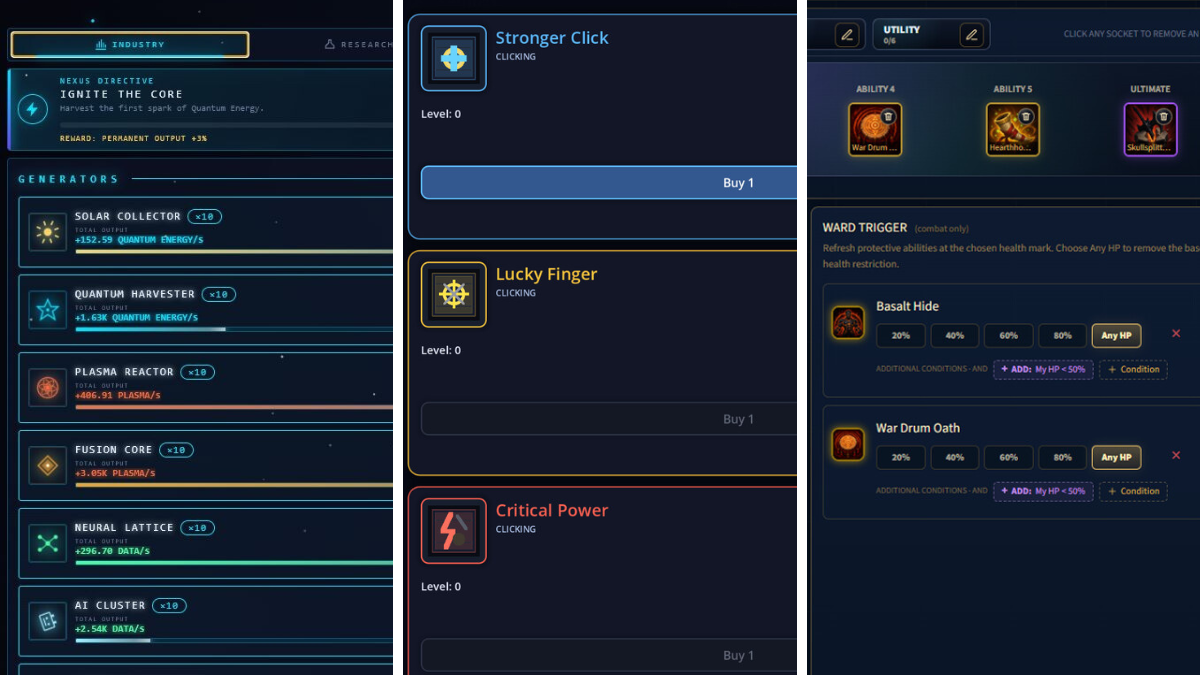
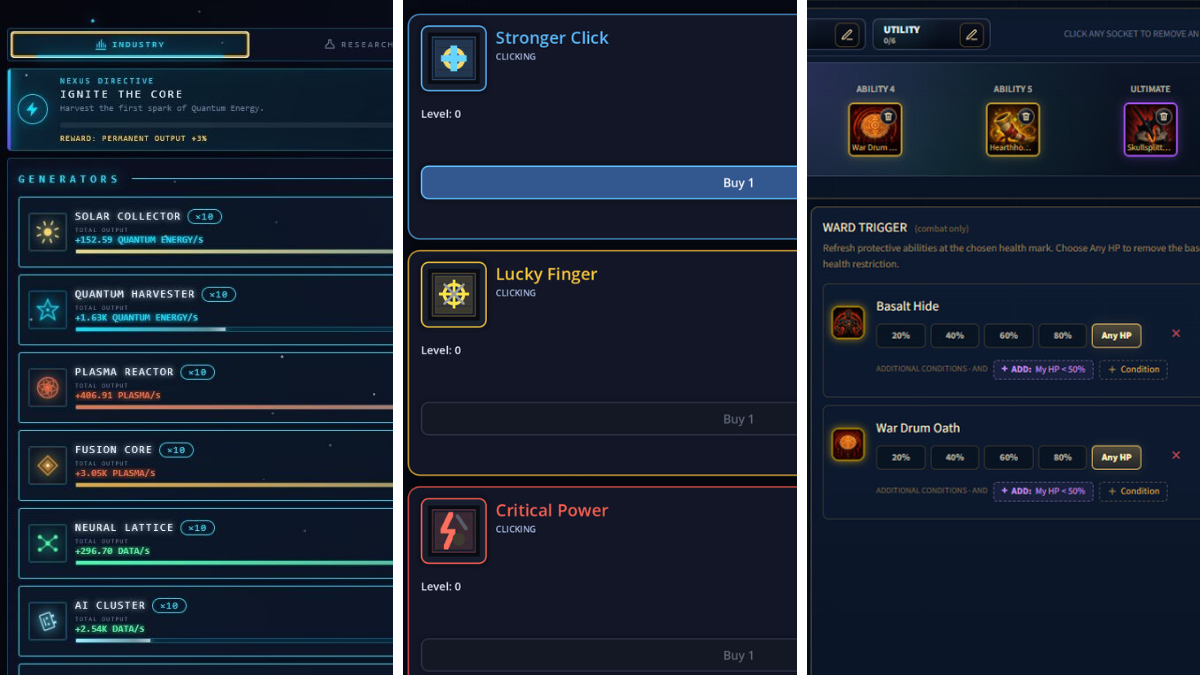
However, this modern gold rush is markedly different from the boutique passion projects of the early 2010s. The contemporary incremental market is increasingly characterized by a deluge of low-effort, AI-generated titles—colloquially termed "AI slop." These games rely on automated code generation, synthetic assets, and uncanny, cookie-cutter user interfaces. They share not only a genre tag, but a depressingly uniform aesthetic: a dark blue color palette, nearly identical layouts, and identical mechanics engineered solely to farm algorithmic visibility.
Detailed Chronology: From Satire to Industrialized Inundation
To understand how Steam became a repository for thousands of automated clickers, it is necessary to trace the trajectory of the incremental genre across three distinct eras: the satirical dawn, the mid-decade refinement, and the current era of generative automation.
Phase 1: The Satirical Dawn (2010–2014)
In the beginning, idlers were exercises in minimalist philosophy. Ian Bogost’s Cow Clicker (2010) was designed to critique the microtransaction-heavy, click-to-wait mechanics of Facebook games like FarmVille. Players clicked a cow every six hours to earn "moos."
When Cookie Clicker and Candy Box arrived in 2013, they stripped away the explicit academic pretense of Cow Clicker while retaining its core absurdity. You clicked a single graphical cookie; that action generated cookies; those cookies bought cursors and grandmas; those grandmas generated more cookies. The sheer absurdity of watching your browser tab accumulate trillions of baked goods overnight felt like an in-joke shared by the entire internet.
Phase 2: The Proliferation and Craft Era (2015–2022)
As the genre matured, indie developers realized that beneath the joke lay a profoundly potent psychological hook. Idlers evolved from crude web pages into sophisticated, systems-heavy PC titles. Developers introduced prestige loops, complex resource trees, automation modifiers, and narrative themes ranging from idle RPGs to corporate management simulators. Games like AdVenture Capitalist, Realm Grinder, and Cookie Clicker’s eventual paid Steam release proved that players were willing to invest hundreds—sometimes thousands—of hours into optimizing passive mathematical engines. During this period, crafting an incremental game still required genuine programming effort, bespoke interface design, and careful balancing of exponential formulas.
Phase 3: The Generative Flood (2023–Present)
The landscape shifted radically with the mainstream democratization of generative artificial intelligence and large language models. The barrier to entry for game development plummeted to near-zero. Unscrupulous developers and automated asset-flippers realized that the straightforward, text-heavy, UI-centric nature of incremental games made them the ultimate canvas for low-effort, AI-assisted mass production.
According to historical data tracked by SteamDB, the acceleration has been exponential:
- 2020: 100 idler games released on Steam.
- 2024: 647 idler games released.
- The Following Year: 1,033 idler games released.
- Current Year (Year-to-Date): 1,811 idler games released, with another 1,119 listed as "Coming Soon" and 380 marked as "TBA."
The genre has metastasized. What was once a quaint corner of internet culture is now an industrial-scale manufacturing pipeline of low-rent clickers, designed to exploit algorithmic discovery queues and capture casual micro-transactions or trading card farming revenue.
Supporting Context & Metrics: The Anatomy of an AI-Inundated Marketplace
A deep dive into Steam’s current release logs reveals the true scale of the phenomenon. While standout games with genuine craft—such as Next Reign: Kingdom, which features charming pixel art, atmospheric music, and tactical depth, or We Need More Humans!, which boasts a darkly humorous premise about alien abduction—still manage to carve out an audience, they are vastly outnumbered.
The Uncanny Valley of User Interfaces
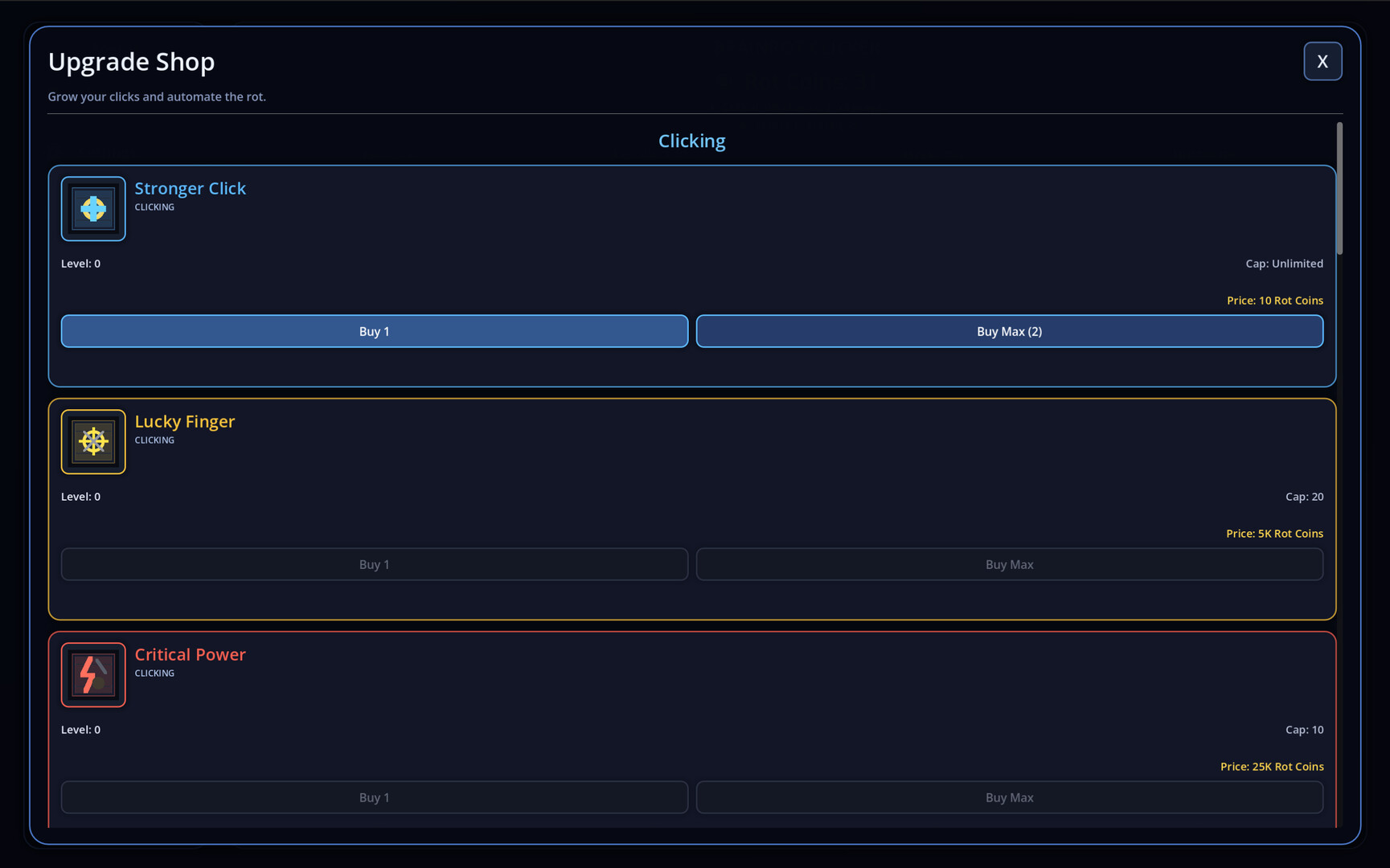
Browsing the unfiltered catalog of recent Steam idlers reveals a striking visual homogeneity. Developers relying on generative AI tools frequently output identical interface structures because the underlying prompt weights and training sets gravitate toward safe, predictable design paradigms.
Consider four distinct releases from independent studios:
- Brainrot Clicker (Fr1ev Studios)
- Path of the Idle Cultivator (Wuxia Games)
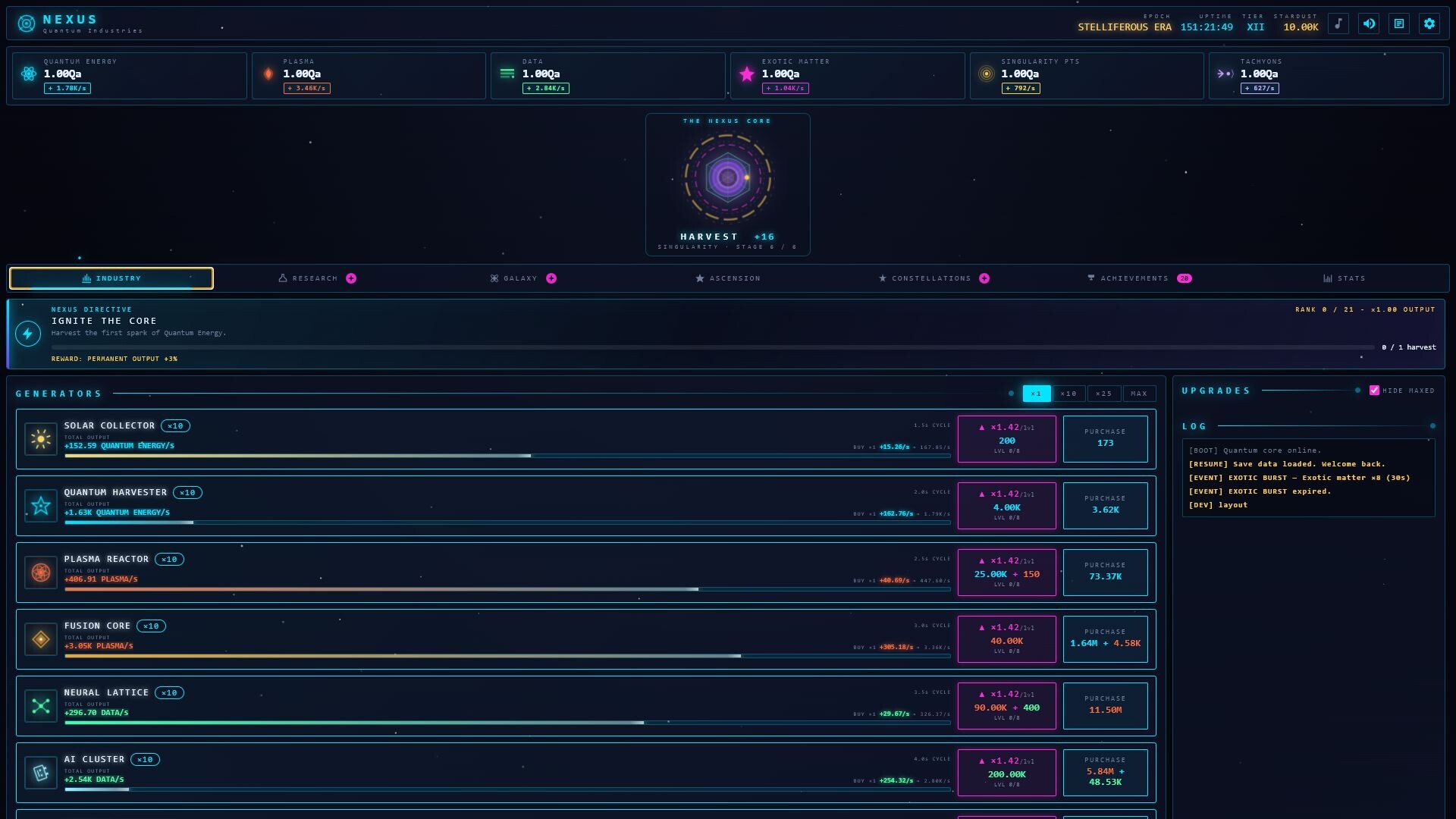
- Nexus: Quantum Industries (Kuiper Industries)
- Vespera (Idle Gamers)
When placed side-by-side, their user interfaces are almost indistinguishable. They share a peculiar, almost aggressive fondness for the exact same brooding, low-contrast shade of dark blue. They feature identical menu tab placements, generic sans-serif numerical readouts, and placeholder upgrade buttons.
These design choices are rarely intentional artistic statements; rather, they are the direct fingerprint of automated production. Official Steam AI disclosures confirm this suspicion:

- Vespera explicitly discloses "AI generated images and other AI made components."
- Nexus: Quantum Industries notes, "Some assets were created using AI. I’m not an artist lol."
- Brainrot Clicker admits to utilizing "some pre-generated visual assets, written content, and development-related creative work."
- Path of the Idle Cultivator utilized AI "for UI and some translations."
Market Dominance vs. The Long Tail
While thousands of AI-generated clickers languish in obscurity with zero concurrent players, the upper echelons of the idler ecosystem demonstrate massive engagement numbers. Genre heavyweights command attention that rivals traditional AAA blockbusters. For instance, titles like Bongo Cat boast concurrent player counts exceeding 135,000, while Task Bar Hero maintains over 66,000 active players.
However, the contrast between these breakout hits and the tidal wave of background noise exposes a struggling storefront ecosystem. Steam’s discovery algorithms, designed to reward frequent releases and baseline engagement metrics, are being aggressively farmed by asset-flippers releasing dozens of automated clickers per month.
Official Statements & Industry Reception
The tension between automated mass-production and traditional game development has sparked intense debate across the industry, echoing far beyond the idle genre. While indie developers grapple with discoverability crises, major studios face parallel structural upheavals.
A prime indicator of the broader market volatility surrounding Steam’s top-earning titles is the case of Star Wars Zero Company. Despite topping the weekly revenue charts as a high-profile strategy RPG in the spirit of XCOM, the studio behind the title—Bit Reactor—reportedly furloughed roughly 80 percent of its workforce shortly after launch. The disconnect between commercial visibility on Steam charts and internal corporate stability underscores an unforgiving industry climate where even a chart-topping launch does not guarantee job security.
Similarly, consumer sentiment regarding pricing and content value has grown increasingly sharp. The release of major expansions and promotional packages—such as the Elden Ring Tarnished Pack, which debuted low on the revenue charts—faced severe community backlash. Reviewers universally panned the offering, with user consensus summarizing it as overpriced and under-delivering: "Not worth the money," wrote one prominent Steam reviewer. "Should have been free as it is a very small update made to promote the launch of the game on the Switch."
When applied to the idle genre, this consumer skepticism creates a volatile dynamic. Players are becoming increasingly adept at spotting the telltale signs of generative asset flips, leading to review-bombing campaigns and strict scrutiny of developer transparency regarding AI usage.
Future Outlook: Where Do Incremental Games Go From Here?
As we look toward the horizon, the trajectory of the incremental genre on PC presents a fascinating paradox. On one hand, the barrier to entry has never been lower. Generative AI tools empower solo creators to prototype and deploy fully functional mathematical progression systems in a matter of days. For hobbyists, this is a golden age of rapid experimentation.
On the other hand, the platform risk of market saturation is reaching a critical breaking point. Steam is facing an unprecedented volume of submissions, and algorithmic fatigue is setting in. As thousands of identical, dark-blue-tinted, AI-generated clickers flood the "New Releases" queue every month, user trust erodes.

To survive and thrive, legitimate developers within the space will need to double down on what algorithms cannot easily replicate: genuine creative voice, deep mechanical innovation, distinctive art styles, and compelling narrative frameworks. The days of simply putting up a basic "number-go-up" screen with AI-generated placeholder art and expecting effortless visibility are rapidly drawing to a close.
Reflecting on those innocent hours spent mindlessly clicking cookies back in 2013, it is hard not to experience a sense of surreal irony. If someone had told us then that this playful satire of late-stage capitalism and compulsive engagement loops would evolve into an automated, AI-driven industrial complex flooding the world’s largest digital storefront by the thousands, disbelief would have been the immediate reaction. Yet, given the relentless momentum of technology and human laziness, its arrival feels chillingly inevitable.