Executive Overview
The modern digital town square is undergoing a radical, irreversible architectural shift. Under the stewardship of Elon Musk, Twitter—now operating under the corporate moniker X—has enacted a series of structural overhauls that fundamentally redefine how information, influence, and identity are managed online. At the center of this transformation is the systematic dismantling of the legacy verification system and the aggressive push toward a subscription-driven monetized model known as Twitter Blue.
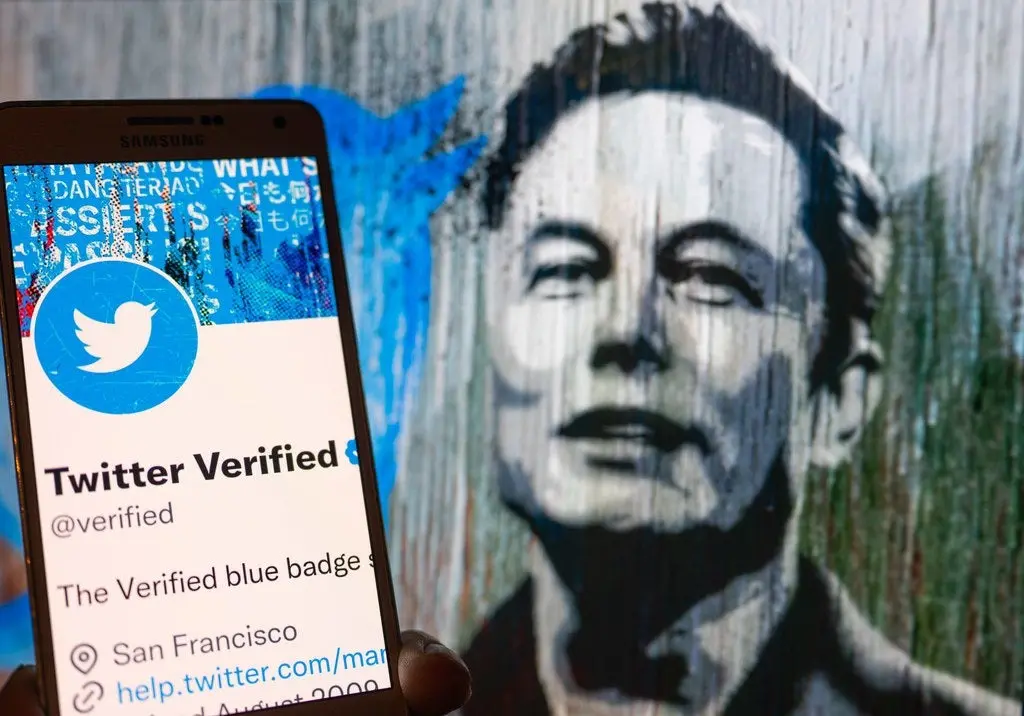
With the official deadline for the removal of legacy blue checkmarks arriving on April 1, 2023, the platform signaled the end of an era. For over a decade, the blue checkmark functioned as a digital passport for journalists, politicians, public figures, and institutions, serving as a rudimentary stamp of authenticity designed to curb impersonation. Today, that badge of honor has been transformed into a commercial commodity available to anyone willing to remit a monthly fee.
Compounding this philosophical pivot is a concurrent initiative allowing paying subscribers to hide their verification badges—a tacit acknowledgment of the social stigma now attached to a symbol that increasingly broadcasts user compliance with a paid tier rather than journalistic or institutional authority.
Beneath these cosmetic tweaks lies a much deeper mechanical restructuring of Twitter’s core distribution engine: the algorithm governing the "For You" timeline. By prioritizing the visibility and algorithmic reach of paid accounts while simultaneously relegating unpaid, non-verified users to the chronological "Following" feed, the platform has initiated a profound pay-to-play experiment. This article provides an in-depth examination of this transition, analyzing its mechanics, its implications for brands and organic creators, and its long-term impact on the future of digital discourse.
Detailed Chronology of the Policy Shift
To understand the current state of Twitter’s algorithmic and verification architecture, one must trace the rapid sequence of events that followed Musk’s acquisition of the company in late 2022. The road to the April 1 mandate was paved with aborted rollouts, chaotic rule changes, and widespread community pushback.
Phase 1: The Initial Rollout and Immediate Chaos
Immediately following the acquisition, leadership signaled its intent to overhaul the platform’s revenue streams and combat what it characterized as a "lords and peasants" system of verification. In November 2022, Twitter launched its revamped Twitter Blue subscription service, initially priced at $8 per month via the web (and later adjusted for iOS and Android platforms).
The initial rollout was plagued by security vulnerabilities. Because the blue checkmark no longer required verification of identity through traditional journalistic or institutional vetting processes, bad actors quickly weaponized the system. Within hours of the launch, a wave of impersonation accounts—posing as major pharmaceutical companies, defense contractors, politicians, and even Musk himself—flooded the platform. Major brands saw their stock prices briefly fluctuate or suffered severe public relations crises as unverified users purchased blue checks and posted fraudulent corporate press releases.
Phase 2: The Grace Period and the April 1 Mandate
Following the initial chaos, Twitter temporarily paused the subscription rollout to implement identity verification safeguards, such as requiring a confirmed phone number and, eventually, government-issued identification in certain tiers. During this interregnum, the platform maintained its legacy verified base—comprising roughly 400,000 accounts verified under the pre-Musk regime—while building out the technical infrastructure for mass commercialization.
By March 2023, the timeline for the final phase became clear. Through internal communications and public policy announcements, Twitter established that April 1, 2023, would serve as the hard deadline for the removal of legacy verification. Users who refused or failed to subscribe to Twitter Blue would systematically lose their checkmarks, regardless of their historical prominence, newsroom credentials, or public safety roles.
Phase 3: The Paradox of the Hidden Checkmark
As the April deadline approached, platform developers began working on a peculiar feature: the ability for paying subscribers to hide their blue checkmarks. Code sleuths and platform analysts discovered references to a toggle that would allow users to reap the algorithmic benefits of Twitter Blue—such as increased character limits, longer video uploads, and algorithmic amplification—without publicly displaying the badge itself.
This development highlighted a profound internal contradiction within the product strategy. The checkmark, once coveted as a status symbol, had evolved into a social liability. For many academics, journalists, and cultural figures, bearing a blue checkmark increasingly signaled that one had financially supported a controversial corporate entity, inviting ridicule and diminishing credibility. By offering a way to conceal the badge, Twitter acknowledged the reputational hazard of its own monetization strategy while preserving the financial incentive for the user.
Supporting Context & Metrics: The Mechanics of the "For You" Feed
The most consequential aspect of Twitter’s pivot is not aesthetic or symbolic; it is algorithmic. The structural decoupling of the "For You" feed from the chronological "Following" feed fundamentally alters the economics of attention on the platform.
The Algorithm and Amplification
Historically, Twitter’s core appeal was its immediacy and its reliance on a chronological feed of accounts a user explicitly chose to follow. While the introduction of the algorithmic "For You" tab earlier in 2023 signaled a shift toward engagement-driven curation (akin to TikTok’s model), the April policy changes accelerated this trajectory by introducing a tiered distribution system based on monetization.
Under the updated framework, content originating from unpaid, unverified accounts faces severe algorithmic friction. While these accounts remain visible to their direct followers within the chronological "Following" feed—reminiscent of Twitter’s early architecture—their capacity for organic discovery, viral reach, and cross-network amplification is drastically curtailed. Conversely, Twitter Blue subscribers receive priority placement in replies, search results, and recommendations across the platform’s primary discovery engine, the "For You" page.
The Impact on Brands, Marketers, and Hucksters
This asymmetric distribution model has created a seismic shift for corporate entities, digital marketers, and independent creators.
For brands, the calculus of platform investment has been rewritten. Traditionally, maximizing organic reach on Twitter required significant investments in dedicated social media management, organic community building, or formal ad spend via Twitter Ads. Under the new paradigm, brands can bypass traditional advertising expenditures and achieve outsized algorithmic amplification simply by subscribing to Twitter Blue. For a nominal monthly fee, a corporate entity can secure prominent placement in the replies of viral threads, driving traffic that previously would have required thousands of dollars in targeted ad campaigns.
However, this democratization of reach comes at a steep price for the platform’s ecosystem health. Industry analysts and digital safety researchers have warned that lowering the barrier to algorithmic amplification converts the "For You" feed into an unmoderated expanse dominated by self-promoters, engagement farmers, cryptocurrency hucksters, and purveyors of low-quality or inflammatory content. Because the algorithm rewards high-engagement metrics—often driven by controversy, outrage, or sensationalism—paying accounts that master these engagement loops can dominate public discourse, overshadowing substantive news and nuanced analysis.
Official Statements and Industry Reaction
The structural changes enacted by Twitter have elicited sharp criticism from civil society organizations, journalism advocacy groups, and digital rights watchdogs, alongside defensive justifications from platform leadership.
Platform Leadership and the Defense of Democratization
Elon Musk and Twitter’s executive team have consistently framed the removal of legacy checkmarks and the expansion of Twitter Blue as an exercise in radical democratization. In public statements and threads posted to the platform, leadership argued that the legacy verification system was inherently corrupt, arbitrary, and exclusionary—a "lords and peasants" hierarchy that favored traditional media elites over everyday users.
By shifting to a subscription model, management asserted that the platform could diversify its revenue streams away from traditional advertising while simultaneously leveraging financial friction (the subscription fee) to disincentivize bot networks and coordinated spam operations. Proponents of the model argue that requiring a paid payment method creates a verified paper trail that makes automated mass manipulation economically unviable for bad actors.
Pushback from Media, Institutions, and Public Safety Officials
Conversely, the reaction from the broader digital ecosystem has been overwhelmingly skeptical. Major newsrooms, including the New York Times, CNN, the Washington Post, and the BBC, publicly announced that they would not pay for institutional verification, arguing that the checkmark no longer served its intended purpose of verifying authenticity.
Government agencies and emergency services providers voiced acute concerns regarding public safety. Without a reliable, universally recognized method to authenticate official accounts during crises, natural disasters, or active security incidents, the platform risks becoming a vector for dangerous misinformation. The absence of verified institutional status makes it exceedingly difficult for the public to distinguish between a genuine municipal emergency account and a malicious impersonator who has simply purchased a blue checkmark.
Civil rights groups also highlighted the chilling effect on marginalized voices and independent journalists operating in repressive regimes. For these individuals, the cost of a subscription, combined with the requirement to link payment methods and phone numbers, presents both a financial barrier and a potential surveillance risk that compromises their safety.
Future Outlook: Where Goes the Town Square?
As the dust settles on the post-legacy-verification era, the long-term viability of Twitter’s pay-to-play model remains one of the most closely watched experiments in the history of the tech industry.
Fragmentation of the Digital Public Sphere
The division of Twitter into two distinct user experiences—the algorithmically boosted, commercialized "For You" feed dominated by paying subscribers, and the quieter, unamplified chronological "Following" feed utilized by legacy holdouts—points toward a fragmented digital public sphere. Users who value signal-to-noise ratio and verified authority are increasingly migrating toward alternative protocols and decentralized platforms like Mastodon, Bluesky, or Meta’s Threads, seeking environments that preserve traditional authenticity markers.
At the same time, Twitter continues to retain its unmatched cultural gravity. Despite widespread dissatisfaction among legacy creators and institutional users, the platform remains a primary nexus for breaking news, sports commentary, and real-time cultural discourse.
The Financial and Operational Horizon
The ultimate success of this strategy hinges on a single economic metric: can subscription revenue sustainably replace or supplement traditional advertising income? While early subscriber adoption metrics showed modest growth, the platform has faced significant headwinds regarding brand safety, advertiser boycotts, and market valuation adjustments.
If Twitter Blue succeeds in cultivating a massive, paying middle class of creators and small businesses, the platform may pioneer a new financial blueprint for social media—one less dependent on programmatic ad networks and more aligned with direct consumer monetization. However, if the degradation of the "For You" feed drives away casual users and erodes institutional trust entirely, the pay-to-play model risk transforming the once-vibrant town square into an echo chamber of commercial noise.
Regardless of the financial outcome, the structural changes implemented in early 2023 mark a permanent departure from the web’s early ethos. The era of the organically earned blue checkmark is over, replaced by a transactional digital economy where visibility, credibility, and influence are priced by the month.