Executive Overview
For decades, the cinematic landscape has been locked in an ongoing arms race for visual supremacy. Moviegoers are continually asked to pay a premium for the latest technological evolution, trading standard auditoriums for giant screens, spatial audio, and dimensional enhancements. Among these high-end options, IMAX 3D sits at the pinnacle of theatrical luxury. Promising the colossal scale of the IMAX format combined with immersive three-dimensional depth, it commands some of the highest ticket prices in the industry.
Yet, as audiences return to theaters in droves for blockbusters like Spider-Man: Brand New Day, a persistent question remains: Is IMAX 3D genuinely a superior cinematic experience to its standard and 2D IMAX counterparts, or is it an expensive gimmick that compromises image fidelity for fleeting thrills?
While the format can deliver breathtaking immersion when paired with fast-paced action, towering heights, and spatial velocity, it introduces notable drawbacks. Chief among these are diminished screen brightness, physical discomfort, compatibility issues for everyday glasses wearers, and well-documented physiological side effects like simulator sickness. This investigative analysis explores the core mechanics, technological variations, medical implications, and consumer considerations that dictate whether IMAX 3D truly earns its glasses—or if smart cinephiles should stick to IMAX 2D.
Detailed Chronology and Technical Evolution
To understand the modern debate surrounding IMAX 3D, one must trace the evolutionary path of large-format and stereoscopic filmmaking over the past twenty years.
The Digital 3D Renaissance (Mid-2000s to 2010s)
The modern theatrical 3D boom kicked off in earnest around 2009 with the release of James Cameron’s Avatar. Prior to that milestone, stereoscopic presentations were largely limited to niche IMAX documentaries or campy horror films reliant on red-and-cyan paper glasses. Avatar changed the commercial paradigm, proving that digital projection systems could render 3D with unprecedented clarity and depth.
Simultaneously, IMAX underwent a massive corporate transformation. Historically known for shooting and projecting massive 15-perf 70mm film on enormous, curved screens primarily for educational and museum venues, the company pivoted toward digital projection. To scale its business globally, IMAX introduced smaller digital screens (often colloquially referred to as "LieMAX") alongside its traditional massive auditoriums. This expansion meant that 3D presentations became far more common, but it also introduced wild inconsistencies in quality from one theater to the next.

The Laser Revolution (Mid-2010s to Present)
By the mid-2010s, critics and studios faced a major hurdle: 3D glasses inherently block a significant portion of light, resulting in muddy, darkened images. In response, projection technology shifted toward laser illumination.
When IMAX introduced its laser projection systems in 2014 and 2015, early tests indicated a light output capable of offsetting the severe dimming traditionally caused by 3D polarizers. However, the rollout of laser technology has been fragmented, creating a tiered landscape of hardware capabilities that directly impacts the viewer’s experience.
Supporting Context & Metrics: The Mechanics of IMAX 3D
The fundamental magic behind theatrical 3D relies on stereopsis: showing two slightly offset perspectives of the same scene—one for the left eye and one for the right—and utilizing polarized lenses to prevent the images from bleeding into one another. The human brain then fuses these distinct inputs into a single image endowed with a sense of volume and depth.
The IMAX Advantage vs. RealD 3D
It is vital to distinguish between IMAX and 3D. They are not mutually exclusive formats. An IMAX screening can be projected in standard 2D or stereoscopic 3D.
When compared to competing 3D formats like RealD 3D—which is installed in over 22,000 screens across 72 countries—IMAX wraps the stereoscopic experience in a much larger hardware package. This includes custom auditorium geometry designed to maximize peripheral vision, multi-channel spatial audio systems, and, in many cases, expanded aspect ratios that reveal up to 26% more image than standard widescreen presentations.
The Laser Tier List: GT vs. CoLa / XT
Not all IMAX 3D experiences are created equal, largely due to the hardware powering the projector booth.

- GT Laser Systems: Based on a dual-projector setup, GT Laser installations deliver the highest tier of brightness, contrast, and sharpness, making them uniquely equipped to handle the light loss inherent to 3D viewing.
- CoLa and XT Systems: These rely on a single laser projector. While still an upgrade over older xenon-bulb technology, single-projector systems struggle more with brightness and sharpness when running 3D content.
This technological discrepancy explains why two filmgoers can have wildly divergent opinions on the same release: one may praise the crystal-clear depth in a GT Laser auditorium, while another complains of a blurry, dim image down the street at a single-projector CoLa location.
Physiological Impact and Consumer Comfort
While technological specs matter, the physical reality of sitting in a dark room wearing specialized eyewear for nearly three hours dictates the ultimate success of any premium format.
The Prescription Glasses Struggle
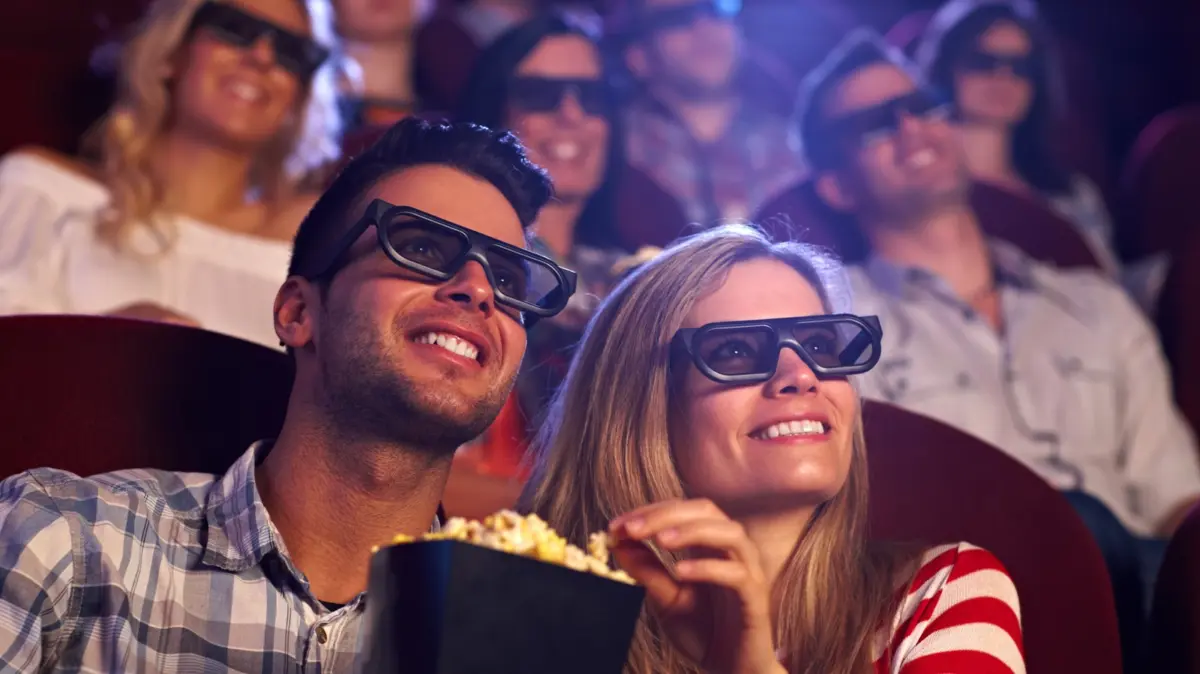
For the millions of moviegoers who wear daily prescription glasses, adding IMAX 3D frames on top introduces immediate friction. While "manageable," layering two sets of frames creates pressure points on the bridge of the nose and ears, introduces extra glare or smudges, and serves as a constant, distracting reminder that you are wearing heavy hardware. For a premium ticket price, audiences expect effortless comfort, not a balancing act.
Brightness, Contrast, and Stereoscopic Discomfort
Even with advanced laser illumination, the physical filter of 3D glasses robs the screen of critical lumens. Darkly graded films suffer immensely, forcing audiences to strain to make out shadow details during pivotal action sequences.
Furthermore, physiological studies underscore the physical toll of stereoscopic viewing. In a comprehensive medical study of 497 healthy adults examining visual fatigue and simulator sickness:
- 54.8 percent reported varying degrees of simulator sickness symptoms after viewing a 3D movie.
- 14.1 percent reported similar symptoms after viewing a 2D movie.
This discrepancy is frequently attributed to vergence-accommodation conflict. In the natural world, our eyes converge on an object while physically focusing (accommodating) at that same exact distance. In a 3D cinema, however, our eyes converge on simulated objects floating in virtual space, but they must physically remain focused on the flat projection screen a fixed distance away. This cognitive dissonance can lead to eye strain, headaches, dizziness, and nausea.
Official Industry Perspectives and Ticket Pricing
Despite the known drawbacks, studios continue to invest in 3D conversions and native stereoscopic framing because of global box office incentives, particularly in international markets where 3D commands higher attach rates.
Exhibitors and subscription services have also adapted their pricing models to mitigate consumer hesitation. For instance, subscription services like AMC Stubs A-List include both IMAX and RealD 3D screenings within their monthly fees without adding punitive premium surcharges. This allows members to experiment with formats without incurring direct out-of-pocket penalties if a 3D presentation proves underwhelming.
Future Outlook: When Does 3D Actually Earn Its Glasses?
The ultimate takeaway for the modern cinephile is simple: 3D has to earn the glasses.
When a filmmaker designs a project specifically around physical space—utilizing sweeping camera movements, hyper-fast pacing, vertigo-inducing heights, and objects constantly traversing depth planes (such as Spider-Man swinging effortlessly between urban skyscrapers)—IMAX 3D transforms into an unmatched, hyper-immersive triumph. Under these ideal conditions, paired with a top-tier GT Laser auditorium, the format justifies its premium pedigree.
However, when 3D is applied as an afterthought in post-production—resulting in flat, lifeless conversions that merely sap screen brightness—the intelligent choice is clear. Audiences are better served opting for IMAX 2D: securing the colossal screen, thunderous sound, and expanded aspect ratio while enjoying a pristine, brilliantly lit image, free from the encumbrance of double glasses and the threat of simulator sickness.
As cinematic technology continues to evolve toward higher frame rates, HDR laser projection, and potentially glasses-free autostereoscopic displays in the far future, the traditional 3D polarized lens remains a transitional tool. Until the hardware catches up with the artistic vision, selective moderation will remain the consumer’s best ticket to visual perfection.