Executive Overview
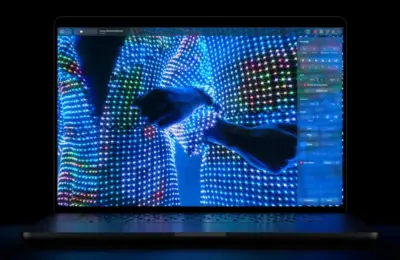
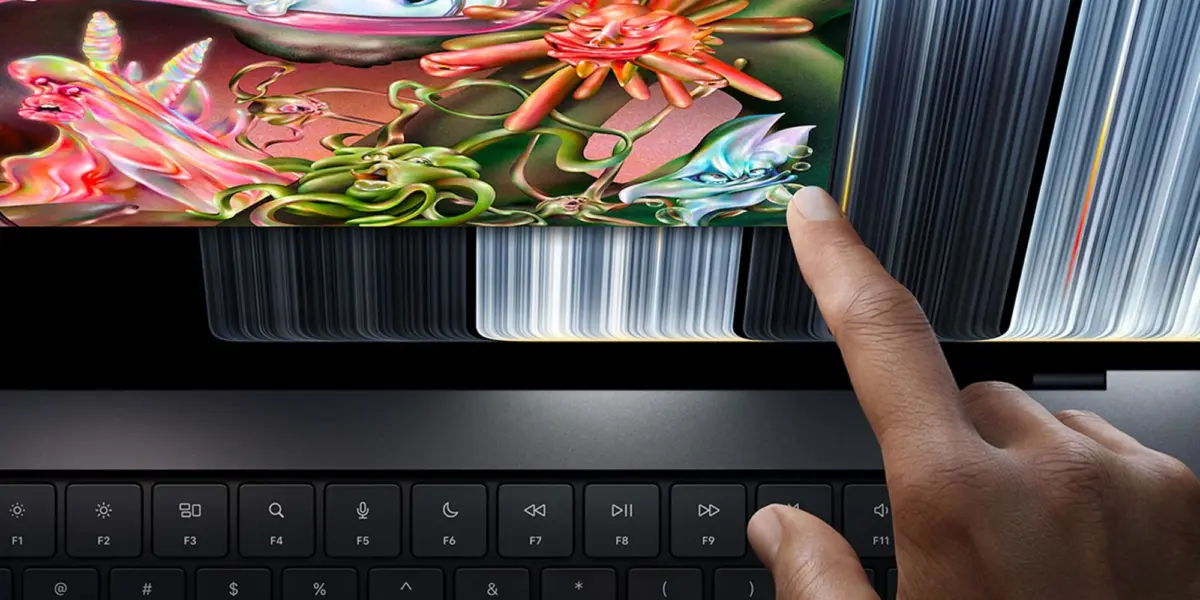
Apple’s long-anticipated release of the touchscreen MacBook Pro has officially redefined the landscape of high-end portable computing. Featuring a stunning PROLED XDR tandem display, a thinner and lighter chassis, slimmer bezels, a revamped audio system, a controversial Dynamic Island, and—most notably—the long-awaited arrival of touchscreen capabilities to macOS, the new lineup represents a seismic shift for the Cupertino giant. Yet, despite the inclusion of aesthetic revivals like the return of the glowing Apple logo on the lid, the most strategic and consumer-friendly move Apple made this week wasn’t what it changed, but what it decided to leave untouched.
Carrying a steep $400 premium over its predecessor, the newly redesigned MacBook Pro hits shelves on November 6. However, a deep dive into its internals reveals that under the hood, the performance architecture remains identical to the existing non-touchscreen M5 Pro and M5 Max models. While a redesigned thermal system aims to keep the brilliant new display cool, processing power and raw computational speeds have not seen a generational leap.
For power users constrained by aging RAM—such as owners of 2023 M2 Pro machines struggling with cramped 16GB configurations—this hardware parity presents a compelling financial dilemma. Fortunately, in an uncharacteristic display of product-line flexibility, Apple has opted to keep the previous-generation non-touchscreen MacBook Pros on the market. This decision offers buyers a strategic workaround: the ability to bypass expensive display and chassis taxes while securing identical raw performance for hundreds of dollars less, or reinvesting those savings into higher memory and storage tiers.
Detailed Chronology: The Long Road to a Touchscreen Mac
The journey toward a touchscreen MacBook Pro is one of the most protracted sagas in modern consumer electronics history. For over a decade, Apple leadership—most notably the late Steve Jobs, who famously dismissed touchscreens on vertical displays as ergonomically "terrible"—resisted calls to merge macOS ergonomics with touch inputs. For years, the company maintained a strict philosophical and functional divide between iOS/iPadOS devices, which were built for touch, and macOS computers, which relied entirely on the precision of keyboards, trackpads, and mice.
The first major crack in this hardware philosophy appeared in 2016 with the introduction of the Touch Bar. While billed as an interactive bridge between physical keyboards and software interfaces, it ultimately proved to be a divisive feature. Apple’s approach at the time forced a rigid ultimatum upon consumers: if you wanted a pro-tier machine, you had to accept the Touch Bar, paying a $300 to $400 premium whether you wanted the touch-sensitive strip or not.
As the years progressed, market demands shifted. Competitors in the Windows ecosystem—such as Dell, Microsoft, and HP—fully embraced touch and 2-in-form factors, leaving Apple isolated in its traditional stance. Rumors regarding an internal pivot began to circulate in earnest around late 2025. Reports from supply chain analysts indicated that Apple was heavily investing in OLED technology, specifically tandem OLED panels, as a stepping stone toward a fully touch-enabled pro laptop.
Throughout 2026, the rumor mill spun into overdrive. Conflicting reports emerged regarding whether the touchscreen overhaul would debut alongside the M6 architecture or be integrated into an interim refresh cycle. By mid-2026, leaks confirmed that Apple would push forward with a radical redesign, though questions lingered regarding chip allocations and thermal engineering. When the final announcement dropped in late October 2026, it confirmed the worst-kept secret in tech: the touchscreen Mac had finally arrived, accompanied by a polarizing $400 price hike.

Supporting Context & Metrics: Specs, Pricing, and the Performance Parity Puzzle
Evaluating the new touchscreen MacBook Pro requires analyzing a delicate balance of engineering triumphs and economic realities. The hardware upgrades are undeniably extensive:
- Display Technology: The adoption of the PROLED XDR Tandem display offers staggering peak brightness, improved contrast ratios, and deep true blacks, aligning laptop visuals closer to high-end professional reference monitors.
- Form Factor: Engineers shaved millimeters off the chassis, resulting in a noticeably thinner and lighter profile framed by significantly slimmer bezels.
- Thermal Architecture: A redesigned cooling system has been implemented. However, tech analysts note that this thermal overhaul is primarily engineered to manage the intense operational heat profiles of the new tandem OLED displays rather than to drive aggressive performance overclocking for the CPU and GPU.
- The Silicon Question: Despite utilizing the same core chipsets found in the previous non-touchscreen iterations—specifically the M5 Pro and M5 Max variants—the entry point for the new touchscreen models demands a $400 premium.
For prospective buyers, this creates a unique psychological and financial hurdle. In past redesign cycles—such as the 2016 Touch Bar rollout or the 2021 Apple Silicon transition—Apple aggressively phased out older chassis variants, forcing consumers to adopt the new hardware paradigm at the newly established price points. By retaining the M5 Pro and M5 Max non-touchscreen models in its active retail ecosystem, Apple has effectively created a dual-track strategy.
This strategy acknowledges a fundamental divide in the prosumer market:
- The Innovators & Early Adopters: Users who prioritize bleeding-edge display tech, aesthetic flair (such as the returning glowing Apple logo), and tactile touchscreen workflows will gladly absorb the $400 markup.
- The Performance purists: Software developers, video editors, and data scientists whose primary bottleneck is RAM and processing throughput rather than display fidelity. For these users, purchasing an older, non-touch model—or using the saved $400 to upgrade from 32GB to 64GB of RAM—represents a vastly more rational allocation of capital.
Official Statements and Industry Reception
Reactions from industry insiders and company executives have highlighted the cultural weight of breaking what was once considered an absolute Apple taboo. During the product launch briefings, hardware engineering leads addressed the pivot away from historical dogma.
Hardware engineering chief John Ternus directly addressed the reversal during post-announcement press sessions. When questioned about crossing the touchscreen Rubicon, Ternus emphasized that technological maturation made the integration viable without compromising the core desktop experience of macOS. "We didn’t set out to simply slap a phone screen onto a laptop," Ternus noted. "We wanted to ensure that when touch arrived on the Mac, it felt organic, purposeful, and fully optimized for workflows that benefit from spatial interaction."
Independent reviewers and analysts, however, have maintained a pragmatic stance. While the hardware engineering is universally praised as a masterclass in industrial design, the lack of a corresponding performance lift has drawn scrutiny.
Tech analysts have pointed out that paying an extra $400 purely for form factor refinements and touch input is a luxury purchase, not a functional necessity. The inclusion of the Dynamic Island on a laptop display has likewise sparked fierce debate across developer forums; while some appreciate the continuity with iOS design languages, others view it as an intrusive notch eating into menu bar real estate.

Crucially, industry watchers have applauded Apple’s unexpected mercy in keeping the non-touch legacy lines available. Retail and supply chain experts note that maintaining parallel product lines mitigates potential consumer backlash over price escalation, ensuring that budget-conscious professionals are not priced out of high-end computational power simply because they refuse to pay a tax on touchscreens they may never use.
Future Outlook: Where the Mac Goes From Here
As the November 6 launch date approaches, the long-term implications of Apple’s dual-track laptop strategy begin to take shape. The introduction of the touchscreen MacBook Pro is not merely an incremental spec bump; it is a profound philosophical stress test for macOS.
Over the coming months, developer adoption will dictate whether touchscreen functionality evolves from a parlor trick into an essential productivity pillar. If major software suites—from Adobe Creative Cloud to Xcode and Final Cut Pro—are aggressively optimized for touch gestures on a vertical plane, the $400 premium will quickly justify itself for a broader segment of the market. Conversely, if touch remains an auxiliary, occasional input method for casual scrolling and zooming, the retention of non-touchscreen alternatives may become a permanent fixture of Apple’s pro lineup.
For the individual consumer staring down an aging machine—such as a cramped 2023 M2 Pro setup—the path forward requires careful calculation. Waiting for hypothetical future iterations, such as the rumored M7 generation, risks falling into a perpetual loop of technological anticipation.
Ultimately, Apple’s unexpected decision to preserve the previous generation’s pricing and non-touch architecture serves as a welcome safety valve. It allows the market to vote with its wallet, proving whether the future of professional computing is genuinely tactile, or whether traditional keyboard-and-trackpad dominance remains entrenched among the heavy lifters of the digital economy.