Executive Overview
In the crowded landscape of prestige television psychological thrillers, Apple TV’s latest offering, Nocturne, endeavors to strike a delicate balance between the comforting tropes of the serial killer genre and the unpredictable narrative swerves expected by modern audiences. Adapted from Lars Kepler’s acclaimed crime novels The Sandman and Lazarus by television veterans Rowan Joffe and John Hlavin, the series wastes no time establishing its high-stakes premise.
The story hinges on a chilling question: What happens when a young boy, long presumed to be the tragic casualty of a notorious serial killer, resurfaces alive?
As law enforcement scrambles against the clock to locate any remaining victims who may still be trapped in the killer’s subterranean clutches, the criminal mastermind orchestrates a complex, calculated game from the confines of a high-security psychiatric facility. Anchored by powerhouse performances from Stephen Graham, Liev Schreiber, and Zazie Beetz, the series’ opening two episodes successfully lay the psychological and atmospheric groundwork for a sweeping cat-and-mouse narrative.
However, beneath the pristine production design, evocative cinematography, and magnetic performances lie recurring questions regarding logic gaps, plot conveniences, and characters behaving against their established nature. While these narrative hurdles threaten to strain credulity, the sheer magnetic pull of Graham’s antagonist and the layered emotional vulnerabilities of the investigators ensure that Nocturne delivers an undeniably compelling premiere.
Detailed Chronology & Narrative Breakdown
Entering the Labyrinth: Episodes 1 and 2
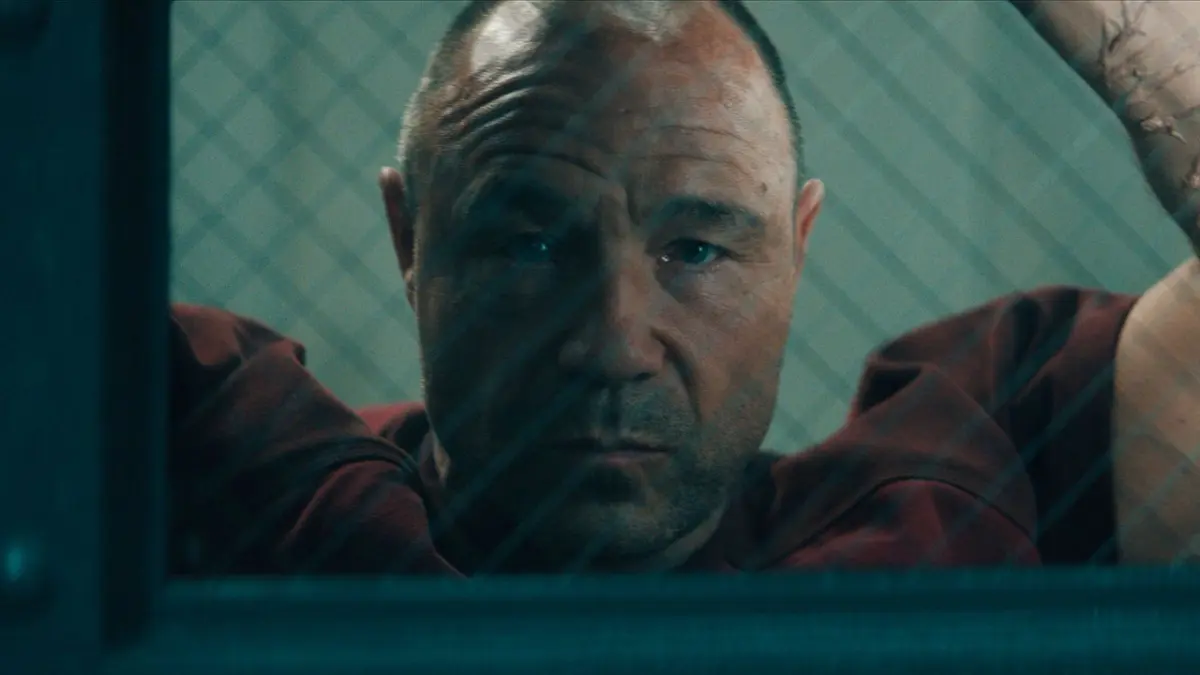
The series opener, aptly titled "Lazarus, Come Forth," establishes a tone of oppressive foreboding, danger, and claustrophobia that permeates the narrative. The opening sequence sets up the viewer inside the psychological ecosystem of Jurek Walter (Stephen Graham), a convicted serial killer whose brutal methods terrorized a small community. Jurek is framed not merely as a criminal, but as a predator caged against his will—a dangerous lion pacing behind reinforced bars.
The camera tracks down a cold, concrete corridor, the dark walls of the cell entryways deliberately obscuring the edges of the frame to induce a sense of suffocation. Jurek is introduced whispering through the wall to an adjacent patient, utilizing a gritty, menacing yet hypnotic cadence to manipulate the man into committing self-inflicted violence. This early display highlights Jurek’s core competency: psychological warfare.
Convicted of a horrific string of murders, Jurek resides not in a maximum-security prison, but in a psychiatric facility after successfully deploying an insanity defense—a narrative detail that invites immediate scrutiny from observant viewers, given his razor-sharp mental acuity. Jurek’s primary objective across the first two episodes is securing his freedom. Believing a legal loophole can overturn his conviction, he targets former homicide detective Jonah Lynn (Liev Schreiber), whom Jurek accuses of perjury to seal his initial fate.
When Jonah and Special Agent Quinn (Poorna Jagannathan) visit Jurek in his ward, the killer offers a classic "truth for the truth" proposition. He promises to lead them to Felicia Frost—the missing sister of Michael, the boy who miraculously returned from the dead—only if Jonah confesses on record to lying during the original trial. This gambit thrusts Agent Quinn into a precarious position; she has already taken a massive professional risk by bringing a retired, emotionally compromised ex-cop close to her active investigation.
The Inside Man and the Ticking Clock
Concurrently, the narrative introduces Karl (Rory Culkin), a compassionate hospital worker assigned to the team overseeing Jurek. Their initial encounter is rife with manufactured tension: Karl searches for a missing weapon beneath Jurek’s metal bed, gets his pant leg snagged, and finds himself paralyzed as the killer awakens from a sedative. Rather than attacking him, Jurek surreptitiously presses a note into Karl’s pocket, instructing him to smuggle it out to his defense attorney.
This single act sets off a cascading series of events, implying that Jurek’s network outside the hospital is actively mobilizing. The discovery of Michael alive brings Jonah back into the fold. The residents of the small town, notably community leader Chief Ellison (Bill Camp) and the children’s grieving mother, Ida Frost (Chrissy Metz), place their absolute trust in Jonah over active-duty law enforcement.
Simultaneously, FBI agent Saga Bauer (Zazie Beetz)—Jonah’s goddaughter, whom he effectively raised following the death of her father, Jonah’s former partner—pushes for his involvement. As the pressure mounts, Bauer takes drastic measures, going undercover as a psychiatric patient within Jurek’s secured ward to root out the mole leaking messages and endangering lives.
Supporting Context & Production Metrics
To understand the weight of Nocturne, one must evaluate the complex web of trauma connecting its central trio of savants: Jonah Lynn, Saga Bauer, and Jurek Walter.
- Jonah Lynn (Liev Schreiber): Burdened by profound guilt after quitting the force following the accidental death of his wife and child, Jonah has spent years methodically searching an enormous geographical grid single-handedly, refusing to let the cold cases die.
- Saga Bauer (Zazie Beetz): Driven by inherited trauma—her mother suffered from severe mental illness, her father committed suicide following the disappearance of Saga’s stepmother, Rebecca, at the hands of Jurek’s accomplice—Bauer approaches the case with a dangerous, chameleon-like willingness to self-harm to achieve closure.
- Jurek Walter (Stephen Graham): A sociopathic mastermind whose method of burying victims alive contrasts sharply with his refined, almost aristocratic disdain for bad manners and intellectual mediocrity.
Visual and Technical Execution
From a technical standpoint, Nocturne excels in atmospheric world-building. The rustic exterior landscapes oscillate between washed-out grays and comforting familiarity, while the dense, dangerous forest environments mirror the cold, stifling confines of the psychiatric facility.
| Production Element | Assessment | Impact on Viewer Experience |
|---|---|---|
| Cinematography | Claustrophobic framing, restricted aspect ratios in facility scenes. | Instills a persistent sense of entrapment and psychological unease. |
| Score & Sound Design | Subdued, ambient soundscapes punctuated by jarring mechanical noises. | Amplifies tension during character interactions and medical procedures. |
| Cast Performances | Masterclass turns by Graham, Schreiber, and Beetz. | Elevates narrative contrivances and grounds high-concept plot points in emotional reality. |
Official Statements & Creative Vision
Adapting Lars Kepler’s internationally renowned literary works for serialized television presented unique challenges for showrunners Rowan Joffe and John Hlavin. In early promotional roundtables, the creative team emphasized their desire to steer clear of traditional, formulaic procedural beats in favor of a deeper exploration of complicity and inherited trauma.
"We didn’t just want to tell a story about a brilliant killer and the cops trying to catch him," notes co-showrunner Rowan Joffe in production notes. "We wanted to examine the structural fractures in the lives of the people left behind. Jurek Walter doesn’t just destroy bodies; he meticulously dissects the psychological foundations of the individuals sworn to stop him."
Cast members have similarly highlighted the psychological toll required to inhabit these deeply wounded characters. Liev Schreiber noted in an interview regarding his portrayal of Jonah Lynn:
"Jonah is a man who is running on fumes. He has survived the catastrophic loss of his family by burying himself alive in a massive grid search. When Jurek re-enters his life, it’s not just a professional confrontation—it’s an existential reckoning with the lies he told to achieve a sense of false justice."
Zazie Beetz echoed these sentiments regarding the emotional vulnerability of Agent Saga Bauer:
"Saga’s decision to go undercover in the psychiatric ward isn’t just tactical bravery; it’s a form of self-flagellation. She is walking into the lion’s den because she has spent her entire life haunted by the ghosts of her stepmother’s disappearance and her father’s suicide. The line between investigator and victim blurs instantly."
Future Outlook & Critical Verdict
As Nocturne moves past its introductory episodes, the series walks a precarious tightrope. When crime dramas rely heavily on preternatural intellect—reminiscent of timeless dynamics like Sherlock Holmes and Moriarty—they risk descending into narrative convenience where characters simply "know" things to advance the plot.
Questions inevitably linger: If Jurek possesses such supreme mental acuity, how was he originally captured while his accomplice remained entirely free? Why would Karl, an empathetic nurse motivated primarily by financial survival, casually risk his career for a dangerous stranger? And why would an experienced investigator like Jonah withhold physical evidence—such as footprints at a crime scene—from the FBI when a young girl’s life hangs in the balance?
Despite these occasional logic gaps, the sheer magnetic pull of Stephen Graham’s performance keeps the audience firmly in thrall. Graham portrays Jurek with a mercurial brilliance, effortlessly shifting from chilling menace to disarming theatricality. When he is on screen, the series achieves an electric vitality that makes viewers crave more time within his warped worldview.
Verdict
Nocturne is a classic, elevated crime drama featuring a detective and a killer locked in a battle of savant-like intellects. High production values, stunning cinematography, and phenomenal lead performances elevate the material well above standard genre fare. While lingering plot contrivances and logical leaps threaten to produce diminishing returns as the narrative expands, the first two episodes perform exceptional foundational work, ensuring that audiences will eagerly follow this dark descent into freedom, loss, redemption, and revenge.