The convergence of two colossal intellectual properties—Wizards of the Coast’s Magic: The Gathering (MTG) and Square Enix’s legendary Final Fantasy franchise—represents a watershed moment for modern tabletop gaming. Released under the banner of the "Universes Beyond" product line, this collaboration bridges decades of complex Japanese role-playing game (JRPG) lore with the intricate stack-based mechanics of the world’s premier trading card game. Spanning 16 mainline entries, numerous spin-offs, and decades of narrative evolution, translating the grand scale of Final Fantasy into the rigid rules framework of Magic was an unprecedented design challenge.
Wizards of the Coast met this challenge not merely by reskinning existing cards, but by engineering bespoke mechanical systems that mirror the thematic weight, emotional resonance, and mechanical loops of the source material. From generational dread in Spira to the apocalyptic spectacles of endgame summons, the set serves as a masterclass in ludonarrative harmony. This report provides a comprehensive examination of the top 10 card designs within the set, evaluating their mechanical integration, competitive potential in formats like Commander, and their fidelity to the foundational lore of the Final Fantasy canon.
Detailed Chronology & Card Breakdown
To understand the scope of the Final Fantasy crossover set, one must examine the specific cards selected by designers to encapsulate generations of digital storytelling. Below is a detailed, chronological breakdown of the top 10 designs, categorized by their narrative origin and mechanical execution.
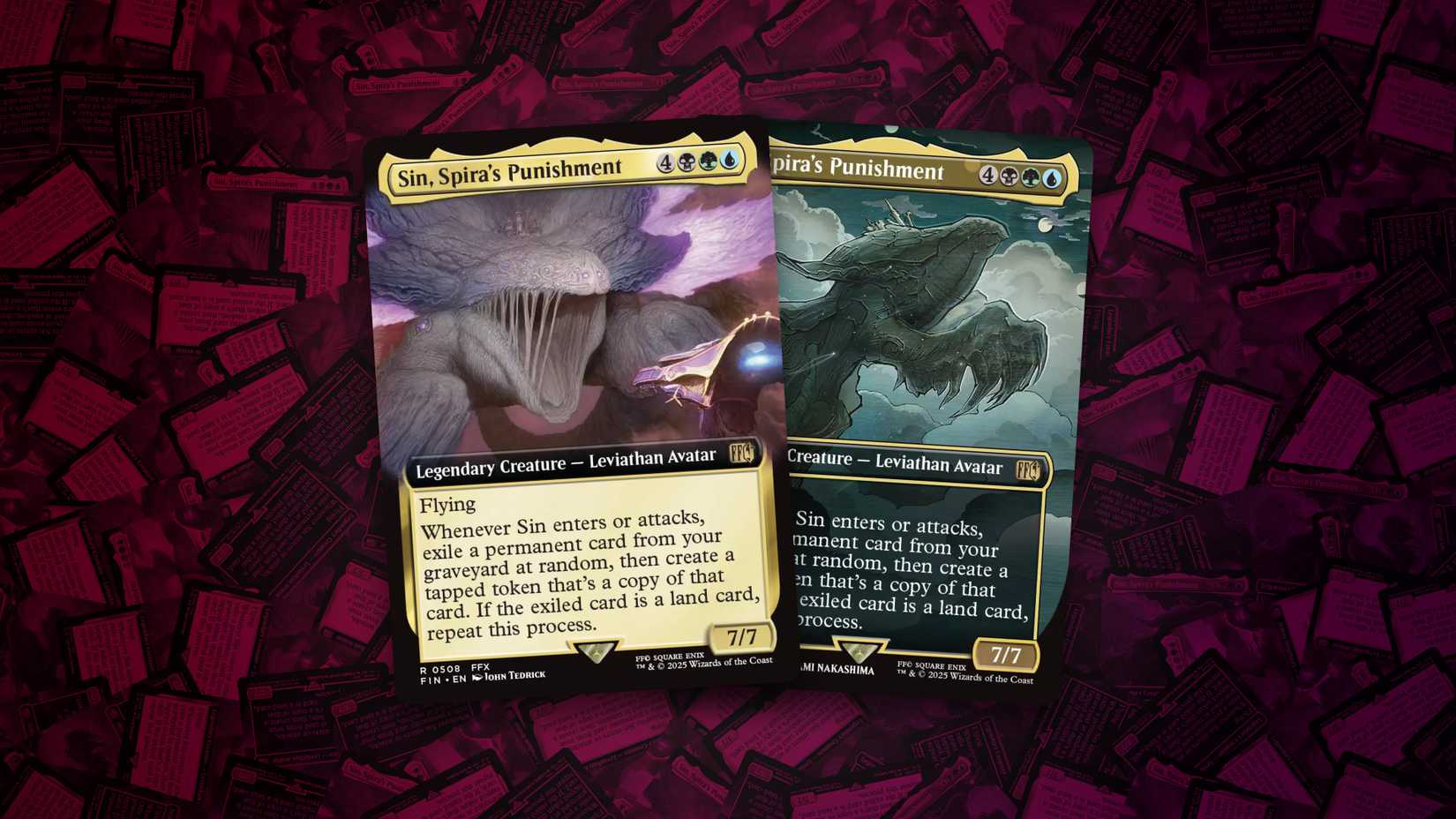
10. Sin, Spira’s Punishment (Final Fantasy X)
Thematic Origin: Encapsulating the cyclical destruction of Final Fantasy X, Sin represents a thousand-year curse of generational dread where humanity is repeatedly beaten down before being forced to rebuild in the shadow of a colossal, whale-like fiend.
Mechanical Design: Costing seven mana, Sin, Spira’s Punishment acts as an unpredictable engine. Whenever it enters the battlefield or attacks, it exiles a random permanent card from your graveyard. If that card is a permanent, it creates a tapped token copy; if it hits a land, the process repeats.
Competitive Synergies: This card excels in Commander archetypes centered on graveyard recursion and land synergies. Pairing Sin with Adrix and Nev, Twincasters doubles the generated token copies, while self-mill cards like Hedron Crab ensure the graveyard remains stocked with high-impact targets, turning the remnants of past destruction into compounding battlefield threats.
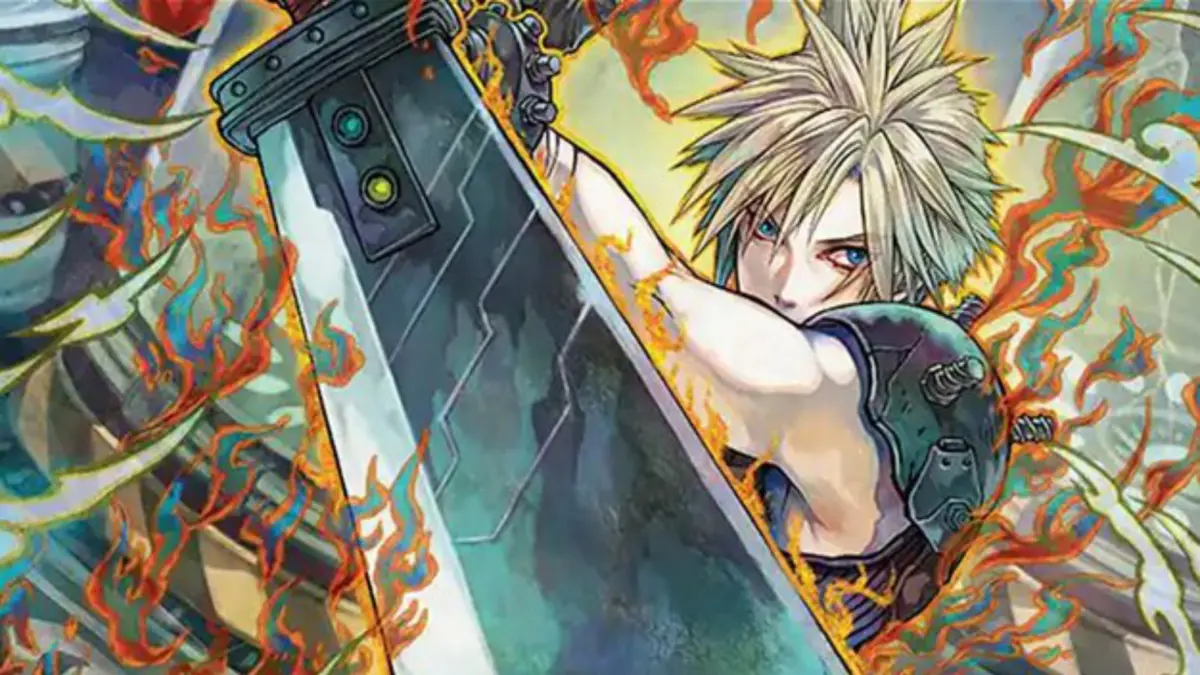
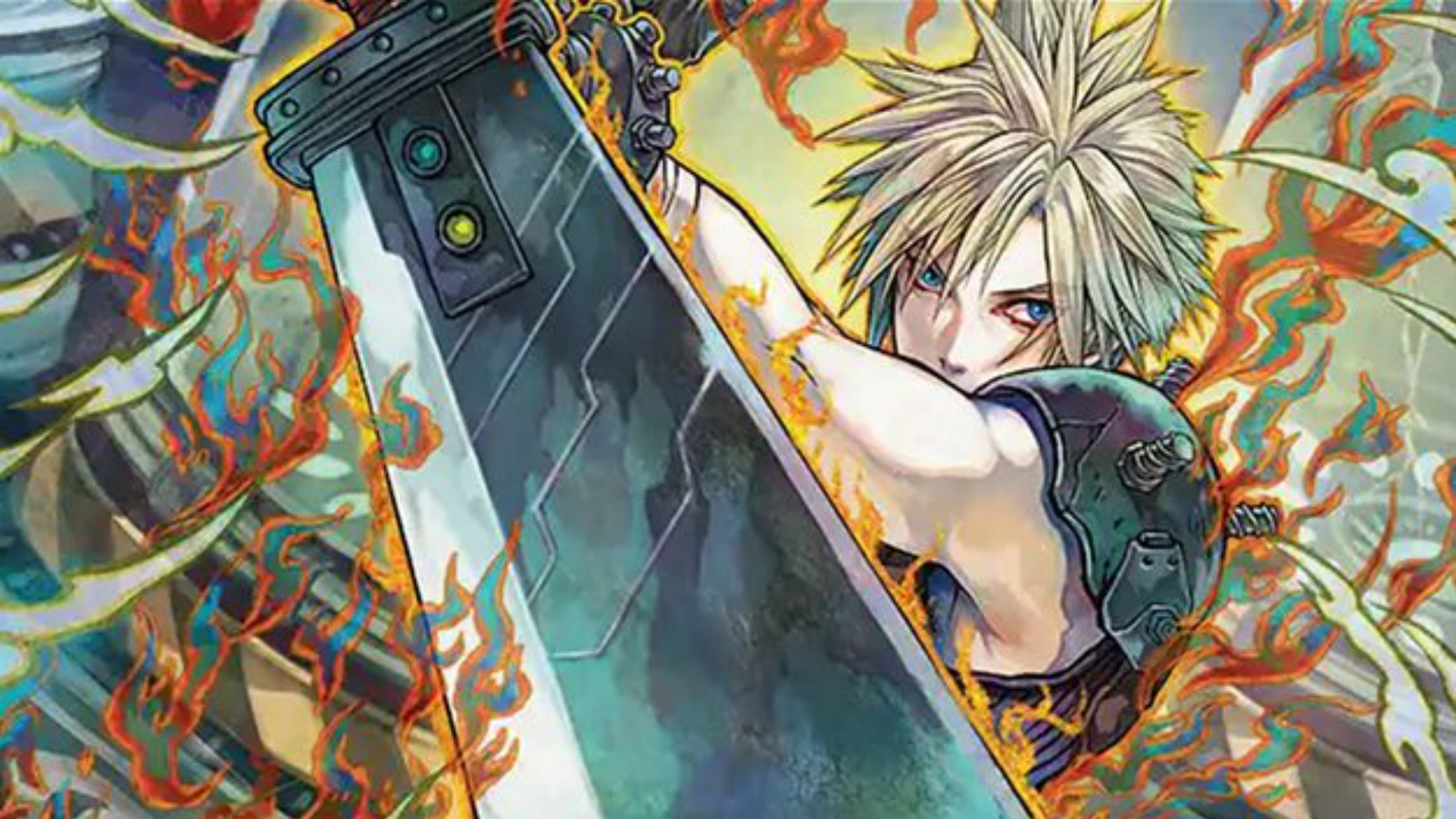
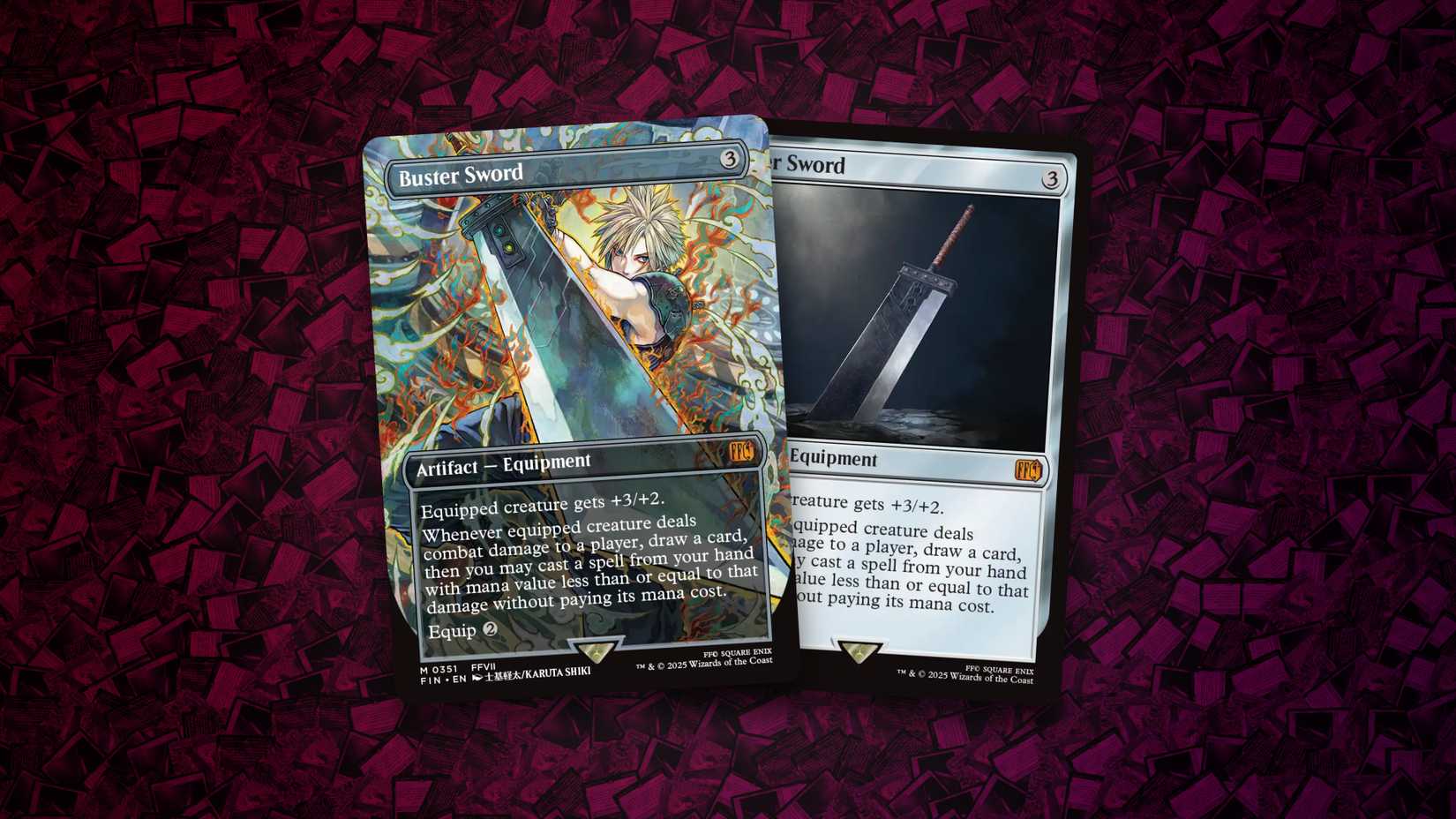
9. Buster Sword (Final Fantasy VII)
Thematic Origin: More than just a weapon, the Buster Sword is a heavy emblem of legacy passed down from Angeal Hewley to Zack Fair, and finally to Cloud Strife, symbolizing the burdens and dreams inherited by successive generations.
Mechanical Design: As an Equipment card, the Buster Sword grants its wielder a +3/+2 power and toughness boost. Upon dealing direct combat damage to an opponent, the controller draws a card and may immediately cast a spell from their hand for free, provided its mana value does not exceed the damage dealt.
Competitive Synergies: This equipment rewards aggressive playstyles, transforming any evasive creature into a card-advantage engine capable of cheating out high-impact spells during the combat phase.
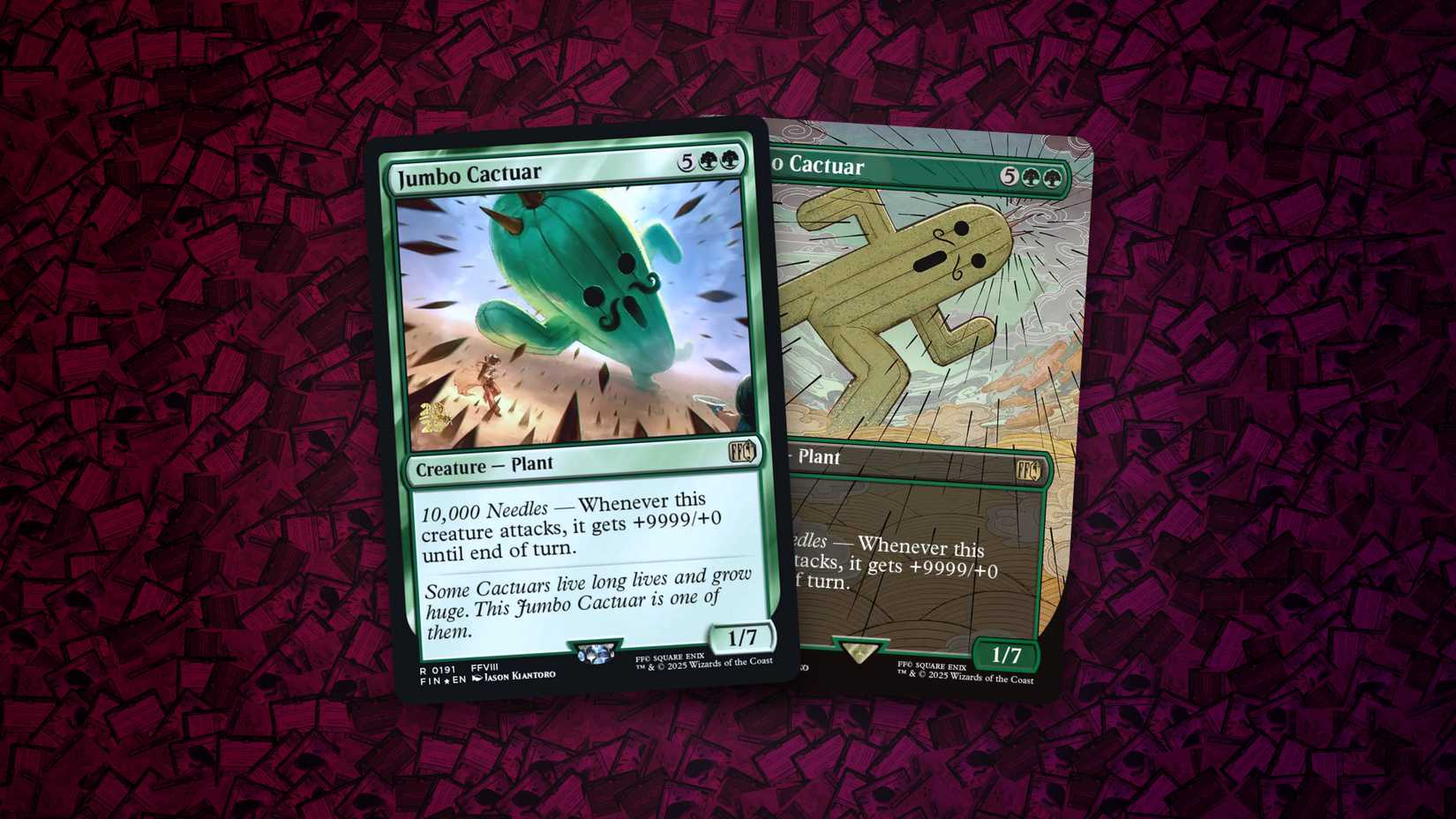
8. Jumbo Cactuar (Final Fantasy VIII)
Thematic Origin: A staple of the franchise, Cactuars appear as unassuming, plant-like creatures that suddenly erupt with devastating, unmitigated damage via their signature 10,000 Needles attack.
Mechanical Design: A seven-mana green creature with an initially deceptive 1/7 stat line. However, its signature ability, 10,000 Needles, grants it a staggering +9,999/+0 whenever it attacks.
Competitive Synergies: Eschewing complex transformational loops, Jumbo Cactuar delivers a comically literal translation of its video game counterpart, turning a harmless-looking card into a one-hit-KO threat on the battlefield.
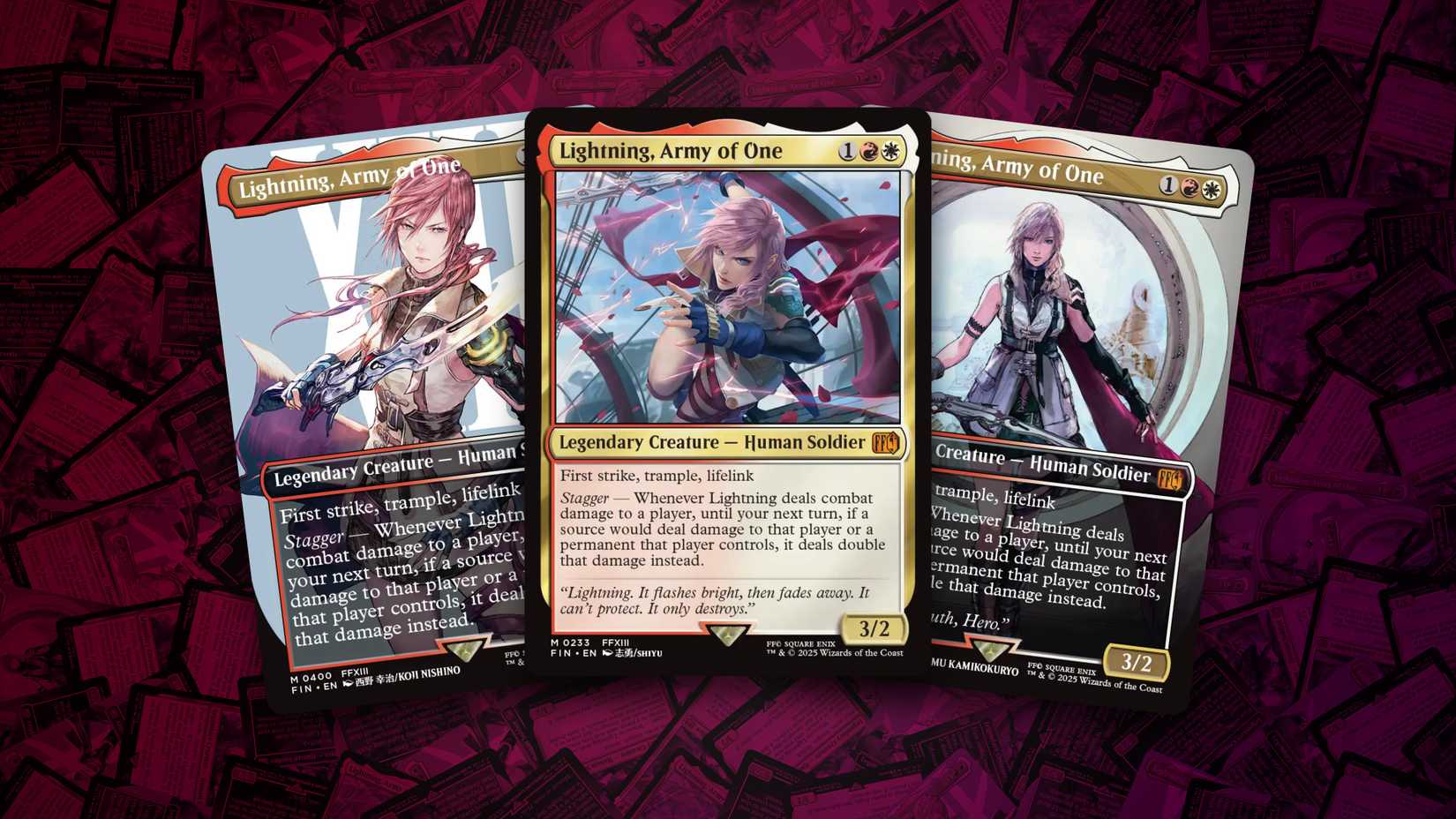
7. Lightning, Army of One (Final Fantasy XIII)
Thematic Origin: Claire "Lightning" Farron is defined by unwavering resolve, fierce independence, and her role as the tactical spearhead of resistance movements against divine and governmental oppression.
Mechanical Design: A three-mana legendary creature featuring first strike, trample, and lifelink. Its defining mechanic, Stagger, dictates that whenever Lightning deals combat damage to an opponent, all damage dealt to that player and their permanents from any source is doubled until your next turn.
Competitive Synergies: This design mirrors the battle rhythm of Final Fantasy XIII, leaving opponents exposed to massive follow-up alpha strikes and transforming Lightning into a central tactical piece for red-white-or-similar aggressive strategies.
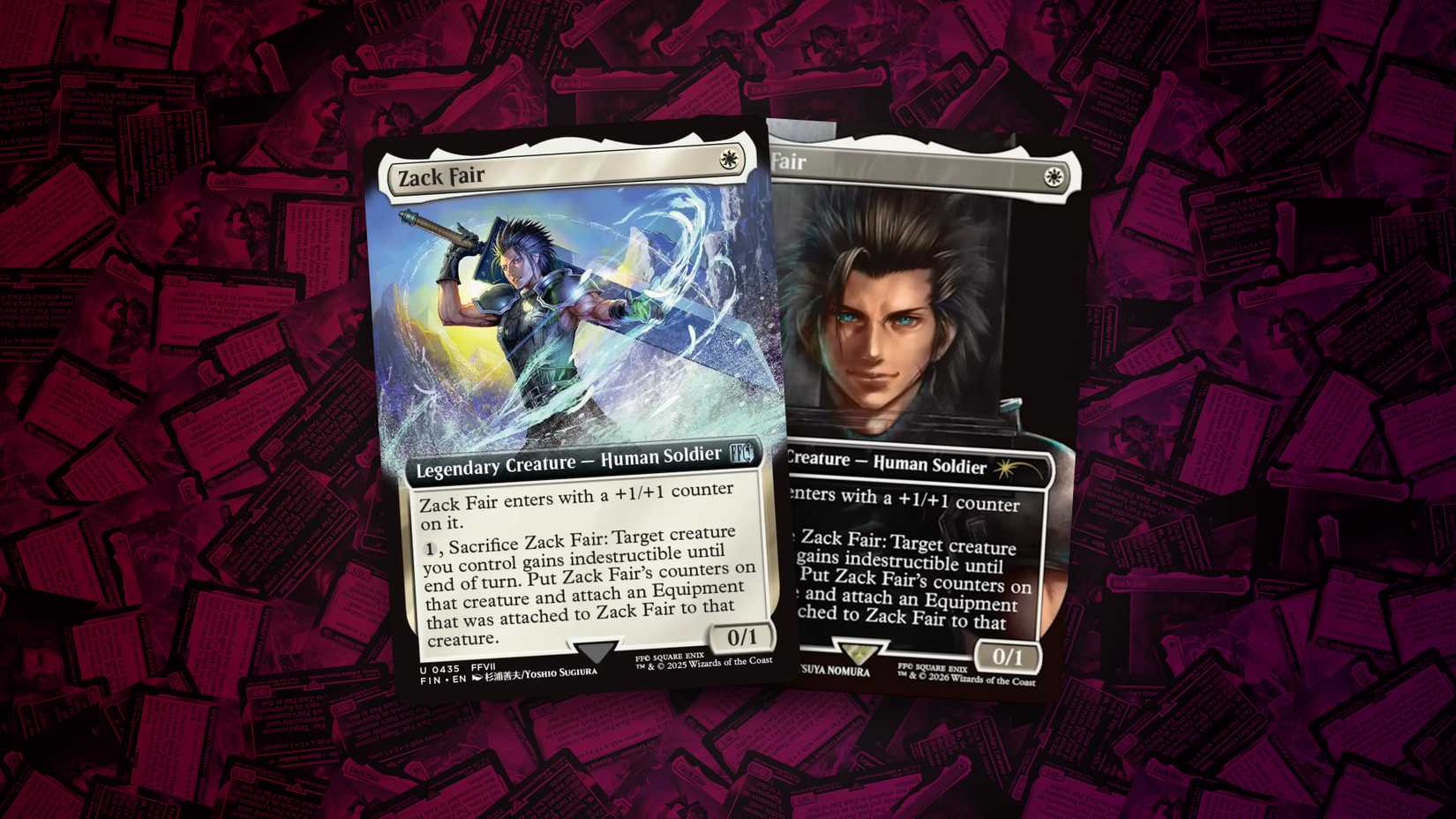
6. Zack Fair (Final Fantasy VII / Crisis Core)
Thematic Origin: Zack Fair’s tragic final stand against Shinra forces outside Midgar remains one of the most emotional moments in gaming, directly shaping Cloud Strife’s identity and psychological state.
Mechanical Design: A 0/1 legendary creature that enters the battlefield with a +1/+1 counter. For one mana, players can sacrifice Zack, passing his counters, any attached equipment, and an indestructible status effect to another target creature.
Competitive Synergies: The card mechanics mechanically replicate his death as an act of legacy inheritance. Clever deckbuilders can loop Zack from the graveyard using reanimation engines like Sun Titan or Lurrus of the Dream Den, repeatedly granting their board protection while passing stats down the line.
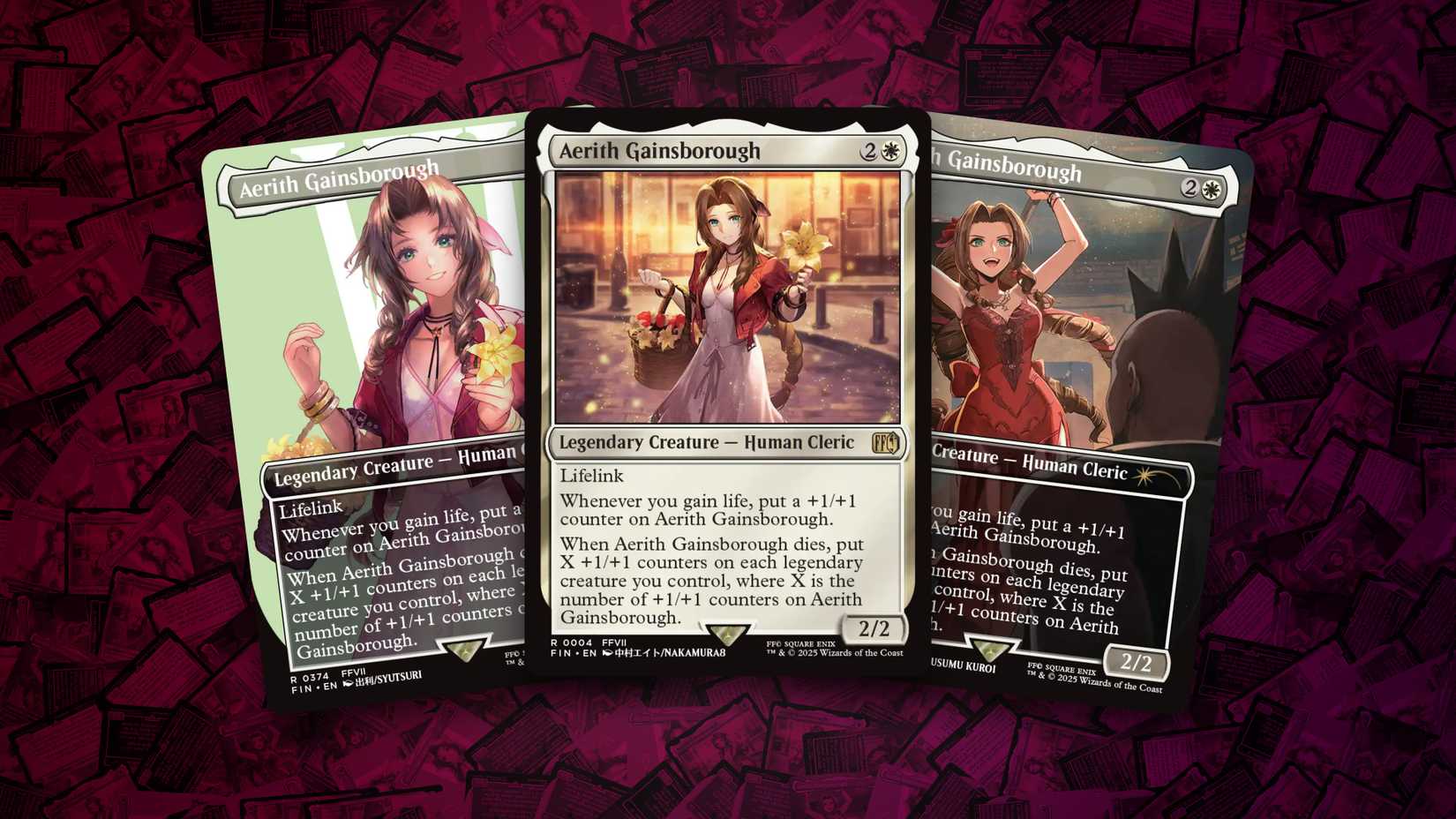
5. Aerith Gainsborough (Final Fantasy VII)
Thematic Origin: The last surviving Cetra, Aerith hides her profound cosmic burdens behind a gentle, flower-selling exterior, ultimately serving as the spiritual anchor for the Planet’s survival.
Mechanical Design: A 2/2 legendary creature with lifelink. Gaining life places +1/+1 counters on her. Upon her death, all other legendary creatures you control receive +1/+1 counters equal to the number Aerith had accumulated.
Competitive Synergies: This captures her enduring influence after her departure from the party. Lifain-gain decks can rapidly scale her power, ensuring that even after a board wipe, her legacy permanently bolsters the remaining roster.
4. Yuna, Hope of Spira (Final Fantasy X)
Thematic Origin: As a Summoner, Yuna communes with the Fayth to bring forth colossal Aeons to protect Spira, anchoring a journey of faith, sacrifice, and spiritual leadership.
Mechanical Design:Yuna, Hope of Spira synergizes heavily with saga creatures—the specialized enchantment cards representing Final Fantasy summons. She grants enchantment creatures trample, lifelink, and ward 2 on your turn, while returning an enchantment from the graveyard to the battlefield at the end of the turn with a finality counter.
Competitive Synergies: Yuna serves as the definitive Commander for "Summon-tribal" lists, allowing players to repeatedly recur powerful iconic entities like Yojimbo, Bahamut, and Knights of Round.
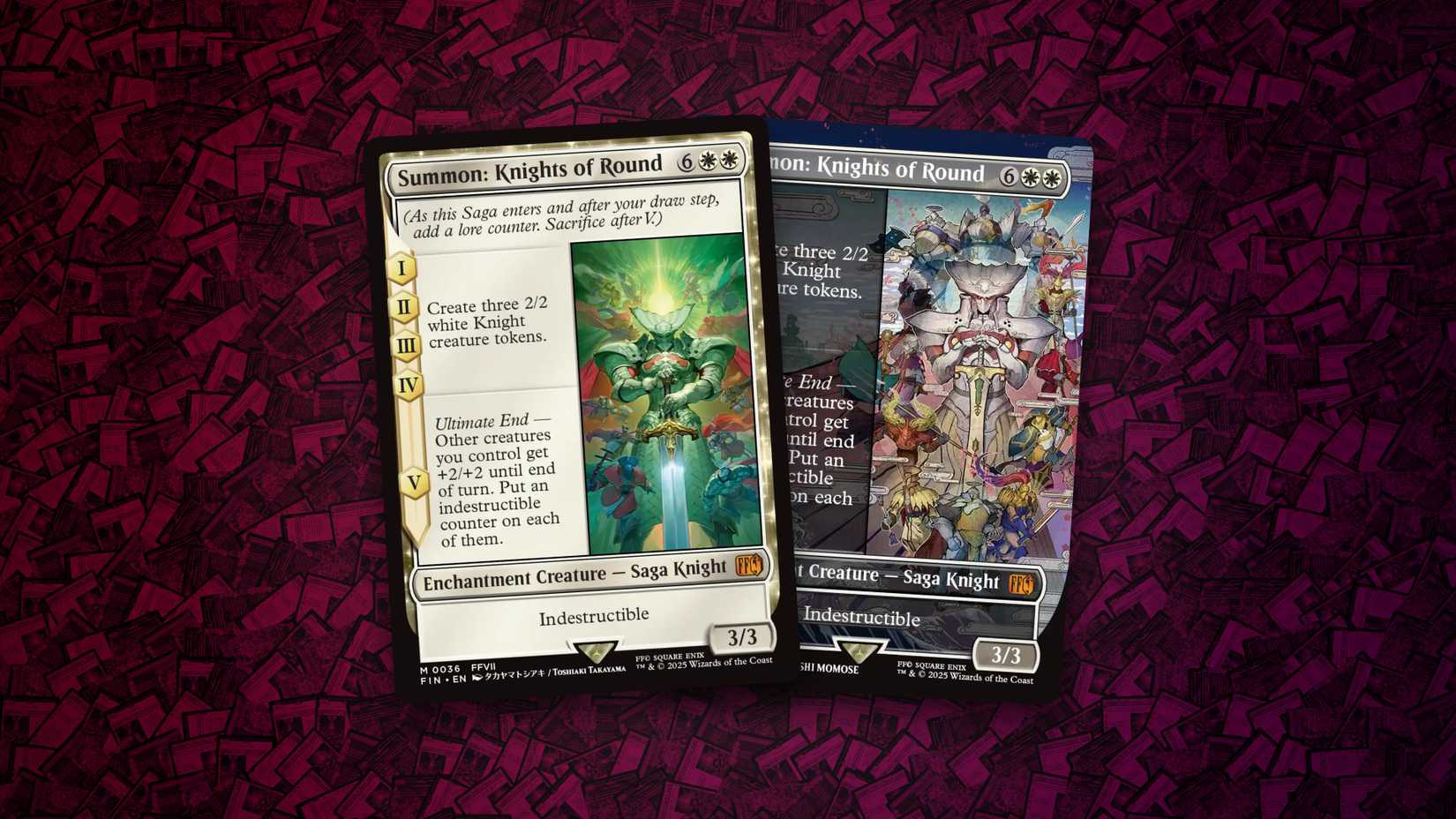
3. Summon: Knights of Round (Final Fantasy VII)
Thematic Origin: The ultimate secret Materia of Final Fantasy VII, requiring deep endgame exploration to unlock an unskippable, two-minute cinematic assault of 13 holy knights obliterating enemy health bars.
Mechanical Design: An eight-mana Saga creature. Over its first four chapters, it produces twelve 2/2 Knight tokens. Its fifth and final chapter, Ultimate End, grants the entire board +2/+2 and an indestructible counter.
Competitive Synergies: A patient, theatrical win-condition that rewards players for surviving the early-to-mid game, turning the slow accumulation of tokens into an overwhelming, unstoppable board state.
Thematic Origin: Shinra’s celebrated hero whose psyche shatters upon discovering his origins as an experiment of Jenova, transforming him into a cosmic, apocalyptic threat bent on planetary destruction.
Mechanical Design: A double-faced card. The front side, Fabled SOLDIER, allows you to sacrifice a creature upon entering or attacking to draw a card, while draining life whenever any creature dies. Achieving this drain effect four times in a single turn triggers his transformation into the One-Winged Angel, generating an irrevocable emblem that maintains life-drain permanently.
Competitive Synergies: An exceptional aristocrat commander that scales dynamically with board wipes and token-sacrifice loops, ticking down opponents’ life totals while cycling through the deck.
1. Absolute Virtue (Final Fantasy XI)
Thematic Origin: Infamous within the Final Fantasy XI community, Absolute Virtue was an optional superboss that took alliances upwards of 18 hours to defeat due to its massive health regeneration and ability to copy player classes.
Mechanical Design: An eight-mana 8/8 uncounterable creature with flying. Its most punishing static ability grants the controller protection from each of their opponents, rendering the player completely untouchable—unable to be attacked, targeted by spells, or enchanted—while Absolute Virtue remains on the board.
Competitive Synergies: A game-halting defensive powerhouse in multiplayer formats, forcing opponents to find niche board-wipe solutions or sacrifice outlets before they can interact with the controller.
Supporting Context & Metrics
The integration of Final Fantasy into Magic: The Gathering represents a massive financial and cultural milestone for Wizards of the Coast. Market data from secondary market platforms and pre-order metrics indicate that Universes Beyond sets outperform traditional standard-legal expansions in casual and collector sectors.
Demographic Expansion: Internal metrics from Wizards of the Coast reveal that cross-brand sets introduce roughly 28% of new players to the physical card game through digital or franchise-loyal entry points (such as fans of Final Fantasy XIV and FFVII Remake).
Format Impact: The inclusion of legendary creatures like Sephiroth, Yuna, and Sin has immediately shaken up the casual Commander metagame, providing robust, synergistic command zones that rival traditional in-universe commanders in terms of build variety and optimization ceilings.
Official Statements
Executives and lead designers from both Hasbro/Wizards of the Coast and Square Enix have expressed profound enthusiasm for the partnership.
"Translating sixteen mainline narratives into the modular, linguistic framework of Magic: The Gathering was a monumental undertaking," noted a lead concept designer during the set’s worldwide unveiling. "We didn’t just want pictures of Cloud or Sephiroth on cardboard. We wanted players casting these spells to physically feel the weight of their favorite gaming moments—whether that’s sitting through the patient countdown of Knights of Round or watching Zack pass his legacy down to the next generation."
Square Enix representatives echoed this sentiment, emphasizing that the cross-licensing agreement ensures strict adherence to the emotional beats that have defined the role-playing franchise since 1987.
Future Outlook
The runaway success of the Final Fantasy crossover set all but guarantees that Wizards of the Coast will continue to pursue deep, narrative-driven partnerships within the Universes Beyond framework. As the boundary between traditional tabletop gaming and digital pop-culture franchises continues to blur, sets of this scale establish a new benchmark for design fidelity.
For players and collectors, the set offers long-term engagement through high-tier foil treatments, localized alternate-art printings, and deep Commander deck-building avenues. Moving forward, the industry will undoubtedly look to this collaboration as a case study in how to honor a beloved digital legacy within the physical constraints of a 60-card or 100-card deck.