Executive Overview
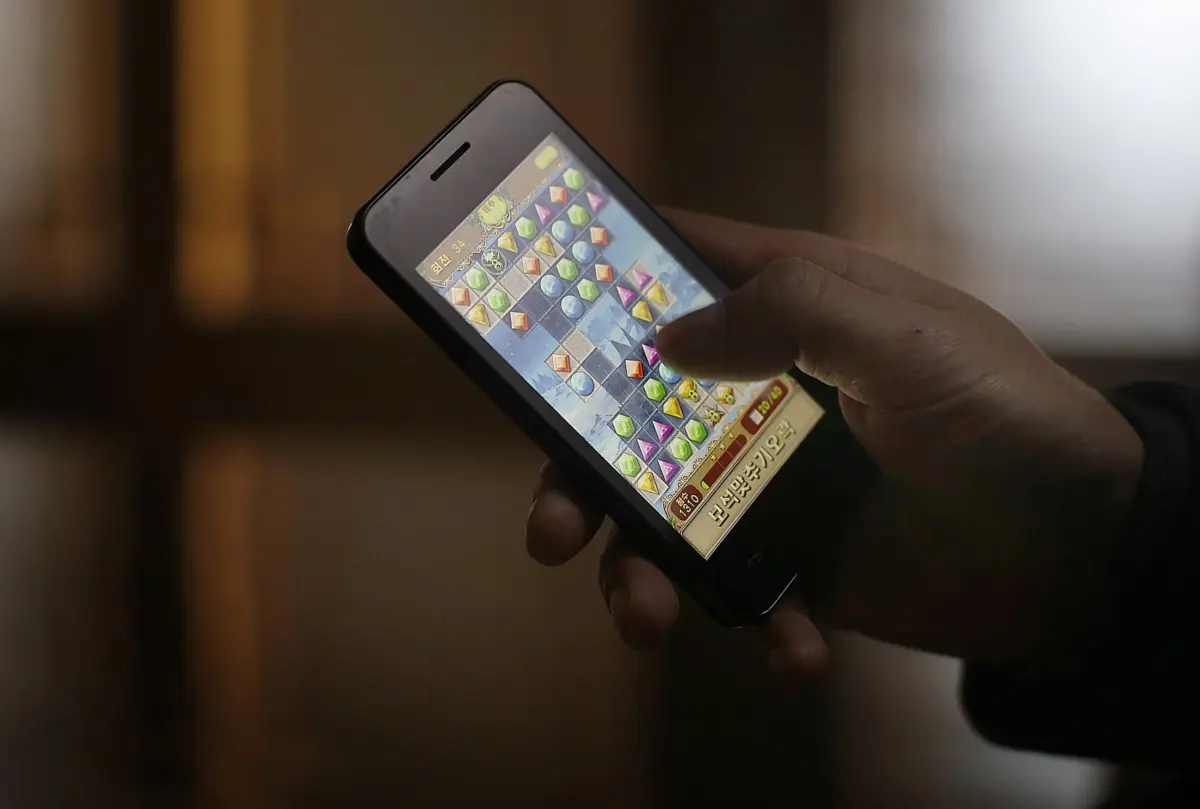
With over 95 percent of Americans utilizing mobile devices on a daily basis, the modern smartphone has firmly established itself as an indispensable extension of human life. From managing global supply chains and social interaction to organizing personal schedules, society relies heavily on the constant connectivity tethering us to handheld transceivers. Yet, beneath the veneer of modern convenience lies a persistent and contentious public health question: What are the long-term biological consequences of bathing human tissue in radiofrequency (RF) energy for decades?
Addressing this critical query head-on, the California Department of Public Health (CDPH) released landmark advisory guidelines detailing explicit steps to minimize exposure to cellphone radiation. Prompted by surging usage statistics and years of public advocacy—including a hard-fought legal battle led by UC Berkeley public health researchers—the state guidelines offer a commonsense framework for reducing daily RF absorption. While the definitive causal link between mobile devices and chronic pathologies such as brain cancer remains fiercely debated by oncologists and epidemiologists, state health authorities advise that adopting simple behavioral adjustments is a prudent, precautionary approach.
This report investigates the scientific foundation of the California guidelines, examines the legal battles that forced transparency from public health agencies, details the five primary cellular practices identified as high-risk, and explores the ongoing global research efforts aimed at solving one of modern technology’s most profound health mysteries.
Detailed Chronology: The Road to Public Transparency
The release of the CDPH advisory guidelines did not happen in a vacuum; it represents the culmination of a decade-long friction point between academic researchers, public transparency advocates, and institutional health agencies reluctant to issue warnings without absolute scientific consensus.
- 2009 — The Legal Challenge Begins: Dr. Joel Moskowitz, a psychologist and researcher at the University of California, Berkeley, filed a lawsuit against the California Department of Public Health. Moskowitz challenged the agency’s withholding of internal drafts and advisory materials concerning the health risks of mobile phone radiation, arguing that the public had an inherent right to know what state scientists were discussing behind closed doors.
- 2011 — Whistleblowing and Early Warnings: Independent investigative reporting brought widespread public attention to anecdotal accounts of neurological distress, electromagnetic sensitivities, and physiological changes among heavy mobile and Wi-Fi users. Prominent toxicologists and public health advocates began drawing parallels to historical delays in acknowledging the hazards of tobacco and asbestos.
- Spring 2017 — A Legal Victory: Following years of judicial stagnation, a California court ruled in favor of Dr. Moskowitz, compelling the state health department to release its compiled guidance documents. Dr. Moskowitz publicly criticized the years-long bureaucratic delay, noting that public health had been actively compromised by withholding accessible risk-reduction strategies.
- December 2017 — The Guidelines Drop: Yielding to legal mandates and mounting public pressure, the CDPH officially published its foundational document, titled "How to Reduce Exposure to Radiofrequency Energy from Cellphones." The release marked the first time a major U.S. state health department systematically categorized daily behaviors that amplify bodily absorption of electromagnetic radiation.
- Present Day — Ongoing Global Surveillance: While individual state advisories remain scarce, large-scale epidemiological investigations—such as the international COSMOS project tracking hundreds of thousands of users over decades—continue to accumulate longitudinal data to settle the debate once and for all.
Supporting Context & Metrics: The Science of Non-Ionizing Radiation
To understand the controversy surrounding mobile phones, one must first understand the physics of the radiation they emit. Cellphones operate by transmitting and receiving signals via radio waves, a form of non-ionizing radiation. Unlike X-rays or nuclear radiation (ionizing radiation), non-ionizing radiofrequency energy lacks the photon energy required to directly strip electrons from atoms or shatter chemical bonds within human DNA.
However, federal regulatory bodies and cancer research institutions—including the U.S. Food and Drug Administration (FDA), the American Cancer Society (ACS), and the National Cancer Institute (NCI)—acknowledge a secondary, undisputed mechanism: thermal heating.
[Cell Phone Antenna]
       │
       ▼ (Emits RF Waves)
[Tissue Absorption] ──► Molecular Friction ──► Localized Tissue Heating (Head, Brain, Ear)
When a smartphone is held directly against the head, the tissues closest to the internal antenna—namely the ear, skull, and superficial regions of the brain—absorb the emitted radiofrequency energy. This energy causes microscopic molecular agitation, resulting in localized tissue heating. While public health agencies historically maintained that this heating is insufficient to raise overall core body temperature or cause acute cellular damage, growing bodies of peer-reviewed research suggest that chronic, low-level exposure may yield subtle biological consequences over time.
The Statistical Reality of Modern Use
- 95% of Americans use cellphones on a daily basis, according to comprehensive data compiled by the Pew Research Center.
- 24/7 Exposure: As noted by public health historians, humanity is experiencing an unprecedented epoch where biological organisms are blanketed by ambient electromagnetic frequencies (EMFs) from mobile devices, cellular towers, smart meters, and wireless routers around the clock.
- Conflicting Epidemiological Signals: A landmark study published in the journal PLOS ONE analyzed extensive data across multiple decades and identified a "significant association" between long-term mobile phone usage and the development of gliomas—a malignant and aggressive form of brain tumor. Conversely, critics of the study point out the heterogeneous quality of older datasets, emphasizing the urgent need for long-term, standardized prospective analyses.
Beyond oncology, specialized literature links excessive mobile exposure to secondary physiological anomalies:
- Reproductive Health: Clinical evaluations published in peer-reviewed reproductive journals suggest that keeping transmitting devices in close proximity to the pelvic region can measurably lower sperm count and degrade sperm motility.
- Neurological Disturbances: Chronic users frequently report increased incidence of stress-induced headaches, cognitive fatigue, and short-term memory retention difficulties.
- Circadian Disruption: The suppression of melatonin production caused by late-night screen time and localized RF exposure significantly interferes with natural sleep architecture.
Official Statements and Institutional Perspectives
The official stance of international health organizations remains characterized by a delicate balancing act: acknowledging biological mechanisms while refusing to declare definitive harm in the absence of absolute long-term proof.
The National Cancer Institute summarizes its institutional position through its official advisory channels:
"Radiofrequency exposure from cellphone use does cause heating to the area of the body where a cellphone or other device is held (ear, head, etc.). However, it is not sufficient to measurably increase body temperature, and there are no other clearly established effects on the body from radiofrequency energy."
Yet, independent researchers argue that absence of evidence is not evidence of absence. Dr. David O. Carpenter, director of the Institute for Health and the Environment at the State University of New York, stated regarding radiofrequency bio-effects:
"Radiofrequency radiation has a number of biological effects which can be reproducibly found in animals and cellular systems. We really cannot say for certain what the adverse effects are in humans. But the indications are that there may be—and I use the words ‘may be’—very serious effects in humans."
Dr. Joel Moskowitz echoed this sentiment following his legal victory against the state:
"People are being injured and harmed by the delay in having this information accessible to them."
The Five Dangerous Cellphone Practices You Need to Stop Doing
Recognizing that definitive scientific consensus could take decades to materialize, the California Department of Public Health formulated its advisory around a pragmatic philosophy: When long-term risks are unquantifiable, simple, commonsense preventative adjustments are the wisest path forward.
The CDPH guidance document explicitly highlights five everyday habits that exponentially increase radiofrequency exposure, along with actionable corrections:
1. Don’t Hold Your Phone Directly Up to Your Ear
- The Hazard: Pressing the smartphone chassis directly against the side of your head maximizes the amount of RF energy absorbed by the ear canal, skull, and temporal lobe.
- The Fix: Cultivate the habit of utilizing speakerphone mode or plugging in a headset. Both wired headsets and modern Bluetooth wireless devices emit exponentially lower RF energy levels than a phone operating at full transmitting capacity. Additionally, whenever feasible, substitute voice calls with text messaging.
2. Avoid Using Your Phone in Fast-Moving Vehicles
- The Hazard: When you are traveling at high speeds in a car, train, or bus, your mobile device is forced to constantly search for, connect to, and hand off signals between rapidly changing cell towers. Unless placed in specialized modes, the phone automatically ramps up its internal transmitter power to maintain a dropped-call-free connection, resulting in a massive spike in localized radiation output.
- The Fix: Turn on Airplane Mode during transit, or refrain from engaging in long conversational calls while commuting.
3. Step Away When Your Screen Shows Weak Service Bars
- The Hazard: A low signal indicator (one or two bars) is a direct diagnostic sign that your device is struggling to bridge the physical distance to the nearest cellular infrastructure. To compensate for the environmental attenuation, the phone’s internal amplifier automatically increases its RF power output.
- The Fix: Wait until you have a robust signal before making calls, or utilize Wi-Fi calling options when cellular reception is degraded.
4. Never Carry Your Phone Unprotected Close to Your Body
- The Hazard: Stashing a smartphone loosely inside a pants pocket, shirt pocket, or tucked directly into a bra places the device’s transmitting antenna mere millimeters away from sensitive organs, reproductive systems, and lymph nodes. Because electromagnetic radiation intensity drops off dramatically over distance (following the inverse-square law), keeping the phone directly against soft tissue maximizes exposure.
- The Fix: Carry your device in an independent bag, backpack, or briefcase. If you must keep it on your person, ensure it is powered down or switched to Airplane Mode.
5. Never Sleep with Your Phone Under Your Pillow
- The Hazard: Countless individuals fall asleep with their smartphones resting under their pillows for easy alarm access or night-browsing. This subjects the user’s brain to hours of continuous, close-proximity background signaling, data syncing, and potential thermal exposure, all while disrupting circadian rhythms via blue light and electromagnetic pulses.
- The Fix: Keep your phone at a minimum distance of an arm’s length away from your bed on a nightstand. Better yet, power the device completely off or engage Airplane Mode before closing your eyes for the night.
Future Outlook: The Next Decades of Research
As society accelerates toward an era defined by 5G networks, Internet of Things (IoT) integration, and ubiquitous wearable technology, the ambient density of electromagnetic radiation will only intensify.
To bridge the gap between preliminary warnings and absolute scientific certainty, the scientific community is pinning its hopes on large-scale epidemiological ventures. Foremost among these is the COSMOS (Cohort Study on Mobile Communications) project. Initiated in 2007 across multiple European nations, COSMOS is actively tracking the longitudinal health profiles, brain tumor incidence rates, and mobile usage patterns of over half a million citizens. Designed as a multi-decade observational study slated to run well into the 2030s and 2040s, COSMOS aims to provide the definitive statistical power that historical studies lacked.
Until definitive empirical data emerges from these large-scale studies, the guidance issued by public health authorities remains an exercise in risk mitigation. Consumers are not being asked to discard their smartphones or retreat to a pre-digital era; rather, they are being empowered to practice digital hygiene. By making minor, conscious adjustments to how we hold, carry, and store our mobile devices, we can successfully harness the extraordinary benefits of modern communication technology while safeguarding our long-term biological well-being.