Executive Overview
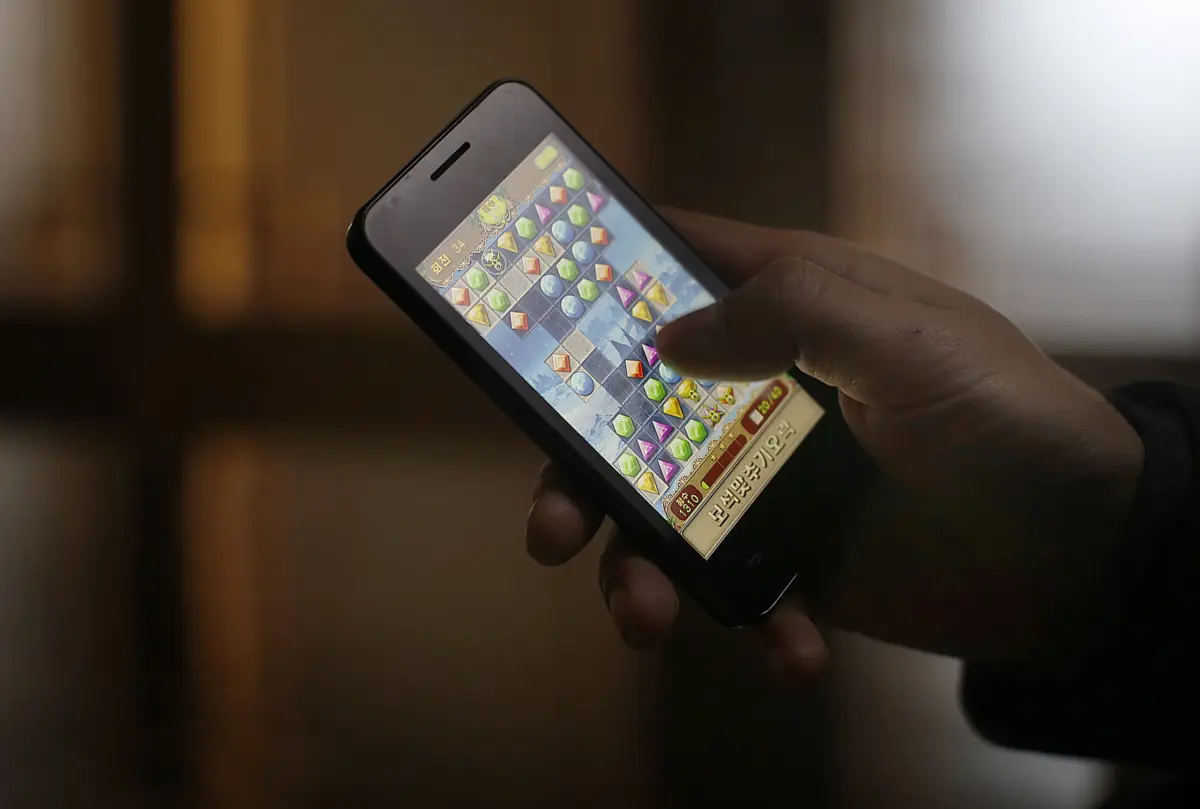
In an era defined by hyper-connectivity, the smartphone has evolved into an indispensable extension of the human body. With statistics from the Pew Research Center indicating that a staggering 95 percent of Americans use cellphones daily, our reliance on mobile technology is at an all-time high. Yet, this convenience comes hand-in-hand with a persistent, low-level environmental exposure that scientists, public health advocates, and regulatory agencies have debated for decades: radiofrequency (RF) energy, commonly referred to as cellphone radiation.
Breaking years of bureaucratic inertia, the California Department of Public Health (CDPH) released the state’s first-ever comprehensive guidelines addressing how individuals can proactively minimize their exposure to radiofrequency energy from mobile devices. The advisory arrives amid a growing body of scientific inquiry examining the complex biological impacts of non-ionizing radiation. While national regulatory bodies like the U.S. Food and Drug Administration (FDA) and the National Cancer Institute (NCI) have historically maintained that short-term, low-level RF exposure does not cause measurable harm outside of minor tissue heating, mounting independent research points toward potential cumulative risks.
From debated correlations with brain tumors and diminished sperm counts to documented disruptions in sleep architectures, memory retention, and auditory health, the conversation surrounding digital safety has reached a critical juncture. The CDPH guidelines do not declare cellphones categorically unsafe; rather, they apply a precautionary principle. By introducing five straightforward behavioral adjustments, the state aims to empower citizens to navigate their technological dependence safely while long-term scientific studies continue to unfold.
Detailed Chronology: The Legal Battle and Policy Shift
The publication of California’s cell phone safety guidelines was not a spontaneous administrative decision. It is the culmination of nearly a decade of intense legal friction, public advocacy, and institutional resistance.
The 2009 Lawsuit: Opening the Vault of Public Health Data
The trajectory toward transparency began in 2009, when Dr. Joel Moskowitz, a psychologist and public health researcher at the University of California, Berkeley, filed a lawsuit against the California Department of Public Health. Moskowitz challenged the state agency’s persistent refusal to release internal drafts and documents detailing the potential health risks associated with long-term cellphone usage. For years, public health advocates argued that withholding this information deprived consumers of their right to make informed decisions about their daily technological habits.
A Landmark Legal Victory
For over a decade, the legal battle crawled through the state courts. However, the tide turned decisively when a judge ruled in favor of Moskowitz, compelling the state health department to make its hidden guidance documents accessible to the general public. Reflecting on the prolonged resistance, Moskowitz stated to a San Francisco CBS News affiliate: "People are being injured and harmed by the delay in having this information accessible to them."
The court-ordered release of these documents laid the groundwork for the formalization of the CDPH guidelines. Prompted by growing public scrutiny, mounting inquiries from concerned citizens, and the tireless persistence of independent researchers, state health officials finally codified practical, science-based recommendations designed to mitigate everyday radiation exposure.
Supporting Context & Metrics: The Science of Non-Ionizing Radiation
To understand why health agencies are issuing precautionary measures, one must examine the physics of mobile communication and the biological mechanisms at play.
Non-Ionizing Radiation vs. Ionizing Radiation
Cellphones communicate via cellular networks by transmitting and receiving radiofrequency (RF) waves, which are a form of electromagnetic fields (EMF). Unlike X-rays or gamma rays, which possess "ionizing" radiation powerful enough to break chemical bonds and directly damage cellular DNA, cellphones emit non-ionizing radiation.
For years, the scientific consensus rested on the premise that because non-ionizing radiation lacks the energy to break DNA strands, it was biologically inert aside from thermal effects. Specifically, the energy absorbed by human tissues close to a phone’s internal antenna—such as the ears, scalp, and cerebral cortex—causes microscopic heating. While regulatory agencies maintain that this thermal effect is negligible and insufficient to raise core body temperature, contemporary research suggests that non-ionizing radiation may trigger other biological responses.
The Expanding Body of Scientific Literature
Despite institutional reassurances, independent studies have continually probed the subtle, long-term physiological consequences of continuous RF exposure:
- Oncological Concerns: The American Cancer Society (ACS) acknowledges that some epidemiological studies have identified statistical correlations between prolonged, heavy cellphone use and an increased risk of brain tumors, specifically gliomas and acoustic neuromas. A landmark study published in PLOS ONE analyzed multiple datasets spanning from 1980 to 2016 and concluded there was a significant association between long-term mobile phone use and glioma risk. However, researchers frequently urge caution, noting that data quality varies and self-reporting biases can skew retrospective studies.
- Reproductive Health: Clinical reviews published in medical journals such as the National Institutes of Health (NIH) databases have linked extended pocket storage of active mobile devices to reduced sperm motility and lower overall sperm counts, largely attributed to localized thermal radiation and electromagnetic interference.
- Neurological and Cognitive Disruptions: Sleep studies indicate that exposure to RF energy prior to bedtime interferes with normal circadian rhythms, suppressing melatonin production and inhibiting deep-sleep cycles. Furthermore, chronic close-range use has been anecdotally and clinically linked to recurring tension headaches, auditory fatigue, and diminished short-term memory retention.
The 24/7 Environmental Shift
Writing for AlterNet as early as 2011, investigative journalist Christopher Ketcham highlighted a profound evolutionary milestone: for the first time in human history, populations are immersed in a 24-hour blanket of anthropogenic electromagnetic frequencies generated by cell towers, Wi-Fi routers, smart meters, and mobile handsets.
Quoting Dr. David O. Carpenter, director of the Institute for Health and the Environment at the State University of New York, Ketcham emphasized the nuanced reality of cellular science: "Radiofrequency radiation has a number of biological effects which can be reproducibly found in animals and cellular systems. We really cannot say for certain what the adverse effects are in humans. But the indications are that there may be—and I use the words ‘may be’—very serious effects in humans."
Official Statements and Institutional Perspectives
The public health landscape remains divided, characterized by a cautious dialogue between national regulatory bodies and independent scientific investigators.
Federal and International Stance
The U.S. National Cancer Institute (NCI) and the Food and Drug Administration (FDA) maintain that the weight of scientific evidence does not definitively link cellphone use to adverse health outcomes. The NCI’s official fact sheet asserts: "Radiofrequency exposure from cellphone use does cause heating to the area of the body where a cellphone or other device is held (ear, head, etc.). However, it is not sufficient to measurably increase body temperature, and there are no other clearly established effects on the body from radiofrequency energy."
However, international bodies have taken a more conservative approach. The World Health Organization’s International Agency for Research on Cancer (IARC) classified radiofrequency electromagnetic fields as "possibly carcinogenic to humans" (Group 2B) back in 2011, a classification that continues to influence state-level policy decisions in regions like California.
The Massive COSMOS Study: Looking Ahead
Because mobile phone technology has only achieved ubiquitous, multi-decade saturation within the last twenty years, absolute long-term epidemiological data remains difficult to finalize. To bridge this gap, European health authorities launched the COSMOS (Cohort Study on Mobile Communications) project. Begun in 2007, this large-scale epidemiological endeavor is actively tracking the health outcomes and mobile usage patterns of more than half a million people across Europe over a projected span of two to three decades. Until such longitudinal studies conclude, public health officials emphasize that adopting a precautionary stance remains the most sensible path forward.
Future Outlook: Five Common Cellphone Practices to Avoid
Rather than inducing panic or demanding a return to pre-digital lifestyles, the California Department of Public Health’s advisory—titled "How to Reduce Exposure to Radiofrequency Energy from Cellphones"—focuses on practical behavioral modifications. Because RF energy exposure diminishes exponentially with distance, minor adjustments to daily habits can dramatically lower cumulative bodily absorption.
Here are the five common cellphone practices health officials urge the public to reconsider:
1. Don’t Hold Your Phone Directly Against Your Ear
When engaging in long voice calls, pressing a smartphone directly against the side of your head places the internal antenna in immediate proximity to delicate cranial tissues.
- The Better Alternative: Utilize the speakerphone function or invest in a headset. Both wired and Bluetooth wireless headsets emit exponentially lower RF energy levels than a handset held against the skull. Additionally, opting to send text messages rather than engaging in prolonged voice conversations significantly reduces direct exposure time.
2. Avoid Using Your Phone in Fast-Moving Vehicles
When you travel at high speeds—such as in a car, train, or bus—your mobile device is forced to work substantially harder to maintain network integrity. As you transition rapidly from one cell tower coverage zone to the next, the phone automatically ramps up its power output to prevent dropped calls.
- The Better Alternative: Refrain from heavy data use or lengthy voice calls while commuting. If phone use is unavoidable, switch the device to Airplane Mode until you have reached your destination and remain stationary.
3. Steer Clear of Weak Signals (One or Two Bars)
When your phone displays only one or two service bars, it signifies that you are operating at a significant distance from the nearest cellular base station. To compensate for the degraded connection, the handset automatically boosts its internal transmitter power to maximum capacity in an effort to search for and lock onto a signal.
- The Better Alternative: Avoid streaming video, downloading large files, or making lengthy calls in geographic dead zones, elevators, or rural fringes where signal strength is perpetually compromised. Wait until your device registers a strong, stable connection.
4. Never Carry Your Phone Directly Against Your Body (Pockets and Holsters)
Many individuals habitually slip their smartphones into pants pockets, shirt pockets, or tight hip holsters, keeping the active transmitter pressed directly against sensitive soft tissues, reproductive organs, or major muscle groups for hours at a time.
- The Better Alternative: Store your phone in a backpack, briefcase, handbag, or purse. Maintaining even a small buffer of physical distance—a matter of just a few inches—exponentially decreases the amount of RF energy absorbed by your body. When carrying the phone close to your body is unavoidable, toggle it into Airplane Mode to completely halt RF transmissions.
5. Never Sleep with Your Phone Under Your Pillow or Near Your Head
A pervasive modern habit is scrolling through social media or reading news updates in bed, followed by placing the active smartphone directly under the pillow or on a nightstand inches from the head. This practice guarantees continuous, close-range exposure throughout the entire nocturnal recovery cycle.
- The Better Alternative: Dr. Karen Smith and CDPH health experts recommend keeping your mobile device at least an arm’s length away from your bed while sleeping. Furthermore, turning the phone completely off or switching it to Airplane Mode ensures zero radiofrequency emissions while you rest, safeguarding both your cellular exposure levels and your uninterrupted circadian sleep architecture.