Executive Overview
In the hyper-curated landscape of modern social media, the definition of aspiration has long been tethered to perfection, exclusivity, and substantial financial investment. From high-fashion aesthetics to meticulously orchestrated minimalist lifestyles, digital culture has historically promoted an elite standard of "chic." However, a seismic cultural shift occurred across Instagram Reels and TikTok, subverting these rigid criteria. Enter the "Kinda Chic" trend—a viral movement that has taken over the internet, redefining chic not through luxury labels or unattainable physical standards, but through personal growth, peace of mind, body positivity, and the quiet dignity of everyday authenticity.
Emerging in the spring of 2026, the trend relies on a deceptively simple linguistic formula: participants share aspects of their lives, appearances, or mental states prefixed with the casual, self-effacing qualifier, "It’s kind of chic to…" Rather than highlighting designer handbags or exotic vacations, viral posts celebrate elastic waistbands, being comfortable in one’s body at any size, embracing mental health milestones, and finding contentment in the mundane.
By the late summer of 2026, the movement had evolved from a niche expression of self-acceptance into a massive cross-platform phenomenon. Garnering millions of views and participation from high-profile celebrities like Drew Barrymore, the trend highlights a collective exhaustion with traditional internet perfectionism. This investigative report examines the origins, trajectory, cultural significance, and future outlook of the "Kinda Chic" trend, exploring how it reflects a broader generational desire for mental respite and authentic self-definition.
Detailed Chronology: From Grassroots Affirmations to Mainstream Virality
The trajectory of the "Kinda Chic" trend offers a fascinating case study in how organic, low-stakes digital content can snowball into a dominant cultural conversation. While internet trends often rely on complex choreography, high-production value, or expensive gear, "Kinda Chic" found its footing in raw vulnerability and casual relatability.
Phase 1: The Germination Period (Late April 2026)
The exact genesis of the phrase remains difficult to pinpoint to a single creator, a common trait among linguistic trends that bubble up organically across algorithmic feeds. However, early iterations began surfacing on Instagram and TikTok in late April 2026.
One of the earliest documented milestones occurred on April 27th, 2026, when Instagram user @mariabegins shared a carousel of unfiltered photographs accompanied by reflections on body positivity. By framing her natural, curvier physique through the lens of being "kinda chic," she struck a chord with a small audience, accumulating early engagement that signaled the viability of the concept. The post bypassed standard aesthetic filters, relying instead on a tone of unapologetic self-acceptance.
Phase 2: Algorithmic Acceleration (May – June 2026)
Throughout the late spring, the phrase began circulating organically within wellness and body-positive micro-communities. Creators utilized the "kinda chic" framework to dismantle personal insecurities, framing everyday acts of self-care and mental health preservation as acts of high style.
Unlike previous movements that demanded rigorous lifestyle overhauls (such as the "clean girl" aesthetic or hyper-disciplined morning routines), the "Kinda Chic" trend celebrated lowering the bar. It suggested that surviving the week, prioritizing a good night’s sleep over social obligations, or wearing comfortable, unpretentious clothing possessed its own intrinsic elegance.
Phase 3: Mainstream Breakthrough and Celebrity Adoption (July – August 2026)
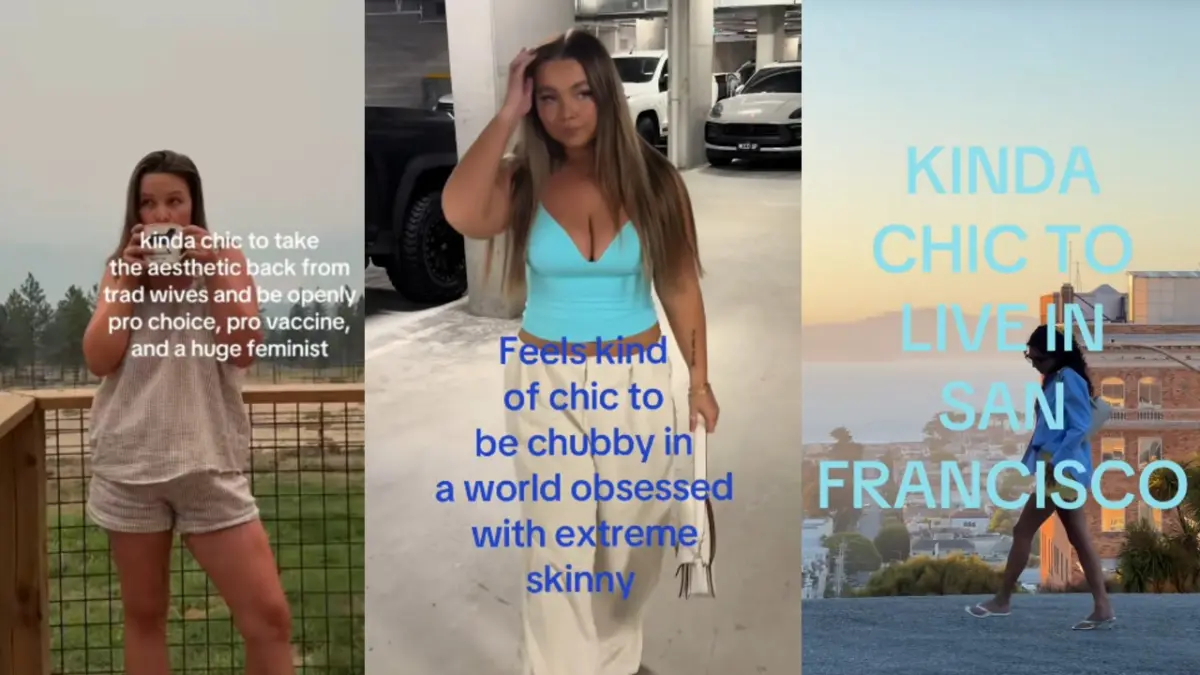
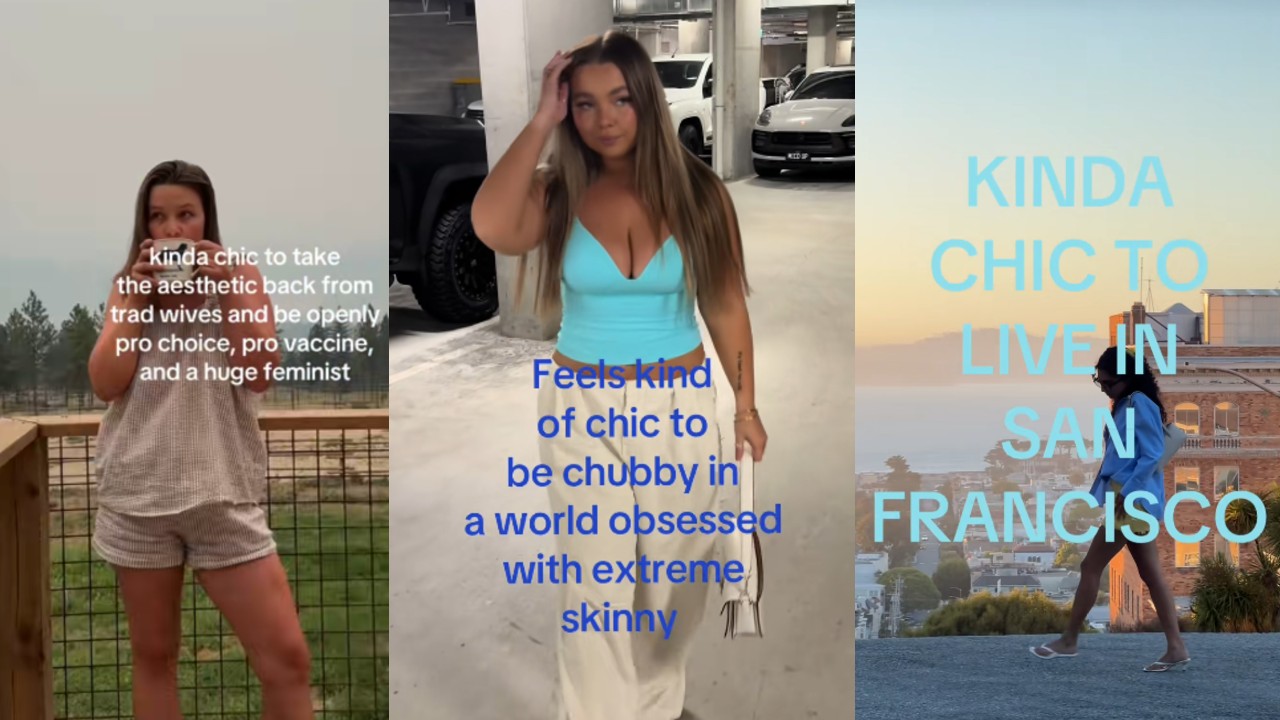
By mid-summer, the trend had broken out of its micro-community containment zones, crossing over into mainstream TikTok and Instagram feeds. On July 27th, 2026, creator @frankiehelen posted a tongue-in-cheek video declaring it "kinda chic to just say I’m a trad wife when I’m not even married or an asshole," cleverly poking fun at internet subcultures while amassing over 40,000 views in a fortnight.
The movement achieved hyper-viral velocity on August 2nd, 2026, when TikToker @lifewitht00 published a video captioned, "Feels kind of chic to be chubby in a world obsessed with extreme skinny." The post resonated deeply with millions, ultimately pulling in over 192,000 likes within five days and sparking an influx of similar duets and response videos.
The tipping point from internet subculture to widespread cultural fixture occurred on August 3rd, 2026, when veteran actress Drew Barrymore shared an image carousel on Instagram leaning into the trend with the declaration, "KINDA CHIC TO BE IN YOUR 50s." Barrymore’s endorsement brought institutional validity and multi-generational appeal to the movement, driving the hashtag’s visibility higher and cementing its place in the 2026 digital canon.
Supporting Context & Metrics: Decoding the Appeal
To understand why the "Kinda Chic" trend captured the public imagination so swiftly, one must examine the socio-cultural climate of social media in 2026. For years, platforms like Instagram and TikTok have been scrutinized for fostering unrealistic standards of beauty, wealth, and productivity. Terms like "quiet luxury," "that girl," and "balletcore" dominated previous years, all of which—despite their minimalist branding—demanded significant financial investment, rigorous physical maintenance, and strict behavioral codes.
The Antidote to Exhaustion Culture
"Kinda Chic" arrived as a psychological antidote to perpetual optimization. By injecting the word "kinda"—a linguistic modifier that introduces a deliberate sense of casual uncertainty—participants rejected the dogmatic certainty of traditional aesthetic trends. You are not claiming to be the pinnacle of fashion or wellness; you are merely suggesting that comfort, mental peace, or self-acceptance holds a comparable, if understated, value.
Key Thematic Pillars of the Trend
An analysis of thousands of posts utilizing the trend reveals several recurring thematic categories:
- Body Positivity and Radical Acceptance: Moving away from diet culture and extreme fitness metrics, users celebrate aging, stretch marks, fluctuating weights, and natural physical forms as inherently stylish.
- Comfort-First Lifestyle: Rejecting restrictive footwear and architectural garments in favor of elastic waistbands, oversized silhouettes, and sensory comfort.
- Mental Health Boundaries: Framing the act of saying "no," protecting personal peace, and managing burnout not as failures of productivity, but as sophisticated lifestyle choices.
- Subverting Traditional Archetypes: Playfully co-opting rigid online tropes—such as the "tradwife" or the hyper-productive entrepreneur—and stripping them of their pressure to perform.
Quantitative Impact
While search metrics and platform data continue to evolve, engagement statistics from early August 2026 underline the unprecedented velocity of the movement:
- High Engagement Ratios: Videos tagged with variations of the trend consistently outperform baseline engagement metrics for lifestyle creators, indicating high emotional resonance with viewers.
- Cross-Demographic Participation: Unlike niche aesthetics tied strictly to Gen Z or Millennials, the trend has successfully bridged age gaps, drawing enthusiastic participation from teenagers as well as prominent figures in their 50s and beyond.
Cultural Analysis: The Evolution of "Chic"
The word "chic" has a storied history. Originating in French and traditionally associated with cleverness, elegance, and high fashion, it was long used to describe things that required taste, money, and deliberate cultivation. To call something chic was to elevate it above the ordinary.
The "Kinda Chic" trend radically democratizes and internalizes the concept. By shifting the locus of elegance from external markers—such as designer logos, immaculate home interiors, or flawless skin—to internal states of being, the trend completes a postmodern inversion of luxury.
Sociologists point out that this linguistic framing reflects a broader economic and psychological reality in the mid-2020s. With younger generations facing persistent economic pressures, skyrocketing housing costs, and pervasive burnout, the pursuit of traditional luxury has increasingly felt out of reach or hollow. Consequently, cultural capital has migrated away from material accumulation toward emotional resilience and self-preservation. In an exhausting world, peace of mind is the ultimate luxury; acknowledging that peace with a casual shrug is "kinda chic."
Future Outlook: Where Does the Trend Go From Here?
As the "Kinda Chic" movement continues to mature across social media ecosystems, industry analysts and digital culture researchers are evaluating its long-term viability and potential commercialization.
The Risk of Co-Optation
As with any viral phenomenon rooted in authenticity, the primary threat to "Kinda Chic" is corporate co-optation. Major lifestyle, fashion, and wellness brands have already begun testing the waters, attempting to market products under the guise of the trend—selling elastic-waist trousers, comfort-wear, or wellness supplements framed as "kinda chic."
However, marketing experts warn that heavy-handed corporate participation risks killing the organic, self-deprecating charm that made the trend popular in the first place. The power of "Kinda Chic" lies in its casual, grassroots defiance of consumerist perfection; once a brand attempts to sell it back to consumers as a packaged aesthetic, the underlying irony and sincerity are easily lost.
Long-Term Cultural Legacy
Even if the specific hashtag eventually fades from peak algorithmic visibility, the cultural posture it champions is likely to endure. The trend has opened up a permanent conversational space on social media where imperfection is not merely tolerated, but celebrated. It has provided millions of users with a low-stakes vocabulary to articulate self-worth without the pressure of toxic positivity.
Ultimately, the "Kinda Chic" trend serves as a mirror reflecting a generation learning to exhale. By lowering the stakes and redefining elegance through the lens of mental peace and bodily autonomy, participants have proven that the most radical thing you can do on the internet today is to simply accept yourself, flaws and all—and decide that, actually, that’s more than enough.