Executive Overview
In an era dominated by the algorithmic duopoly of Google Maps and Apple Maps, the digital cartography landscape seemed permanently settled. However, a sudden geopolitical flashpoint has triggered one of the most unexpected legacy software resurrections in Silicon Valley history. On Tuesday, September 1, 2026, MapQuest—the pioneering "OG" web-mapping application long assumed by many to be a relic of the early-2000s internet—surged to become the No. 1 overall application on the U.S. App Store.
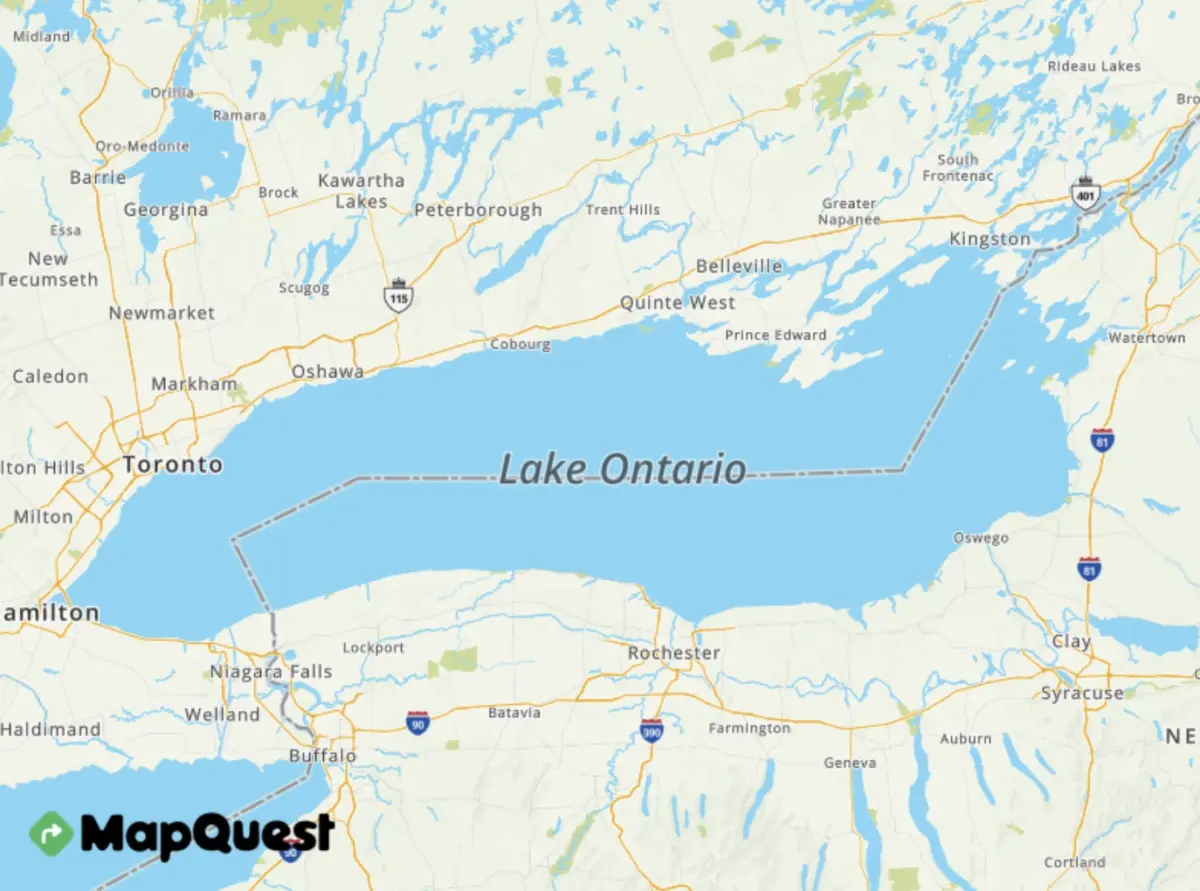
This dramatic ascension, which saw MapQuest climb from a modest No. 8 on Monday to the absolute zenith of the iOS charts, was not driven by a breakthrough technological update or a massive advertising campaign. Instead, it was sparked by a high-stakes act of corporate and cartographic defiance. Following a highly controversial executive order issued by President Donald Trump on August 27, 2026, which directed U.S. geographic naming authorities to rename Lake Ontario as "Lake America," the tech industry split along ideological and operational lines.
While multinational titans Google and Apple swiftly capitulated to the federal directive to protect their regulatory standing and maintain alignment with official databases, MapQuest publicly refused to comply. Leveraging its position as a smaller, more agile player, the legacy brand declared it would retain the name "Lake Ontario." This stance transformed the mapping app into a digital battleground for consumer protest, driving a massive wave of downloads from users eager to express their dissatisfaction with the federal mandate.
Detailed Chronology
The timeline of MapQuest’s rapid ascent illustrates how quickly political decisions can disrupt consumer technology markets in the social media age.
[August 27] Executive Order 141xx Issued -> [August 28] MapQuest Defies Order on X (App Rank: 128) -> [August 29] Public Backlash Against Big Tech Grows (App Rank: 92) -> [August 31] Apple Capitulates; MapQuest Surges (App Rank: 3 / No. 1 Navigation) -> [September 1] MapQuest Hits No. 1 Overall App Store SpotAugust 27, 2026: The Spark
President Trump issues an executive order titled "Honoring the American History of the Great Lakes and Renaming Lake Ontario as Lake America." Designed to signal a hardline stance in ongoing bilateral trade negotiations with Canada, the order directs the United States Geological Survey (USGS) and the domestic Geographic Names Information System (GNIS) to immediately deprecate the name "Lake Ontario" in favor of "Lake America" across all official federal communications and mapping assets.
August 28, 2026: The Line in the Sand
As federal agencies begin updating their internal databases, MapQuest takes a public stand. Via its official account on X (formerly Twitter), the company announces that it will not adopt the new designation, asserting its commitment to historical cartographic accuracy and international naming standards.
Almost simultaneously, Google Maps begins updating its rendering engines to display "Lake America." On this day, MapQuest sits at a quiet No. 128 on the U.S. App Store charts.
August 29, 2026: The Viral Ripple Effect
As consumers realize that Google Maps has updated its labels, public backlash begins to mount. Digital rights advocates, geographers, and political opponents of the administration voice their disapproval online.
MapQuest’s refusal goes viral, positioning the legacy brand as an unexpected symbol of resistance. By the end of Saturday, MapQuest climbs to No. 92 on the App Store charts.
August 31, 2026: Apple Capitulates, MapQuest Soars
On Monday, Apple Maps quietly follows Google’s lead, updating its vector maps to label the body of water as "Lake America." The compliance of both dominant mobile operating system providers leaves MapQuest as the sole major mapping platform resisting the change.
Consumer sentiment shifts rapidly toward active support for the underdog. By Monday evening, MapQuest rockets to No. 3 overall on the App Store and claims the No. 1 spot in the highly competitive Navigation category.
September 1, 2026: The Crown Reclaimed
By Tuesday morning, the momentum becomes unstoppable. MapQuest officially claims the No. 1 overall position for all free apps and games on the U.S. App Store, completing an unprecedented climb in less than five days.
Supporting Context & Metrics
The scale of MapQuest’s resurgence is reflected in both its chart positioning and its installation metrics.
The Download Surge in Numbers
According to preliminary data compiled by mobile market intelligence provider Sensor Tower, MapQuest was downloaded approximately 632,000 times in the United States in the immediate aftermath of the executive order (from August 27 through September 1).
However, when accounting for international reactions—particularly in Canada, where the unilateral renaming of a shared Great Lake sparked widespread diplomatic and public outrage—the numbers are even higher. Reached for comment, MapQuest’s parent company revealed that the application had surpassed 1.5 million installs across the United States and Canada combined during this brief window.
MapQuest U.S. App Store Chart Trajectory (August 28 – September 1, 2026):
--------------------------------------------------------------------------
August 28:   [#128 Overall]
August 29:   [#92 Overall]
August 31:   [#3 Overall] -------> [#1 in Navigation]
September 1: [#1 Overall] -------> [All Apps & Games]
To put this velocity into perspective:

- YTD Concentration: A staggering 56% of MapQuest’s total year-to-date U.S. downloads occurred within this single six-day window.
- Day-over-Day Velocity: Daily U.S. downloads experienced an average increase of 123% day-over-day during the peak of the controversy.
- Year-over-Year Growth: Download volume during this period was more than 50 times higher than that of the corresponding timeframe in 2025.
Corporate Lineage and Agility
To understand how MapQuest was able to pivot so quickly, it is helpful to look at its corporate structure. Launched in 1996 as an early consumer web pioneer, MapQuest was acquired by AOL in 1999 for $1.1 billion. In the decade that followed, it ceded its dominant market share to Google Maps, which offered superior mobile integration and pre-installed defaults on Android devices.
After passing through Verizon’s hands following its acquisition of AOL in 2015, MapQuest was quietly sold in 2019 to System1 (NYSE: SST), an internet advertising and user-acquisition technology company.
Unlike Google (Alphabet) and Apple—multibillion-dollar conglomerates heavily dependent on federal contracts, regulatory approvals, and antitrust clearances—System1 operates with a different set of business constraints. This relative insulation from direct federal oversight gave MapQuest the operational freedom to ignore the executive order, turning what could have been a regulatory risk into a highly successful brand-building opportunity.
Official Statements
The conflict highlights a fundamental divide in corporate philosophy between Big Tech compliance and the strategic independence of smaller platforms.
The Challenger: MapQuest
Speaking to TechCrunch via email, MapQuest General Manager Doug Berger emphasized that this download surge has translated into sustained user engagement rather than temporary curiosity:
"What’s been incredible is that people aren’t just installing our app—they care enough to communicate directly with us—making feature requests and submitting bug reports on social, and in our app reviews. Our small team has been working around the clock to build features people are asking for. We are aiming for everyone to have a great experience with the app."
MapQuest has also leaned into its rebel branding by launching an interactive web tool. The utility allows users to humorously rename Lake Ontario to whatever they choose and share the custom-labeled maps on social media, reinforcing the company’s critique of top-down geographical renaming.
                      +-----------------------------+
                      |     U.S. Executive Order     |
                      |   "Rename Lake Ontario to   |
                      |       Lake America"         |
                      +--------------+--------------+
                                     |
              +----------------------+----------------------+
              |                                             |
              v                                             v
    +-------------------+                         +-------------------+
    |  Big Tech Giants  |                         |  Agile Challenger |
    | (Google & Apple)  |                         |    (MapQuest)     |
    +---------+---------+                         +---------+---------+
              |                                             |
              | Compliance via                              | Strategic
              | GNIS Database                               | Defiance
              v                                             v
+---------------------------+                 +---------------------------+
| Updates maps to reflect   |                 | Retains historical name;  |
| "Lake America" label      |                 | launches interactive tool |
+---------------------------+                 +-------------+-------------+
                                                            |
                                                            v
                                              +---------------------------+
                                              | Achieves No. 1 ranking    |
                                              | on U.S. App Store         |
                                              +---------------------------+
The Incumbent: Google
Google defended its decision to rename the lake by pointing to its standard operating procedures regarding national sovereignty and official geographical registries:
"We update our map labels to accurately reflect changes made by official government sources, such as the United States Geological Survey’s Geographic Names Information System (GNIS). Our policy is to remain politically neutral and provide users with maps that align with local administrative and legal standards."
The Silent Giant: Apple
Apple has declined to comment publicly on its decision to rename the lake. However, industry analysts suggest that Apple’s compliance stems from similar operational guidelines, as the company relies heavily on official government datasets to maintain licensing agreements and ensure its devices remain compliant with national standards worldwide.
Future Outlook
As the initial wave of downloads begins to stabilize, MapQuest faces the challenging task of converting this moment of viral attention into long-term market share.
The Retention Challenge
Historically, apps that rise to the top of the App Store on the back of political or cultural trends face steep drop-offs in user retention once the news cycle moves on. For MapQuest to sustain its comeback, it must bridge the gap between a symbolic "protest download" and a reliable daily utility.
This will require significant capital investment from System1. MapQuest’s engineering team must rapidly modernize its user interface, optimize its routing algorithms, and expand offline mapping capabilities to compete with the feature-rich ecosystems of Google Maps and Apple Maps.
The Geopolitics of Digital Cartography
This dispute highlights a broader, more complex trend: the politicization of digital maps. Cartography has always been an exercise in political power, but the transition to digital platforms has made geographic naming dynamic and highly sensitive.
In the past, Google and Apple have navigated these issues by showing localized borders and names depending on where a user is located—such as displaying different borders in Crimea or Jammu and Kashmir to users in Russia, Ukraine, India, or Pakistan. The "Lake America" controversy brings this geopolitical tension home to North America, showing that even domestic geographical features can become subject to shifting political currents.
A Blueprint for Challenger Brands
Ultimately, MapQuest’s successful stance offers a compelling case study for legacy and challenger brands. In a tech landscape dominated by massive, risk-averse corporations, MapQuest has demonstrated that strategic defiance can be a powerful tool for brand differentiation. By prioritizing historical consistency and consumer sentiment over immediate regulatory compliance, the "OG" mapping app has not only secured its place back on millions of smartphones but has also challenged the idea that Big Tech’s map of the world is the only one that matters.