Executive Overview
For years, the monitor market has been trapped in a binary struggle for dominance: traditional IPS panels offering high refresh rates at affordable prices, versus high-end OLED displays providing near-infinite contrast ratios at exorbitant costs. While OLED technology has taken impressive strides in bridging the affordability gap, a stubborn memory crisis has inflated component costs across the broader hardware ecosystem, squeezing consumers looking for high-performance upgrades.
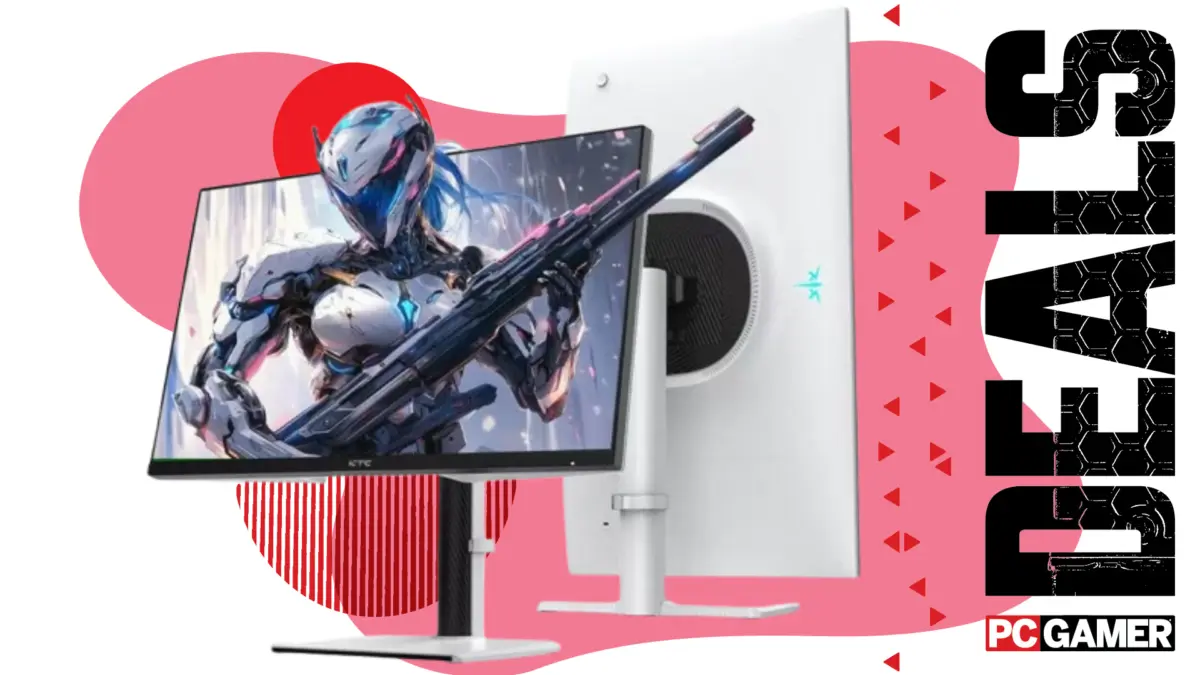
Amidst this economic turbulence, Mini-LED technology has carved out a revolutionary middle ground, combining the blinding peak brightness of localized dimming zones with the swift response times of traditional LCD architecture. Leading this charge is the critically acclaimed KTC M27T6S, a 27-inch, 1440p gaming monitor that has unexpectedly defied current market trends.
Currently available at Best Buy for an unprecedented $260—its lowest price point on record—this display represents a massive paradigm shift. Scoring a phenomenal 90% in hardware evaluations and cementing its place as a top-tier recommendation for 1440p gaming, the KTC M27T6S does not merely compete with entry-level HDR and budget OLED alternatives; in many scenarios, it comfortably outperforms them. This comprehensive report explores the technological innovations behind the monitor, an analysis of its performance metrics, its position in the current hardware landscape, and what this price drop means for the future of display technology.
Detailed Chronology: The Rise of KTC and the Evolution of the M27T6S
To understand the significance of the $260 price tag, one must trace the recent trajectory of KTC (Key Top Computer) within the competitive hardware ecosystem. Historically known as an OEM/ODM manufacturer producing white-label displays for major brands, KTC shifted its strategy to launch proprietary retail hardware lines, catching the attention of enthusiasts seeking uncompromised performance without the traditional "brand-name tax."
Early 2026: The Critical Breakthrough
When hardware reviewers first evaluated the updated 2026 white edition of the KTC M27T6S earlier this year, expectations were tempered. Budget Mini-LED monitors often suffer from clunky local dimming algorithms, severe blooming, or lackluster firmware support. However, the M27T6S shattered these expectations, earning a stellar 90% review score and quickly climbing to the summit of recommended 1440p gaming monitors.

The Mid-2026 Market Squeeze
Concurrently, the global component market entered a punishing memory crisis. Prices for flash storage, RAM, and silicon infrastructure drove up production costs, causing ripple effects that inflated MSRPs across graphics cards, motherboards, and displays. While competing manufacturers adjusted their pricing upward to protect profit margins, KTC’s supply chain stability allowed for aggressive promotional positioning.
Present Day: The Record-Breaking $260 Drop
The arrival of the monitor at Best Buy for $260 marks a watershed moment. Never before has a high-zone Mini-LED panel of this caliber breached the mid-$200 threshold. For budget-conscious builders and upgraders alike, this discount transforms a compelling recommendation into an absolute must-buy.
Supporting Context & Metrics: Under the Hood of the KTC M27T6S
Evaluating a gaming monitor requires looking past marketing buzzwords and examining the core hardware specifications, panel characteristics, and real-world performance metrics.
Panel Architecture and Technical Specifications
- Display Size & Resolution: 27-inch QHD (2560 x 1440)
- Panel Type: Fast IPS with Mini-LED Backlighting
- Local Dimming Zones: 1,152 zones
- Refresh Rate: 200 Hz
- Response Time: 1 ms (GtG)
- HDR Certification: HDR1000
The Mini-LED Advantage: Smashed Expectations in SDR and HDR
The crown jewel of the KTC M27T6S is its 1,152-zone local dimming array. While standard edge-lit or basic direct-lit LED monitors struggle with uniform backlighting, a matrix of over a thousand independent zones allows the display to tightly control light emission across the screen.
In standard SDR (Standard Dynamic Range) workflows, the monitor is exceptionally competent, offering sharp text clarity and consistent color reproduction. However, activating the HDR1000 mode is where the display transforms entirely.

Industry benchmarks and field testing—particularly within demanding titles like Cyberpunk 2077—demonstrate a stark contrast between Mini-LED and OLED performance profiles. While OLED panels excel in pitch-black environments due to their self-emissive pixels, they can struggle in high-APL (Average Picture Level) scenes featuring sweeping, bright environments. For instance, render-heavy desert environments under a blazing sun often push OLED panels into automatic brightness limiting (ABL) territories, resulting in a muted, slightly dull image because the entire panel cannot sustain ultra-high brightness simultaneously.
The KTC M27T6S obliterates this limitation. Reviewers noted that rendering desert sunscapes in Cyberpunk 2077 on this monitor yields a searing, genuinely blinding level of brightness that approaches true physical discomfort. This achieves an authentic HDR realism that completely outclasses entry-level "HDR 400" monitors, which lack the physical luminance required to produce true high dynamic range.
Trade-offs: The Limitations of Budget Mini-LED
No piece of hardware is without compromise, especially at a $260 price point. While the KTC M27T6S dominates bright scenes, it reveals minor limitations in exceptionally dark, high-contrast scenarios.
- Light Bleed and Blooming: Because Mini-LED relies on physical clusters of diodes behind an LCD stack, extreme contrast boundaries—such as a small white cursor against a pitch-black background—can occasionally exhibit mild blooming or halo effects.
- Build Quality and I/O Constraints: The chassis is constructed predominantly from sturdy plastics rather than premium aluminum alloys. Furthermore, the monitor lacks advanced connectivity features like a high-wattage USB-C Power Delivery hub, meaning users cannot conveniently single-cable charge a gaming laptop while playing.
Despite these minor concessions, the core display performance far outweighs the physical build limitations. A 200 Hz refresh rate paired with a snappy 1 ms response time ensures that motion handling remains buttery smooth, eliminating ghosting and keeping pace with high-end non-Mini-LED competitors.
Comparative Analysis: KTC M27T6S vs. The Market
To contextualize the gravity of this $260 deal, it is essential to examine its positioning relative to alternative display technologies available today.

| Feature / Metric | KTC M27T6S (Mini-LED) | Budget Entry OLED | Standard 1440p IPS |
|---|---|---|---|
| Price Point | ~$260 (Best Buy Sale) | ~$270+ (e.g., Acer Nitro OLED deals) | ~$200 – $250 |
| Peak Brightness | HDR1000 (Searing highlights) | Moderate (Subject to ABL limits) | Low to Moderate (300-400 nits) |
| Refresh Rate | 200 Hz | 240 Hz | 1440p / 165Hz – 180Hz |
| Dark Scene Performance | Good (Minor blooming possible) | Perfect (True Blacks) | Mediocre (IPS Glow) |
| Burn-in Risk | Zero | Present (Mitigated by modern tech) | Zero |
When weighed against budget-oriented QD-OLED alternatives—such as entry-level 240Hz OLED panels that hover just $10 higher at retailers like Walmart—the choice boils down to use cases. Gamers who prioritize absolute black levels in cinematic, dark-room horror titles may lean toward OLED. However, those who play in well-lit rooms, demand blistering peak luminance for HDR gaming, or fear the long-term degradation of organic pixel burn-in will find the KTC M27T6S to be the vastly superior choice.
Future Outlook: What This Means for the Display Industry
The aggressive pricing of the KTC M27T6S signals a transformative shift in the monitor market heading into the latter half of the decade. For years, advanced display tech like local dimming Mini-LED arrays carried a severe early-adopter tax, often restricting them to the $500–$1,000 bracket.
By demonstrating that high-zone Mini-LED can be successfully manufactured, reviewed, and retailed at the $260 mark, KTC is forcing legacy monitor brands to rethink their pricing strategies. Consumers no longer have to settle for washed-out edge-lit IPS panels or risk financial strain to experience true HDR gaming.
As supply chains stabilize and component manufacturing matures, we can anticipate a broader democratization of high-end panel technologies. Until then, price trackers and hardware analysts agree: for anyone currently utilizing a standard 1080p or basic 1440p screen, snapping up the KTC M27T6S while this historic Best Buy discount remains active is arguably the smartest hardware upgrade of the year.