For over a decade, The Elder Scrolls V: Skyrim has maintained a monumental presence in the cultural landscape of gaming. Released by Bethesda Game Studios in November 2011, the title continues to captivate millions of players worldwide through its sprawling open world, rich Norse-inspired lore, and deeply immersive gameplay loops. Among the game’s many iconic locations, the Throat of the World—the highest peak in Skyrim—and the legendary pilgrimage to reach the mysterious Greybeards at High Hrothgar stand out as definitive milestones for any player stepping into the boots of the Dragonborn.
At the base of this towering mountain lies the sleepy village of Ivarstead, where a local messenger named Klimmek greets travelers with a sobering warning about the arduous trek ahead. To reach the summit, he explains, one must ascend The 7,000 Steps, a legendary pathway carved into the jagged rock face of the world’s roof. For years, however, observant players have noted a glaring geographical discrepancy: a literal count of the visible stone steps reveals nowhere near seven thousand stairs, hovering closer to an estimated 700. Even when accounting for footstep calculations by dedicated community archives like the Ultimate Elder Scrolls Portal, the actual traversal requires roughly 2,400 footsteps.
Now, as part of Bethesda Game Studios’ sweeping 40th-anniversary retrospectives—which famously included the long-awaited official subtitle reveal for The Elder Scrolls 6: Sentinel—developers have finally broken their silence. Newly unearthed behind-the-scenes commentary confirms what many suspected: the design team genuinely attempted to build all 7,000 steps into the game’s world, only to discover that the mathematical and spatial realities of video game development made a literal interpretation entirely untenable. This comprehensive investigative report explores the monumental challenge of designing Skyrim’s most famous mountain, the logistical nightmare of mapping 7,000 stairs into an open-world engine, and the fascinating compromises developers must make when translating sprawling lore into playable reality.
Detailed Chronology: The Architectural Evolution of the Throat of the World
To understand why The 7,000 Steps remain a mathematical myth, one must examine the development timeline of The Elder Scrolls V: Skyrim. During the conceptualization and world-building phases in the late 2000s, Bethesda Game Studios sought to construct a landscape that felt genuinely vast, vertical, and mythic. The Throat of the World was envisioned not merely as a high point on a map, but as a towering geographic anchor that would physically and metaphorically dominate the province.
Phase 1: Conceptualizing the Pilgrimage
In the original lore of The Elder Scrolls, the path to High Hrothgar was always described in epic proportions. The moniker "The 7,000 Steps" served as both a literal instruction and a poetic hyperbole meant to convey the spiritual exhaustion and physical peril faced by those seeking the counsel of the Greybeards. When environmental artists and level designers at Bethesda began translating this lore into the proprietary Creation Engine, they faced an immediate philosophical crossroads: should the physical geometry of the game map match the literal text of the lore, or should it submit to the spatial limitations of digital map design?
Deciding to test the boundaries of their own world-building philosophy, members of the environmental design team took up the challenge of physically constructing all 7,000 steps along the mountain’s ascent. What followed was a masterclass in scale distortion, spatial budgeting, and the humbling realization of digital architecture.
Phase 2: The Attempted Implementation
According to retrospective developer commentary released during Bethesda’s 40th-anniversary celebrations, an environmental artist tasked with refining the shapes of High Hrothgar made a concerted, literal-minded effort to layout the full path.
"I love trying to be as faithful to lore or real-life as possible and I did my darndest to find a way to fit all 7,000 steps into the storied path," the developer noted. However, the spatial reality of the game world quickly intervened. When every single step was mapped out sequentially, the pathway could no longer be contained within the immediate vicinity of Ivarstead.
The stairs spiraled upward, stretched outward, and ultimately extended far past the village boundaries, wrapping completely around the mountain’s flank and terminating deep within the frozen tundra near the city of Whiterun. The sheer linear distance required to house 7,000 distinct geometric objects broke the intended pacing of the early-game journey, transforming a localized pilgrimage into an absurd cross-provincial marathon.
Phase 3: The Compromise and Scaling Down
Realizing that a 1:1 scale representation of the lore-accurate stairs would completely warp Skyrim’s overworld geography, the development team made the executive decision to heavily compress the path. The visual language of the stairs was retained—broken stone markers, ancient shrines to the Wise Women of Kyne, and weathered flagstones were placed strategically to evoke a sense of immense age and distance—while the actual count was slashed to a manageable number.
The resulting path, while still daunting to a low-level character, proved navigable within a reasonable timeframe. Yet, the lore-friendly designation of "The 7,000 Steps" remained intact, creating a fascinating cognitive dissonance between the in-game text and the physical reality rendered on screen.
Supporting Context & Metrics: Breaking Down Skyrim’s Scale
The discrepancy between the literal name of the path and its physical reality is not an isolated anomaly within Skyrim; rather, it is a textbook example of open-world game design compression. To understand why 7,000 steps proved impossible, one must analyze the mathematical and cartographic scaling models used by Bethesda Game Studios.
The Problem of Open-World Compression
Open-world role-playing games rarely, if ever, operate on a 1:1 physical scale with the real-world equivalents they represent. If Bethesda had constructed Skyrim to a true geographical scale, traveling from the northern docks of Solitude to the southern swamps of Riften would take real-world days of uninterrupted walking.
To maintain player engagement, developers employ aggressive spatial compression. Cities are miniaturized, populations are truncated, and wilderness distances are shortened. Consider these notable scalar quirks within Skyrim:
- Solitude: The bustling capital of Haafingar and the seat of the Skyrim Empire boasts a permanent population of fewer than 100 named residents within its walls.
- Whiterun: Serving as the central trade hub of the hold, the city features a handful of agricultural plots and a sparse residential district that metaphorically represents a much larger agrarian society off-camera.
- The Mountain Ascents: Distances between holds are compressed so that a player can traverse the entire province in a matter of hours, making narrative timeframes feel fluid and manageable.
[Lore-Accurate Path]  ---> Ivarstead ===> Throat of the World ===> Extended deep into Whiterun Tundra (Abandoned Concept)
[Rendered In-Game Path] ---> Ivarstead ===> ~700 Physical Stone Steps ===> High Hrothgar Summit (Optimized Reality)
Counting the Steps: What the Data Shows
Meticulous community researchers, notably contributors to the Ultimate Elder Scrolls Portal (UESP), have analyzed the geography of the climb to establish empirical data regarding the ascent:
- Visible Stone Steps: A manual count of the rendered stone steps carved into the mountainside yields roughly 700 distinct platforms.
- Footstep Equivalents: When measuring the distance using in-game movement mechanics and walking animations, navigating from the base near Ivarstead to the doors of High Hrothgar requires approximately 2,400 digital footsteps.
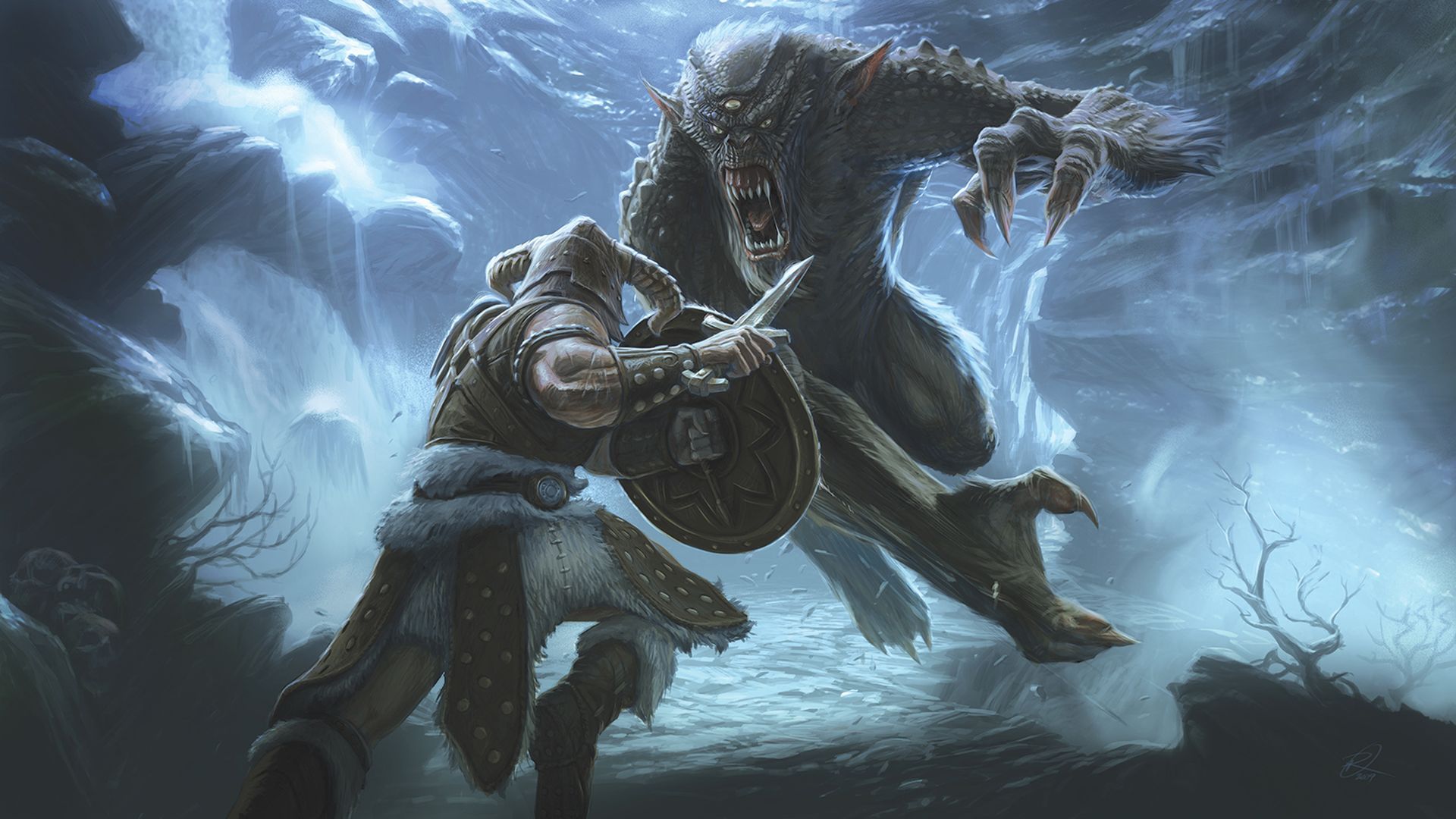
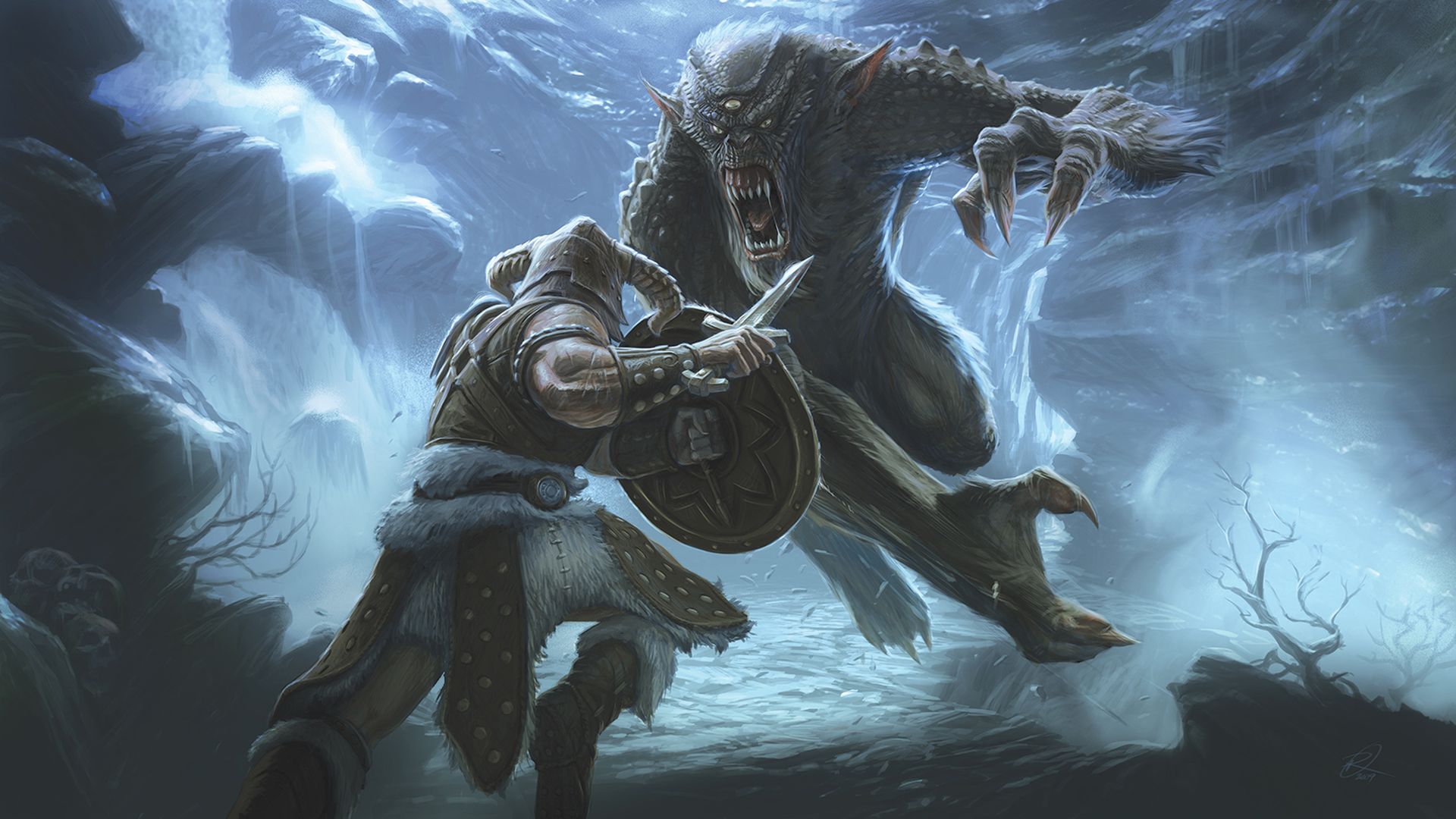
- The Environmental Hazards: While the development team successfully managed the layout of the mountain, terrain dressing, and visual flora, they explicitly disclaimed responsibility for one specific element of the climb: the infamous Frost Troll. Stationed midway up the path, this hostile creature has served as a rite of passage—and a recurring nightmare—for countless low-level players who dared to scale the mountain too early in their campaign.
Official Statements & Developer Insights
The revelation regarding The 7,000 Steps emerged as a treasured nugget of industry lore during Bethesda’s celebration of four decades in the gaming sphere. As executives, designers, and programmers looked back on iconic titles like The Elder Scrolls III: Morrowind, Oblivion, and Skyrim, archival insights shed light on the day-to-day creative struggles of building virtual worlds.
In their official retrospective commentary, the environmental design team emphasized the delicate balancing act between narrative purity and technical feasibility. The developer responsible for sculpting High Hrothgar reflected on the challenges of dressing the mountain with visual effects, flora, and architectural debris:
"While not responsible for the rough layout of Skyrim’s terrain, I was responsible for refining the shapes of High Hrothgar. I would look at the mountain from various viewpoints and tried to keep the shape interesting… This of course, included the infamous 7,000 steps. Now, I love trying to be as faithful to lore or real-life as possible and I did my darndest to find a way to fit all 7,000 steps into the storied path. However, my best attempt to do so included extending far past Ivartstead, wrapping around the mountain and ending near Whiterun in the frozen tundra. It turns out, 7,000 is quite a lot!"
Furthermore, the team lightheartedly clarified boundaries of responsibility regarding enemy placement, noting: "By the way, my work did NOT include enemy encounters, so I take no responsibility for the Frost Troll that was the woe of many players."
This transparency highlights a broader truth about game development: legendary features within beloved franchises are often born from a combination of grand narrative ambition, technical pruning, and humorous community-driven milestones that outlive the original design intent.
Future Outlook: What This Means for The Elder Scrolls 6
As the gaming community eagerly anticipates the next major chapter in the franchise—The Elder Scrolls 6, officially subtitled Sentinel during recent promotional milestones—discussions surrounding world scale, lore fidelity, and environmental design have taken center stage.
Modern hardware capabilities, advanced procedural generation tools, and massively expanded storage mediums mean that future iterations of Tamriel will likely feature far greater fidelity and more expansive physical scales than what was possible on seventh-generation consoles in 2011. However, the fundamental design lesson learned from The 7,000 Steps remains evergreen: literal adherence to fantastical lore does not automatically translate into good video game pacing.
Key Takeaways for Future Open-World Design:
- Pacing Over Pedantry: Players value smooth gameplay progression and engaging environmental storytelling over mathematically rigid adherence to in-game texts. Forcing a player to walk through 7,000 literal steps of empty geometry would quickly transition from awe-inspiring to tedious.
- Implied Scale: Utilizing environmental cues—such as worn stone, weathering, distant vistas, and narrative dialogue—successfully tricks the human brain into perceiving a much larger, grander world without requiring exhaustive digital mapping.
- The Legacy of Memorable Obstacles: Whether it is a literal mountain climb or an unexpectedly punishing Frost Troll, the friction points engineered into open-world exploration forge lasting community memories that define a game’s enduring legacy.
As Bethesda Game Studios looks toward the horizon with Sentinel, the legacy of Skyrim’s impossible stairway serves as a humorous and poignant reminder of the creative compromises required to build worlds that feel both mythic and alive. While the Dragonborn may never truly climb seven thousand physical stairs, the journey to the Throat of the World remains an unforgettable cornerstone of interactive entertainment history.