Executive Overview
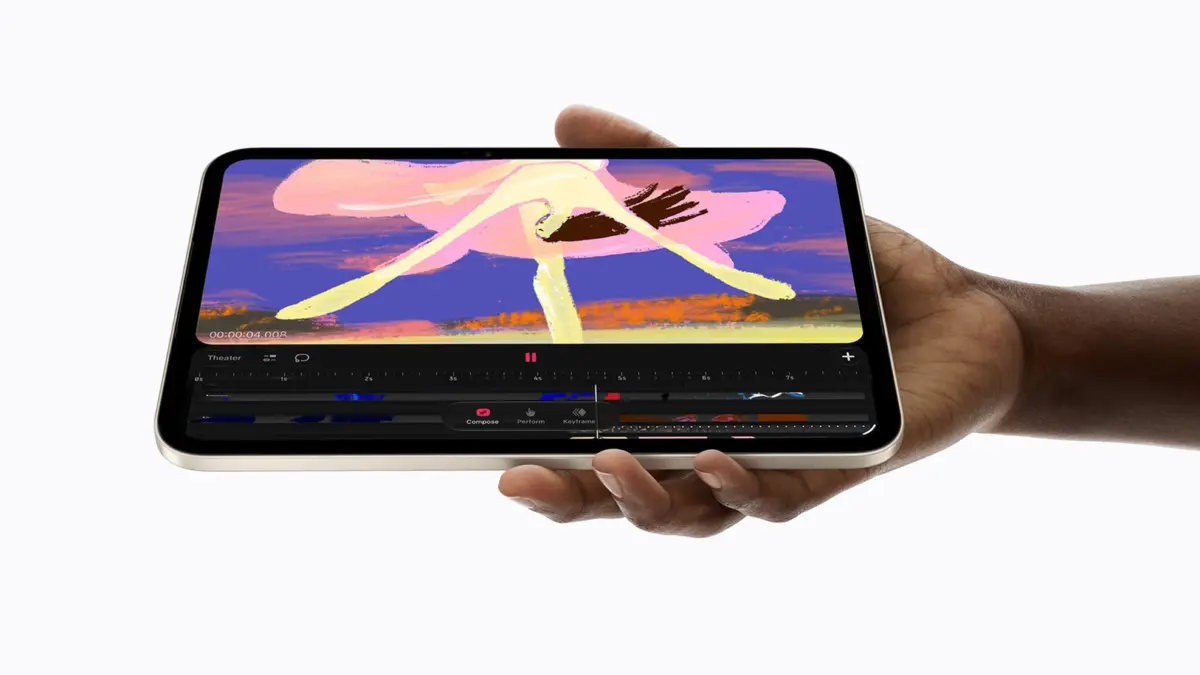
Apple’s compact tablet line has long occupied a unique, beloved corner of the consumer technology ecosystem. Because Apple updates the iPad mini on an irregular, multi-year cycle rather than an annual cadence, each new iteration arrives bearing generational leaps in capability. The latest entry into the lineage is no exception. Powered by the groundbreaking 2nm A20 Pro system-on-chip (SoC) and boasting Apple’s coveted OLED display technology for the first time outside the iPad Pro lineup, the new iPad mini is a technological marvel on paper.
Yet, this ambitious generational refresh arrives tethered to a controversial narrative. Apple has implemented a steep $200 price hike, shifting the entry-level tier to a formidable $699. For users opting for the maximum 512GB configuration, complete with cellular connectivity and the optional nano-texture glass finish, the price balloons to an eye-watering $1,249—territory historically reserved for the larger, more robust iPad Pro.
Compounding the sticker shock is a pared-down color palette, restricted solely to Midnight and Starlight, and a persistent omission that has ignited fierce online debate: a standard 60Hz refresh rate. Despite these points of friction, the new iPad mini introduces unprecedented features to Apple’s small-form-factor segment, including an IP67 water-resistance rating, Wi-Fi 7, Bluetooth 6, Apple’s proprietary C2 cellular modem, and an innovative acoustic display system. This report provides a comprehensive examination of the hardware, pricing strategies, engineering decisions, and market implications surrounding Apple’s most powerful compact tablet to date.
Detailed Chronology and Hardware Evolution
The Leaps and Bounds of the A20 Pro SoC
The architectural backbone of the new iPad mini is its silicon. Built on an ultra-efficient 2nm process, the 5-core A20 Pro SoC represents a seismic shift in processing power. According to Apple’s internal benchmarks, the new processor delivers up to 2.7 times faster graphics performance and an astonishing 4.5 times increase in artificial intelligence workloads compared to the A17 Pro found in its predecessor.
Storage configurations remain consistent with previous generations—starting at 128GB and topping out at 512GB. However, a notable segmentation exists within the lineup: the top-tier 512GB model features an extra CPU core alongside a dual 16-core Neural Engine. While official RAM specifications remain omitted from Apple’s formal documentation, industry consensus and teardown expectations point to a substantial upgrade to 12GB of RAM across the board, up from the 8GB found in the outgoing model.
This hardware foundation ensures seamless compatibility with Apple Intelligence and expanded Siri AI capabilities. Furthermore, while base models handle intensive on-device AI tasks with ease, the 512GB variant is custom-engineered to shoulder the most demanding computational workflows. Battery life claims remain stable, but Apple has introduced faster charging capabilities, allowing the tablet to reach a 50 percent charge in just 30 minutes when paired with a compatible adapter.
The Long-Awaited Transition to OLED
Arguably the most significant aesthetic and functional upgrade is the integration of an OLED panel. This move elevates the iPad mini to elite status, making it the only other tablet in Apple’s portfolio besides the iPad Pro to feature OLED technology.
While the display maintains a resolution roughly comparable to past generations, its luminous capabilities are dramatically enhanced, achieving up to 1,200 nits of peak HDR brightness. This stands in stark contrast to the A17 Pro iPad mini, which maxes out at a modest 500 nits of SDR brightness.
The transition to OLED has also yielded physical dividends. Despite housing a slightly larger 8.5-inch display—made possible by reducing the surrounding bezels by 24 percent—the tablet’s overall footprint is markedly sleeker. It shares the exact height and near-identical width of its predecessor, yet it is noticeably thinner at 5.4mm and lighter at 255 grams (compared to 6.3mm and 293 grams for the previous model).
Creative professionals and digital artists will find much to love here. Continued support for the Apple Pencil Pro, paired with the color-accurate, high-contrast canvas of the OLED screen, transforms the compact tablet into an elite portable studio for HDR content creation.
Supporting Context & Metrics
The 60Hz ProMotion Controversy
Despite the overwhelming praise for the OLED upgrade, a storm of criticism erupted across social media platforms like X shortly after the announcement. Users and tech enthusiasts expressed widespread disappointment over Apple’s decision to stick with a standard 60Hz refresh rate on a product commanding a $700 starting price in the year 2026.
In a market where high refresh rates (120Hz) have become standard on mid-range Android tablets and smartphones—and even budget devices—the omission of ProMotion on a premium Apple device is glaring.
Audio Innovation: The IP67 Rating and Acoustic Display
In a design achievement for the compact tablet category, the new iPad mini earns Apple’s first-ever IP67 water-resistance rating. To accomplish this without sacrificing internal volume, Apple engineered a radical acoustic system, eliminating traditional speaker grilles.
Instead, the device utilizes a new Acoustic Display system. Tweeters are placed strategically between the glass and the aluminum body, while woofers fire directly through the display panel. Apple claims this setup delivers punchier bass, enhanced treble clarity, and greater overall volume. This echoes historical experiments like the Huawei P30 Pro, though Huawei’s implementation was primarily designed to replace an earpiece for voice calls rather than project full stereo sound.
Connectivity and Ergonomic Refinements
The iPad mini is fully future-proofed in terms of connectivity, incorporating:
- Wi-Fi 7: For ultra-fast local wireless data transfers.
- Bluetooth 6: Ensuring low-latency accessory pairing.
- Apple C2 Cellular Modem: A proprietary modem system promising up to 50 percent faster cellular data speeds.
Biometric authentication remains anchored to the Touch ID-enabled power button. Meanwhile, a subtle yet vital ergonomic adjustment repositions the front-facing camera along the tablet’s longer edge, drastically improving the natural framing for video calls when used in landscape orientation.
Official Statements and Industry Insights
Addressing the fierce consumer backlash over the 60Hz display limitation, Apple’s Vice President of Hardware Engineering, Dave Pakula, defended the company’s engineering choices in an interview with tech creator Christopher Lawley.
"The display experience is about more than just a single spec," Pakula explained during the discussion. He emphasized that the intrinsic physical properties of the new OLED panel—specifically its dramatically faster pixel response times—deliver a visual fluidity that redefines user perception. "It makes everything really smooth," Pakula noted, suggesting that raw numerical refresh rates fail to capture the holistic visual leap provided by modern OLED architecture.
Industry analysts have similarly weighed in on the pricing strategy. While the $699 entry point introduces a major barrier to entry, market watchers suggest Apple is deliberately repositioning the iPad mini from a casual reading and media-consumption device into a high-margin, professional-grade productivity tool. By packing desktop-class silicon, 12GB of RAM, and advanced AI capabilities into a sub-nine-inch frame, Apple is targeting niche power users who demand uncompromising performance in a pocketable footprint.
Future Outlook
The launch of the 2026 iPad mini establishes a fascinating precedent for the future of mobile computing. By refusing to compromise on internal architecture—equipping the device with the 2nm A20 Pro SoC and up to 12GB of RAM—Apple has effectively eliminated the performance gap between its smallest tablets and its largest professional hardware.
Gamers stand to benefit immensely from this shift. With resource-intensive AAA titles like Control and Death Stranding now natively available on the App Store, the new iPad mini emerges as a formidable, highly portable gaming console capable of sustained, high-fidelity performance.
However, market reception will ultimately hinge on whether consumers are willing to swallow a $200 price increase for features that, while undeniably advanced, sit alongside controversial omissions like a 60Hz screen. If the adoption rate remains high among enterprise users, digital artists, and mobile gamers, Apple’s gamble will pay off, cementing the iPad mini not as an affordable compromise, but as a luxury instrument of uncompromising power. If consumer pushback proves severe, it may force Apple to reconsider its aggressive pricing tiers in future hardware cycles.