Executive Overview
For decades, the Universal Serial Bus (USB) has served as the invisible digital nervous system of the modern technological age. From desktop computing peripherals to industrial mainframes and handheld pocket computers, USB has connected virtually every consumer hardware accessory imaginable. Yet, despite its ubiquity, the standard has long been plagued by user frustration: asymmetrical ports that required multiple attempts to plug in, an ever-expanding alphabet soup of confusing sub-specifications, and an ocean of tangled, incompatible cables.
The introduction of the USB Type-C connector in August 2014 promised to solve these headaches once and for all. Promoted as a universal, reversible, and extraordinarily capable conduit, Type-C has successfully swept across the consumer electronics landscape, displacing proprietary connectors and unifying everything from smartphones to heavy-duty laptops under a single port footprint.
However, a persistent urban legend continues to circulate online and among consumers: What does the "C" actually stand for? Popular guesses range from "connectivity" and "charging" to a descriptor for the cable’s curved physical shape.
The reality, stripped of internet folklore, is far more mundane yet historically significant. The "C" does not stand for any descriptive word or technical feature; it is merely an alphabetical designation. It represents the natural evolutionary next step in a lineage that began nearly thirty years ago with Type-A and Type-B.
Beyond demystifying the nomenclature, this report examines the historical architecture of USB standards, exposes the widespread consumer misconceptions regarding port capabilities, evaluates the engineering triumphs and physical vulnerabilities of the Type-C design, and casts a speculative eye toward the distant horizon of future connectivity.
Detailed Chronology: From the USB Dark Ages to the Type-C Era
To understand how the industry arrived at USB Type-C, one must retrace the historical milestones of the USB Implementers Forum (USB-IF) and the evolving philosophy of hardware design.
The Genesis: USB 1.0 and the Host-Peripheral Dichotomy (1996)
When USB 1.0 made its debut in January 1996, computing environments were a chaotic landscape of proprietary ports: parallel ports for printers, serial ports for modems, and distinct round connectors for mice and keyboards. The foundational goal of USB was to establish a single, plug-and-play architecture that could unify peripheral connections.
However, the architecture of early USB was strictly hierarchical and fundamentally asymmetric. It relied on two distinct physical plugs:
- USB Type-A: Designed as a flat, wide rectangle, this connector was designated exclusively for the "host"—the computer, hub, or power source that maintained administrative control over the bus.
- USB Type-B: Built as a chunky, nearly square plug with beveled top corners, this connector was meant for the "peripheral"—the downstream device, such as a printer, scanner, or external storage drive.
This division was deliberate. The host supplied the power and managed the communication protocol, while the peripheral obeyed. The radically different shapes enforced a one-way physical rule, ensuring users could never accidentally plug a device into another device or create a dangerous loop of power delivery.
The Proliferation of Fragmentation: USB 2.0 and the Mini/Micro Era (2000–2010s)
As portable electronics—digital cameras, MP3 players, and early smartphones—proliferated through the 2000s, the original Type-A and Type-B form factors proved far too bulky.
To accommodate miniaturization, the USB-IF introduced successive iterations:
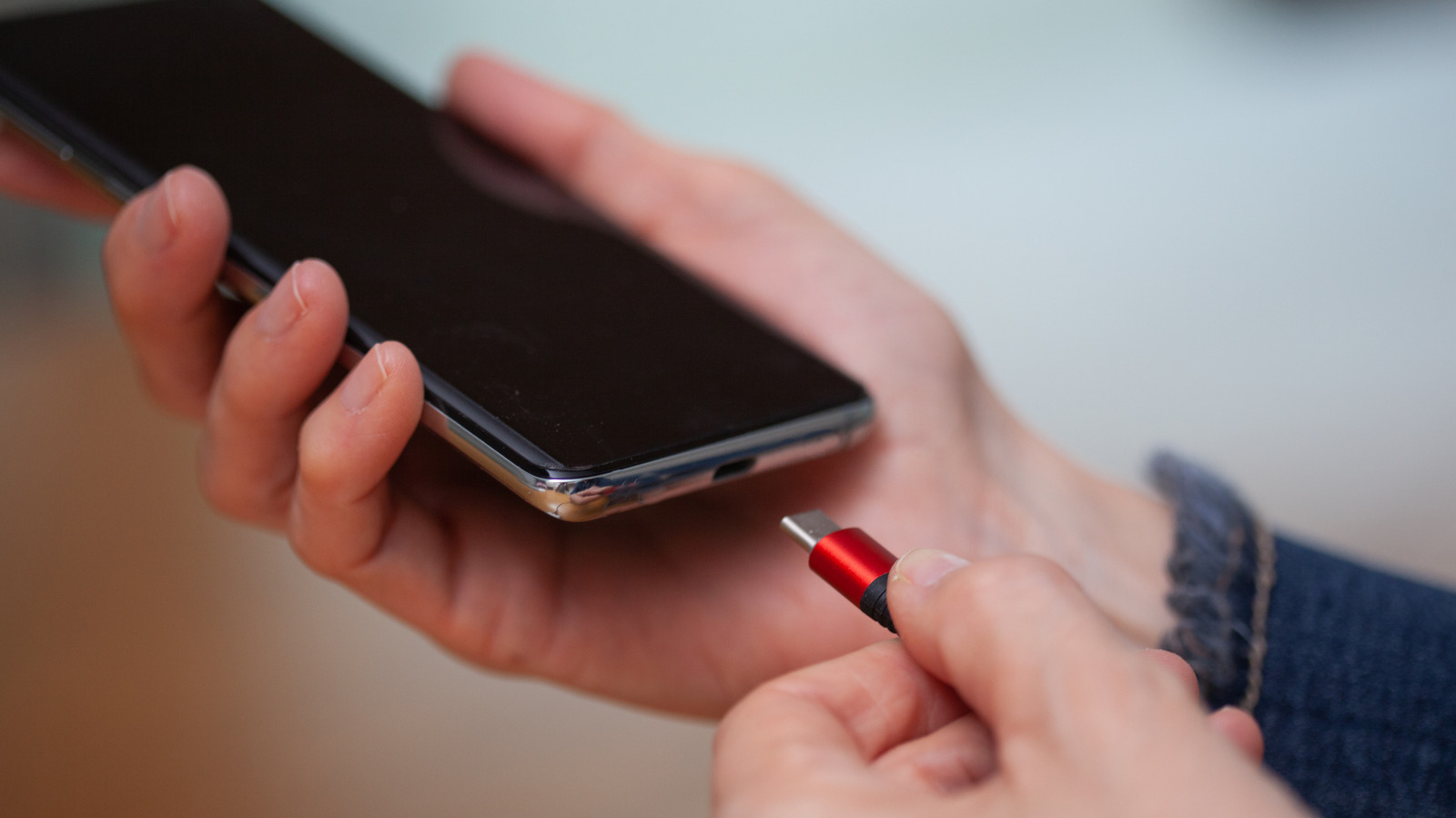
- Mini-USB: Launched with USB 2.0, this smaller connector attempted to bring standardized ports to compact gadgets, though it suffered from mechanical wear issues over time.
- Micro-USB: Eventually becoming the global standard for Android smartphones and mobile accessories for nearly a decade, Micro-USB offered an even thinner profile, though it retained the infamous asymmetrical trap of only plugging in "right side up."
Compounding this physical fragmentation was an increasingly confusing color-coding convention deployed by manufacturers to differentiate port speeds and power delivery features. Black typically indicated standard USB 2.0 speeds; blue denoted USB 3.0 (SuperSpeed); and red, yellow, or orange often pointed to "always-on" charging ports capable of supplying power even when the host computer was powered down. Unfortunately, adherence to these color codes was entirely voluntary. Hardware manufacturers routinely ignored the guidelines, leaving consumers to guess whether a given port could transfer data quickly or merely trickle a charge.
The Type-C Revolution: Finalization and Standardization (2014–Present)
Finalized by the USB-IF in August 2014, USB Type-C was engineered from the ground up to address nearly every major complaint leveled against its predecessors.
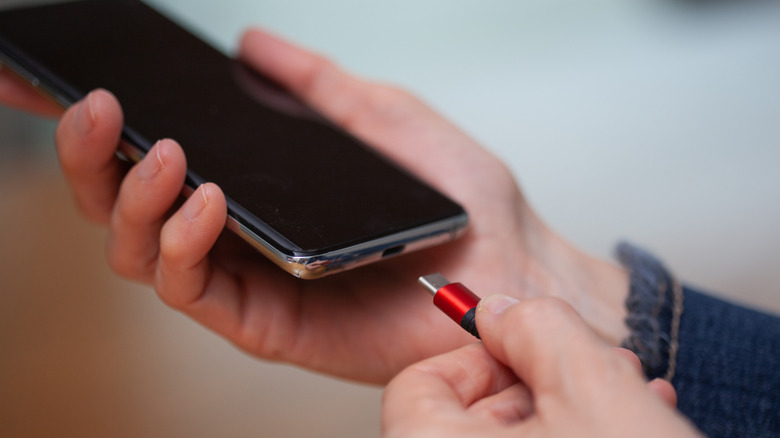
By eliminating the rigid host-versus-peripheral shape distinction at the physical layer, Type-C allowed the connector to be completely symmetrical and fully reversible. No longer did users have to flip a cable three times before finding the correct orientation. Furthermore, the internal logic of the connection shifted: the two connected devices now communicate via an intelligent negotiation protocol to determine power flow direction, data speeds, and alternative display modes dynamically.
Today, the Type-C physical standard serves as the foundation for the most advanced data protocols ever devised, including USB4 Version 2.0, which leverages the same physical footprint to push staggering data transfer speeds of up to 80Gbps.
Supporting Context & Metrics: Unpacking the Myths and Realities
The transition to a single, universal physical connector has inadvertently birthed a new category of consumer confusion. Because a USB-C cable or port looks identical regardless of its internal engineering, consumers frequently conflate physical shape with performance capabilities.
Debunking the Three Great USB Myths
Market research and consumer tech forums consistently reveal three pervasive misconceptions regarding the letter "C":
- The "Connectivity" Fallacy: A widespread assumption is that the letter stands for connectivity, owing to the port’s ability to bridge myriad device types—from monitors and audio interfaces to external GPUs and power banks. While accurate in spirit, it is etymologically false.
- The "Charging" Myth: Because USB-C has become the default medium for powering modern smartphones, tablets, and ultrabooks, many believe "C" stands for charging or current. Again, this describes a primary use case rather than the origin of the letter.
- The "Curved" Geometry Theory: Another common urban legend posits that the letter describes the physical geometry of the plug—specifically, its rounded, oblong cross-section.
In truth, the naming convention is entirely linear. Following Type-A and Type-B, the engineering committee simply progressed alphabetically to Type-C.
The Performance Illusion: Shape vs. Capability
Perhaps the most dangerous misconception is the belief that "all USB-C ports are created equal." Consumers routinely purchase a high-end external solid-state drive or a 4K external monitor, plug it into a laptop’s USB-C port using an arbitrary cable found in a desk drawer, and experience subpar performance or outright failure.
The USB-C specification defines only the physical connector—the dimensions of the plug, the pin layout, and the mechanical retention force. It does not dictate:
- Data Transfer Speeds: A USB-C port might operate at legacy USB 2.0 speeds (480Mbps), USB 3.2 Gen 2 speeds (10Gbps), or Thunderbolt 4/USB4 speeds (up to 40Gbps or 80Gbps).
- Power Delivery (PD) Wattage: While some USB-C ports deliver a modest 5V/1.5A trickle, others support USB Power Delivery profiles scaling up to 240W (48V at 5A), capable of energizing demanding gaming laptops and professional workstations.
- Alternate Modes: Not all USB-C ports support DisplayPort or HDMI video output, meaning a direct cable connection to an external monitor will fail unless the underlying hardware explicitly supports alternate display protocols.
Official Statements and Industry Perspective
Industry stakeholders and standards organizations have long grappled with the tension between simplifying user experiences and maintaining backward compatibility within a rapidly advancing technological ecosystem.
Representatives from the USB Implementers Forum have repeatedly emphasized that the primary design objective of Type-C was to future-proof device architecture by decoupling physical form from data protocol specifications. In historical technical briefings, USB-IF engineers noted:
"The objective of the Type-C architecture was to create a robust, scalable, and orientation-agnostic interface that could transcend generations of hardware. By shifting the complexity of power and data negotiation from static physical pins to intelligent software protocols, the connector adapts to the device rather than constraining it."
Concurrently, international regulatory bodies have intervened to mandate the standard for consumer protection and environmental sustainability. Most notably, the European Union’s Radio Equipment Directive formally mandated USB Type-C as the common charging standard for all handheld mobile phones, tablets, and cameras sold within the EU by late 2024.
Legislative frameworks view the universal adoption of Type-C not merely as a convenience, but as a critical measure to reduce electronic waste by eliminating the need for consumers to accumulate proprietary chargers and incompatible cables with every hardware upgrade.
Future Outlook: Beyond Type-C and the Prospect of Type-D
As USB Type-C firmly entrenches itself as the undisputed king of digital connectivity, engineers and industrial designers are already contemplating the next frontier of hardware interfaces.
The Physical Vulnerabilities of Type-C
Despite its overwhelming success, Type-C is not without engineering flaws. The most prominent vulnerability lies within the female socket architecture: the delicate, thin plastic or metal "tongue" situated in the center of the port, which houses the fragile spring-loaded contact pins.
If a user inserts a cable at an aggressive angle or introduces particulate debris into the port, this internal tongue can bend, crack, or shear off entirely. When this occurs, the entire port is compromised, often requiring expensive motherboard-level repairs for what is superficially a simple cable interface. Furthermore, mechanical wear on the outer shielding spring contacts can lead to a loose connection over years of heavy daily plugging and unplugging.
Envisioning USB Type-D and Beyond
At present, the USB-IF has announced no concrete development roadmap or formal plans for a "USB Type-D" connector. The current physical specifications of Type-C—bolstered by active optical cables, improved pin metallurgy, and continually scaling data protocols like USB4 v2—provide more than enough headroom to satisfy consumer and enterprise bandwidth demands for the foreseeable future.
However, if industry futurists and ergonomics experts were tasked with conceptualizing a hypothetical Type-D successor, the design priorities would likely center on:
- Magnetic Coupling or Contactless Induction: Transitioning away from physical insertion pins entirely in favor of secure, self-aligning magnetic attachment systems (similar to Apple’s MagSafe or industrial quick-release connectors) to eliminate mechanical wear and catastrophic port damage.
- Pancake-Profile Integration: Further reducing vertical height requirements to allow device manufacturers to engineer even thinner chassis without sacrificing structural port integrity.
- Omni-Directional Power and Optical Data Hybridization: Integrating native high-speed optical transceiver channels directly into the connection matrix to bypass the physical limitations of copper wiring entirely over longer distances.
Until such a paradigm shift materializes in research laboratories, USB Type-C will remain the definitive bedrock of digital connectivity. And while the letter "C" may lack a dramatic, poetic backstory, its legacy is securely cemented as the standard that finally brought order to the chaotic world of electronic cables.