Executive Overview
NVIDIA continues to double down on its polarizing artificial intelligence initiatives, bringing its latest neural rendering marvel—Deep Learning Super Sampling 5 (DLSS 5)—to the company’s popular RTX Remix modding platform. Originally debuted alongside NBA 2K27, DLSS 5 has provoked intense debate across the PC gaming community. While previous iterations of DLSS focused primarily on frame-rate acceleration through AI-driven upscaling and frame generation, DLSS 5 introduces 3D-Guided Neural Rendering, a technology that fundamentally alters in-game character lighting, surface texturing, and asset presentation.
The technology’s expansion into RTX Remix, alongside upcoming native implementations in titles like Hogwarts Legacy, signals NVIDIA’s unwavering commitment to AI-assisted graphics pipelines. However, this push has not been without controversy. Unlike its performance-boosting predecessors, DLSS 5 demands a heavy computational toll, frequently slashing frame rates by anywhere from 25% to over 50%. Critics argue that the technology imposes an unwelcome, overly polished "beauty filter" that betrays the original artistic intent of classic and modern games alike. Conversely, defenders and modding enthusiasts point to its transformative impact on character models, breathing new life into aging digital faces.
This comprehensive report examines the rollout of DLSS 5 across RTX Remix and RTX Spark, explores community-driven methods for injecting the technology into legacy titles, analyzes the real-world performance metrics on high-end hardware, and evaluates the broader implications of neural rendering for the future of PC gaming.
Detailed Chronology of the DLSS 5 Rollout
The trajectory of DLSS 5 from a controversial launch feature to a broader ecosystem tool has moved at a rapid pace, punctuated by hardware leaks, software updates, and community ingenuity.
- September 3: NVIDIA officially launches DLSS 5 alongside NBA 2K27. The rollout immediately sparks online debate regarding the aesthetic merits of 3D-Guided Neural Rendering and its heavy performance cost.
- Early September (The Leak): Following the early build leak of NBA 2K27, independent modders gain unauthorized access to DLSS 5’s neural rendering assets, laying the groundwork for unofficial community injection tools.
- October 16: DLSS 5 integration expands to RTX Spark, NVIDIA’s newly introduced system-on-a-chip (SoC) architecture aimed at enhancing local Windows AI capabilities.
- October 23 (Current Milestone): NVIDIA officially rolls out DLSS 5 support to the RTX Remix platform, empowering modders to remaster classic titles with advanced neural lighting and ray-traced enhancements.
- November 5 (Upcoming): Official native implementation scheduled to arrive in Avalanche Software’s Hogwarts Legacy, featuring heavily tuned visual profiles designed to mitigate the heavy-handed aesthetic criticism seen in earlier demonstrations.
Technical Analysis: How DLSS 5 Works and Community Injection
To understand why DLSS 5 is both celebrated and condemned, one must examine the underlying mechanics of 3D-Guided Neural Rendering. Traditional graphics pipelines rely on deterministic rasterization and ray tracing algorithms to calculate light bounce, shadow depth, and material properties based on strict mathematical rules set by game developers. DLSS 5, by contrast, intercepts these pipelines to reinterpret scenes through deep learning models trained to infer complex lighting and facial features in real-time.
The Modding Community Takes the Reins
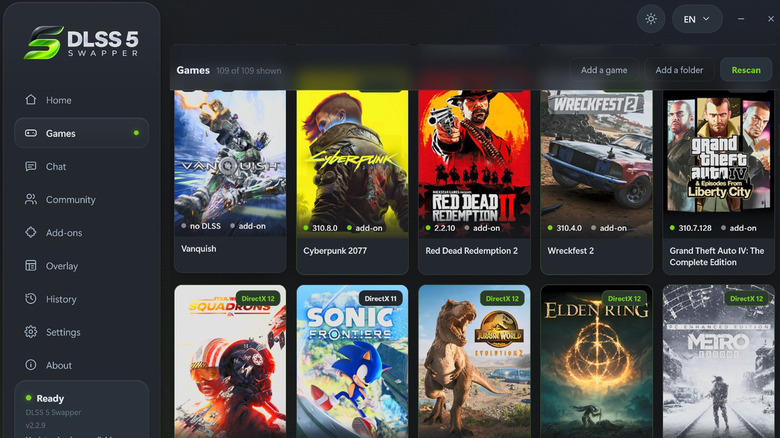
While official native support remains restricted to a handful of select titles, the PC modding community bypassed NVIDIA’s timeline entirely. Utilizing assets extracted from early software leaks, developers released community-built wrappers and utilities—most notably DLSS 5 Manager and DLSS 5 Swapper.
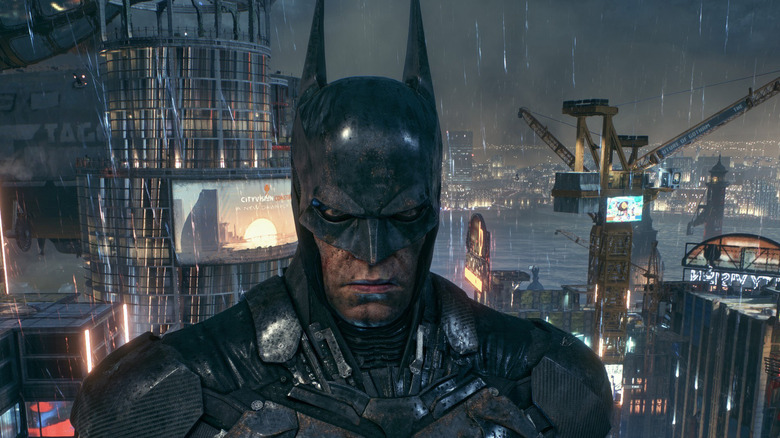
These applications allow users with compatible NVIDIA RTX graphics cards to inject neural rendering files into thousands of legacy Vulkan and DirectX titles (spanning DirectX 9 through DirectX 12).
[ Game Executable ] ---> [ DirectX / Vulkan API ] ---> [ DLSS 5 Swapper / DLLs ] ---> [ Neural Rendering Pipeline ] ---> [ Final Display Output ]Step-by-Step Community Installation Process:
- Acquisition: Download a trusted community tool such as DLSS 5 Swapper or DLSS 5 Manager from verified community repositories.
- Library Scan: Upon launching, the utility automatically catalogs local drives and major game client libraries to identify compatible rendering APIs.
- Injection: Select the target game from the UI and click "Install DLSS 5." The software automatically places the requisite DLL files and compatible Reshade configurations into the game directory.
- Verification: The application detects the correct rendering architecture natively, requiring zero manual script writing from the user.
- Reversal: If performance penalties or visual artifacts prove undesirable, clicking "Restore Originals" instantly strips the neural rendering files, returning the game to its pristine state.
The Anti-Cheat Roadblock
Despite the seamless nature of tools like DLSS 5 Swapper, compatibility is not universal. Games employing aggressive kernel-level anti-cheat software—such as Grand Theft Auto V: Enhanced Edition utilizing BattlEye—routinely block the unauthorized DLL injections required by these mods, causing the titles to crash on startup. Industry experts anticipate that this friction will gradually diminish as NVIDIA expands official, developer-sanctioned DLSS 5 support across a wider array of mainstream software.
Supporting Context, Visual Debates, and Performance Metrics
The discourse surrounding DLSS 5 centers on two primary battlegrounds: artistic integrity and hardware performance tax.
The "Yassification" Debate: Artistic Vision vs. AI Enhancement
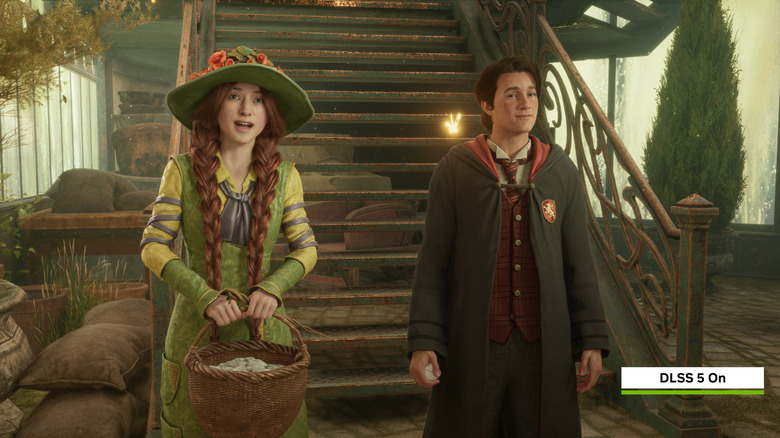
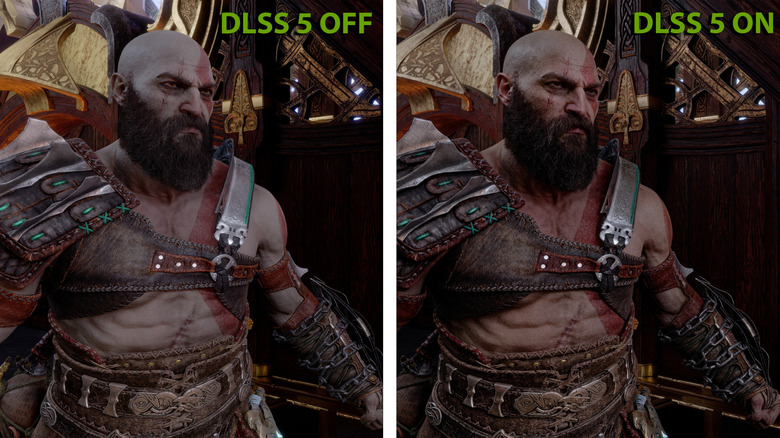
Critics have derided DLSS 5 as an intrusive, AI-driven beauty filter that homogenizes the visual identity of games. Early promotional material for Hogwarts Legacy and initial modded implementations drew sharp criticism for giving student and NPC faces an unnaturally smoothed, "yassified" sheen that detached players from the gritty atmosphere of the source material.
However, extended testing paints a more nuanced picture. In atmospheric titles such as Cyberpunk 2077, Remedy’s Control, and the Resident Evil 2 and Resident Evil 3 remakes, neural rendering yields striking results when focused primarily on character models. While environmental lighting changes are often subtle—typically manifesting as deeper, more accurate ambient occlusion shadows—the transformation applied to protagonist and NPC facial geometry is profound. Skin shaders, subsurface scattering, and eye reflections exhibit a level of fidelity that traditional rasterization struggles to match. Consequently, users are finding the best visual return on investment in narrative-driven, character-focused titles where facial close-ups are frequent.
The Performance Cost: FPS Metrics and Hardware Realities
Unlike DLSS 2 (Super Resolution) and DLSS 3 (Frame Generation), which are engineered explicitly to multiply frame rates, DLSS 5 is an intensive quality-first (or quality-altering) pipeline that levies a heavy performance penalty.
- Initial Launches: Early third-party implementations saw catastrophic performance degradation, with frame rates plummeting by 50% to 60% in demanding scenes.
- Recent Optimizations: Following recent driver updates and NVIDIA app beta optimizations (notably highlighted by PC Gamer’s analysis of the October model update), the performance tax in titles like NBA 2K27 has been reined in to an average 25% drop at 1440p resolution.
Comparative Frame Rate Impact (High-End Hardware Test Bench)
| Game Title | Resolution & Settings | Native FPS (DLSS 5 Off) | DLSS 5 Active (Pre-Update) | DLSS 5 Active (Post-Update) |
|---|---|---|---|---|
| Control | 4K, Max Settings, Ray Tracing | ~135 FPS | ~68 FPS | ~100 FPS |
| Metal Gear Solid 4 (Remaster) | 4K, Ultra Preset | ~120 FPS | ~52 FPS | ~70 FPS |
| Cyberpunk 2077 | 1440p, Psycho Ray Tracing | ~110 FPS | ~45 FPS | ~82 FPS |
As demonstrated by the benchmark data, running DLSS 5 comfortably requires elite-tier hardware. Users equipped with anything less than an NVIDIA RTX 5070 or AMD Radeon RX 9070 are strongly advised to leave the feature disabled. For the vast majority of PC gamers, the steep performance deficit makes neural rendering an impractical luxury.
Official Statements and Industry Perspective
NVIDIA has positioned DLSS 5 not as a replacement for traditional rendering techniques, but as the vanguard of a paradigm shift toward generative, AI-assisted graphics pipelines. Company representatives maintain that 3D-Guided Neural Rendering bridges the gap between static asset creation and dynamic scene interpretation, giving developers tools to achieve cinematic fidelity without manually baking lighting for every polygon.
Third-party developers and purist communities, however, remain cautious. While studios are slowly warming up to official integration—evidenced by Avalanche Software’s upcoming November 5 patch for Hogwarts Legacy—many creators worry about the erosion of precise artistic direction. When AI models dynamically reinterpret lighting and facial textures on the fly, the final visual output belongs as much to the neural network as it does to the game’s original art director.
Future Outlook
The integration of DLSS 5 into RTX Remix marks a watershed moment for the PC modding community. It demonstrates that classic games can be structurally re-envisioned using cutting-edge machine learning models, even if the barrier to entry remains sky-high.
Looking forward, the success of DLSS 5 will hinge on two critical factors: hardware accessibility and algorithmic efficiency. As NVIDIA refines its neural rendering models to reduce the crushing performance tax, and as subsequent GPU generations democratize the necessary tensor compute power, neural rendering may transition from an ultra-enthusiast novelty to an industry standard. Until then, DLSS 5 will remain a polarizing frontier—welcomed by modders seeking to push the boundaries of digital beauty, and scrutinized by purists guarding the sanctity of original artistic intent.