Executive Overview
Television history is punctuated by rare creative milestones that completely alter the trajectory of the medium. Shows like The Twilight Zone revolutionized the anthology format, I Love Lucy laid the foundational bricks for the modern multi-cam sitcom, and Lost forced mystery-box storytelling into the mainstream consciousness. Yet, some television landmarks achieve greatness not through narrative innovation alone, but through a total synthesis of style, mood, and cultural resonance.
Few series have achieved this quite like Miami Vice, the iconic NBC crime drama that ran from 1984 to 1990. While traditional television detectives of the era relied on gritty realism and drab precinct offices, Miami Vice injected an electric shock of pastel colors, cinematic framing, and pulsating pop soundtracks into the standard police procedural.
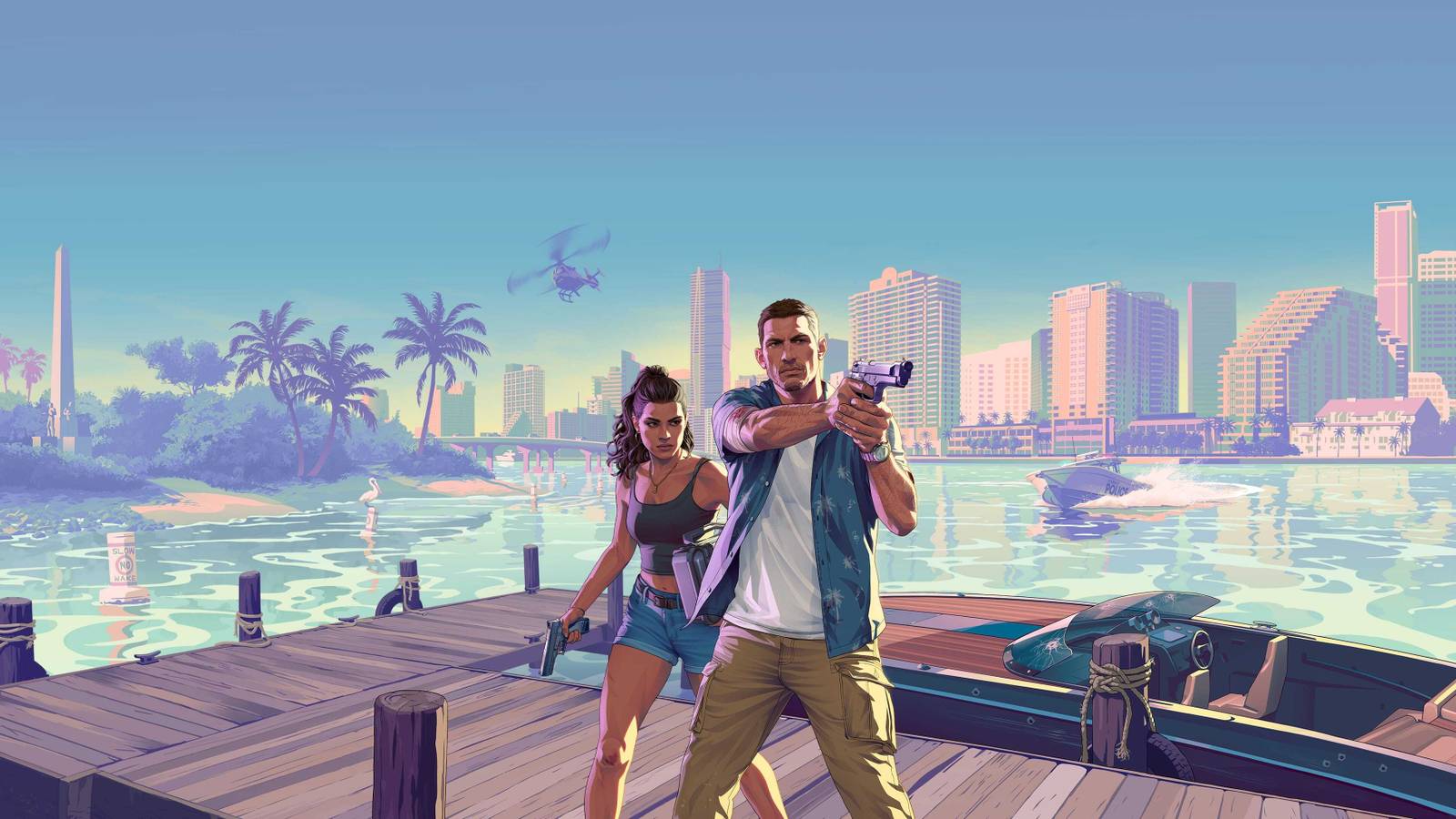
For modern audiences looking to bridge the agonizing gap before the release of Rockstar Games’ Grand Theft Auto 6—which returns virtual players to a hyper-modernized, neon-soaked rendition of Vice City—there is no better time to revisit the source. All five seasons of Miami Vice are currently available to stream for free on Tubi, offering a masterclass in atmospheric television that remains as influential today as it was four decades ago.
Detailed Chronology: The Rise, Reign, and Cultural Impact of an Icon
The 1984 Genesis: Bridging Cinema and Television
When Miami Vice premiered on NBC in September 1984, the television landscape was dominated by traditional, safe procedurals. Created by Anthony Yerkovich and heavily shepherded by executive producer Michael Mann, the series was conceptualized with a bold mandate: treat every single episode like a mini-feature film.
Yerkovich was inspired by a Harper’s Magazine article detailing how federal agents were seizing assets from drug smugglers in South Florida and using their own seized boats and cars in undercover operations. Coupled with a legendary internal NBC memo that simply read, "MTV Cops," the stage was set for a visual and auditory revolution.
The Evolution of Tone (1985–1988)
In its initial seasons, Miami Vice leaned heavily into its signature sensory overload. Detective Sergeants James "Sonny" Crockett (Don Johnson) and Ricardo "Rico" Tubbs (Philip Michael Thomas) zipped across Biscayne Bay in high-speed Chris-Craft boats, wearing unconstructed linen suits over pastel t-shirts, soundtracked by Phil Collins and Glenn Frey.
However, as the series progressed past its initial breakout success, the narrative tone underwent a profound shift. What began as a flashy, fast-paced action-adventure show steadily evolved into something far darker, more cynical, and profoundly melancholic. By seasons three and four, the neon lights of South Beach began to feel less like a glamorous playground and more like a neon-lit purgatory. Crockett and Tubbs were routinely forced to confront the systemic rot of the American criminal justice system, running up against deeply entrenched institutional corruption, broken bureaucratic machinery, and the crushing psychological weight of living double lives.
The Twilight Years and Cancellation (1988–1990)
By its fifth and final season, Miami Vice was fighting fatigue, writer turnover, and shifting network scheduling. Yet, even in its twilight phase, the show pushed boundaries by tackling controversial geopolitical themes, international drug cartels, and deeply personal psychological trauma for its central duo. When the series concluded in January 1990, it left behind a staggering 111 episodes that had permanently rewritten the rulebook for what weekly television could achieve visually and tonally.
Supporting Context & Metrics: Analyzing the Architecture of Miami Vice
The Characters: Moral Ambiguity and the Grey Areas of Justice
At its core, Miami Vice works because of the magnetic, contrasting chemistry between its two leads. Don Johnson brought a rugged, effortlessly cool, lone-wolf vulnerability to Sonny Crockett—a former college football star turned undercover cop living on a docked sailboat with an alligator named Elvis. This was perfectly offset by Philip Michael Thomas’s Ricardo Tubbs, a smooth, sophisticated ex-New York City police detective who moved to Miami seeking vengeance for his brother’s murder before joining the Metro-Dade Police Department.
Unlike the black-and-white morality common in 1980s television, Miami Vice lived and breathed in ethical grey areas. Crockett and Tubbs routinely had to cross moral lines, break federal laws, and betray their own code of ethics just to maintain deep-cover operations. Consequently, the series frequently rejected neat, "happily-ever-after" conclusions. Episodes often ended with haunting, ambiguous notes where the protagonists experienced no catharsis, serving time in a psychological wasteland of collateral damage.

The Auteur Touch: Michael Mann’s Visual Grammar
While several directors rotated through the series, executive producer Michael Mann’s blueprint defined its aesthetic identity. Mann—who would later apply these exact thematic and visual philosophies to cinematic masterpieces like Heat (1995) and Collateral (2004)—pioneered a visual grammar that mimicked high-end music videos.
Stylized violence, slow-motion sequences, rain-slicked pavement reflecting neon signs, and moody electronic scores (courtesy of Jan Hammer) became the series’ signature hallmarks. This cinematic approach elevated the weekly procedural format into high art, proving that television could match the production value of Hollywood feature films.
Cultural and Urban Transformation: The Real-World Impact on Miami
Perhaps the most staggering metric of the show’s success is its direct impact on the physical city of Miami itself. In the early 1980s, Miami Beach was struggling with economic decline, high crime rates, and crumbling Art Deco architecture.
Miami Vice turned the city into a central character. By showcasing the pastel-colored, historic Art Deco hotels of South Beach against gorgeous coastal sunsets, the show single-handedly sparked a tourism boom and catalyzed historic preservation efforts. According to the Miami Design Preservation League, the series fundamentally transformed the demographics, tourism economy, and architectural landscape of Miami Beach, turning a neglected urban center into a global luxury destination. Furthermore, the show’s costume design—championed by Michael Mann and costume designer Jodie Tillen—permanently altered global menswear trends, introducing pastel blazers, no-socks loafers, and casual linen to the mainstream.
Official Statements and Industry Reception
Looking back at the enduring legacy of Miami Vice, industry critics and creators alike continue to acknowledge its revolutionary status.
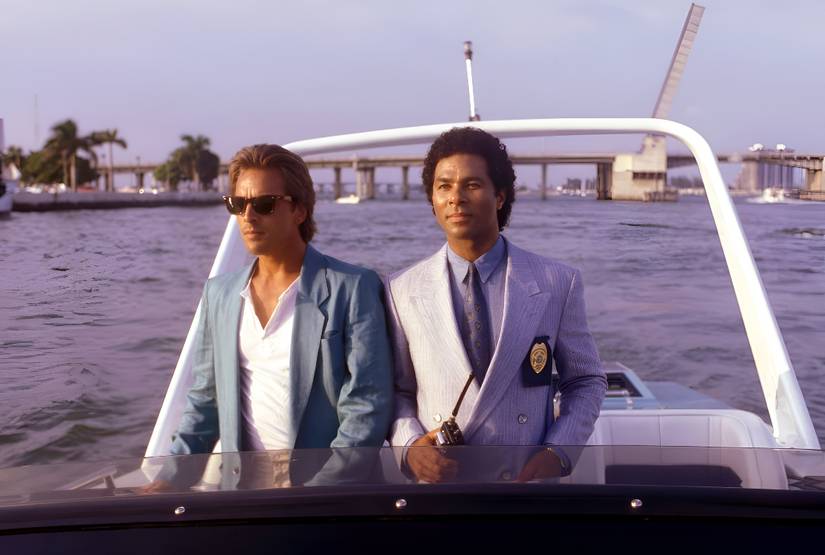
Michael Mann noted in retrospective interviews regarding the visual philosophy of the show:
"We weren’t interested in making standard network television. We wanted to capture the texture, the heat, the humidity, and the moral corruption of Miami in a way that had never been seen before. The camera had to move the way the music moved; the city had to feel alive, dangerous, and intoxicating all at once."
Television historians often point to Miami Vice as the missing link between the episodic television of the past and the "Golden Age" of serialized prestige drama that arrived decades later with The Sopranos and The Wire. By proving that television audiences could emotionally engage with morally compromised protagonists operating in ethically ambiguous worlds, Miami Vice opened the doors for complex, anti-hero-driven narratives across the entire industry.
Future Outlook: The Bridge to GTA 6 and Beyond
As the gaming community eagerly counts down the days toward the launch of Rockstar Games’ Grand Theft Auto 6, the cultural relevance of the Miami Vice blueprint has never been stronger. GTA: Vice City famously channeled the neon-soaked aesthetic, synth-heavy soundtracks, and criminal underworld tropes pioneered by the 1980s series. With GTA 6 returning players to the fictional state of Leonida (Rockstar’s modern take on Florida and Miami), anticipation is at an all-time high for a fresh interactive dive into sun-drenched corruption, high-speed boat chases, and organized crime.
For fans wanting to immerse themselves in the authentic roots of this specific brand of neo-noir crime fiction, streaming all five seasons of Miami Vice on Tubi provides an invaluable masterclass. Whether you are a die-hard gamer preparing for the next chapter of Rockstar’s open-world masterpiece, or a cinephile tracing the lineage of modern prestige television, Crockett and Tubbs’ patrol through the neon-lit streets of Miami remains an absolute essential watch.