Executive Overview
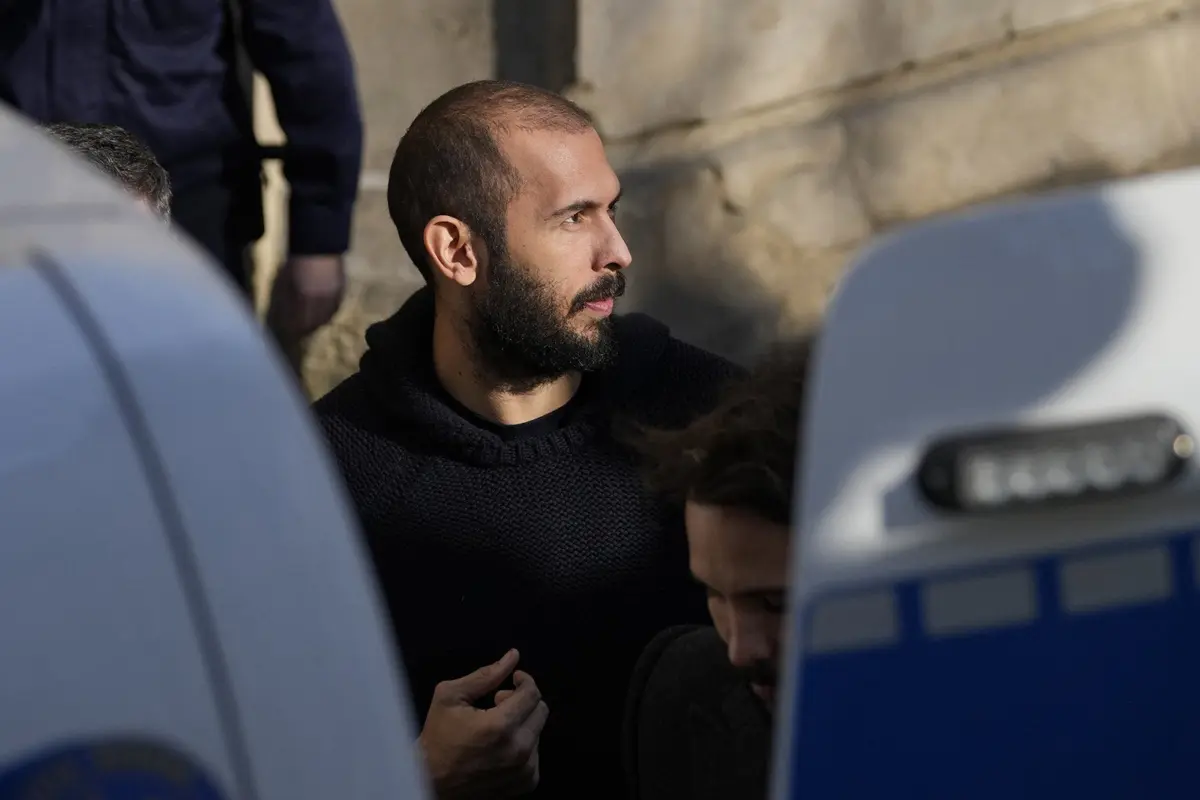
Controversial misogynistic influencer Andrew Tate, alongside his brother Tristan and two alleged accomplices, Georgiana Naghel and Luana Radu, transitioned from a high-security Bucharest penitentiary to house arrest in late March. While celebrated by the siblings and their supporters as a major legal triumph, an in-depth review of court documents, freedom of information requests, and insights from Romanian prosecutors reveals a starkly different reality.
Far from signaling a weakening of the state’s case, the Tates’ time in detention appears to have deeply exacerbated their legal jeopardy. According to confidential case files, transcripts, and insider sources within the Romanian judicial system, the influencers orchestrated a multifaceted campaign designed to obstruct justice. Prosecutors allege that the group plotted an illicit escape to Dubai under the guise of medical treatment, engaged in systematic witness intimidation, attempted to leverage far-right political connections, and illicitly accessed classified police databases.
Legal experts warn that these extra-judicial maneuvers have thoroughly alienated Romanian judges and prosecutors, instilling a profound institutional skepticism that will likely shadow the defendants throughout their upcoming trial, expected to commence in late April. This report synthesizes court filings, leaked wiretaps, and official statements to examine how the Tates’ aggressive penchant for controversy may ultimately sabotage their defense against grave charges of organized crime and human trafficking.
Detailed Chronology of Events
The legal saga surrounding the Tate brothers has evolved rapidly since law enforcement first raided their properties in late 2022. To understand the gravity of their current predicament, it is necessary to examine the sequence of events that transformed a standard criminal investigation into an expanding web of compounding legal liabilities.
Late December 2022: The Arrests and Initial Detentions
On December 29, 2022, Romanian authorities detained Andrew Tate, Tristan Tate, Georgiana Naghel, and Luana Radu during high-profile raids in the Ilfov county near Bucharest. The Directorate for Investigating Organized Crime and Terrorism (DIICOT) formally suspected the quartet of forming an organized criminal group, human trafficking, and rape—allegations the defendants have consistently denied. Following their arrest, a Romanian court remanded them to central custody, setting the stage for months of prolonged detention battles.
January – February 2023: Escalating Interventions and Alleged Intimidation
While locked behind bars, the defendants reportedly sought to alter the trajectory of the investigation through aggressive, unprescribed channels. Court documents detail a coordinated effort by the Tates and their network to pressure key witnesses and victims into retracting statements.
- December 2022 – February 2023: A US-based law firm representing the brothers issued a cease-and-desist letter to a primary witness in Florida, threatening defamation lawsuits if she failed to retract her allegations. Romanian prosecutors quickly integrated this document into their investigation as evidence of witness tampering.
- Mid-February 2023: Online surrogates for the Tate network, such as pro-Tate commentator Sulaiman Ahmed, publicly announced travels to the hometown of key witnesses, behavior prosecutors argue was intended to project intimidation. Concurrently, wiretaps reveal that Andrew Tate attempted to broker political interventions, allegedly instructing an assistant to promise future rewards to radical Romanian politicians George Simion and Diana Șoșoacă if they publicly championed his cause. Both politicians ultimately declined.
February 21, 2023: The Court Denies Release
In a strongly worded judicial summary issued on February 21, a Bucharest judge rejected the Tates’ latest appeal for release. The court cited fresh evidence of "new reasons" to keep the group locked away, explicitly noting that the accused posed a clear danger to public order, actively prepared to evade justice by fleeing the country, and exerted psychological pressure on vulnerable victims.
March 2023: The Medical Plot and the Dubai Wiretaps
Throughout March, court papers illuminated Andrew Tate’s desperate bids to secure international transit. Wiretapped jailhouse communications revealed a plotted escape to Dubai. Under the pretext of seeking treatment for a lung lesion—which representatives initially speculated to the Daily Mail was "most likely a tumor," but Andrew later conceded on social media was simply scarring from "an old battle"—Tate hoped to leverage the United Arab Emirates’ lack of an extradition treaty with Romania. Romanian authorities swiftly denied the travel request.
March 31, 2023: Transition to House Arrest
Despite the severe warnings issued by prosecutors and previous judges, two newly assigned appeals court judges ruled on March 31 to transfer the Tates and their alleged accomplices from central custody to house arrest at their guarded compound north of Bucharest. While framed as a victory by the defense, the ruling triggered quiet anxiety in legal circles, leading authorities to place the compound under continuous, high-level surveillance.
Supporting Context & Metrics
The quantitative and qualitative dimensions of the Tate case underscore the unprecedented scale of scrutiny facing the defendants. Romanian jurisprudence places immense weight on the demeanor and compliance of defendants awaiting trial, making the Tates’ public and private maneuvers exceptionally damaging.
Key Case Metrics & Indicators
- Number of Co-Defendants: 4 primary suspects (Andrew Tate, Tristan Tate, Georgiana Naghel, Luana Radu).
- Core Charges: Human trafficking, rape, and forming an organized criminal group.
- Duration of Pre-Trial Detention: Approximately 3 months in high-security holding (December 29, 2022, to March 31, 2023).
- Surveillance Scale: 1 dedicated luxury compound under 24/7 law enforcement monitoring during house arrest.
- Expanded Investigations: Multiple auxiliary probes triggered by alleged witness tampering, unauthorized database access, and international cease-and-desist maneuvers.
The Institutional Fallout: Judicial Irritation
According to Mihai Mareș, a prominent criminal defense lawyer in Bucharest and a law lecturer at the Alexandru Ioan Cuza University of Iași, the cumulative paper trail reflects a profound institutional frustration.
"Any subsequent statements they may give will be viewed with a certain amount of skepticism by the judicial bodies," Mareș explained.
Romanian judges operate within an inquisitorial-leaning civil law system where pre-trial conduct significantly influences the perception of credibility. By attempting to subvert the judicial process through backchannel political overtures, unauthorized database lookups, and international legal threats, the defendants have effectively poisoned their own well of presumed good faith.
Official Statements & Legal Perspectives
The friction between the defense teams’ public relations strategy and the stark language of the prosecution highlights a deep philosophical divide in how the case is being fought.
Defense Counter-Perspectives
The Tates’ legal representatives and spokespersons have consistently pushed back against the narrative that their clients are flight risks or bad actors. Eugen Vidineac, a defense attorney for the siblings, told local media:
"They have a home and children in Romania, they are under criminal investigation, there is no reason to run away."
Similarly, Mateea Petrescu, spokesperson for the Tates, addressed the controversial wiretaps regarding Dubai:
"Regarding their departure from the country, the partially published wiretaps omitted the context, [namely] Andrew discussing leaving to Dubai for medical inquiries only in the case that his status allows it."
Regarding the US cease-and-desist letters, Tina Glandian, a US-based lawyer recently added to the Tates’ Romanian legal roster, sought to distance the current defense team from the actions, emphasizing that her specific firm had no involvement. Petrescu further defended the correspondence as a standard civil action, asserting:
"These suspicions are obsolete given that the judges from the appeals court decided to place them in house arrest."
Prosecution and Expert Rebuttals
Legal experts and anonymous insiders within DIICOT maintain that the defense’s minimization strategy ignores the explicit wording of the court orders. A confidential source from the prosecutor’s office noted the extreme sensitivity of victim-related evidence and accused the brothers of tacitly inciting their massive online following:
"The Tates have played an extremely dangerous game. From [the Tates’] tweets, it appears they are encouraging it… Every aspect of the case that touches on the victims is very sensitive."
Furthermore, the involvement of Luana Radu—a former police officer accused of leveraging unknown contacts to illegally access classified Ministry of Internal Affairs databases between April and December 2022—has introduced systemic corruption angles to the prosecution. A presiding judge noted in court files that it would have been technically impossible for Radu to access the secure database without high-level external assistance, signaling that auxiliary indictments against unindicted co-conspirators may be forthcoming.
Future Outlook
As the legal teams prepare for the commencement of the official trial in late April, the road ahead for Andrew and Tristan Tate appears fraught with structural hazards.
- Widening Scope of Criminal Investigation: Legal scholars point out that if prosecutors formally establish that the US cease-and-desist letter and online follower campaigns were designed to force a withdrawal of criminal complaints, the brothers could face entirely new, distinct charges for influencing statements and obstructing justice.
- Eroded Judicial Credibility: Because the February court files explicitly highlighted the defendants’ "clear danger for public order" and persistent attempts to evade investigation, future appeals for lighter house arrest conditions or permission to travel internationally will face an exceptionally steep judicial hurdle. Judges will view every motion through the lens of prior deception and boundary-pushing.
- The Trap of Inevitable Controversy: As one experienced Romanian justice system insider bluntly summarized, Andrew Tate’s deep-seated compulsion for public validation and manufactured controversy may ultimately prove to be his undoing: "I think Andrew Tate is not the most intelligent guy, but he probably can’t help himself."
In conclusion, while the transition to house arrest offered the Tates a temporary physical reprieve from the stark confines of Bucharest’s central arrest facility, the investigative fallout of their clandestine maneuvering has fundamentally reinforced the prosecution’s hand. As the trial approaches, the very tactics meant to secure their freedom may well cement their legal defeat.