Executive Overview
Following the much-anticipated opening of pre-orders for Apple’s latest hardware category entrant, the iPhone Duo, regulatory compliance filings have pulled back the curtain on one of the device’s most closely guarded technical specifications: its exact battery capacity. According to official European Union regulatory documents published shortly after pre-orders went live, the iPhone Duo packs a formidable 4883mAh total power source.
This disclosure settles weeks of industry speculation, insider leaks, and consumer debate regarding how Apple managed power delivery within the unique, dual-screen form factor of the iPhone Duo. Sitting comfortably on the high-end spectrum of contemporary mobile power capacities, the 4883mAh figure places the device squarely between the standard flagship Pro models and the ultra-massive Pro Max tier.
However, raw numbers only tell part of the story. Because the iPhone Duo incorporates a revolutionary dual-display architecture—balancing an external everyday cover screen with an expansive, foldable internal panel—power consumption is dynamic and heavily dependent on user behavior. This comprehensive analysis breaks down the official EU regulatory metrics, contrasts the Duo’s battery ecosystem against the broader iPhone lineup, explores the physics of its dual-cell internal layout, and evaluates what these numbers mean for day-to-day longevity in the hands of early adopters.
Detailed Chronology: From Pre-Order Launch to Regulatory Discovery
The timeline surrounding the revelation of the iPhone Duo’s battery capacity highlights the modern intersection of global commerce, regulatory transparency, and consumer curiosity.
The Pre-Order Window Opens
The saga began in the early hours of a mid-September morning when Apple officially opened global pre-orders for the iPhone Duo. Eager enthusiasts rushed to Apple’s online storefronts and carrier partner portals to secure launch-day delivery slots. As is customary with any first-generation Apple hardware form factor, initial supplies vanished within minutes, leading to immediate backorders stretching well into October and November.
Yet, even as confirmation emails flooded inboxes around the world, a glaring omission remained on Apple’s spec sheets. Historically, Apple avoids publishing exact milliamp-hour (mAh) ratings on its consumer-facing marketing pages, preferring instead to quote qualitative metrics such as "hours of video playback." Instead, tech enthusiasts rely on teardowns and regulatory databases to understand the precise hardware components ticking beneath the chassis.
The EU Regulatory Document Leak
Per European Union directives aimed at increasing repairability, transparency, and consumer right-to-information, manufacturers of consumer electronics must submit comprehensive technical dossiers to public regulatory databases. These documents are designed to provide recycling facilities, regulatory bodies, and independent watchdogs with exact compositional data—including chemical makeup, weight, and crucially, exact battery capacity.
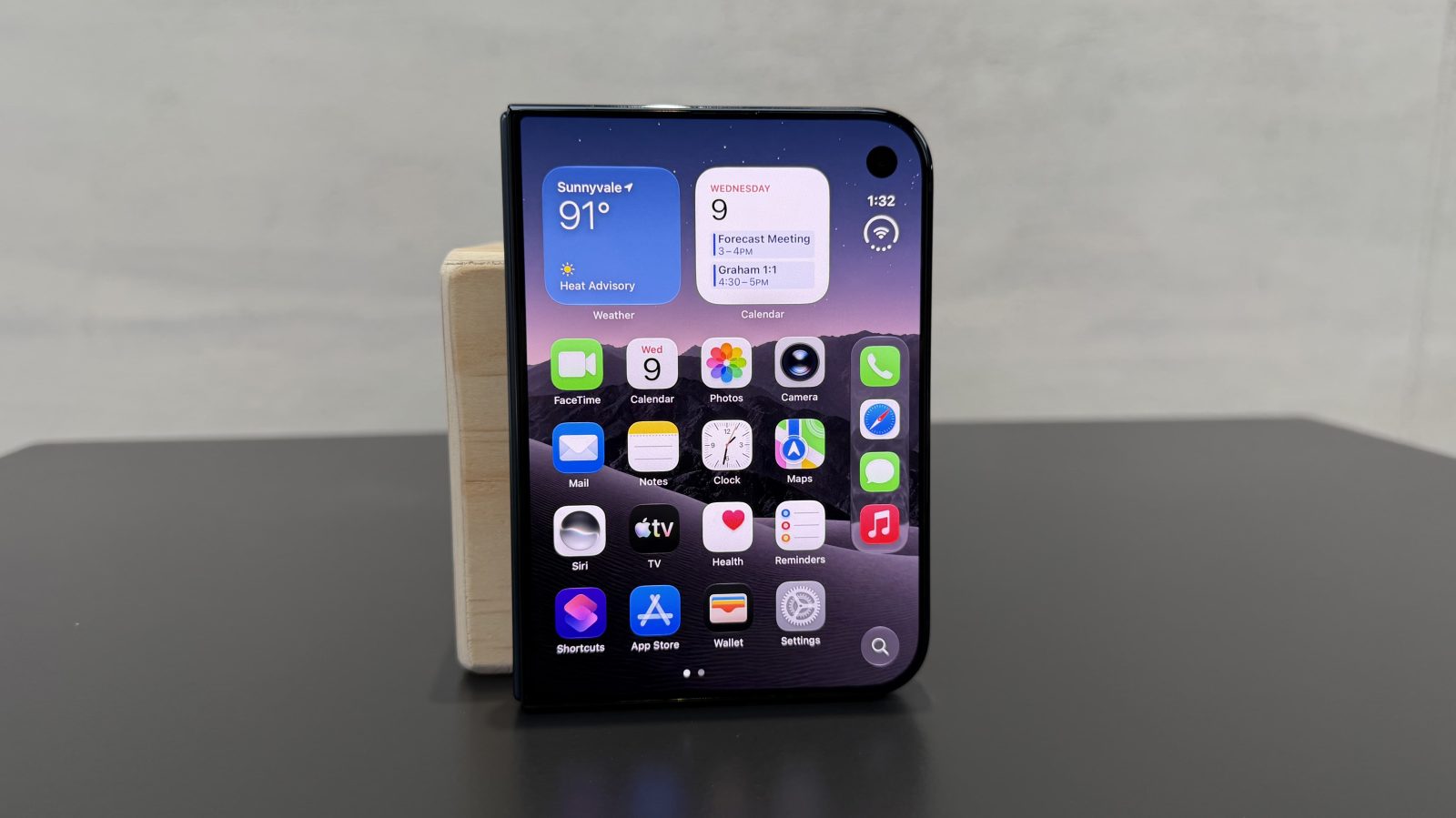
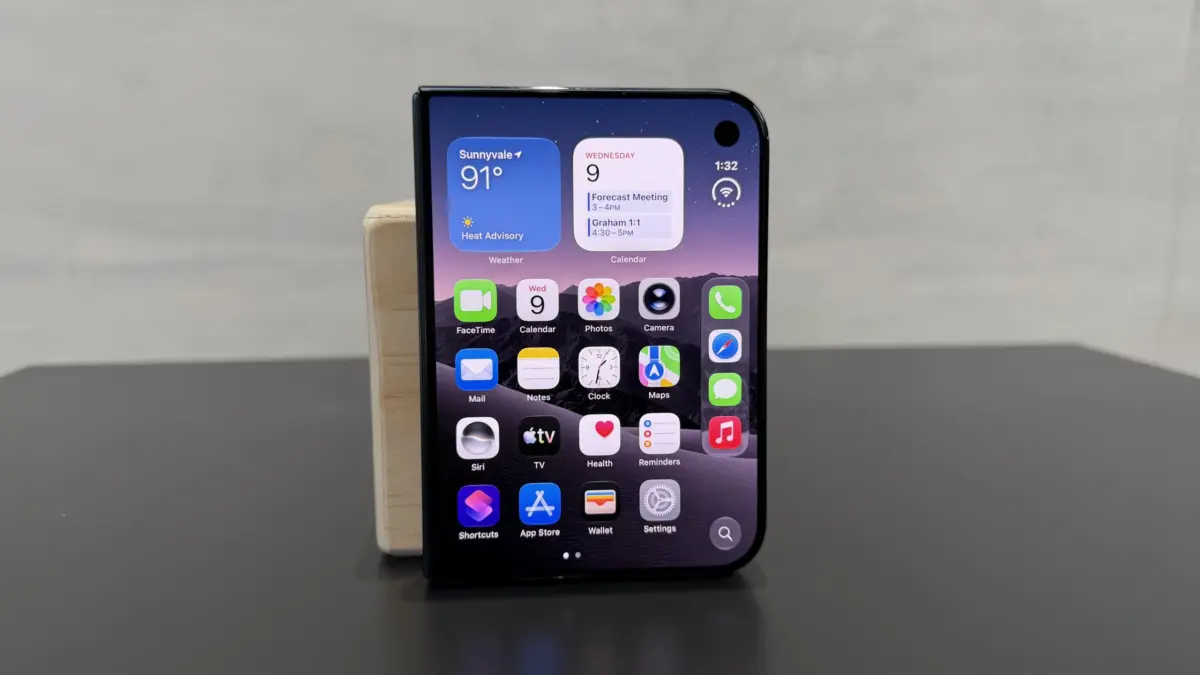
Within hours of the pre-order gates opening, eagle-eyed researchers spotted a newly uploaded EU compliance filing matching the identifier for the iPhone Duo. Deep within the regulatory text, the mystery was solved: the device houses a combined 4883mAh power system. This discovery instantly triggered waves of analysis across tech communities, setting off intense comparisons with both preceding iPhone generations and competitive foldables on the market.
Supporting Context & Metrics: The Anatomy of a 4883mAh Power System
To fully appreciate the 4883mAh rating of the iPhone Duo, one must examine how Apple engineered the physical interior of the device. Space constraints are the ultimate enemy of foldable and dual-screen mobile engineering. Fitting internal components around hinges, cameras, and structural reinforcement requires creative design.
The Dual-Cell Architecture
Rather than relying on a single, monolithic power block, the iPhone Duo utilizes a dual-cell battery architecture. According to the regulatory documents, the power supply is split into two distinct physical cells:
- Cell One: 2962mAh
- Cell Two: 1921mAh
- Total Capacity: 4883mAh
This split-cell strategy allows Apple to distribute weight and thermal load more evenly across the chassis, balancing the two halves of the device when opened or closed.
Comprehensive iPhone Battery Capacity Ranking
When placed in the context of recent iPhone releases (focusing on eSIM variants, which feature slightly larger battery configurations than their physical SIM counterparts), the iPhone Duo commands an impressive mid-to-high tier ranking:
| Device Model | Battery Capacity | Percentage Difference vs. iPhone Duo | Official Apple Video Playback Rating |
|---|---|---|---|
| iPhone 18 Pro Max | 5567mAh | +14% | 45 hours |
| iPhone 17 Pro Max | 5088mAh | +4% | 39 hours |
| iPhone Duo | 4883mAh | — | 44 hours (outer display) / 31 hours (inner display) |
| iPhone 16 Pro Max | 4685mAh | -4% | 33 hours |
| iPhone 18 Pro | 4288mAh | -12% | 36 hours |
| iPhone 17 Pro | 4252mAh | -13% | 33 hours |
| iPhone 17e | 4005mAh | -18% | 26 hours |
| iPhone 17 | 3692mAh | -24% | 30 hours |
| iPhone Air | 3149mAh | -36% | 27 hours |
Analyzing the Longevity Metrics
At 4883mAh, the iPhone Duo outperforms almost every standard flagship and specialty device in Apple’s stable, falling short only of the massive Pro Max models. On paper, it beats out the iPhone 16 Pro Max by 4% and outclasses the standard iPhone 18 Pro by a notable 12%.
However, raw milliamp-hours do not translate directly to screen-on time in a dual-display environment. Apple’s official endurance ratings paint a nuanced picture:

- Outer Display Mode: When utilizing the device primarily folded or via its external display, users can expect up to 44 hours of video playback—putting it within striking distance of the titan-class iPhone 18 Pro Max.
- Inner Display Mode: When unfurled to utilize the expansive interior screen, the playback endurance drops significantly to 31 hours.
This delta highlights the immense power draw demanded by larger, high-refresh-rate folding panels. While the physical battery is physically larger than nearly anything else in the lineup, heavy reliance on the inner display will drain the 4883mAh pool noticeably faster than casual outer-screen usage.
Official Statements and Industry Impact
While Apple corporate has not issued a dedicated press release concerning the leaked EU document—adhering to its long-standing policy of letting consumer-facing specs speak for themselves—industry analysts and supply-chain experts have been vocal about the significance of the filing.
Engineering Triumphs in Thermal and Spatial Design
Speaking anonymously, a hardware design consultant noted that packing nearly 5000mAh into a chassis as thin as the iPhone Duo represents a significant engineering achievement. "Managing two separate battery cells while maintaining structural integrity, drop resistance, and thermal dissipation around modern high-performance chipsets is a monumental task," the analyst explained. "Hitting 4883mAh demonstrates that Apple is no longer willing to compromise heavily on battery life just to chase a thinner foldable or dual-screen profile."
Consumer Reception and Pre-Order Realities
Despite the stellar battery numbers, the launch of the iPhone Duo has not been without friction. Consumer forums and social media channels are flooded with mixed reviews regarding the pre-order experience. While early adopters expressing excitement over the hardware capabilities are thrilled by the 4883mAh disclosure, thousands of others have voiced frustration over immediate shipping delays, site crashes, and inventory shortages that pushed delivery dates deep into the holiday season.
Future Outlook: What the iPhone Duo Signals for Apple’s Roadmap
The unveiling of the iPhone Duo’s 4883mAh battery capacity serves as a bellwether for Apple’s hardware trajectory moving forward. As form factors evolve beyond the traditional slab phone into dual-screen and foldable ecosystems, power management and battery density will remain the ultimate battlegrounds for mobile supremacy.
The Balancing Act of Dual-Screen Efficiency
Looking ahead, future iterations of the Duo series will likely focus on improving panel efficiency rather than merely scaling up battery size. OLED advancements, micro-lens arrays, and more aggressive adaptive refresh rate technologies will be necessary to bridge the 13-hour playback gap between the outer and inner displays. If Apple can tame the energy consumption of its folding panels while maintaining or increasing cell density past the 5000mAh threshold, subsequent models could achieve true multi-day autonomy under heavy workloads.
Conclusion
The EU regulatory filing has demystified the power source driving Apple’s latest experimental powerhouse. With a robust 4883mAh split-cell battery, the iPhone Duo proves that versatility does not inherently require sacrificing endurance. Whether consumers are willing to navigate the complexities of dual-screen power management—and weather the turbulence of initial pre-order bottlenecks—will determine whether the Duo establishes a permanent, foundational pillar in Apple’s product ecosystem for years to come.