Executive Overview
On a crisp Friday evening at the Broadhurst Theatre in New York City, theatergoers settled into velvet seats for what was billed as a major theatrical event. The production featured a star-studded ensemble boasting stage and screen heavyweights Billy Porter and Billy Zane, theater veteran Jessica Vosk, and an original script packed with self-aware pop culture references. Yet, as the house lights dimmed, the audience was greeted with a startling disclaimer: they were about to watch a polished, 60-minute commercial for a corporate finance application.
The production, Bill Pay the Musical, was a one-night-only spectacular sponsored, financed, and heavily branded by Ramp, a New York-based fintech unicorn valued in the tens of billions of dollars. Eschewing the uncanny, machine-generated digital ads typical of the modern tech landscape, Ramp opted for an analog spectacle, reviving the midcentury tradition of the "industrial musical"—original stage shows commissioned by major corporations to entertain and indoctrinate employees and shareholders.
While critics might easily dismiss the event as the ultimate evolution of corporate synergy, the production serves as a fascinating cultural bellwether. By deploying union labor, a diverse cast, anti-AI rhetoric in creative fields, and nostalgic "Obamacore" optimism, Ramp successfully transformed tedious invoicing software into a glamorous, black-tie night out. This deep dive examines the anatomy of Bill Pay the Musical, exploring how a multibillion-dollar financial tech platform managed to weaponize Broadway nostalgia, capture the media zeitgeist, and signal a potential shift away from the hyper-cynical tech marketing of recent years.
Detailed Chronology: Anatomy of a Corporate Spectacular
The Build-Up: Weeks of Omnipresent Teasing
Ramp’s campaign for Bill Pay the Musical was months in the making. The fintech firm utilized a multi-pronged marketing strategy designed to bridge the gap between B2B software and consumer-facing pop culture. Trade announcements in Playbill, partnerships with high-profile digital influencers, vertical-video sketches on TikTok and Instagram, and saturated logo placements outside the Broadhurst Theatre built intense anticipation.
Crucially, the company leaned heavily into authenticity. Promotional materials featured Billy Porter explaining that the show utilized no generative artificial intelligence—a direct jab at tech competitors relying on synthetic media—and noting that historical industrial musicals had helped support actors in their pre-celebrity days.
Opening Night: The "Yellow Carpet" and the Clopening
On the night of the performance, two massive lines of well-dressed attendees wrapped around the block. Guests navigated a sea of Ramp employees identifiable by their signature yellow lanyards. The red carpet was swapped for a "yellow carpet," where social media influencers, industry insiders, and contest winners—many of whom were invited simply because their legal first name was "Bill"—posed for professional photographers.
Inside the theater, the swag bags overflowed. Attendees received branded Playbills, souvenir cups filled with wine, artisanal cupcakes, fruit sodas, and snacks from MrBeast’s "Feastables" brand.
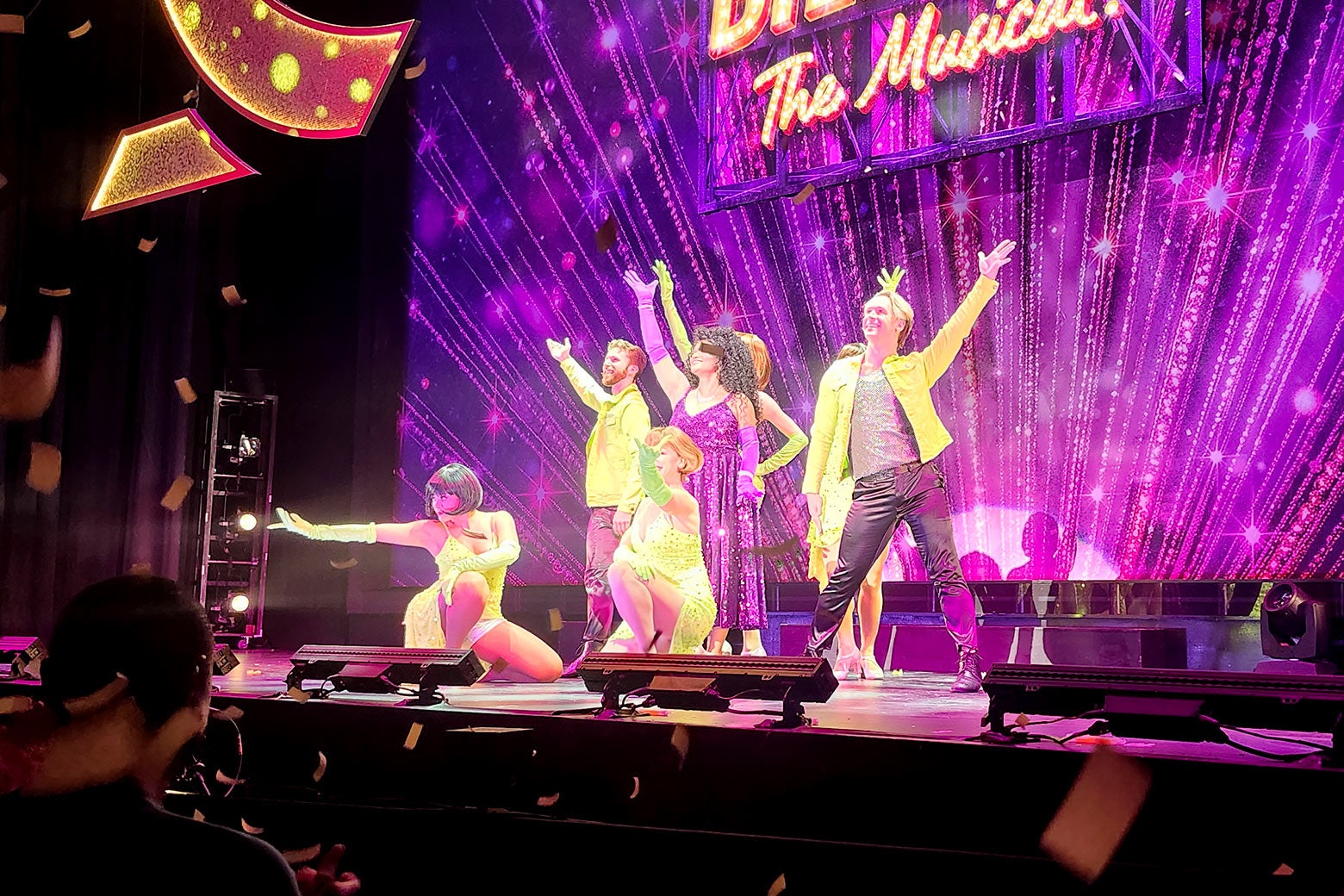
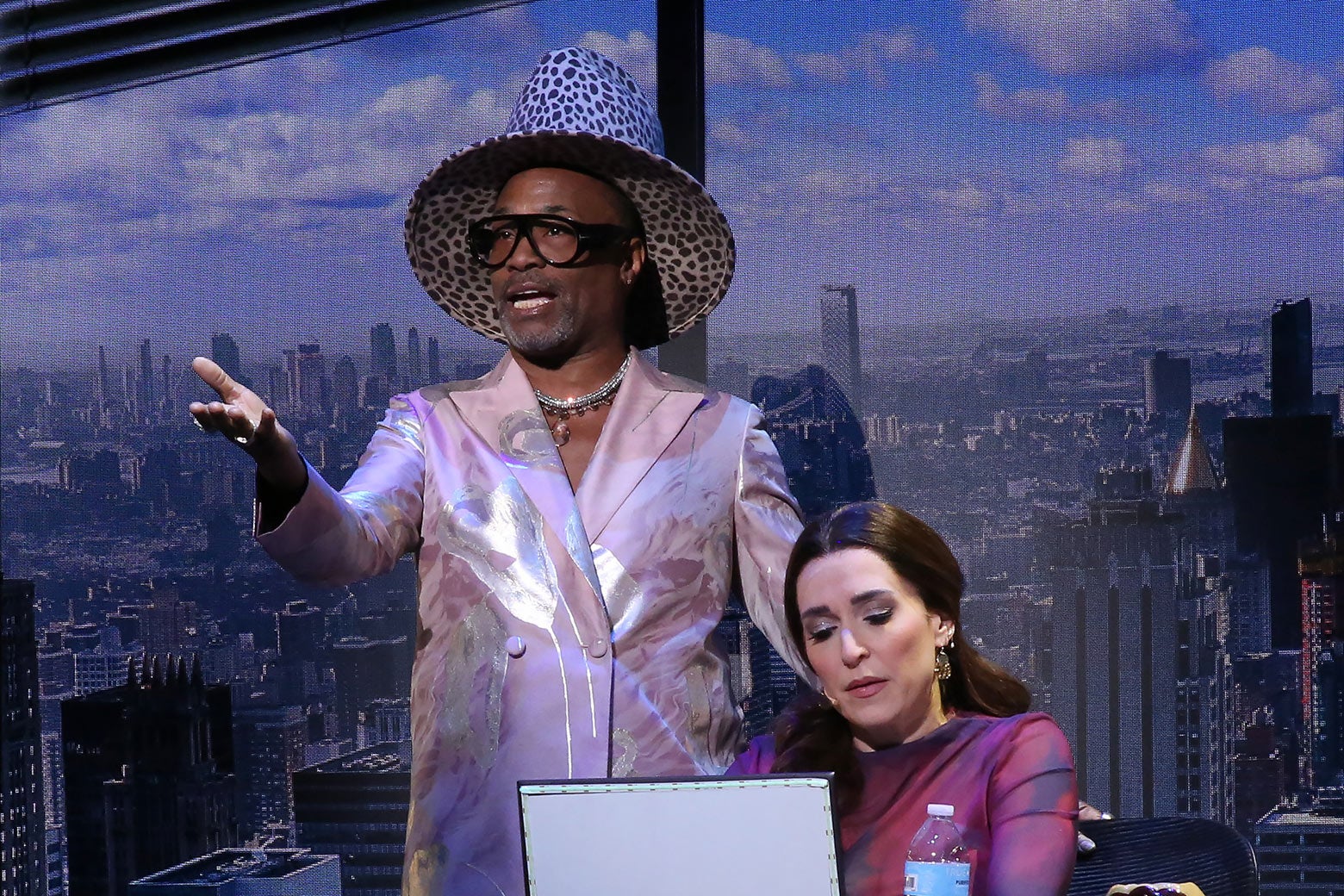
When the curtain finally rose 21 minutes past schedule, the production delivered precisely what it promised: a breathless, intermission-less, post-modern pageant. The plot followed a small-business owner named Lisa Blupey (played by Jessica Vosk)—whose name served as a transparent anagram for "Use Bill Pay"—as she struggled with mountains of paperwork and malfunctioning AI platforms. Transported to a magical realm called "Billicon Valley," she encountered historical and fictional figures named "Bill," including Bill-bo Baggins, William Shakespeare, Willy Wonka, and various cultural archetypes.
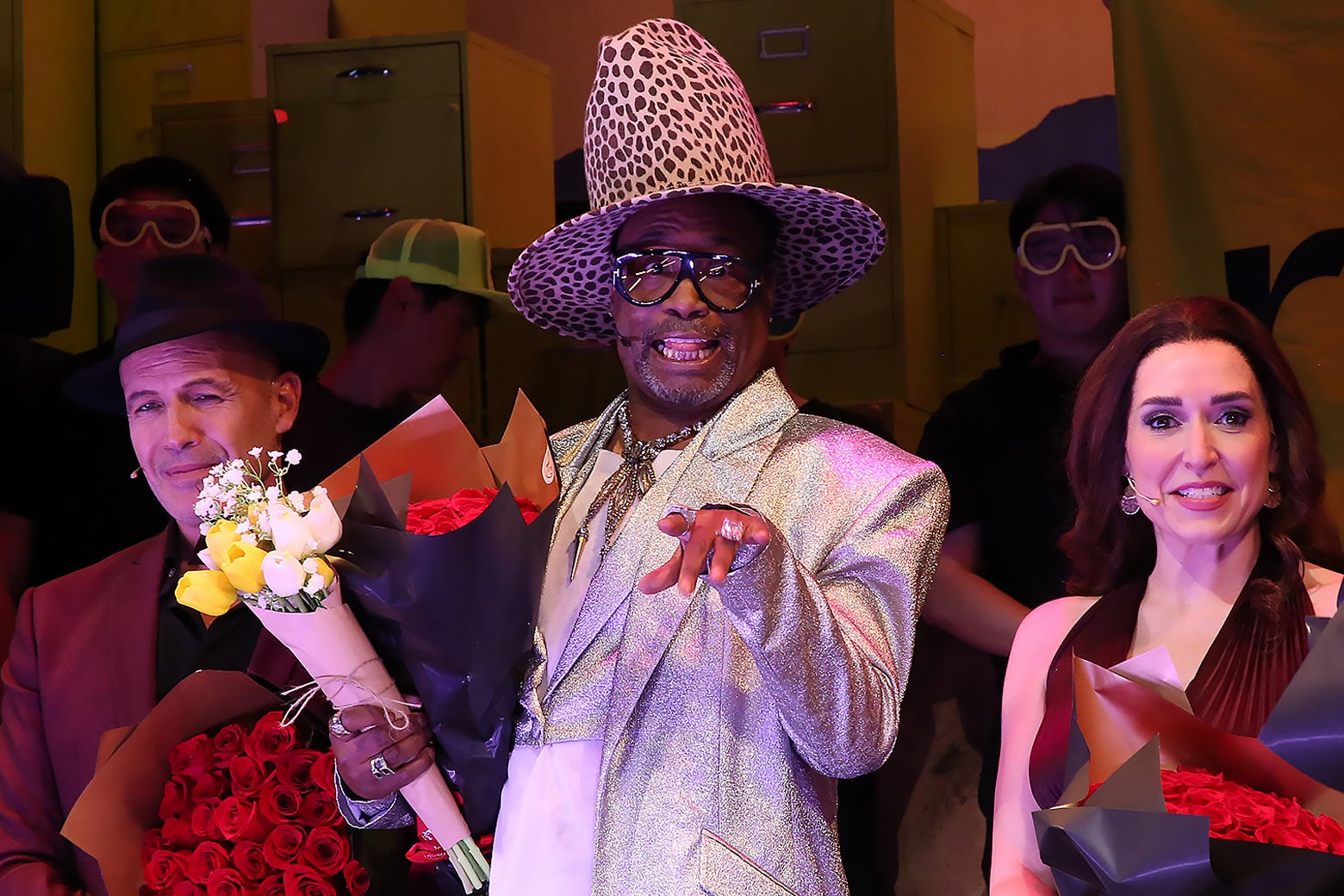
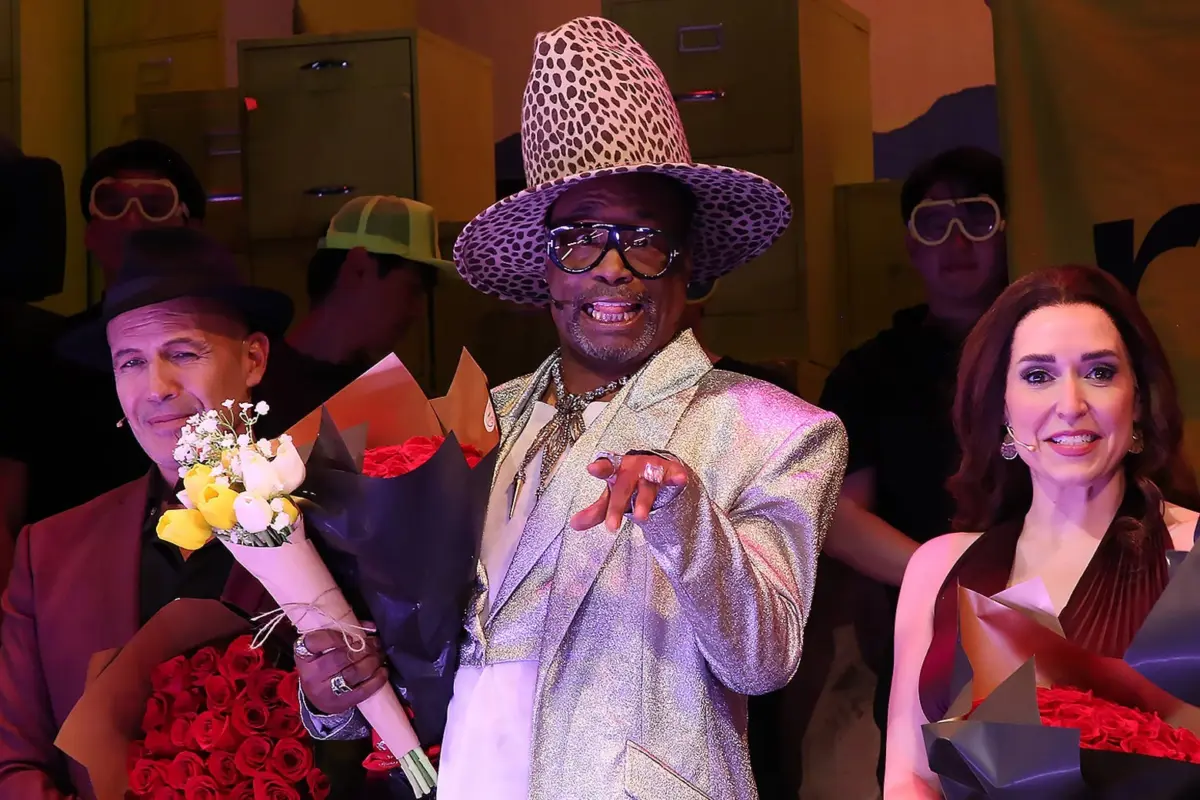
Interspersed throughout the narrative was Billy Porter, acting as an omniscient, fourth-wall-shattering narrator. The production culminated in Lisa realizing that her operational woes could be easily solved by Ramp’s automated invoicing software.
The Curtain Call and the Anti-AI Manifesto
At the final curtain call, confetti rained down upon the stage as the cast was joined by Ramp co-founder and CEO Eric Glyman, sporting bright yellow sneakers that matched the company’s corporate branding.
Handing out flowers and basking in the applause of his employees and guests, Glyman delivered the night’s defining soundbite:
"A.I. is for finance. It is not for fine art."
The line drew deafening applause from the crowd, seamlessly marrying the company’s pitch for its assistive financial agents with a defense of human creative labor.
Supporting Context & Metrics: The Rise of Ramp and the Industrial Musical
To understand why a software company would sink significant capital into a full-scale Broadway production, one must examine the meteoric rise of Ramp and the history of the medium it resurrected.
The Financial Engine Behind the Show
Founded seven years ago by Eric Glyman and Karim Atiyeh, Ramp initially set out to disrupt corporate credit cards by offering automated cash-back perks and expense management tools. As economic pressures during the post-pandemic recovery forced startups to lean out their operations, Ramp’s automated invoicing and bill-payment systems experienced explosive adoption.
Backed by prominent venture capital firms—including Peter Thiel’s Founders Fund, which recently closed a massive $6 billion haul—Ramp’s valuation skyrocketed. By mid-2026, the company achieved a staggering valuation of $44 billion, reporting over $1 billion in annual revenue. Its rapid ascent has drawn attention not only from Silicon Valley elite but also from political circles, securing its place as one of the dominant forces in the New York tech ecosystem.
Stunts as a Core Marketing Strategy
Ramp has built its brand identity on audacious, high-concept promotional stunts rather than traditional banner ads. Past marketing campaigns include:
- Super Bowl Commercials: High-profile spots starring NFL star Saquon Barkley and The Office actor Brian Baumgartner.
- The "Penny Funeral": A heavily publicized gathering held at the Lincoln Memorial in December following the U.S. Mint’s decision to cease penny production, featuring hundreds of Abraham Lincoln and Mary Todd impersonators.
- The Kevin Malone Livestream: Placing Brian Baumgartner—in character as The Office accountant Kevin Malone—inside a see-through glass box in Flatiron Plaza to livestream his "workday" to millions.
Bill Pay the Musical represents the logical apex of this strategy: substituting a digital banner ad for a multimillion-dollar theatrical experience that media outlets, trade publications, and influencers felt compelled to cover.
The History of Industrial Musicals
Industrial musicals—often referred to as "industrials"—were massive theatrical productions commissioned by Fortune 500 corporations like Ford, General Electric, and Coca-Cola during the mid-20th century. Designed exclusively for internal audiences of employees, dealers, and shareholders, these shows used song and dance to roll out new product lines, explain corporate policy, and boost morale.
Though largely extinct by the early 2000s, these productions occasionally featured top-tier Broadway composers and performers. Ramp’s revival of the form cleverly tapped into vintage corporate camp, framing commercial software promotion as a whimsical nod to mid-century Americana.
Official Statements and Industry Reception
Reactions to Bill Pay the Musical have ranged from amused bewilderment to sharp media critique. Cultural commentators have dissected the event as a masterclass in corporate self-awareness.
In promotional interviews leading up to the single-night performance, Billy Porter defended his participation by emphasizing the supportive nature of the gig for union performers and crew members.
"Industrial musicals provided steady, honorable work for generations of theater professionals when traditional Broadway work was scarce," production representatives noted in press statements.
Meanwhile, tech industry analysts pointed out the clever irony of a software company utilizing human-centric, high-cost performance arts to position itself as a champion against the cold, impersonal encroachment of generative AI.
"It’s an aggressive pivot from the tech sector’s usual messaging," noted one media critic in attendance. "Instead of telling you that algorithms can replace human workers, Ramp is spending millions to tell you that software should handle the boring math so humans can go out and enjoy actual theater."
Future Outlook: The Return of "Obamacore" Corporate Culture?
The most enduring takeaway from Bill Pay the Musical may not be its immediate impact on B2B software sales, but rather what it signals about the evolution of corporate public relations.
For the past several years, tech sector marketing has been dominated by austere minimalism, crypto-futurism, and aggressive, hustle-culture paradigms. However, Ramp’s theatrical gambit suggests a pivot toward a different aesthetic—one that observers have likened to "Obamacore."
This cultural vision leans back into optimistic, inclusive, proudly municipal corporate messaging:
- Pro-Labor Optics: Generous utilization of unionized actors, musicians, and stagehands.
- Diversity and Inclusivity: Centering queer-friendly performers like Billy Porter and embracing whimsical, self-deprecating humor.
- Community-Facing Philanthropy: Free tickets, public-facing red carpets, and widespread distribution of consumer-friendly giveaways.
Whether this trend will be adopted by other capitalized tech giants remains to be seen. However, as audiences grow increasingly fatigued by uninspired digital advertising and automated slop, the success of Bill Pay the Musical proves that corporate branding can still cut through the noise—provided it sings, dances, and hires a Broadway legend to carry the tune.