Executive Overview
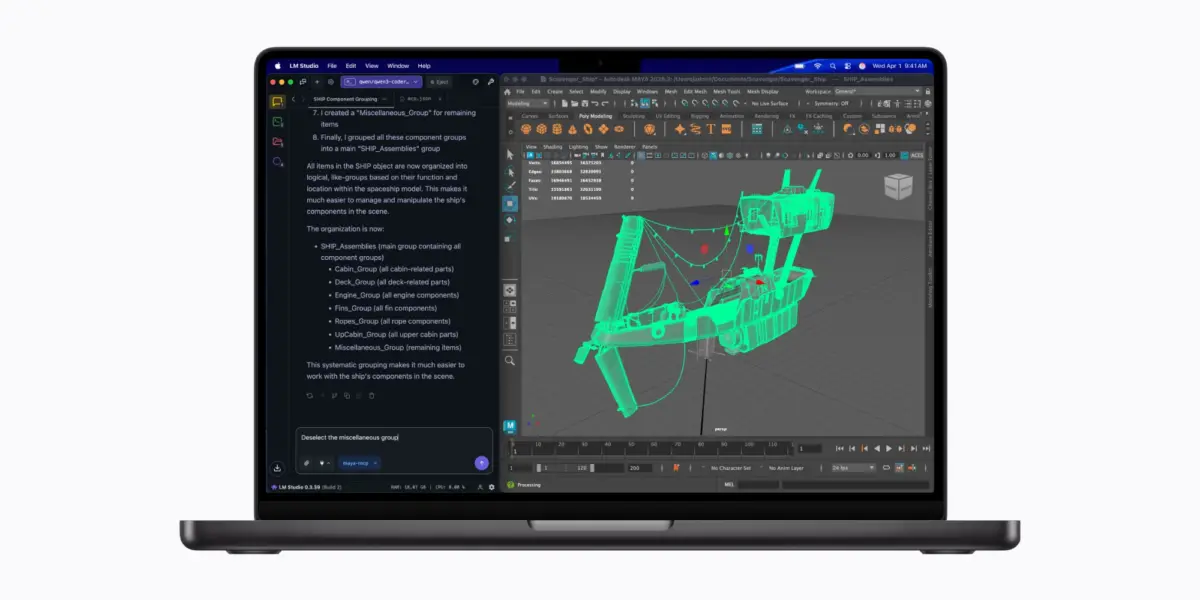
As Apple prepares its robust slate of autumn hardware releases, anticipation is steadily mounting for one of the company’s most pivotal portable machines in years: the upcoming M6 MacBook Pro. Retaining the sleek, tried-and-true industrial design of its predecessors while housing a paradigm-shifting piece of silicon under the hood, the 14-inch M6 MacBook Pro represents a major inflection point for personal computing.
With the foundational M6 chip having officially broken cover—making its initial debut in the newly redesigned Mac mini—analysts, developers, and everyday users alike are turning their attention toward how this next-generation architecture will translate to Apple’s flagship pro laptops. Far from a routine iterative update, the M6 silicon family introduces architectural breakthroughs that blur the line between standard consumer chips and elite, workstation-class performance.
At the heart of the excitement are three transformative upgrades: a groundbreaking Dual 16-core Neural Engine designed to supercharge on-device artificial intelligence, a robust 12-core CPU and GPU configuration featuring high-performance "super cores" previously reserved for high-end Pro and Max tiers, and monumental efficiency gains driven by an advanced 2nm manufacturing process.
For power users, creative professionals, and those heavily integrated into macOS’s expanding AI ecosystem, the M6 MacBook Pro is shaping up to be a compelling justification for an upgrade. This deep-dive report examines the technological leaps powering Apple’s next notebook, evaluating the performance metrics, architectural changes, and broader industry implications as we approach its anticipated fall launch.
Detailed Chronology: The Path to the M6 Architecture
To understand the magnitude of the M6 MacBook Pro, it is essential to trace the rapid, calculated evolution of Apple Silicon. Ever since Apple severed its historic ties with Intel to chart its own course with the M-series processors, the cadence of innovation has been nothing short of relentless.
From M1 to M5: The Foundation of Domination
When the M1 chip debuted in late 2020, it upended the laptop market by proving that blistering performance could coexist with phenomenal energy efficiency. Subsequent generations—the M2, M3, M4, and M5 families—steadily refined this philosophy. Each iteration brought incremental gains in transistor density, graphics capabilities, and thermal management.
However, by the time the M5 generation rolled out, the computing landscape had fundamentally shifted. Artificial intelligence and machine learning models were no longer niche tools for data scientists; they had become central operating system components, driving features across productivity suites, media editing platforms, and system-level utilities like Apple Intelligence. While the M5 series managed these tasks admirably with its standard 16-core Neural Engine, hardware limitations began to emerge for power users attempting to run localized, large-scale language models and heavy rendering pipelines simultaneously.
The Summer of 2026: The M6 Breakthrough
The turning point arrived in the late summer of 2026. Apple formally introduced the M6 and M5 Ultra processors, marking a dramatic leap forward in both raw compute power and AI processing capabilities. Crucially, the M6 debuted in the compact form factor of the Mac mini, offering the public its first tangible look at what the architecture could achieve outside of a controlled laboratory environment.
Industry watchers quickly realized that the architectural DNA of the M6 was fundamentally different from past base-tier chips. By democratizing features that were once exclusive to the pricey Pro and Max tiers, Apple signaled a new strategy: equipping even its entry-level professional machines with enterprise-grade capabilities.
The Fall Launch and Beyond
With the M6 chip now out in the wild, the supply chain and manufacturing pipelines have pivoted entirely toward the mobile ecosystem. The upcoming fall hardware cycle is slated to bring this revolutionary silicon to the MacBook Pro lineup, starting with the 14-inch variant. As production ramps up, attention shifts to how Apple will harness these hardware enhancements within the thermal constraints of a laptop chassis, setting the stage for what promises to be one of the most consequential product rollouts in recent memory.
Supporting Context & Metrics: Unpacking the M6 Architecture
The architecture of the M6 chip is a masterclass in semiconductor engineering. To truly appreciate why the upcoming M6 MacBook Pro is generating so much enthusiasm, one must dissect the three core pillars of its hardware design: the Neural Engine, the core configuration, and the manufacturing node.
+-----------------------------------------------------------------+
|                        APPLE M6 SILICON                         |
+---------------------------------+-------------------------------+
|  DUAL 16-CORE NEURAL ENGINE     |  12-CORE CPU & GPU            |
|  • Up to 2x Peak Compute        |  • 2 Super Cores              |
|  • Simultaneous Dual-Engine     |  • 4 Performance Cores        |
|    Framework Execution          |  • 6 Efficiency Cores         |
+---------------------------------+-------------------------------+
|                        2nm PROCESS NODE                         |
|  • Major Leap in Performance & Power Efficiency                 |
+-----------------------------------------------------------------+
1. The Dual 16-Core Neural Engine: A New Era for On-Device AI
Artificial intelligence is no longer an auxiliary feature; it is the operating system’s beating heart. With macOS developments pushing the envelope on machine learning integration, local AI workflows demand unprecedented processing muscle.
The M6 chip directly answers this call by introducing a Dual 16-core Neural Engine, effectively doubling the neural processing hardware found in the M5 and earlier generations. According to internal metrics and Apple’s official disclosures, this dual-engine configuration delivers up to 2x the peak compute performance over previous iterations.
What makes this implementation particularly clever is software-level optimization. System frameworks are engineered to automatically utilize both neural engines simultaneously. For end-users, this translates to drastically reduced latency when executing complex machine learning models, lightning-fast image and video generation, and seamless, real-time processing for natural language tasks—all processed locally on the device for optimal privacy and speed.
2. 12-Core CPU and GPU: Democratizing Pro-Level Power
In previous generations, buyers seeking advanced core configurations had to stretch their budgets into the Pro or Max tiers. The standard, base-level chips were constrained to 10-core CPU and GPU layouts.
The M6 shatters this artificial barrier. The base M6 chip boasts a formidable 12-core CPU and 12-core GPU, representing a massive generation-over-generation step up. More importantly, Apple has fundamentally restructured the CPU core distribution. For the first time in a base-tier chip, the M6 features three distinct core types:
- 2 Super Cores: Designed for ultra-heavy, single-threaded bursts and intensive computing tasks.
- 4 Performance Cores: Balanced for sustained multi-threaded workloads, ensuring heavy applications run smoothly without bottlenecking.
- 6 Efficiency Cores: Optimized to handle background tasks and low-intensity operations with minimal power draw.
Previously, housing both super cores and performance cores within a single system-on-a-chip was the exclusive domain of high-end variants like the M5 Pro, M5 Max, and the newly minted M5 Ultra. Bringing this capability to the standard M6 chip means that users purchasing the entry-level 14-inch MacBook Pro will experience workstation-grade responsiveness that was previously out of reach at that price point.
3. The 2nm Process and Efficiency Gains
Perhaps the most foundational technological achievement of the M6 is its manufacturing process. The M6 is the very first Apple Silicon chip built on an advanced 2nm process node.
In the world of semiconductors, moving to a smaller node allows engineers to pack significantly more transistors into the exact same physical footprint, drastically improving electron flow speed while cutting down on resistance and heat generation. While the initial M6 rollout in the desktop Mac mini showcased raw speed, applying this 2nm architecture to a battery-powered laptop opens up extraordinary possibilities for energy management.
Official Statements & Industry Insights
Apple’s executive team has made no secret of the ambition driving the M6 generation. In official press releases and technical briefings accompanying the chip’s unveiling, company spokespeople emphasized that the M6 is not merely an incremental speed bump, but a fundamental reimagining of what compact silicon can achieve.
Highlighting the AI capabilities, Apple’s engineering division noted:
"M6 also introduces a Dual 16-core Neural Engine, providing up to 2x the peak compute over previous generations to make on-device AI workflows run even faster. System frameworks can automatically utilize both engines simultaneously, enabling applications to see faster model execution."
Furthermore, regarding the overarching philosophy of the chip’s design, Apple reiterated that the transition to the 2nm fabrication node represents "a major leap in performance and power efficiency."
Industry analysts have echoed these sentiments, pointing out that by trickling down Pro-level core architectures—specifically the inclusion of dedicated super cores—Apple is aggressively widening the performance gap between its proprietary silicon and competing x86 architectures from Intel and AMD. As enterprise environments increasingly demand robust, localized AI capabilities coupled with all-day battery endurance, Apple’s vertically integrated approach appears uniquely positioned to dominate the professional laptop sector.
Future Outlook: Battery Life, Expectations, and What Lies Ahead
As the technology community counts down the days to the formal reveal of the 14-inch M6 MacBook Pro this fall, one burning question remains on the minds of mobile professionals: How will these architectural marvels translate into everyday usability, particularly regarding battery life?

The Battery Life Dilemma
Because the only current device running the M6 chip is the desktop-bound Mac mini, consumers have yet to see how the 2nm node performs under the strict thermal and electrical constraints of a portable chassis.
Historically, Apple has faced a strategic choice when confronted with massive efficiency gains:
- Shrink the physical battery capacity to make the laptop thinner and lighter while maintaining the exact same battery life as previous generations.
- Maintain the current physical battery size, leveraging the dramatic efficiency of the new chip to deliver unprecedented longevity away from the wall outlet.
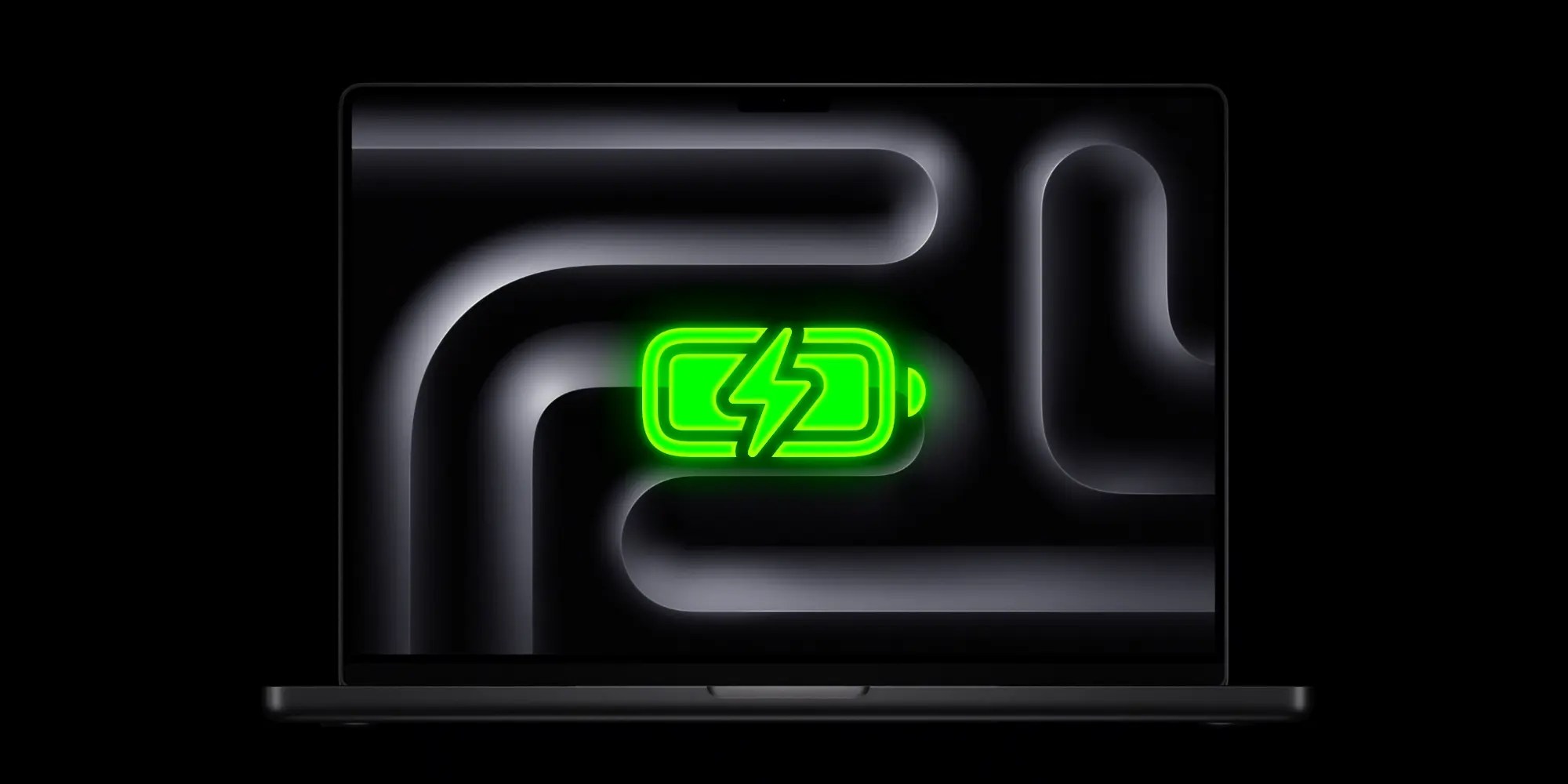
Given the demographic that purchases the MacBook Pro—developers, traveling creatives, audio engineers, and corporate executives who live out of their backpacks—the overwhelming consumer consensus heavily favors the latter. The prospect of a 14-inch MacBook Pro comfortably clearing 22 to 24 hours of real-world usage on a single charge is not outside the realm of possibility, thanks to the low-draw efficiency cores and the power-sipping nature of the 2nm process.
Beyond the 14-Inch Model
While the fall launch will kick off with the foundational 14-inch MacBook Pro configuration, industry insiders expect Apple’s rollout schedule to expand rapidly. Subsequent quarters will likely see the architecture scale upward into the M6 Pro and M6 Max variants, destined for higher-end 14-inch and 16-inch MacBook Pro models, as well as refreshed MacBook Air lineups.
For now, all eyes are locked on the entry-level professional tier. If the M6 Mac mini is any indicator, the forthcoming M6 MacBook Pro is poised to redefine expectations for what a professional laptop can accomplish—delivering desktop-grade AI compute, expanded core versatility, and transformative energy efficiency in the familiar, beloved form factor that users have come to trust.

What features, ports, or design tweaks are you hoping to see in the upcoming M6 MacBook Pro? Join the conversation and let your voice be heard in the comments below.