

Executive Overview
For over two decades, a single, recurring question has echoed across internet forums, social media comment sections, and video-sharing platforms: "Can he beat Goku?"
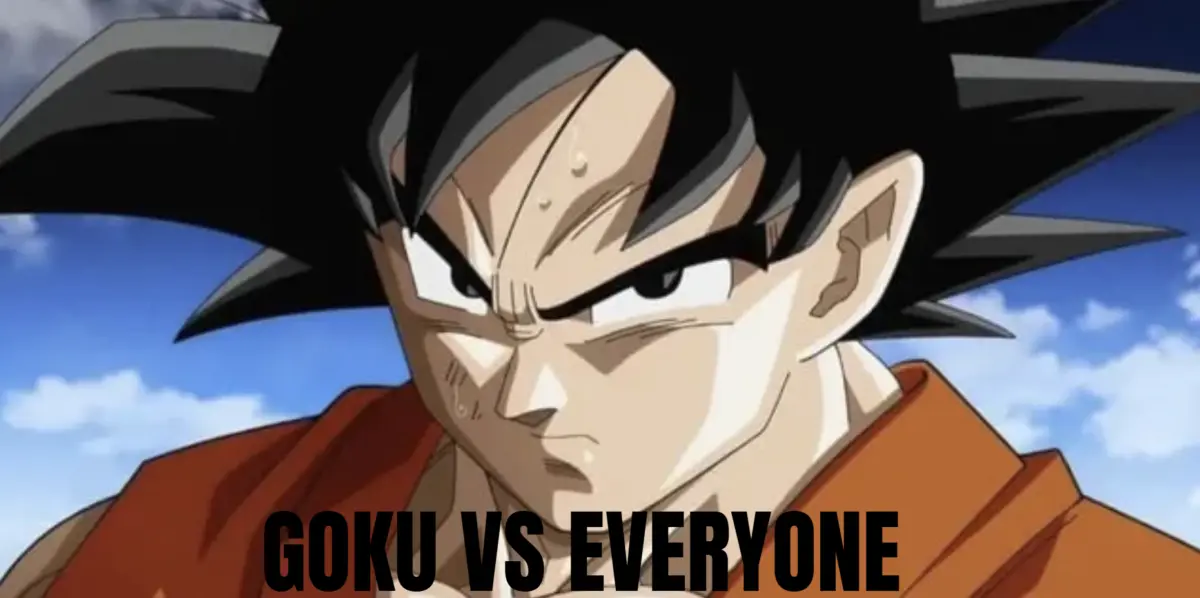
What began as localized, nerd-culture debates regarding the relative strengths of fictional characters has blossomed into a sprawling, multi-generational internet phenomenon known simply as "Goku VS." Centered on Son Goku, the iconic, spiky-haired protagonist of Akira Toriyama’s legendary Dragon Ball franchise, this phenomenon involves pitting the Saiyan warrior against virtually any imaginable fictional entity—ranging from mainstream superheroes and magical girls to abstract philosophical concepts, inanimate objects, and the internet itself.
While some segments of the online community treat these matchups with mathematical precision, calculating kinetic energy outputs, speed-of-light feats, and universal destruction thresholds, an equally vocal faction approaches the debate through pure satire. To these digital natives, Goku is less a specific character from a specific piece of media and more a universal unit of measurement for combat capability. The phrases "Goku Solos" and "But can he beat Goku though?" have transcended their anime-fandom origins to become ubiquitous internet catchphrases, used to mock the relentless over-earnestness of power-scaling discussions.
This deep-dive investigation explores the origins of the "Goku VS" phenomenon, tracing its path from print magazine novelties to viral TikTok edits and Twitter meme formats. Furthermore, we examine its cultural footprint, iconic matchups (such as Goku vs. Superman, Madoka Kaname, and Saitama), and what this persistent internet tradition reveals about how modern audiences consume and playfully subvert serialized storytelling.
Detailed Chronology: From Print Magazines to Digital Memes
The Late 1990s and Early 2000s: The Dawn of Crossover Debates
Before high-speed broadband internet and social media algorithms dictated digital culture, early fan communities thrived on message boards, IRC channels, and Geocities fan sites. As anime like Dragon Ball Z gained mainstream traction in Western markets via networks like Cartoon Network’s Toonami, fans naturally began comparing their newly discovered heroes to traditional American comic book icons.
The concept transitioned from grassroots forum threads to institutional pop-culture validation in October 2002. In issue #133 of Wizard Magazine—a premier publication for comic book and pop culture enthusiasts at the time—editors included a dedicated "East vs. West" feature. Illustrated by Long Vo and Udon Studios, the feature presented a narrative combat scenario wherein Goku crossed dimensions to face off against DC Comics’ flagship hero, Superman.
This professional collision of manga and comic book royalty catalyzed an insatiable appetite for crossover combat. Fans no longer had to merely imagine what would happen if the legendary Super Saiyan locked horns with the Man of Steel; they had a stylized, printed blueprint.
The 2010s: The Birth of the "Goku Solos" Era and Death Battle
As web video matured, platforms like YouTube birthed dedicated analytical series that formalized these debates. Channels like Death Battle, produced by ScrewAttack (now Rooster Teeth), institutionalized the science of hypothetical matchups. By meticulously calculating the feats, durability, and special abilities of combatants, these shows brought data-driven rigor to what was once playground banter. Goku featured prominently in several high-profile episodes, most notably his repeated clashes with Superman.
However, as the power-scaling community grew increasingly granular and, at times, overly aggressive, the wider internet began to push back. Fans observed that no matter how complex, obscure, or omnipotent a newly introduced character might be, a subset of the anime community would invariably swarm comment sections insisting that Goku would emerge victorious.
This gave birth to the catchphrases "Goku Solos" (the assertion that Goku can single-handedly defeat every character within a given universe) and the skeptical interrogation "But Can He Beat Goku Though?" These terms quickly divorced themselves from literal combat analysis, morphing into ironic tools used to derail serious narrative discussions with absurd, comedic interjections.
The Late 2010s and Early 2020s: The Parody and "Your Fave" Intersection
By the late 2010s, the "Goku VS" phenomenon had drifted fully into postmodern territory. On platforms like Twitter (now X), Tumblr, and later TikTok, the joke intersected with the broader "Your Fave" meme formats.
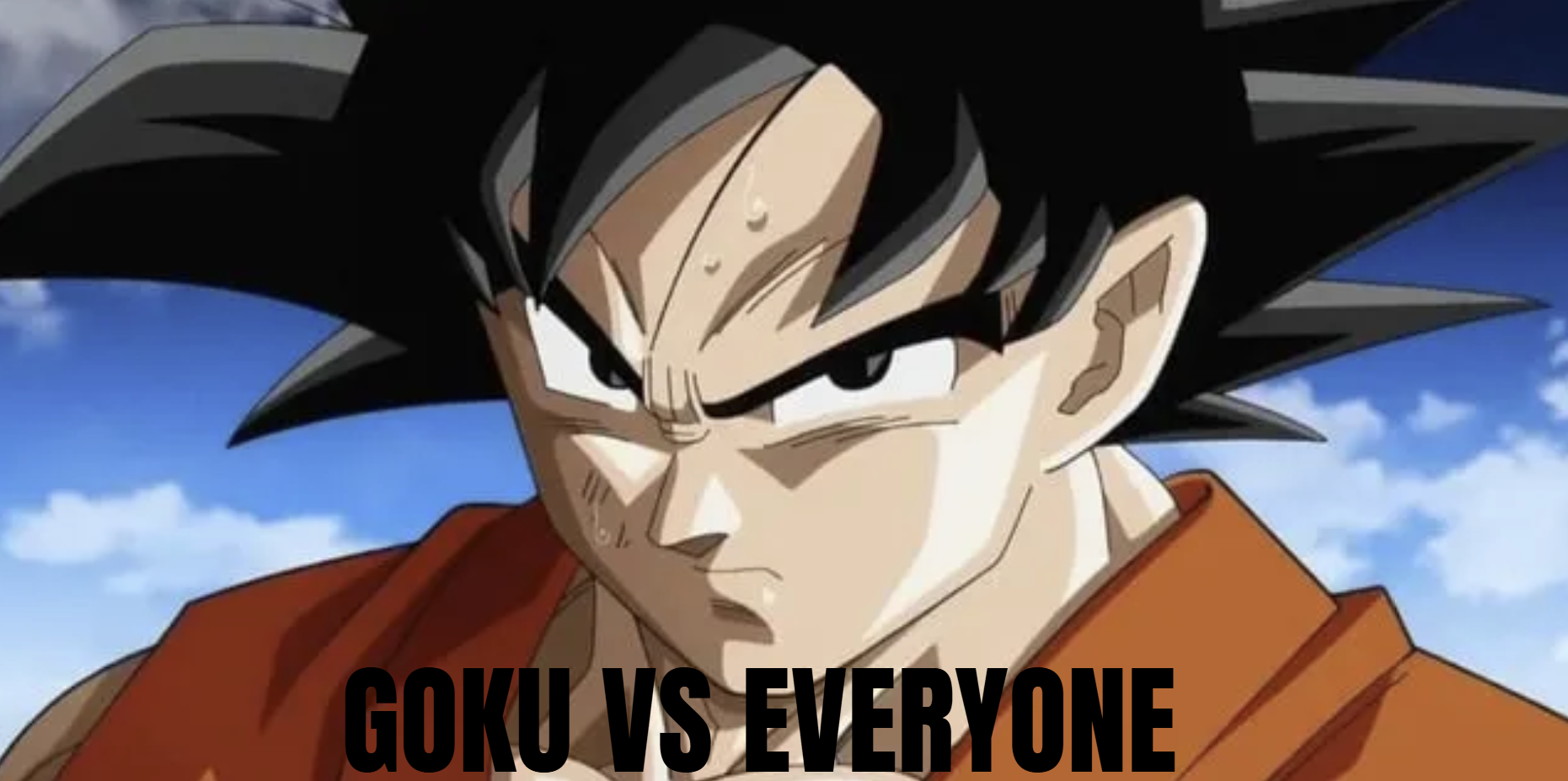
Instead of arguing for Goku’s supreme dominance, internet users began inverting the joke. Creators started posting declarations that absurdly weak, mundane, or domestic characters—ranging from fictional house pets to slice-of-life anime protagonists—could effortlessly defeat Goku. These formats served as a satirical mirror, poking fun at the intense tribalism of traditional shonen anime fandoms while keeping the cultural gravity of Son Goku intact.
Supporting Context & Metrics: Anatomy of a Matchup
To understand the staying power of "Goku VS," one must examine the specific archetypes of opponents typically matched against the Saiyan warrior. Matchups generally fall into three distinct categories:
- The Classic Rivalries (Physical vs. Physical): Matchups like Goku vs. Superman or Goku vs. Saitama (One-Punch Man). These pit characters with nearly limitless physical growth potential against one another, sparking intense debates regarding speed thresholds, durability feats, and narrative scaling.
- The Conceptual Clash (Physical vs. Meta-Physical): Matchups like Goku vs. Madoka Kaname (Puella Magi Madoka Magica). Here, the debate centers on a fundamental philosophical question of power-scaling: Can raw martial arts prowess, energy projection, and transformation limits (Super Saiyan forms, Ultra Instinct) overcome absolute, reality-warping conceptual manipulation? (Ultimate Madoka, for instance, operates as a universal law rather than a physical combatant).
- The Absurdist Satire: Matchups featuring inanimate objects, abstract concepts, or internet memes pitted against Goku. These are explicitly designed to mock the very premise of power-scaling, highlighting the absurdity of reducing complex artistic creations down to raw combat statistics.
Search Interest and Cultural Longevity
Data tracking across search engines and social media tags reveals that "Goku VS" is not a trend subject to typical internet half-lives. While spikes in search interest reliably correlate with the release of new Dragon Ball media (such as Dragon Ball Super anime arcs, theatrical films like Dragon Ball Super: Super Hero, or the announcement of projects like Dragon Ball Daima), the baseline level of engagement remains remarkably high year-round.
This resilience is sustained by a continuous cycle of user-generated content: TikTok video edits comparing audio and visual cues of various fighters, YouTube reaction essays dissecting fictional physics, and viral memes on X establishing new, increasingly ridiculous contenders for the "Goku VS" gauntlet.
Official Perspectives and Industry Reception
While media conglomerates and creators rarely issue formal policy statements regarding fan-led power-scaling, the architects of these fictional universes have occasionally acknowledged the phenomenon.
Creators of shonen manga frequently design their protagonists with upward-scaling power curves precisely to engage readers’ imaginations regarding upper limits. Akira Toriyama’s philosophy behind Goku’s progression—constantly seeking stronger opponents, breaking through physical plateaus, and achieving divine transformations—inherently invites comparative analysis.
Industry analysts note that the "Goku VS" phenomenon acts as a powerful, organic marketing engine. By keeping the character perpetually relevant in cross-franchise discussions, the internet ensures that Son Goku remains a foundational pillar of global pop culture consciousness, bridging generations of fans who may have discovered the franchise through different eras of animation.
Future Outlook: The Indestructible Legacy of the Saiyan
As we look toward the future of digital media and fandom culture, the "Goku VS" tradition shows no signs of abating. The phenomenon has successfully adapted to every technological shift—migrating from ink-and-paper magazine spreads in the early 2000s to high-definition video essays on YouTube, and finally to fast-paced, algorithm-driven short-form video edits on TikTok and Instagram Reels.
The beauty of the "Goku VS" meme lies in its infinite extensibility. As long as storytellers continue to introduce new fictional universes, heroes, and cosmic entities, internet users will inevitably ask the ultimate, unifying question:
“That’s impressive, but can they beat Goku?”




