Executive Overview
On a brisk Monday afternoon in April 2023, the media landscape shifted irrevocably. Fox News made the bombshell announcement that its flagship primetime host and right-wing populist superstar, Tucker Carlson, was out. While media executives scrambled and political commentators across the spectrum parsed the tea leaves, Katherine “Kat” Abughazaleh was simply glowing.
Sitting before a video camera just hours after the news broke, the 24-year-old Washington, D.C.–based senior video producer for the media watchdog group Media Matters for America made no attempt to conceal her delight. “I’ve been very joyful today,” she admitted, a wide smile breaking across her face. “I feel like everyone’s just having a fun day.”
For Abughazaleh, Carlson’s abrupt dismissal was more than just a major news cycle—it was the professional culmination of two years spent cataloging, analyzing, and dismantling his nightly broadcasts. As a professional media monitor, her day job requires her to immerse herself in the most vitriolic streams of conservative cable news. But on her own time, Abughazaleh has successfully carved out a parallel identity as "Kat Abu," a TikTok and Twitter phenomenon whose sharp-witted, satirical breakdowns of right-wing media have amassed hundreds of thousands of followers and millions of views.
Yet, this sudden ascendance to digital stardom has not come without a severe toll. Navigating the treacherous waters of online political discourse as a young, digitally fluent woman has made Abughazaleh the prime target of a relentless, highly coordinated campaign of misogynistic harassment, doxxing attempts, and vile internet abuse. This is the story of how a former Republican kid from Dallas became the progressive internet’s favorite media watchdog, how she balances a grueling professional obligation with viral side-hustles, and what it costs to look the modern American right dead in the eye.
Detailed Chronology: The Anatomy of a Viral Media Watchdog
From Dallas to D.C.: A Conservative Upbringing
Kat Abughazaleh’s path to becoming a progressive digital icon is laced with a unique irony: she grew up immersed in the very ideology she now critiques. Raised in an affluent pocket of Dallas, Texas, her early life was defined by traditional conservative pillars. Her father is a Palestinian immigrant, while her mother’s side boasts a lineage of seventh-generation Texans deeply embedded in the state’s political fabric. Her maternal grandmother was a long-standing fixture of the Texas Federation of Republican Women, dedicating her life to GOP campaigns and traditional party values—a legacy so tangible that upon her passing, Abughazaleh inherited the mink coat her grandmother wore to President Richard Nixon’s inauguration.
Up until her teenage years, Abughazaleh identified as a Republican, regularly absorbing the talking heads and fierce partisan debates broadcast on Fox News in her childhood home. However, a seismic shift occurred when her family relocated to Tucson, Arizona, during her high school years. Placed into a public school environment where at least half of her peers came from low-income or undocumented backgrounds, the ideological scaffolding of her youth began to fracture.
“The bootstrap myth just shattered before my eyes,” Abughazaleh reflects.
This disillusionment propelled her toward a more progressive worldview. She enrolled at George Washington University in the heart of the nation’s capital, majoring in international security while simultaneously studying journalism during the tumultuous years of the Trump presidency. By the time she graduated in 2020, she knew she wanted a career driven by a moral compass rather than a corporate checklist. When an opening arose at Media Matters for America, she recognized it as the ideal intersection of her analytical skills and personal convictions.
The Daily Grind at Media Matters
Operating out of the organization’s expansive, largely empty Navy Yard offices overlooking the Anacostia River in Washington, D.C., Abughazaleh’s professional life is a masterclass in media consumption. While the COVID-19 pandemic decentralized much of the workforce to home offices, the core mission of Media Matters—comprehensively monitoring, analyzing, and correcting conservative misinformation in the U.S. media—remains unyielding.
Unlike colleagues who utilize sophisticated multi-monitor command centers, Abughazaleh conducts her operations entirely from a single laptop. With lightning speed, she flips through browser tabs, logs video clips from Fox News primetime broadcasts, transcribes offensive or misleading statements, and distributes them to her colleagues to track emerging right-wing narratives.
Her professional beat naturally placed her squarely in the crosshairs of Tucker Carlson’s nightly rants. On a typical evening in the office, she might capture a monologue targeting progressive politicians or pushing incendiary cultural talking points, calmly exporting the video file while remarking to colleagues, “Strong stuff—he’s having a normal one today.”
While critics occasionally accuse media watchdogs of inadvertently platforming harmful rhetoric by broadcasting it to broader audiences, Abughazaleh staunchly rejects this premise. “Fox is the most-watched cable news channel in the country,” she points out. “They already had the platform. And just letting them get by scot-free does more damage than it helps.”
The Birth of "Kat Abu"
While her professional output feeds the institutional machinery of Media Matters, the birth of her personal social media brand was entirely self-directed. Armed with video editing skills she taught herself as a child by creating Anime Music Videos (AMVs), Abughazaleh began scripting, shooting, and editing her own TikToks on her personal time.
Her first TikTok, posted in January 2023, targeted Carlson’s on-air attacks against then-aspiring House Speaker Kevin McCarthy. It was an instant hit. Subsequent videos—such as “10 Ridiculous Things That Made Tucker Carlson Throw a Tantrum”—cemented her unique style: quick-witted, heavily researched, and delivered with a sharp, unfiltered candor.
Her viral reach expanded exponentially in April 2023, when she skewered Carlson’s televised interview with Donald Trump. It was their first on-air interaction since explosive legal documents from the Dominion Voting Systems defamation lawsuit revealed private text messages where Carlson labeled Trump a “demonic force” and a “destroyer.”
“Trump saw an opportunity to put Tucker back in his place, and boy did he take it,” Abughazaleh quipped in a viral TikTok. “It went on like this for an hour—Trump rambling about something for five minutes and then pausing so Tucker can respond like a trained animal.”
By leaning into her identity as a young woman who refuses to be intimidated, her follower counts surged. On TikTok, she rapidly amassed nearly 130,000 followers, with multiple videos crossing the coveted 1-million-views threshold. On Twitter, her follower count swelled past 182,000.
Supporting Context & Metrics: The Digital Ecosystem and Its Toll
Expanding Horizons: YouTube and Investigative Satire
Abughazaleh’s digital footprint extends far beyond short-form TikToks. Recognizing the limits of 60-second clips, she began experimenting with long-form content on YouTube, where her subscriber base quickly climbed past 11,000.
Her investigative curiosity led her to purchase and review products and services aggressively marketed within the right-wing ecosystem. After seeing endless advertisements on Fox News for former Arkansas Governor Mike Huckabee’s “Christian Nationalist homeschooling program,” Abughazaleh signed up for the curriculum to produce deep-dive video breakdowns exposing its ideological messaging. She similarly targeted Mammoth Nation, an online marketplace branded as the “right-wing Amazon,” dissecting its business model as a financial grift targeting politically conservative consumers.
The Realities of Online Harassment
With digital fame, however, came a dark and volatile underbelly. Abughazaleh’s prominent profile as a progressive woman critiquing right-wing male media figures has made her a lightning rod for explicit, gendered, and coordinated abuse.
Her experiences with internet harassment are well-documented and profoundly disturbing. In August 2022, she was roofied at a bar in Washington, D.C., and courageously tweeted about her experience to warn other women—a story that quickly rippled across national media outlets. In November 2022, she gained access to The Right Stuff, a niche, conservative dating app. Posting screenshots of the platform, she characterized it as “a cesspool of cringe conservative dudes who are desperate to get laid,” generating thousands of retweets and widespread internet amusement.
The humor, however, was quickly weaponized against her. In January 2023, conservative commentator Phil Labonte tweeted a screenshot of Abughazaleh’s Tinder profile alongside a condescending caption. The resulting pile-on exposed her to a tidal wave of vile, misogynistic, and sexually explicit messages. In a brilliant display of digital resilience, Abughazaleh publicly shared 50 random replies she received, using them as a stark visual aid to highlight the everyday digital violence women navigate online.
Furthermore, she frequently deals with targeted doxxing attempts and "snitch-tagging"—a tactic where angry online trolls pull images from her public Instagram accounts (such as a photo of her smoking a cigarette) and tag the official Media Matters Twitter handle in an effort to get her fired.
“Oh my fucking god are you really tattling to my employer because I smoke,” she tweeted in response to one such troll. “Noooo don’t show everyone fun pictures from my public insta!!! How will I ever recover!!!”
The abuse often crosses into surreal territory. Trolls frequently flood her mentions with bizarre, racially charged commentary regarding her background. “People will talk about how I should be breeding white babies, and then I have to refer them to my Palestinian grandfather’s obituary again,” she notes with dark humor. “Like, how many times do we have to go over this?”
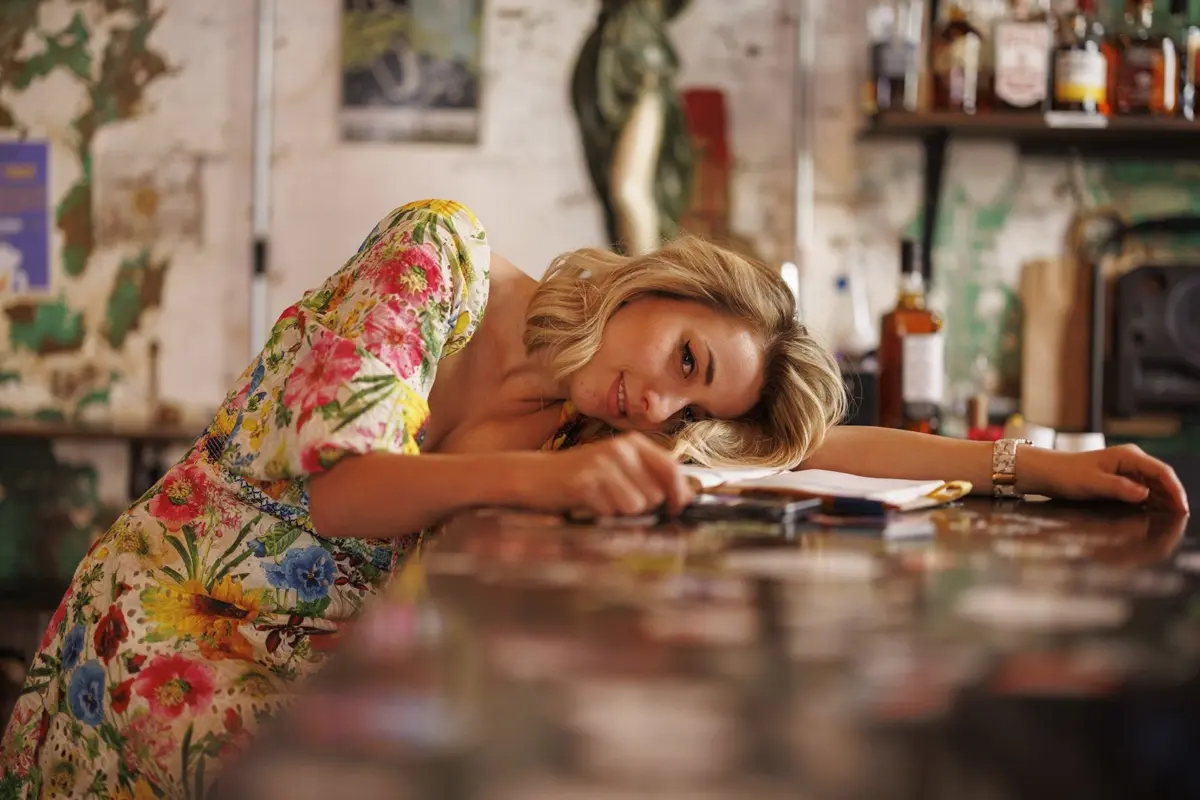
Despite receiving an unprecedented volume of rape threats and explicit photoshops, Abughazaleh refuses to be silenced. Rather than shrinking from the abuse, she deliberately leans into her femininity—applying bold makeup and styling her hair before recording her videos—as a silent act of defiance. “It makes them even more mad,” she explains. “They don’t like a woman telling them that everything they believe is bullshit.”
Official Statements and Institutional Impact
While Media Matters maintains strict protocols regarding employee safety—including public relations teams carefully scrubbing potential location identifiers from interviews to mitigate security risks—the institutional impact of Abughazaleh’s work is undeniable.
Her videos have transcended traditional political echo chambers, generating a very specific, highly rewarding form of positive feedback: breaking familial information silos. Across TikTok and Twitter, users frequently message her to share that her content served as a bridge, helping them talk their parents out of consuming radicalized cable news.
“I see comments from people on TikTok saying, ‘I sent these to my mom, and now she’s decided to only watch Special Report With Bret Baier instead of Tucker Carlson Tonight,’” Abughazaleh says, referencing a relatively benign news program compared to Carlson’s inflammatory primetime slot. “And that’s really great.”
Her supporters have even expressed their gratitude financially. Following the sudden announcement of Tucker Carlson’s termination, strangers began unsolicitedly sending Abughazaleh money via Venmo with simple instructions: “Go get a drink.” Though she initially attempted to return the funds, senders frequently rejected the refunds. “I think people have just been having fun watching me have fun,” she reflects.
Future Outlook: Life After Tucker
The seismic media earthquake of April 2023—marked by the unceremonious firing of Tucker Carlson—signaled a major turning point for cable news, yet Abughazaleh remains pragmatic about its long-term operational impact.
In her estimation, Carlson’s massive influence was inextricably tied to the structural power of the 8:00 PM timeslot, rather than any unique intellectual brilliance of the anchor himself. Drawing a historical parallel to Bill O’Reilly—the former Fox News titan who was forced out in 2017 amid sexual harassment scandals and subsequently faded from cultural relevance—she believes Carlson’s trajectory will follow a similar downward slope.
“Look at Bill O’Reilly,” she points out. “No one knows what he’s up to now, and he was even more powerful than Tucker.”
As Fox News experiments with a rotating roster of guest hosts to fill the vacant primetime chair, Abughazaleh continues to monitor the network with the sharp eye of an investigator and the comedic timing of a digital native. Whether she is dissecting the latest right-wing grift on YouTube, calling out misogynistic trolls on Twitter, or summarizing cable news insanity for hundreds of thousands of Gen Z TikTok users, Kat Abu remains an emblematic figure of a new generation of media watchdogs: resilient, unyielding, and profoundly online.
Ultimately, her motivation remains simple in a media ecosystem defined by outrage. “It feels like I’m doing something—it’s so easy to feel powerless,” she concludes. “Being angry and passionate and wanting to push forward because you want to make things better for other people makes it worth it.”