Executive Overview
For over seven decades, Charles Schulz’s Peanuts has occupied a unique space in American culture. It is deceptively simple in its artistic execution—featuring children rendered in clean, minimalist ink lines against blank backgrounds—yet profoundly complex in its existential weight. While characters like Lucy Van Pelt offered cynical observations on human nature and Snoopy lived out grand, imaginative fantasies as a World War I flying ace, the beating heart of the strip remained Charlie Brown: the ultimate perpetual underdog.
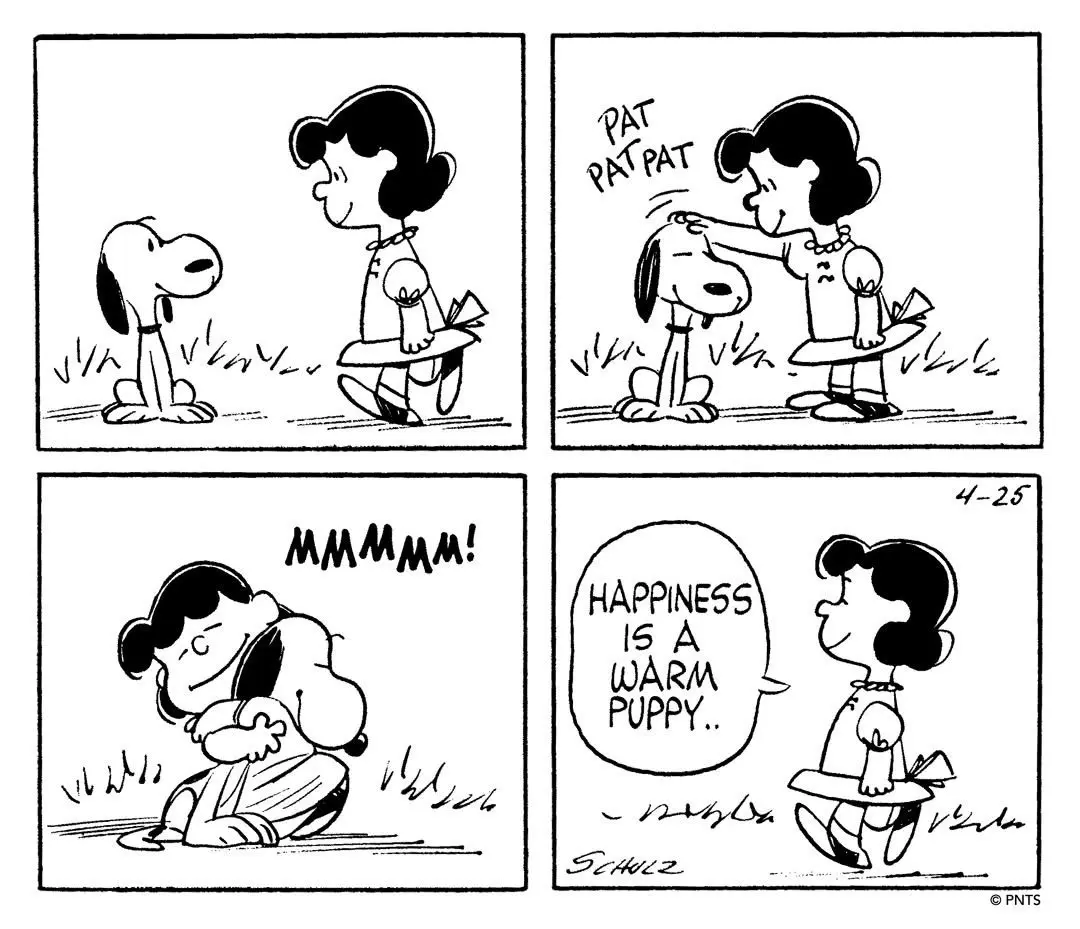
Throughout the 50-year run of the comic strip, Peanuts birthed countless memorable adages. Some of these lines achieved immortality through accidental brilliance, such as Lucy’s famous declaration that "Happiness is a warm puppy," or Charlie Brown’s lament on romance: "Nothing takes the taste out of peanut butter like unrequited love!"
However, when examining the totality of Charles Schulz’s literary architecture, a single exchange between Charlie Brown and his blanket-tethered friend Linus stands out as the definitive thesis statement of the character’s worldview. Uttered against a backdrop of existential weariness, Charlie Brown’s declaration—"I’ve developed a new philosophy… I only dread one day at a time"—serves as the ultimate encapsulation of modern resilience, melancholy, and perseverance. This article explores the cultural legacy of Peanuts, the psychological architecture of its protagonist, and how a comic strip about children captured the sobering reality of the adult human condition.
Detailed Chronology: The Evolution of Peanuts and Existential Comedy
To understand how Charlie Brown arrived at his defining worldview, it is essential to trace the historical evolution of the strip and the psychological depths plumbed by Charles Schulz.
The Early Years: The Birth of a Sad Sack (1950–1960)
When Peanuts debuted on October 2, 1950, across just seven newspapers, it bore little resemblance to the global merchandising empire it would eventually become. Initially titled Li’l Folks in its prototype phase, the early strips featured round-faced children navigating mundane childhood frustrations. Charlie Brown, in these nascent days, was less of a designated loser and more of a dryly sarcastic participant in childhood banter.

However, by the mid-1950s, Schulz had refined the character archetypes. Charlie Brown evolved into the archetypal sad sack: a boy defined not by his successes, but by his quiet dignity in the face of absolute, systemic failure. He was bad at baseball, incapable of flying a kite without it being devoured by a tree, and perpetually ignored by the little red-haired girl.
The Peak Years of Existential Realism (1960–1975)
By the 1960s, America was changing. The post-World War II optimism was giving way to cultural introspection, anxiety, and eventual disillusionment. Peanuts mirrored this cultural shift. The strip transformed from a gag-a-day comic into a philosophical sandbox where children pondered theology, psychiatry, loneliness, and the absurdity of existence.
It was during this golden era of introspection that Schulz penned the definitive Charlie Brown quote. On a fateful strip first published in 1966, Charlie Brown stands leaning against a classic brick wall alongside Linus. Linus, ever the philosopher, surveys the horizon and notes, "Life is difficult, isn’t it, Charlie Brown?"
Charlie Brown responds with a quiet affirmation: "Yes, it is."
Then, delivering a masterclass in comic timing and psychological resignation, he states his new mantra: "I’ve developed a new philosophy… I only dread one day at a time."

Cultural Immortality and Adaptation (1969 and Beyond)
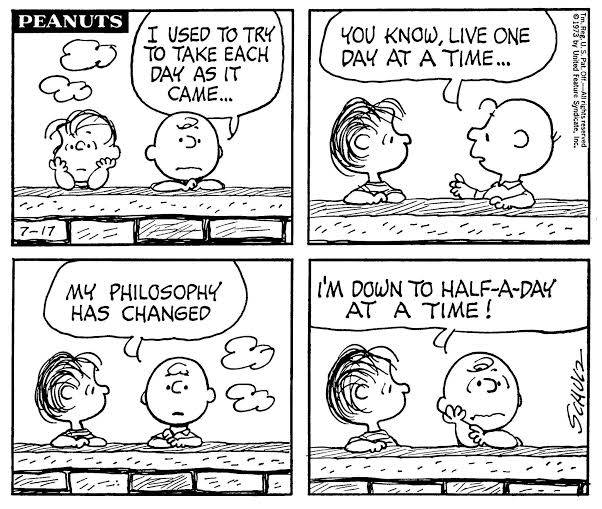
The resonance of this specific line was not lost on Charles Schulz. The sentiment was so powerful, and so fundamentally tied to the core of Charlie Brown’s identity, that Schulz recycled and adapted variations of it in subsequent years. In 1973, another prominent strip featured Charlie Brown updating his timeline: "I used to try to take each day as it came… You know, live one day at a time… My philosophy has changed. I’m down to half-a-day at a time!"
Furthermore, the 1969 animated feature film A Boy Named Charlie Brown—written entirely by Schulz himself—cemented the 1966 brick-wall conversation in cinematic history. Hearing the line spoken aloud gave a new auditory dimension to Charlie Brown’s perpetual state of psychological endurance.
Supporting Context & Metrics: The Cultural Footprint of Peanuts
To grasp the magnitude of Charlie Brown’s philosophy, one must understand the unprecedented cultural saturation of the medium that produced it.
- Global Reach: At its peak, Peanuts was syndicated in over 2,600 newspapers worldwide, reaching an estimated 355 million readers in 75 countries and translated into 21 languages.
- Longevity: Charles Schulz drew nearly 18,000 daily and Sunday strips over a span of 50 years, making Peanuts arguably the longest story ever told by a single human being.
- Psychological Impact: Psychologists and literary critics have long noted that Peanuts pioneered the integration of neurosis and melancholy into mainstream pop culture. Long before modern anxieties were openly discussed in media, Charlie Brown was the patron saint of clinical depression, imposter syndrome, and chronic burnout.
| Metric Category | Data / Statistics | Significance |
|---|---|---|
| Syndication Peak | 2,600+ newspapers | Universal cultural penetration across diverse demographics |
| Total Lifespan | October 2, 1950 – February 13, 2000 | Uninterrupted creative output by Charles M. Schulz |
| Media Adaptations | 45+ TV specials, 4 feature films | Preservation of Schulz’s dialogue in animated formats |
| Core Theme | The Paradox of Hope and Despair | Resonates deeply with adult readers despite child protagonists |
The Anatomy of a Loser: Hope vs. Dread
What makes Charlie Brown’s philosophy so enduring is the tension between his despair and his relentless persistence.
Cultural commentators often misinterpret Charlie Brown as a purely tragic figure—a victim of endless torment who should simply give up. But giving up would destroy the philosophical integrity of the character. The tragedy, and the beauty, of Charlie Brown lies in the fact that he never stops trying.

Consider his annual ritual with Lucy and the football. Every autumn, Lucy holds a football on the grass. She promises she will not pull it away. Charlie Brown, despite every piece of empirical evidence proving she will yank it away at the last millisecond, runs toward the ball with all his might, driven by a desperate, beautiful, irrational hope: “Maybe this time will be different.”
When he inevitably crashes onto his back, bruised and humiliated, he doesn’t retreat into cynicism; he simply absorbs the blow and prepares for the next trial. This is precisely why the quote "I only dread one day at a time" is a stroke of brilliance. It acknowledges that the future is terrifying, the past is littered with failure, and the present is often bleak. Yet, by limiting his dread to a strictly 24-hour increment, Charlie Brown manages to wake up the next morning and walk back out onto the pitcher’s mound—even when his team loses 123-0.
Future Outlook: Why Charlie Brown’s Wisdom Endures in the 21st Century
As society navigates an era defined by hyper-connectivity, economic instability, political polarization, and widespread burnout, the mental health landscape mirrors Charlie Brown’s backyard. Modern life often feels like a never-ending cycle of pulled footballs, unmet expectations, and systemic anxieties.
In an age dominated by toxic positivity—where social media demands constant displays of triumph, hustle culture, and manufactured joy—Charlie Brown offers a radical form of validation. He grants us permission to not be okay. He reminds us that it is entirely acceptable to feel overwhelmed by the sheer velocity of modern existence, so long as we find a way to take it one day at a time.
Charles Schulz passed away in February 2000, just hours before his final original strip was published. Yet, his creations remain immortal. Charlie Brown’s modest brick wall, his threadbare yellow-and-black zig-zag shirt, and his quiet resignation serve as a timeless monument to the human condition.
We may not always win our baseball games, our kites will continue to find their way into arboreal traps, and our unrequited loves will occasionally ruin the taste of our afternoon snacks. But as long as we wake up, face the horizon, and limit our existential dread to a manageable daily dose, we are walking shoulder-to-shoulder with Charlie Brown—proving that true resilience is not the absence of despair, but the courage to keep moving forward, one dread-filled day at a time.