Executive Overview
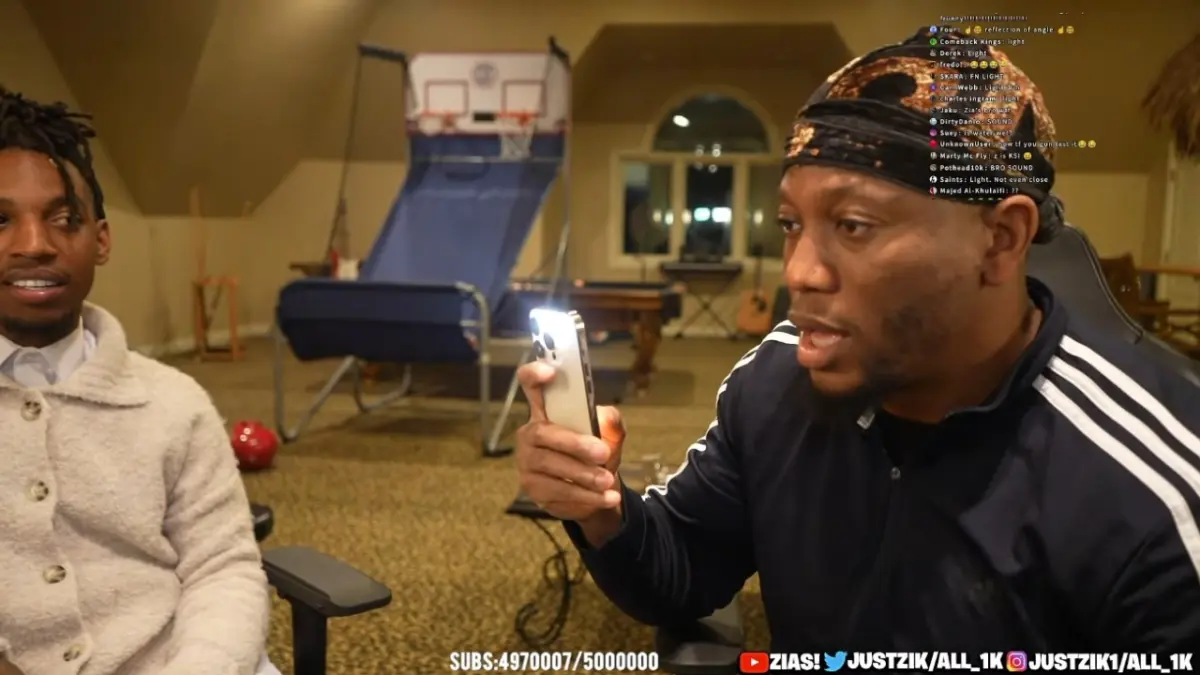
In the hyper-accelerated ecosystem of modern internet culture, viral moments frequently blur the line between genuine ignorance and performance art. Few events have epitomized this phenomenon quite as vividly as the impromptu "science experiment" conducted by popular YouTube streamers Zias and B.Lou. During a live broadcast on March 22, 2025, the duo attempted to resolve one of the fundamental laws of physics—whether sound travels faster than light—using a smartphone flashlight, a vocal utterance, and pure intuition.
What began as a fleeting, unscripted moment of comedic bewilderment has since morphed into a sprawling, multi-platform meme. Initially circulating as an object of ridicule on TikTok in the spring of 2025, the clip underwent a profound cultural mutation by September 2026. Stripped of its straightforward mockery, the footage was reframed through layers of heavy irony, spawning an influx of high-production "edits" that sarcastically recast the streamers as visionary geniuses, profound philosophers, and pioneers of modern physics.
This deep-dive investigation explores the anatomy of the "Zias and B.Lou Sound Faster Than Light Test." We trace its origins from a routine livestream on the ZIAS! YouTube channel to its explosive resurgence across TikTok and Instagram Reels. Furthermore, we examine the broader implications of "clip farming," the mechanics of ironic internet myth-making, and how digital communities collectively rewrite reality for comedic effect.
Detailed Chronology
March 22, 2025: The Genesis on the ZIAS! Stream
The timeline of this cultural artifact begins on March 22, 2025, during a routine broadcasting session hosted by content creators Zias and B.Lou on their shared YouTube channel. Known for their high-energy reactions, comedic banter, and unscripted engagement with live chat prompts, the duo had cultivated an audience accustomed to unpredictable moments.
At the 1:51:24 mark of the livestream (later cataloged and clipped by fans), Zias paused to read a seemingly innocuous question submitted by a viewer in the live chat: Is sound faster than light?
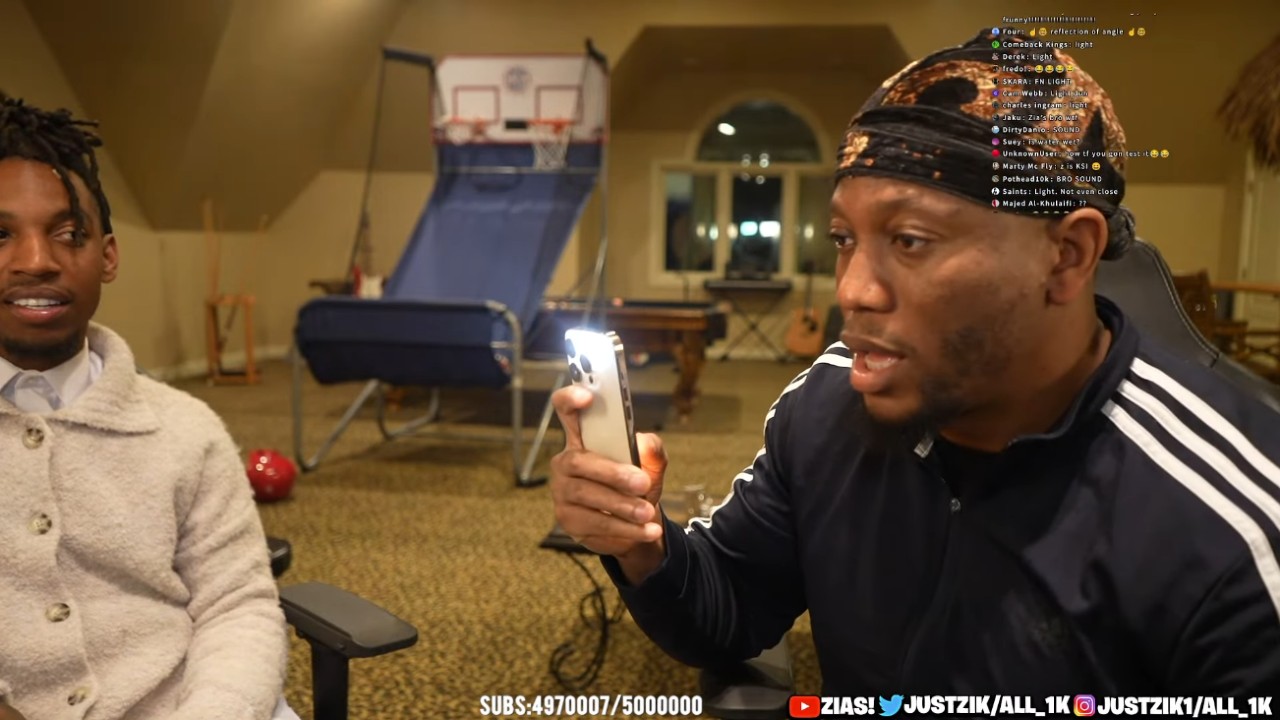
Rather than relying on basic scientific literacy—or declining to answer—Zias decided to test the hypothesis empirically in real-time. With the assistance of B.Lou acting as an adjudicator, Zias executed a makeshift scientific trial. He activated his smartphone’s flashlight while simultaneously emitting a sharp "Ah" vocalization. The objective was to determine which sensory input reached B.Lou’s perception first.
Despite the immutable laws of physics—wherein light travels at approximately 299,792 kilometers per second in a vacuum, while sound plods along at a mere 343 meters per second in air—B.Lou entertained the possibility that sound could occasionally outpace light. The confident delivery of this fundamentally flawed empirical observation provided an instant goldmine for digital spectators.
March 2025 – August 2025: Initial Viral Spread and Ridicule
Within hours of the broadcast concluding, independent archive accounts and clip farmers recognized the comedic value of the exchange. On March 23, 2025, TikTok user @clipscentral766 uploaded a dedicated excerpt of the experiment. The caption—"never seen a more stupid duo"—captured the immediate, literal interpretation of the clip.
The video spread rapidly across TikTok, accumulating over 2 million views within its first year. Commenters pointed out the elementary school-level scientific error, transforming the streamers into temporary archetypes of digital cluelessness. For several months, the clip remained a standard viral video: a funny blunder preserved for public amusement, but otherwise confined to traditional reactions of disbelief.
September 2026: The Irony Renaissance and Myth-Making
The true cultural evolution of the meme occurred roughly a year and a half later, in mid-September 2026. Internet memes frequently undergo a lifecycle wherein literal interpretations give way to surrealist irony. The Zias and B.Lou clip was no exception; it experienced a massive resurgence driven not by mockery, but by satirical hero-worship.
On September 14, 2026, TikToker @bah7uz published a stylized video edit featuring the clip, overlaid with high-energy phonk music (specifically the track "BLUFF"), cinematic transitions, and a glowing caption declaring: "Zias and B lou are too smart for this world." The juxtaposition of low-brow scientific illiteracy with high-octane, anime-style edit aesthetics struck a chord with the algorithm. The post garnered over 3.7 million views in just three days.
This opened the floodgates for a cottage industry of derivative content. On September 15, creators such as @gigasethh and @yhorikedits dropped competing edits. Using slowed phonk tracks, flashing lights, and dramatic slow-motion particle effects, these creators aggressively committed to the bit. They reframed the smartphone flashlight test not as an error, but as a paradigm-shifting breakthrough that successfully disproved centuries of established physics. By September 16, the timeline was flooded with parodies celebrating Zias and B.Lou as avant-garde philosophers who transcended traditional academic limitations.
Supporting Context & Metrics
To understand the cultural velocity of the "Sound Faster Than Light Test," one must analyze the quantitative metrics and structural mechanics that fueled its distribution.
Engagement Metrics Breakdown
- Original Source Material: The March 22, 2025 livestream on the ZIAS! YouTube channel accumulated over 100,000 views within its first year, serving as the foundational repository for the clip.
- Initial Wave (March 2025): Early reposts, such as
@clipscentral766’s TikTok upload, easily cleared the 2 million-view threshold, establishing baseline awareness across the platform. - The Resurgence (September 2026):
@bah7uz(Sept. 14, 2026): 3.7+ million views in 72 hours.@gigasethh(Sept. 15, 2026): 369,000+ views in 48 hours.@yhorikedits(Sept. 15, 2026): 235,000+ views in 48 hours.
The Mechanics of "Clip Farming" and Irony Edits
The phenomenon highlights a broader shift in how live-streaming culture interfaces with short-form video platforms. "Clip farming"—the deliberate or accidental generation of hyper-shareable, out-of-context moments during live broadcasts—has become a primary engine of internet fame.
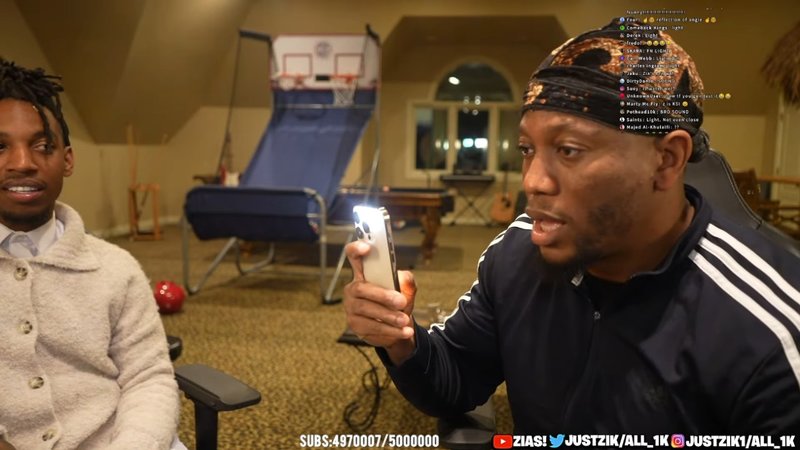
However, the September 2026 renaissance demonstrates how internet subcultures elevate clip farming into participatory performance art. By deploying the cinematic language typically reserved for hyper-competent anime protagonists, professional athletes, or historical geniuses (such as Albert Einstein or Nikola Tesla) onto two streamers failing a middle-school science concept, the community creates a layer of recursive irony. The humor relies on total commitment to an obviously absurd premise: everyone involved knows sound does not travel faster than light, yet the community unites under the collective delusion that Zias and B.Lou have unlocked forbidden knowledge.
Official Statements and Community Reactions
While neither Zias nor B.Lou initially published an academic retraction of their findings, the digital community’s reaction has manifested as an extensive corpus of ironic commentary, fan art animations, and theoretical defenses.
The Fan-Led Defense of "Alternative Physics"
In the comment sections of viral edits across TikTok and Instagram Reels, users leaned heavily into pseudo-intellectual defenses of the experiment. Comments such as "You guys just don’t understand theoretical acoustics" and "Zias factored in quantum audio-luminescence that textbooks refuse to teach" became ubiquitous.
This tongue-in-cheek intellectualization mirrors historical shifts in scientific consensus, where established paradigms were upended by maverick thinkers. By placing internet streamers in the lineage of Galileo Galilei—albeit for confusing light-years with microphone latency—the community weaponized irony to build a shared, absurdist mythology around a mundane livestream blunder.
Future Outlook
As the internet continues to ingest and metabolize its own history, the trajectory of the Zias and B.Lou "Sound Faster Than Light Test" offers a clear case study in modern meme longevity.
- Mainstream Crossover and Merchandising: Memes of this magnitude frequently transition from short-form video loops into tangible merchandise, custom soundboards, and self-referential callbacks within the creators’ future streams. It is entirely probable that future live broadcasts will feature chat members spamming lightbulb and soundwave emojis to bait the creators into repeating or addressing the experiment.
- The Evolution of Edits: As AI-generated video tools and advanced editing templates become increasingly accessible, we can anticipate higher-fidelity visual reimaginings of the test. Future iterations may feature deepfake cinematic trailers depicting Zias and B.Lou as sci-fi scientists warring against the laws of thermodynamics.
- Educational Irony: Interestingly, the meme has inadvertently functioned as a bizarre form of public science engagement. Millions of young viewers exposed to the edits have engaged in comment-section debates regarding the actual speed of light versus sound, proving that even absolute nonsense, when packaged with compelling audiovisual aesthetics, can inadvertently prompt scientific discourse.
Ultimately, the Zias and B.Lou sound-speed experiment reminds us why digital culture remains endlessly fascinating. Through the alchemy of platform algorithms, community creativity, and collective irony, a simple lapse in basic physics was transformed into an enduring monument of internet absurdity.