Executive Overview
In the volatile intersection of corporate power, social media deregulation, and soaring healthcare costs, few moments in recent history capture the zeitgeist quite like the "Eli Lilly Twitter impersonation" of November 2022. What began as a slapdash rollout of a subscription-based verification model on the platform then known as Twitter devolved into a masterclass in corporate vulnerability. In an era where digital trust is traded for algorithmic engagement, a 34-year-old writer from Queens, New York, managed to execute one of the most consequential online pranks of the decade.
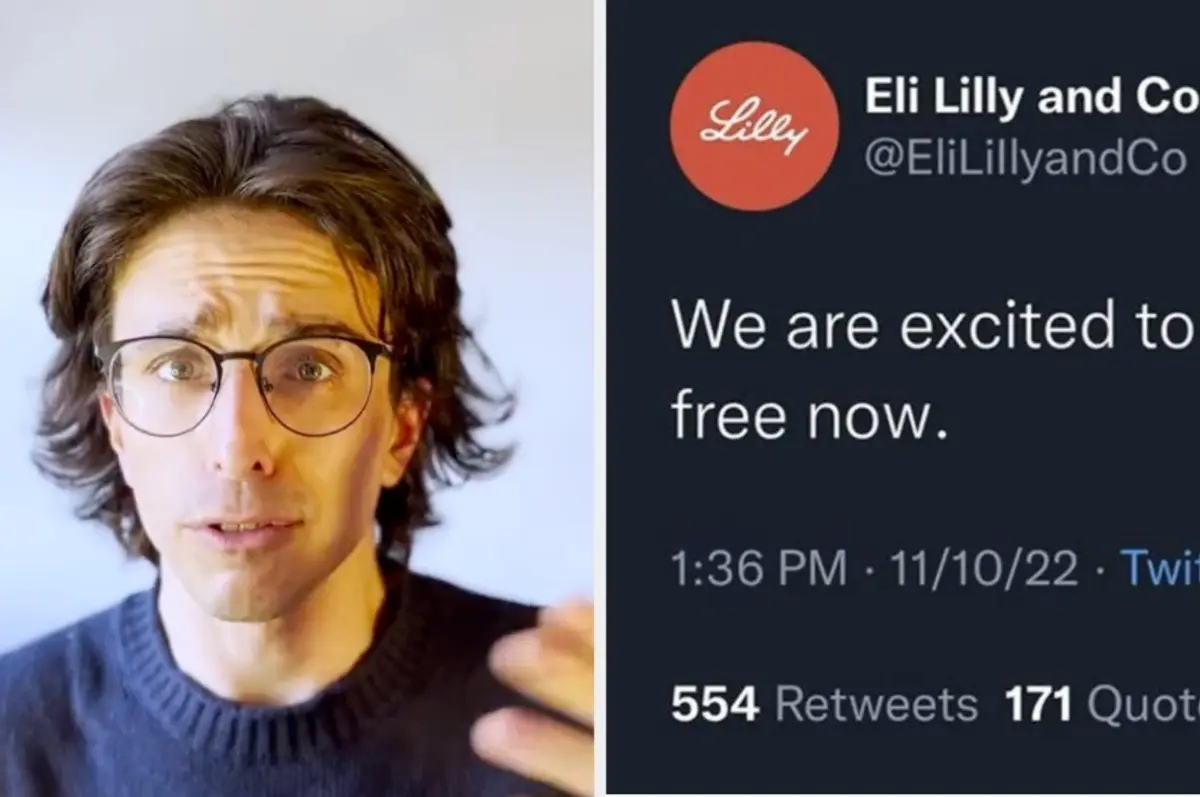
For the modest price of $8 a month—the fee for the newly minted "Twitter Blue" subscription—Sean Morrow exploited a glaring loophole in Elon Musk’s hastily implemented verification system. By changing the handle of a dormant novelty account to @EliLillyandCo and securing a coveted blue checkmark, Morrow published a single, deceptively simple sentence: "We are excited to announce insulin is free now."
The fallout was immediate, multifaceted, and deeply revealing. Within hours, the tweet went viral, exposing the absurdity of exorbitant insulin pricing while simultaneously kneecapping one of the world’s most valuable pharmaceutical conglomerates. Eli Lilly’s stock tumbled by more than 4% as investors panicked, while the public engaged in a collective debate over corporate greed, digital authenticity, and the responsibilities of social media platforms.
This in-depth investigative report examines the mechanics of the stunt, the chaos of Twitter’s early Musk era, the systemic injustices of American healthcare pricing, and the lasting repercussions of a single $8 digital prank that briefly forced a $300 billion pharmaceutical giant to reckon with its own public image.
Detailed Chronology: The Anatomy of a Digital Uprising
The Rollout of Chaos: Early November 2022
To understand how the Eli Lilly spoof succeeded, one must revisit the chaotic early days of Elon Musk’s acquisition of Twitter. In an effort to overhaul the platform’s revenue streams and democratize its verification system—which had previously been reserved for notable public figures, journalists, and institutions to prevent impersonation—Musk introduced Twitter Blue. For $8 a month, any user could purchase a blue checkmark, ostensibly conferring authenticity without rigorous identity verification.
Tech journalists, digital security experts, and civil rights groups immediately warned that the system was primed for catastrophic abuse. Their warnings were realized almost instantly. Within the first 48 hours of the rollout, the timeline descended into a surrealist theater of bad actors and satirists. A verified account purporting to be defense contractor Lockheed Martin announced it was halting weapons sales to Saudi Arabia, Israel, and the United States. Another account, posing as corporate giant Nintendo, tweeted an image of Mario flipping the bird.
Yet, none of these pranks would carry the real-world financial and societal weight of the strike against Eli Lilly.
Enter Sean Morrow: The Queens Writer Who Broke the Timeline
Amidst the digital pandemonium, Sean Morrow—a 34-year-old writer for the progressive media outlet More Perfect Union—decided to test the limits of the new system. Morrow did not suffer from diabetes, but he had long harbored a profound resentment toward the pharmaceutical industry’s handling of life-saving therapeutics.
"I always saw it as one of the worst corporate exploitations of everyone else in a world of terrible corporate exploitations of everyone else," Morrow shared in an interview with BuzzFeed News.
Dusting off an old, inactive novelty account, Morrow modified the display name and handle to match Indianapolis-based pharmaceutical giant Eli Lilly and Co. Because Twitter’s new verification protocol did not require identity checks for paying subscribers, the account was quickly granted the blue checkmark of authenticity.
At precisely the right moment of public skepticism and regulatory scrutiny over drug prices, Morrow hit "publish" on a message that millions of Americans wished were true:
"We are excited to announce insulin is free now."
The Spread and the Split
The tweet struck a nerve with terrifying velocity. It existed in a strange quantum state of modern communication: half the internet understood it as a brilliant piece of performance art and satire, while the other half—including exhausted patients, weary advocacy groups, and harried financial analysts—read it as corporate altruism.
The tweet was amplified exponentially by retweets, quotes, and screenshots. It functioned simultaneously as a direct dunk on Eli Lilly—highlighting the grotesque reality that a corporation valued at $300 billion was profiting exorbitantly off a medication discovered a century earlier for the public good—and an indictment of Musk’s engineering-by-fiat approach to social media governance.
Supporting Context & Metrics: Wall Street, Big Pharma, and the $8 Checkmark
While internet users cheered the audacity of the stunt, the corporate and financial world experienced whiplash.
The Market Reaction
On Friday, November 11, 2022, Eli Lilly’s stock price suffered a precipitous drop, falling more than 4.37% in trading. While market analysts debated the exact attribution—noting that broader pharmaceutical indices also saw mild dips that day—the timing was too poetic to ignore. Billions in market capitalization evaporated in the wake of a tweet that cost its creator less than a cup of gourmet coffee.
Financial pundits scrambled to assess the damage. How could a tweet from a newly minted $8 account move the needle for a company that traces its roots back to 1876? The answer lay in the intersection of high-frequency trading algorithms, automated news scrapers, and investor skittishness. Modern financial markets rely heavily on sentiment analysis tools that scour platforms like Twitter for breaking news regarding major corporations. When a "verified" account bearing the official name and logo of Eli Lilly announced a sweeping policy change, automated bots and panicked traders reacted before human communications teams could issue a denial.
The Insulin Crisis: A Century of Corporate Exploitation
To fully grasp why Morrow’s tweet resonated so deeply, one must look at the grim financial reality of insulin access in the United States.
Insulin was discovered in 1921 by Canadian researchers Frederick Banting, Charles Best, and James Collip. In an act of profound humanitarian selflessness, Banting sold the patent for a mere $1, famously declaring that "insulin does not belong to me, it belongs to the world." The researchers wanted the medication to be accessible and affordable to everyone whose life depended on it.
A century later, that humanitarian vision has been thoroughly dismantled by a predatory oligopoly. In the United States, three major pharmaceutical companies—Eli Lilly, Novo Nordisk, and Sanofi—control the vast majority of the insulin market. Over the decades, these companies engaged in lockstep price increases, driving the cost of a single vial of insulin up by more than 1,000% over a generation.
For millions of Americans living with Type 1 diabetes, insulin is not a lifestyle choice or a preventative supplement; it is an immediate, daily requirement for survival. The astronomical out-of-pocket costs forced many patients to ration their doses—a practice that frequently leads to diabetic ketoacidosis, organ failure, or death.
Public health advocates had spent decades trying to break through the news cycle to highlight this crisis, running campaigns, lobbying Congress, and sharing devastating personal stories. Yet, it took an anonymous writer using an $8 exploit on a flailing social media platform to force the conversation onto the front pages of mainstream media outlets worldwide.
Official Statements and Corporate Fallout
The immediate aftermath for Eli Lilly was a public relations nightmare.
The Scramble for Damage Control
As the fake tweet went viral, Eli Lilly’s real communications team swung into action. Operating from the official (and hastily re-verified) account @LillyPad, the company issued a terse retraction: "We apologize to those who have been served a misleading message from a fake Lilly account. Our official account is @LillyPad."
However, the damage was already done. The internet had spoken, and the response was overwhelmingly unsympathetic to the pharmaceutical giant. Social media users flooded the corporate replies with reminders of the millions of dollars spent lobbying Washington against price-cap legislation, juxtaposed against executive compensation packages totaling tens of millions of dollars.
The Two-Week Reveal
Morrow maintained his anonymity for two weeks following the incident, watching from the sidelines as the media dissected the event. When he finally unmasked himself in an interview with BuzzFeed News, he reflected on the surreal nature of the campaign he had accidentally spearheaded.
Morrow acknowledged that Eli Lilly was unlikely to implement free insulin solely because of his prank—such massive corporate decisions are governed by long-term strategic calculations, regulatory pressures, and shifting political landscapes. However, he maintained that the public pressure generated by the stunt undoubtedly shone an uncomfortable, glaring spotlight on the industry’s practices.
"I did have an emotional reaction to this news," Morrow later confessed, speaking about the broader discourse surrounding insulin pricing that followed the incident. "I haven’t really cried since the season finale of The Leftovers, but I felt some welling up, even if I don’t trust Lilly’s motivations here."
Future Outlook: The Legacy of the $8 Tweet
What is the lasting legacy of the day a fake Eli Lilly account promised free insulin? The ripples of November 2022 continue to influence both big tech governance and pharmaceutical policy.
The Evolution of Social Media Verification
For Elon Musk and the platform formerly known as Twitter (now X), the episode served as a permanent scar. The company was forced to rapidly backtrack on its unvetted subscription model, introducing tiered verification systems, gray checkmarks for government entities, gold checkmarks for verified businesses, and identity authentication protocols to prevent rampant impersonation.
The incident catalyzed a broader reckoning across the tech industry regarding trust and safety. As generative AI makes deepfakes and automated misinformation increasingly sophisticated, the vulnerability exposed by Morrow demonstrated that institutional authority online is fragile, easily spoofed, and acutely dangerous when tied to real-world financial markets.
Shifts in Pharmaceutical Pricing
More tangibly, the public shaming surrounding insulin prices did not fade quietly into the night. In the months following the incident, mounting political pressure from the Biden administration, congressional inquiries, and sustained public outrage—catalyzed in no small part by the viral shockwave of November 2022—forced major pharmaceutical companies to make concessions.
In early 2023, Eli Lilly announced it would cap out-of-pocket insulin costs at $35 a month for millions of Americans, followed closely by similar announcements from competitors Novo Nordisk and Sanofi. While critics rightly point out that insulin should ideally be free or manufactured at cost through public options—and that international pricing remains far lower than in the U.S.—the price caps represented a significant, albeit overdue, victory for patients.
Conclusion
Sean Morrow’s $8 prank was never going to permanently dismantle the American healthcare system. But it achieved something remarkably rare in the digital age: it punctured the invincible aura of corporate conglomerates and exposed the farcical nature of unregulated social media governance in a single, perfectly executed stroke of satire.
As we look toward the future of digital communications and corporate accountability, the story of the fake Eli Lilly tweet remains a cautionary tale for CEOs and a glimmer of hope for satirists. It proved that sometimes, when the systems of power are unresponsive to human suffering, a little bit of well-placed chaos is all it takes to force the world to pay attention.