Executive Overview
To the casual sports fan tuning in once every four years for the Summer Olympic Games, the sport of weightlifting appears deceptively minimalist. Stripped of the sprawling venues, tactical complexity, or multi-phase scoring systems of gymnastics, track and field, or swimming, weightlifting is defined by an uncompromisingly simple premise: lift a heavily loaded barbell from the floor to an overhead lockout, and hold it under control until the referees signal for it to be dropped.
The entire discipline rests upon just two foundational movements: the snatch and the clean and jerk. Yet, beneath this veneer of raw, brutal simplicity lies one of the most technically demanding, psychologically taxing, and strategically intricate sports in existence. It is a crucible where milliseconds dictate success, millimeters alter biomechanical efficiency, and tactical chess matches played out on the scoreboard can completely overturn physical hierarchies.
In this deep-dive investigative feature, we peel back the layers of elite-tier strength sports. Through an exclusive breakdown with Matthew Tung, a premier competitive weightlifter representing Hong Kong on the international stage, we examine the hidden mechanical intricacies of the lifts, decode the baffling strategies behind mid-competition weight adjustments, and unpack the mathematical paradox of how an athlete can fail four out of their six total attempts and still walk away with a gold medal dangling from their neck.
Furthermore, this report explores the broader lessons that elite weightlifting offers to the worlds of general strength training, human resilience, and peak physical performance, all while contextualizing the sport’s evolving global landscape.
Detailed Chronology: The Anatomy of a Competition and the Mind of the Lifter
To understand the complexity of Olympic weightlifting, one must first trace the precise arc of a competition lifecycle—from the silent tension of the warm-up room to the deafening roar of the competition platform, and finally through the psychological labyrinth of tactical game-play.
Phase 1: The Pre-Competition Crucible and the Warm-Up Room
The public rarely sees the true battleground of weightlifting. Long before an athlete steps onto the platform under the blinding stadium lights, the competition has already been heavily shaped in the warm-up area. Here, lifters must navigate a delicate physiological high-wire act: timing their warm-up jumps so that their central nervous system reaches absolute peak activation precisely when their name is called, without exhausting their muscular energy reserves.
Matthew Tung explains that the warm-up room is an arena of psychological warfare. "Everyone is watching everyone else," Tung notes. "You are tracking the bar weights your opponents are hitting in the back. You are listening to the announcers call out opening weights. If a rival looks shaky on 160 kilograms in the back room, it changes your tactical approach out front. Conversely, if someone is missing their warm-ups, panic can ripple through the coaching staffs."
Athletes must systematically climb a ladder of escalating weights—from an empty 20-kilogram men’s bar (or 15-kilogram women’s bar) up to heavy preparatory singles just shy of their intended opening competition weight. This requires an intimate, almost clairvoyant understanding of one’s own physiology. Peak too early, and the muscles enter a state of post-activation fatigue; peak too late, and the lifter risks opening cold, leading to catastrophic technical breakdowns under heavy loads.
Phase 2: The Snatch – Speed, Depth, and Spatial Precision
Once on the platform, the competition begins with the snatch. The objective is singular: lift the barbell from the platform to overhead in a single, uninterrupted motion, typically catching the bar in a deep, explosive overhead squat known as the "rock bottom" position.
The movement is broadly broken down into several distinct phases:
- The First Pull: The lifter breaks the bar from the floor, maintaining a rigid spinal posture while engaging the hamstrings and quadriceps.
- The Transition (The Double Knee Bend): As the bar passes the knees, the lifter rebends the knees slightly, sliding the hips forward to position the body for maximum leverage.
- The Second Pull (The Explosion): This is the most violent phase of the lift. Through a rapid triple extension of the ankles, knees, and hips, combined with a violent shrug of the traps, the lifter generates maximum vertical momentum on the bar.
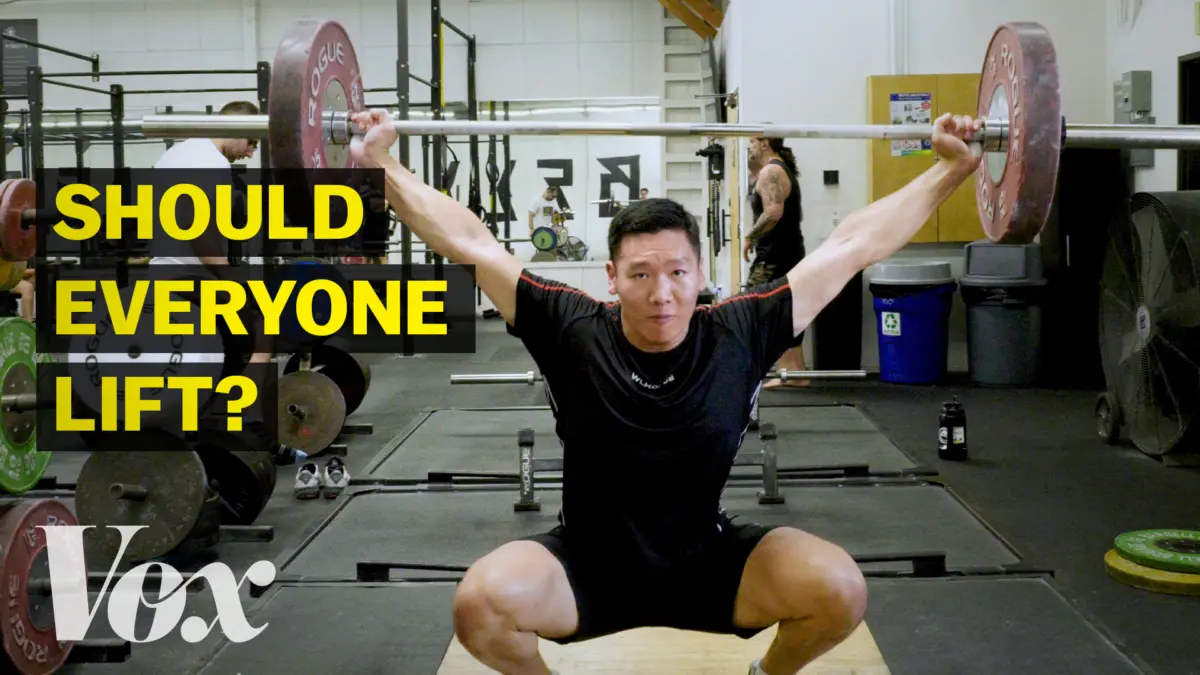
- The Turnover and Catch: While the bar is weightless at the peak of its trajectory (often traveling at speeds exceeding 2 to 2.5 meters per second), the lifter drops violently underneath the steel, locking their arms out overhead into an ultra-stable, wide-grip overhead squat.
"People think the snatch is about back and arm strength," Tung emphasizes. "In reality, it is a gymnastics movement disguised as a strength lift. It is about speed, timing, and spatial awareness. If your shoulders are off by a single centimeter at the catch, 140 kilograms will pull you forward or backward, and you will miss."
Phase 3: The Clean and Jerk – Power Meets Mechanical Efficiency
After the snatch discipline concludes, athletes take a brief respite before returning to the platform for the clean and jerk. This event is historically associated with heavier loads, as it breaks the ascent into two distinct movements.
- The Clean: The bar is lifted from the platform to the shoulders in a single continuous movement, catching it across the clavicles and anterior deltoids in a deep front squat. The lifter then rises powerfully out of the hole.
- The Jerk: From the standing rack position, the lifter dips the torso straight down and explodes upward, driving the bar overhead while splitting their legs apart (the split jerk) or dropping into a shallow squat (the squat or power jerk).
The clean demands immense lower-body and core durability, while the jerk relies heavily on lower-to-upper body power transfer. "The clean is about absorbing and redirecting heavy loads, whereas the jerk is about violence and timing," says Tung. "By the time you step up for your final clean and jerk, your central nervous system is completely fried. You are relying entirely on muscle memory and sheer willpower."
Phase 4: Tactical Game-Play and the Art of the Declared Weight
One of the most fascinating yet misunderstood aspects of elite weightlifting is the strategic declaration and mid-competition changing of weights. Under International Weightlifting Federation (IWF) rules, athletes and their coaches must declare their opening attempt weights long before the session begins. However, as the competition unfolds, coaches are permitted to alter these weights based on real-time developments.
This introduces a high-stakes game of poker:
- Jockeying for Position: If a leading lifter chooses a conservative opening weight and misses, trailing athletes can hastily lower their requests to secure a medal position.
- Psychological Pressure: A coach might bump an athlete’s weight up by 3 to 5 kilograms mid-session to force an opponent into a premature, heavier-than-comfortable attempt.
- The Clock: Athletes are given a strict two-minute window to lift once their name is called (extended to three minutes if they are following themselves on consecutive attempts). Coaches manipulate this clock to buy their lifters precious recovery time between heavy attempts.
Supporting Context, Metrics, and the Paradox of Victory
To truly grasp the magnitude of elite weightlifting, one must examine the hard metrics of human biomechanics and the fascinating statistical anomalies that govern the sport.
Biomechanical Metrics and Force Production
At the elite international level, weightlifters routinely pull loads that defy common-sense expectations relative to their body weight. Consider the following performance metrics:
- Peak Power Output: During the second pull of a snatch or clean, elite lifters can generate instantaneous mechanical power outputs exceeding 4,000 to 5,000 watts—roughly equivalent to the horsepower required to power several household appliances simultaneously.
- Vertical Acceleration: The barbell can reach vertical velocities of up to 2.2 meters per second, meaning the transition from floor to overhead lockout often occurs in less than 1.5 seconds.
- Relative Strength Multipliers: Elite athletes in the lighter bodyweight categories routinely snatch and clean-and-jerk upwards of 3 to 3.5 times their own body weight. For instance, a 61-kilogram athlete lifting 180 kilograms overhead is managing a dynamic load that would crush an untrained human skeletal structure instantly.
The Mathematics of Missing Four Lifts and Winning Gold
One of the most captivating narrative elements highlighted by Matthew Tung is the counter-intuitive scoring structure of weightlifting: an athlete can miss four out of their six total attempts and still win the gold medal.
How is this mathematically and competitively possible?
Weightlifting competitions are structured around a cumulative total: an athlete’s best successful snatch is added to their best successful clean and jerk. Total misses do not subtract from the score; they simply yield a score of zero for that specific attempt.
Imagine the following scenario at a major international championship:
- Lifter A (The Favorite): Opens conservatively with three relatively light, safe weights to guarantee a total on the board (e.g., 140kg snatch / 170kg clean & jerk = 310kg total). They then take two aggressive, maximum-effort attempts at world-record weights and miss both. They finish with a total of 310kg, having missed two attempts.
- Lifter B (The Risk-Taker): Gambles heavily. They miss their first two warm-up weights/opening attempts on the snatch due to technical errors, finally hitting their third attempt. In the clean and jerk, they miss their first two attempts at a massive weight, but desperately grind out their third and final attempt. Lifter B has missed a staggering four out of six lifts (two snatches, two cleans). However, because that final successful clean and jerk was significantly heavier than Lifter A’s conservative total, Lifter B finishes with a total of 315kg.
Lifter B goes home with the gold medal, despite failing nearly 67% of their total attempts on the platform.
"This is why weightlifting is as much a sport of risk management as it is of raw power," explains Tung. "Coaches must calculate the exact threshold where ambition meets reality. Push too hard, and you bomb out—registering zero totals and walking away with nothing. Play it too safe, and you get out-totaled by someone who was willing to dance on the edge of a knife."
Official Statements and Expert Perspectives
As the sport of Olympic weightlifting navigates modern shifts in governance, anti-doping protocols, and global expansion, voices from within the elite ecosystem offer vital perspectives on the future of the discipline.
Matthew Tung on the Evolution of Modern Weightlifting
Reflecting on his journey representing Hong Kong on the global stage, Matthew Tung highlights how sports science has completely revolutionized training methodologies over the past decade.
"When people look at weightlifting, they often see a traditional, old-school sport that hasn’t changed in fifty years. That couldn’t be further from the truth. Today, elite weightlifters are utilizing high-speed motion capture, force plates, velocity-based training devices, and advanced blood lactate monitoring. Every single rep in the training hall is analyzed down to the millimeter. We aren’t just lifting heavy anymore; we are engineering human movement under extreme loads."
Tung also addresses the mental fortitude required to step onto the international platform:
"The hardest part of international competition isn’t the physical pain—it’s the silence in your head right before you walk out. When you step out from behind the curtain, the crowd vanishes, the lights go dim, and it’s just you, the referee’s white lights, and a piece of steel that wants to humble you. You have to trust the thousands of hours of repetition in the gym. If you hesitate for even a fraction of a second, the weight wins."
Coaching and Sports Science Insights
Biomechanists and elite coaches echo Tung’s sentiments, emphasizing that weightlifting serves as the gold standard for developing explosive athletic power across all sports. Strength and conditioning coaches across the NFL, NBA, Premier League, and Olympic track programs routinely integrate variations of the snatch and clean and jerk into their athlete development pipelines.
The rationale is clear: no other human movement requires the synchronous recruitment of the central nervous system, rapid force development (RFD), and triple extension quite like the Olympic lifts. It teaches the human body how to absorb force efficiently and redirect it with explosive velocity—a vital capability in virtually every athletic endeavor.
Future Outlook: The Horizon of Olympic Strength Sports
As we look toward the future of Olympic weightlifting, the sport stands at a fascinating crossroads of tradition, technological integration, and global democratization.
1. Technological Integration and Data-Driven Training
The integration of real-time velocity-based training (VBT) and AI-driven biomechanical analysis is rapidly shifting from a luxury of elite national training centers to standard practice for competitive athletes. Coaches can now monitor bar deceleration rates during a lift to predict whether an athlete will successfully lock out an attempt before they even complete the turnover. This data-driven approach is minimizing chronic overuse injuries and extending the competitive longevity of elite lifters well into their thirties.
2. Global Democratization and Shifting Power Dynamics
Historically, Olympic weightlifting was dominated by a handful of traditional powerhouse nations from Eastern Europe and Eurasia. However, the modern era has seen a dramatic decentralization of talent. Asian federations (led by nations such as China, Chinese Taipei, and regional hubs like Hong Kong), alongside surging programs in the Americas and Africa, have transformed international competitions into truly global showcases. This geographic diversification has heightened the competitive parity, making tactical strategy and meticulous preparation more critical than ever.
3. Cultural Perception: Beyond the Iron
Perhaps the most promising outlook for the sport is its growing cultural crossover. Thanks to the explosive rise of general strength training, functional fitness, and digital media documentation, millions of everyday fitness enthusiasts are discovering the technical beauty of the snatch and clean and jerk. While only a tiny fraction will ever step onto an international competition platform, the appreciation for the sport’s nuance, discipline, and aesthetic perfection has reached unprecedented heights.
Conclusion
Olympic weightlifting is far more than a simple test of muscular vanity or brute strength. It is a high-stakes kinetic symphony—a discipline where physics, psychology, and tactical cunning converge in a matter of seconds.
Through the lens of elite competitors like Matthew Tung, we are reminded that behind every successful lift lies a mountain of invisible labor: the calculated warm-up room psychology, the microscopic adjustments in bar trajectory, the nerve-wracking chess match of declared weights, and the gritty resilience required to bounce back from missed attempts.
Whether an athlete is chasing an international gold medal or simply striving to hit a personal best in a local gym, the lessons of the platform remain universal: master the fundamentals, respect the mechanics, embrace the strategy, and never let the weight dictate the outcome.
This investigative feature and video breakdown is proudly presented by Colgate. Colgate remains strictly committed to editorial independence and has no influence over journalistic decisions, ensuring that our coverage of elite athletics remains authoritative, objective, and uncompromisingly authentic.