Executive Overview
In the sprawling, lore-dense universe of The Legend of Zelda, few corners are as frequently revisited as the Nintendo 64 masterwork The Legend of Zelda: Ocarina of Time. Released globally in late 1998, the title fundamentally shaped modern 3D action-adventure game design, introducing millions to the plains of Hyrule, the intricacies of Z-targeting, and a rich cast of unforgettable characters. Among them, however, is a figure who exists entirely on the periphery of the grand narrative: a nameless, blue-haired attendant who runs the Bombchu Bowling Alley minigame in Hyrule Castle Town.
Decades after her initial pixelated debut, the character colloquially known as the Bombchu Girl or the Bombchu Bowling Lady has transcended her humble origins as a simple interactive set piece. She has evolved into a bona fide internet meme, a muse for digital artists, a cosplay staple, and an unexpected touchstone for generational nostalgia.
This cultural phenomenon experienced a massive resurgence in October 2026, catalyzed by early preview footage of the highly anticipated Ocarina of Time remake. As industry insiders and previewers gained hands-on access to the modernized version of Hyrule, community-wide anxiety regarding potential character omissions or stylistic sanitization quickly gave way to widespread celebration. The Bombchu Girl had not only survived the transition to modern hardware; her freshly rendered, high-definition design cemented her status as a timeless internet icon. This report explores the origins of the Bombchu Bowling Lady, her decades-long digital footprint, the socio-cultural commentary surrounding her appeal, and the community-wide reaction to her 2026 rediscovery.
Detailed Chronology
1. The 1998 Genesis: A Pixelated Attendant in Castle Town
On November 21st, 1998, Nintendo released The Legend of Zelda: Ocarina of Time for the Nintendo 64 in Japan, followed shortly thereafter by its North American and European launches. Designed under the direction of Shigeru Miyamoto, Takashi Tezuka, and a creative team that would define a generation of game development, the title was an immediate critical and commercial triumph.
Within the bustling confines of the adult and child iterations of Hyrule Castle Town, players could explore various interior shops and minigame establishments. Among these was the Bombchu Bowling Alley. For a fee of 30 Rupees per game, players could test their spatial awareness and luck by launching the self-propelled, scuttling explosive mice known as Bombchus through a hazard-filled course.
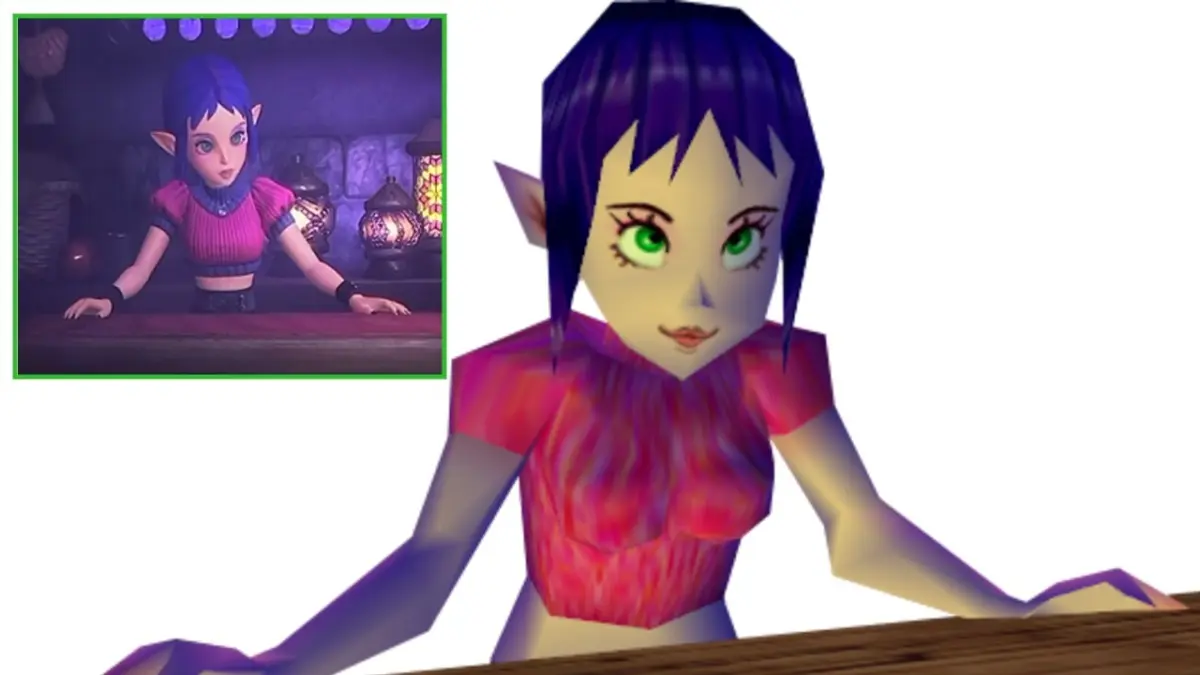
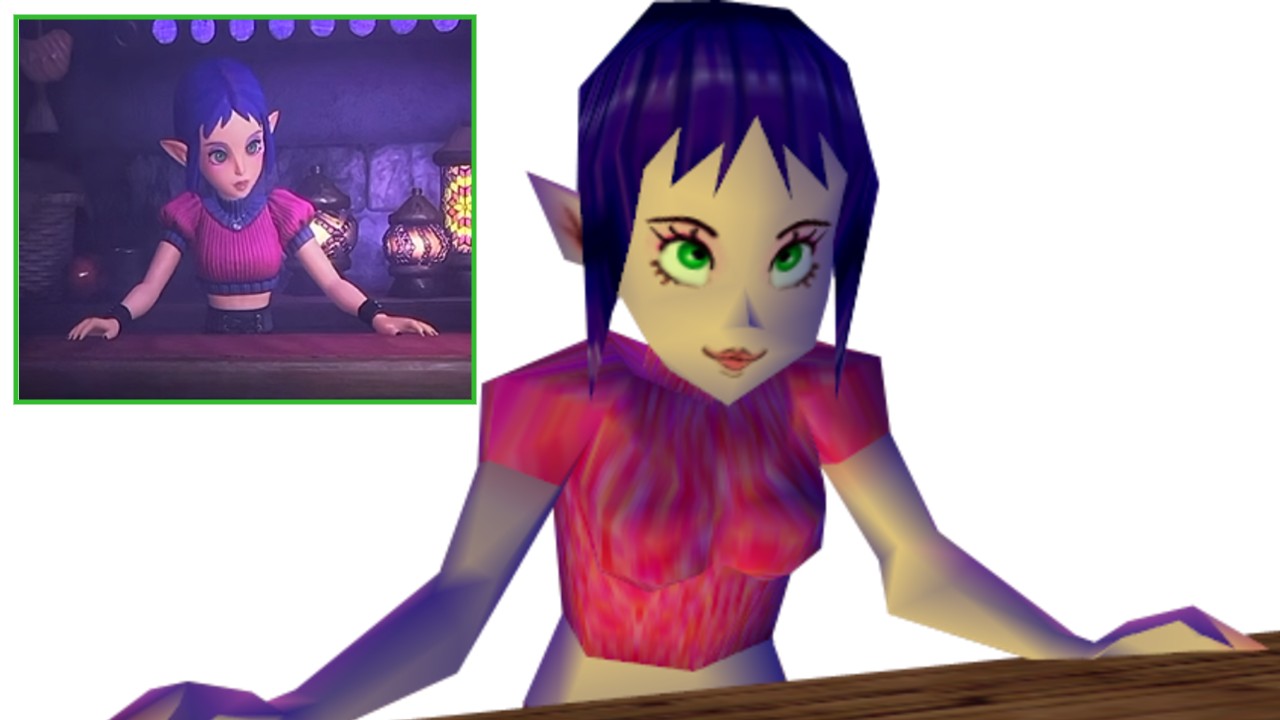
Greeting the player at the counter was the bowling alley operator: a woman distinct for her striking blue hair, green eyes, prominent eyelashes, and a pink crop top that reflected late-90s pop culture aesthetics. Despite never receiving an official proper name within the game’s official strategy guides or core narrative scripts, her distinct visual identity and cheerful, if repetitive, dialogue ("Do you want to play?") burned themselves into the collective memory of a generation of gamers.
2. The Incubation Period: Fan Art and Early Web Communities (2000s–2020s)
Throughout the 2000s and 2010s, as the early internet matured into a network of dedicated forums, fan art repositories, and social media platforms, the Bombchu Girl quietly transitioned from a nostalgic memory into a cult-favorite character. While major narrative figures like Princess Zelda, Sheik, and Malon dominated mainstream fan creations, a dedicated subculture of artists gravitated toward the more obscure inhabitants of Hyrule.
The character’s aesthetic—blending the whimsical fantasy of the Zelda universe with an unmistakably retro, casual human styling—made her a favorite subject for independent creators. Platforms like deviantArt, Tumblr, and eventually Reddit became hosts to a steady, if modest, stream of tributes. On November 28th, 2024, Redditor HeathenArtifex posted a curated collection of fan art celebrating the Bombchu Girl to the popular /r/Zelda community. The post quietly accumulated over 2,000 upvotes over the next two years, signaling a steady, organic baseline of appreciation that predated the explosive viral waves of 2026.
3. Mainstream Social Media Breakthrough (April–June 2026)
As the retro-gaming community began looking toward the speculative horizon of future franchise anniversaries, the Bombchu Bowling Lady broke into broader social media discourse. On April 15th, 2026, writer and showrunner Owen Dennis (Infinity Train) posted a poignant, culturally resonant observation on Bluesky. Sharing an image of the character, Dennis wrote: "Everything is bad now because kids get their taste in music from algorithms instead of from trying to impress the older girl you know who looks like the Bombchu Bowling Alley Operator."
The post struck a powerful chord across the platform, garnering over 5,200 likes and 1,600 reposts within six months. It elevated the character from a simple video game throwback into a sociological archetype representing a very specific brand of 90s cool and youthful aspirations.
The momentum continued into the summer. On June 19th, 2026, Instagram creator sweetnayrucosplay published a series of professional cosplay photographs capturing the character’s iconic pink crop top and blue locks. The post quickly surpassed 1,000 likes, proving that the character’s appeal translated seamlessly from digital canvas to physical craftsmanship.
4. The Autumn Surge and the 2026 Remake Reveal (October 2026)
The definitive turning point in the character’s modern history occurred in October 2026, coinciding with early press previews for the newly announced The Legend of Zelda: Ocarina of Time remake.
- October 3rd, 2026: X (formerly Twitter) user
@DeDHeD_artpublished a series of expressive digital illustrations of the character, noting that she "deserves appreciation." The post went viral, pulling in over 10,000 likes in just two weeks and triggering a fresh wave of fan art across platforms. - October 14th, 2026: Media outlets and previewers released their initial hands-on impressions of the Ocarina of Time remake. Bluesky user higgins.games (Chris Higgins) captured the mood of the fandom perfectly when he posted a video preview clip with the deadpan observation: "Anyway, I checked out the most important thing: she’s still there."
- October 14th, 2026: Simultaneously, X user
@ArcanaLegacyshared high-resolution screenshots of the character’s newly updated 3D model from the remake build, accompanied by the proclamation: "BOMBCHU BOWLING ALLEY LADY, THE TIMELSS WOMAN THAT YOU ARE 💙." The post amassed over 14,000 likes in less than 24 hours, cementing her viral dominance for the autumn season.
Supporting Context & Metrics
To understand the sudden proliferation of the Bombchu Girl across digital feeds in late 2026, one must examine the intersection of systemic game development trends, internet humor, and demographic shifts within the gaming community.
- Generational Nostalgia Cycles: Millennials who experienced Ocarina of Time as children or adolescents in the late 1990s now occupy prominent spaces in media, game development, and digital content creation. Their collective spending power and cultural nostalgia drive the demand for remakes and deeply targeted internet humor.
- The "Minor NPC" Phenomenon: Internet culture has a long history of elevating minor, nameless non-player characters to legendary status (witness the enduring popularity of characters like the Dark Souls "Pot Boy" or various background vendors). The Bombchu Girl fits squarely into this tradition: her limited dialogue, repetitive minigame mechanics, and striking visual design created a canvas onto which the internet projected personality, affection, and irony.
- Engagement Metrics Summary:
- Reddit (/r/Zelda): Historic archival post by HeathenArtifex secured 2,000+ upvotes.
- Bluesky: Owen Dennis’s cultural commentary post achieved 5,200+ likes and 1,600+ reposts.
- X (Twitter): DeDHeD_art’s appreciation sketches crossed 10,000 likes;
@ArcanaLegacy‘s remake model screenshots cleared 14,000 likes within a single day. - Instagram: Cosplay spotlights by community creators consistently cleared baseline engagement thresholds for niche Zelda content, proving cross-platform viability.
Official Statements and Industry Reception
While Nintendo has historically maintained a measured, quiet stance regarding the memetic evolution of its minor background characters, industry analysts note that the inclusion and careful redesign of NPCs like the Bombchu Bowling Lady in high-profile remakes are deliberate choices.
When asked about the philosophy guiding the Ocarina of Time remake’s environmental and character updates during an October 2026 developer roundtable, a representative speaking on behalf of the project’s production team noted:
"When revisiting a world as cherished as the Hyrule of 1998, the fidelity of the grass, the lighting, and the dungeons are only part of the equation. The soul of Ocarina of Time lives in its texture—the quirks of its townspeople, the specific rhythm of its minigames, and the familiar faces that greeted players after a long journey across the fields. Fans remember every corner of Castle Town. Our goal was to honor those memories by ensuring that even the most fleeting encounters felt just as vibrant and lovingly crafted as players remember them in their minds."
Industry critics have echoed this sentiment, pointing out that modernizing background characters without stripping away their idiosyncratic charm is one of the greatest challenges of the contemporary remake era. The enthusiastic response to the Bombchu Girl’s updated model suggests that the development team successfully threaded this needle.
Future Outlook
As the release window for The Legend of Zelda: Ocarina of Time remake approaches, the cultural footprint of the Bombchu Girl serves as a fascinating case study in modern video game folklore. What began as a collection of low-polygon textures on the Nintendo 64 has been fortified by decades of digital culture, fan art, cosplay, and collective affection.
Moving forward, it is clear that the Bombchu Bowling Lady will no longer be relegated to a mere footnote in strategy guides or speedrunning trivia. She has secured her place in the pantheon of internet-beloved video game icons. Whether players return to the bowling alley to test their skills for a Heart Piece or simply to take in the upgraded visual fidelity of Hyrule Castle Town, the blue-haired attendant will be waiting behind her counter, asking the timeless question:
“It’s 30 Rupees per game. Do you want to play?”
And if current internet trends are any indication, the answer from the global gaming community will remain a resounding Yes.