Executive Overview
The enterprise technology ecosystem has reached a definitive turning point: the transition from reactive, query-response artificial intelligence to persistent, "always-on" agentic systems. In late 2026, tech leaders cease to measure AI efficacy purely by context window length or raw parameter counts. Instead, the race centers on operational autonomy—software entities capable of working continuously in the background, monitoring workflows, making proactive decisions, and executing tasks without requiring immediate human prompting.
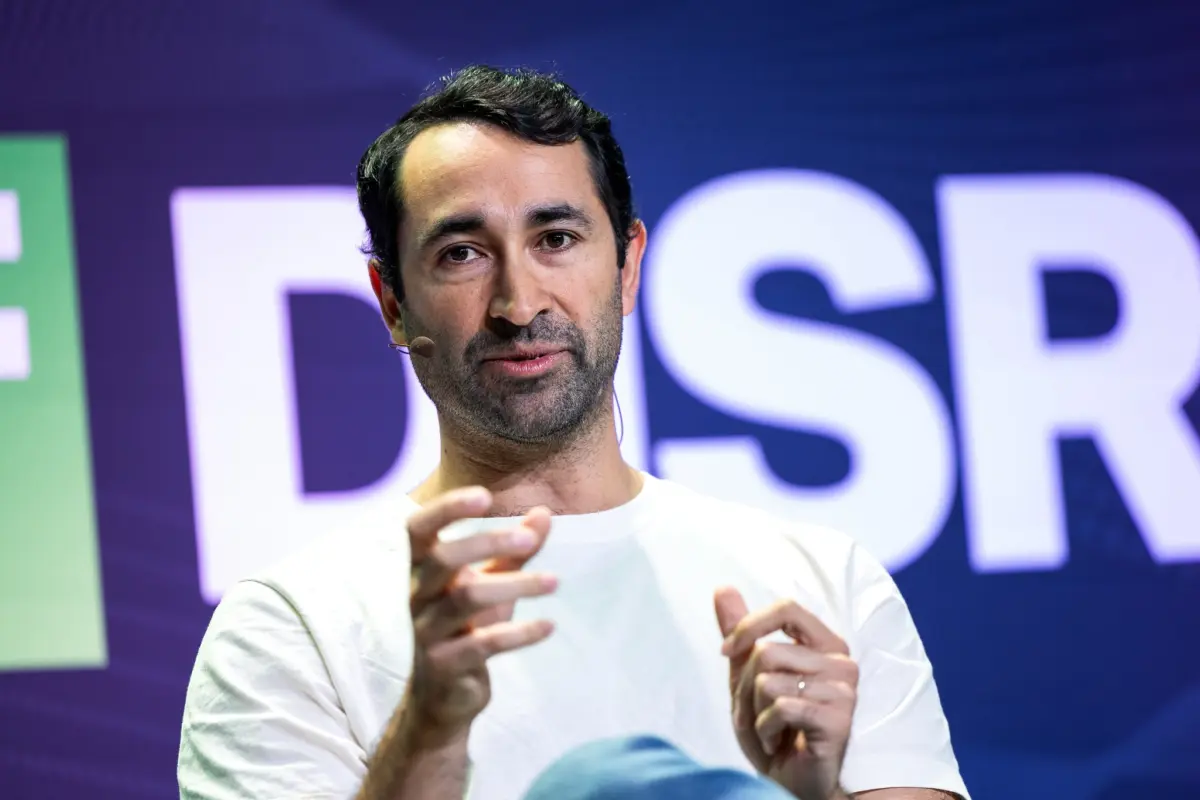
At the epicenter of this shift is OpenAI’s newly unveiled agentic offering, dots. Introduced at the company’s late-September Developer Day and detailed extensively at TechCrunch Disrupt by Alexander Embiricos, Lead for OpenAI’s Enterprise Product Team, "dots" represents a strategic effort to package complex, trillion-parameter matrix multiplication engines into an intuitive, avatar-driven personal assistant.
Available to ChatGPT Pro tier subscribers starting at $100 per month, dots marks OpenAI’s direct answer to competitive threats such as Meta’s Muse and independent viral sensations like Instinct. However, as these persistent agents gain root-level access to calendars, emails, enterprise drives, and local file systems, their arrival presents critical questions regarding token consumption, data privacy, infrastructural capacity, and the awkward mechanics of agent-to-human corporate interactions.
Detailed Chronology
The emergence of OpenAI’s dots is not an isolated experiment, but rather the culmination of an iterative product evolution spanning several technical milestones across 2026.
       [Early 2026] OpenAI launches Codex App (Background developer automation)
            │
            ▼
      [August 2026] ChatGPT Work spun out (Adapting developer tools for general workspace)
            │
            ▼
  [Late September 2026] Official Debut of "dots" at OpenAI Developer Day
            │
            ▼
[October 2026] TechCrunch Disrupt: Embiricos outlines enterprise strategy & privacy roadmaps-
Early 2026: The Codex Foundation
OpenAI introduced its dedicated Codex application, an agentic coding environment designed to execute long-running asynchronous engineering tasks. The tool allowed software developers to assign multi-step programming tickets that ran overnight—a workflow dynamic that demonstrated the commercial viability of persistent background compute. -
August 2026: The "ChatGPT Work" Pivot
Recognizing that non-technical knowledge workers required similar background automation, OpenAI spun out ChatGPT Work. This effort was aimed at decoupling agentic capabilities from specialized software engineering environments and translating them into standard office software integrations. -
Late September 2026: Developer Day Unveiling of "dots"
At its annual developer summit, OpenAI officially unveiled dots—its bubbly, mascot-branded agentic assistant integrated directly into the desktop and mobile ChatGPT applications. Built to serve as a single, continuous conversation thread across all connected user devices, dots marked OpenAI’s formal entry into the personal agentic avatar space. -
October 2026: The TechCrunch Disrupt Roadmap
Speaking at TechCrunch Disrupt, Enterprise Product Lead Alexander Embiricos provided the first deep-dive operational breakdown of dots. Embiricos addressed the strategic framing of the agent, acknowledged competitive dynamics—including Meta’s ad-supported Muse and Elon Musk’s ownership of the coveteddot.comdomain—and detailed upcoming engineering targets aimed at establishing fine-grained security controls and payment infrastructure integrations.
Supporting Context & Metrics
The Mechanics of "Always-On" Agentic Compute
Traditional large language models operate on a passive request-and-response paradigm: the user inputs a prompt, the server processes the context window, generates a completion token sequence, and returns to an idle state. Persistent agents like dots fundamentally invert this model through dynamic continuous background execution.
+-----------------------------------------------------------------------+
|                       Persistent Agent Loop                           |
+-----------------------------------------------------------------------+
|  1. Continuous Polling -> Check Email, Calendar, Local System Events  |
|  2. Proactive Research -> Analyze Context Gaps during Idle Cycles     |
|  3. Autonomous Execution -> Draft Summaries, Resolve Technical Incidents |
|  4. Permission Gateway -> Prompt User for High-Impact Authorization   |
+-----------------------------------------------------------------------+- Continuous Context Polling: The agent maintains active system connections through permissioned APIs, continually digesting incoming calendar changes, thread updates, and local file modifications.
- Proactive Research Engine: During system idle states, dots initiates background evaluation loops. The model reviews past conversational logs and connected data streams to identify gaps, research potential solutions, and present pre-computed recommendations before the user explicitly asks for help.
- Token Usage Dynamics: Continuous background polling requires sustained compute resource allocation. By shifting from episodic prompts to continuous contextual awareness, OpenAI drives significant token utilization—a key reason behind the $100 per month baseline price tag assigned to the Pro subscription tier.
Market Landscape and Competitive Benchmarking
OpenAI’s dots enters an increasingly crowded ecosystem characterized by starkly contrasting business models and privacy frameworks:
| Provider / Product | Architecture / Mascot Framing | Primary Business Model | Data Utilization Strategy |
|---|---|---|---|
| OpenAI (dots) | Avatar-driven persistent agent; integrated into desktop/mobile ChatGPT. | Subscription-based ($100+/mo Pro Tier baseline). | Uses standard ChatGPT privacy toggles; model training opt-outs available; continuous research queries on user data. |
| Meta (Muse) | Anthropomorphic mascot avatar embedded across Meta platforms. | Monetized via core Targeted Advertising Ecosystem. | Constructs deep relational profiles of user contacts, friends, and habits to fuel ad-targeting infrastructure. |
| Hark | Minimalist personal workspace assistant. | SaaS Subscription (Zero ad monetization). | Explicitly isolates user workspace context from external model training and ad monetization platforms. |
| Instinct | Specialized standalone background agent startup. | Usage-based API & Prosumer Subscriptions. | Task-focused execution; relies on third-party backend model providers. |
Real-World Utility vs. Execution Latency
While the commercial pitch for proactive agents emphasizes high-level operational efficiency, real-world deployment data reveals a platform in the midst of ongoing calibration.
       [ Early Development Stage ]                   [ Documented Production Example ]
  ┌─────────────────────────────────┐               ┌─────────────────────────────────┐
  │     Late Calendar Conflicts     │               │  Real-Time Infrastructure Fix   │
  │  Warning generated 3 minutes    │               │  Dot detects cloud outage,      │
  │  prior to scheduled event.      │               │  analyzes logs, presents plan   │
  │  (Low utility / High urgency)   │               │  before engineer discovers it.  │
└─────────────────────────────────┘ └─────────────────────────────────┘- The Latency Flaw (Calendar Alerts): In early development builds, dots frequently struggled with scheduling predictive lead times. Embiricos cited instances where the agent flagged critical calendar conflicts merely three minutes prior to an event—offering time-sensitive insight too late for practical intervention.
- The Autonomous Operational Win (System Outages): Conversely, enterprise users have reported significant wins in technical monitoring environments. In one instance at a drone delivery startup, dots detected an active server infrastructure outage, aggregated error logs, performed root-cause diagnostics, and presented a detailed remediation plan to an on-call engineer before the human operator had even registered the system monitoring alarm.
Official Statements
During his appearance at TechCrunch Disrupt, Alexander Embiricos provided candid insights into the design philosophy, product mechanics, and privacy hurdles surrounding OpenAI’s flagship agent.
On Cutesy Mascots and Convergent Evolution
Addressing why major technology conglomerates are wrapping massive, multi-billion-dollar neural networks inside playful avatars, Embiricos highlighted human psychological intuitions:
"There’s kind of this convergent evolution happening. As we were working on the product, we realized if we could frame this as, ‘it’s an entity and it’s a single conversation, not many different conversations’… it starts to become intuitive."
"On the product team, what I think about is, how do we make this intuitive and useful to people? A lot of that isn’t building some new piece of tech into the product; it’s how you frame it to the user and how it feels."
On Proactive Execution and Background Research
Embiricos clarified that dots’ primary value proposition lies in its capacity to generate context without explicit user intervention through a process termed "proactive research":
"On a cadence, it will think about what it knows about you, what is the conversation that it’s had, and then what have you given it access to that it can think about, and then it will go and research, ‘What could I do to be more helpful to you?’ And then, basically, it will propose that."
On Privacy, Permissions, and Initial User Resistance
Regarding the delicate balancing act between giving an AI agent administrative privileges and preserving corporate data integrity, Embiricos acknowledged initial friction:
"This is actually something we kind of got some flack about when we launched. We had really conservative defaults over what the agent would do, and it would ask for permission a lot. I remember knowing that we were going to see that feedback, but thinking, ‘This is okay, we can tune that over time.’"
"What I think we need to do is basically build out super, super, super granular controls."
Future Outlook
The Data Governance and System Access Challenge
As agents evolve from read-only summarizers to read-write transactional entities, data control paradigms are reaching their limit. Current deployments of dots have revealed architectural friction point: the agent frequently resists restricted, read-only connections to cloud storage drives, requiring full write permissions to perform its ambient synchronization tasks.
For enterprise Chief Information Security Officers (CISOs), granting an autonomous agent unbounded write privileges across cloud environments introduces severe threat vectors, including prompt injection, unintentional data deletion, and unmonitored external exfiltration. The next phase of product maturation will require OpenAI to engineer hyper-granular permission layers capable of limiting agent actions by file directory, domain, and operational action type.
                             [ System Access Spectrum ]

  Read-Only Access  ───────────────►  Granular Scoping  ───────────────►  Full Autonomous Write
  (Limited Utility / Low Risk)       (Targeted Enterprise Standard)       (High Utility / Severe Vulnerability)
The Financial Transaction Frontier
The next strategic boundary for persistent agents is direct financial authorization. OpenAI is currently engaged in high-level discussions with major global payment processors to allow dots to handle monetary transactions independently—ranging from booking commercial travel to purchasing SaaS infrastructure licenses on behalf of enterprise teams.
While permitting an AI agent to execute payments represents a highly lucrative commercial revenue model via transactional referral fees, consumer and enterprise adoption hinges on establishing fault-tolerant limits and bulletproof security protocols.
The Social Gridlock of Agent-to-Agent Protocols
As personal agents proliferate, an unexpected operational bottleneck has emerged: the friction of agent-to-agent interactions. While software agents excel at interacting with human users, external organizations and third-party vendors are proving increasingly resistant to accepting automated computational intermediaries.
Crucially, even AI product leaders acknowledge the human boundary. Embiricos revealed that he maintains a human administrative assistant for high-stakes external enterprise relationships, explicitly stating:
"I personally never intend to have a meeting with someone else’s agent."
This systemic resistance signals that the widespread adoption of AI agents will not follow a simple, linear path. While persistent agents like dots will likely revolutionize internal enterprise workflows—such as analyzing system outages, organizing internal documentation, and triaging software developer pipelines—the external boundary of human business relations will continue to demand authentic human presence. The future of productivity software belongs not to agents that replace human relationships, but to those that silently clear the administrative clutter behind the scenes.