Executive Overview
The intersection of indie game development, satirical economic modeling, and absurdist science fiction has long been a fertile ground for avant-garde creativity. Yet, few developers possess the singular, satirical verve required to manifest a concept as simultaneously dystopian and hilarious as Space Warlord Baby Trading Simulator. Created by acclaimed developer Xalavier Nelson Jr. and published by Strange Scaffold, this wildly unorthodox title asks players to participate in a high-stakes, ruthless market economy where the commodities being bought, sold, shorted, and leveraged are the lives, trajectories, and eventual demises of alien infants.
Far beyond a mere novelty or a brief flash-in-the-pan joke, the game—which recently launched its playable demo to widespread critical fascination—builds upon a lineage of darkly comedic simulation games like Nelson’s own Space Warlord Organ Trading Simulator. It forces a mirror onto late-stage capitalism, turning the cold, statistical abstraction of Wall Street trading floors into an interstellar nursery of cosmic proportions.
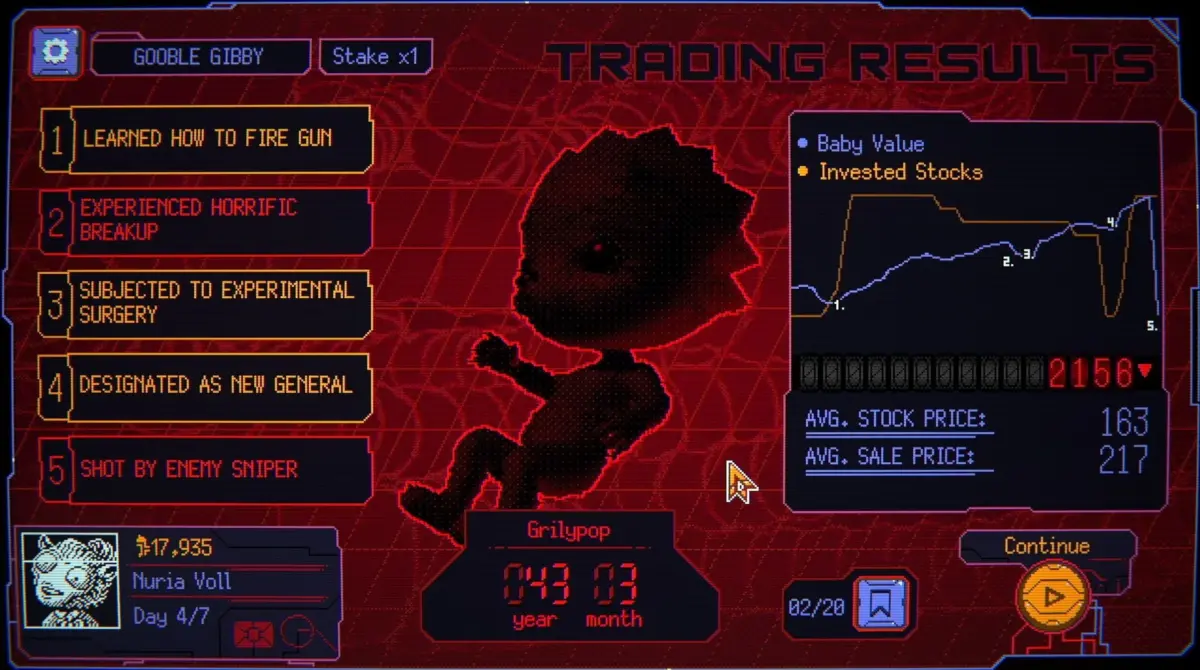
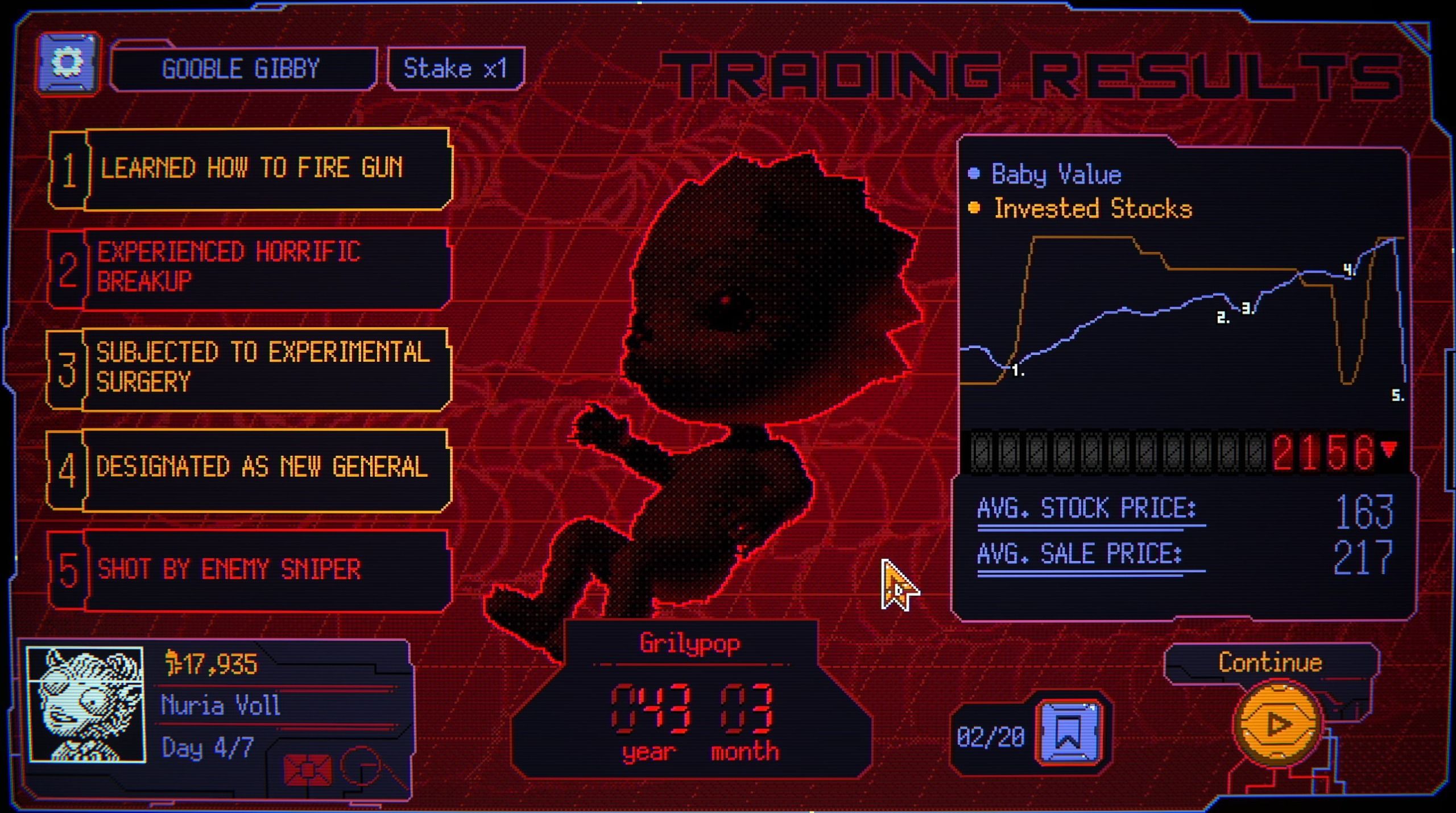
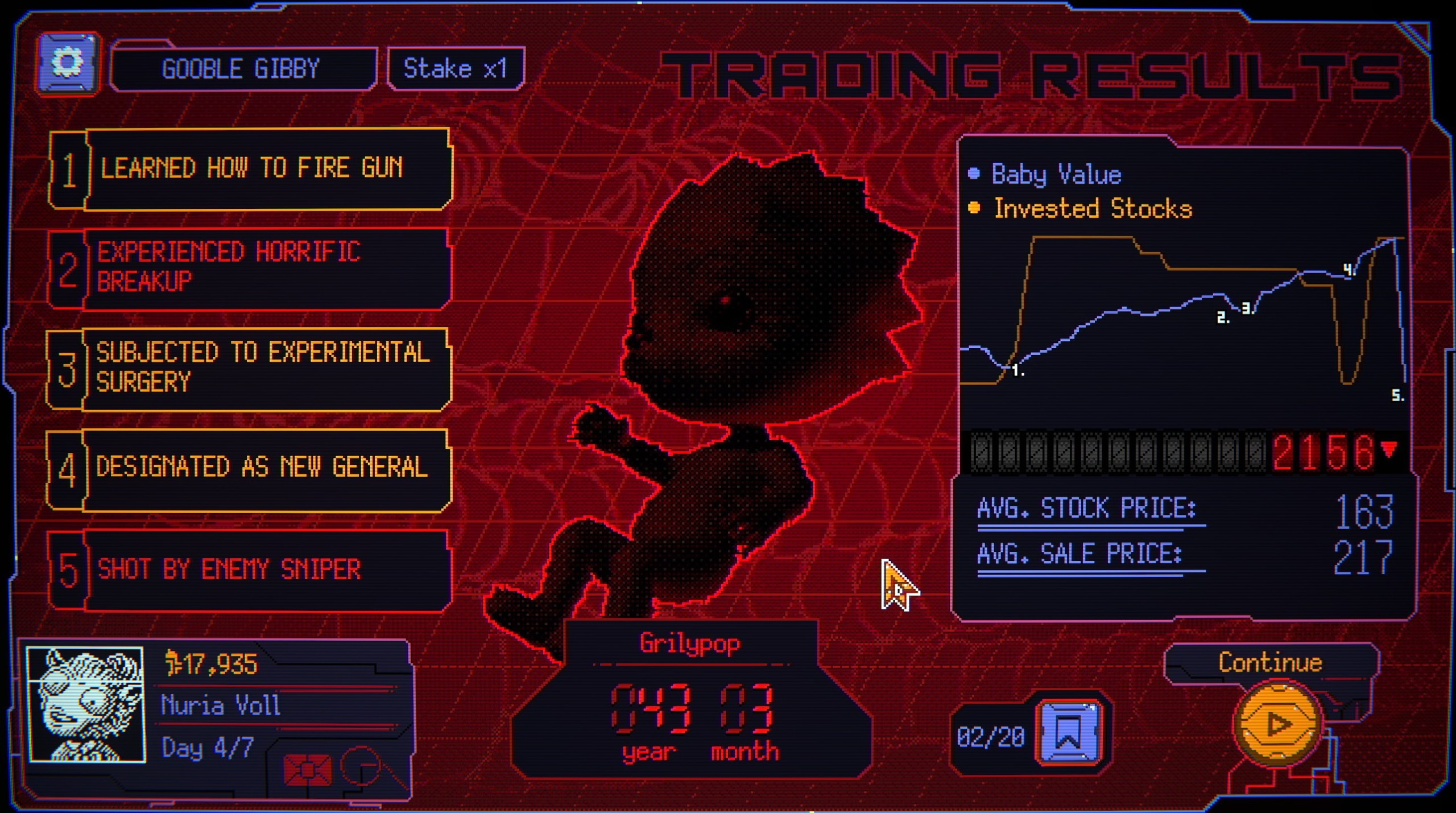
Within this chaotic ecosystem, players are tasked with monitoring the volatile life paths of generated alien babies. These subjects live out compressed, wildly absurd lifetimes that mirror the mundane tragedies and hyper-accelerated chaos of modern human gaming culture. As veteran FPS enthusiast and PC Gamer Global Editor-in-Chief Evan Lahti noted after sampling the demo, watching an alien infant’s life trajectory unfold with the cadence of a burnt-out multiplayer veteran—complete with acquiring a weapon, losing a romantic partner, undergoing scientifically dubious resurrections, rising through military ranks to general, and ultimately meeting an abrupt end via a long-range headshot—encapsulates the game’s brilliant, unhinged design philosophy.
This article explores the mechanics, cultural impact, developer intent, and future trajectory of one of the most eccentric titles to hit the independent gaming scene in recent memory.
Detailed Chronology: From Organ Trading to Interstellar Infancy
To understand the genesis of Space Warlord Baby Trading Simulator, one must trace the evolutionary path of Strange Scaffold’s satirical simulation catalog. The studio, spearheaded by Xalavier Nelson Jr., has carved out a distinct niche in the industry by weaponizing bureaucracy, corporate banality, and morbid capitalism into highly engaging, fast-paced video games.
The Precursor: A Market for Organs
In late 2021, Strange Scaffold released Space Warlord Organ Trading Simulator. The game cast players as interstellar organ brokers operating in a dark, neon-soaked future where human and alien visceral tissue traded just like pork bellies or crude oil on the New York Mercantile Exchange. It combined management mechanics, interface-heavy trading boards, and a bleakly humorous tone that resonated deeply with players looking for something structurally distinct from conventional shooters or narrative RPGs.
The title established a mechanical template:
- A closed-loop market economy.
- Randomized, procedurally generated commodities with fluctuating value traits.
- An ambient narrative delivered entirely through market tickers, corporate emails, and flavor text.
The Evolution to Extraterrestrial Pediatric Markets
Building on the commercial and critical success of its organ-trading predecessor, Nelson and his team began conceptualizing a spiritual successor that would up the emotional and ethical ante. If trading organs was morally bankrupt, what lay on the other side of the speculative abyss? The answer: sentient alien babies.
The announcement of the demo release sent ripples through the indie gaming community. By shifting the commodity from dead biological matter to living, breathing, rapidly evolving extraterrestrial youth, the game introduced a dynamic narrative engine disguised as a spreadsheet simulator. Players no longer just looked at storage temperatures and supply-demand curves; they tracked the life choices, emotional turbulence, and existential crises of tiny, high-value cosmic dependents.
Supporting Context & Metrics: The Anatomy of a Procedural Life
At the core of Space Warlord Baby Trading Simulator lies an intricate procedural generation engine designed to create thousands of unique life paths for every infant introduced to the market. Much like real-world financial assets, these babies possess intrinsic "stats" and volatile event triggers that cause their stock value to skyrocket or plummet in real-time.
The Simulated Lifespan of a Space Baby
As highlighted by early players and critics, the narrative beats generated for these alien infants are astonishingly granular, blending cosmic opera absurdity with deeply recognizable human mundanity. A single trading cycle might witness a baby undergo a trajectory eerily reminiscent of a hyper-addicted multiplayer gamer:
- The Genesis Phase: Acquisition of the asset during its early developmental stage, where baseline traits (aggression, intelligence, resilience, and market viability) are established.
- The Escalation: The infant unexpectedly acquires a weapon—often through dubious galactic circumstances—triggering an immediate bullish trend in its stock valuation.
- The Interpersonal Crisis: The sudden loss of a romantic partner, causing a sharp, volatile drop in market confidence and sending traders scrambling to short the asset.
- The Miraculous Rebound: Through scientifically questionable, high-tech medical interventions or cloning procedures, the subject is brought back from the brink, stabilizing the stock and attracting speculative buyers.
- The Bureaucratic Peak: A surprise promotion to military general, driving the asset’s valuation to historic all-time highs as corporate and military-industrial conglomerates buy in.
- The Sudden Liquidation: A definitive, long-range headshot from an anonymous sniper, ending the life cycle instantly and forcing a frantic rush to liquidate holdings before the asset crashes to zero.
Market Mechanics and Player Psychology
The brilliance of the simulation lies in how it manipulates human psychology. By abstracting life and death into ticker symbols, percentage yields, and buy/sell buttons, the game implicates the player in the exact brand of sociopathic detachment that defines modern high-frequency trading. You do not mourn the alien baby who caught a sniper round from across the map; you curse because your portfolio took a hit, and immediately look for the next high-yield infant to flip for a profit.
Official Statements & Creative Vision
Xalavier Nelson Jr. has consistently positioned Strange Scaffold as a studio unafraid of tackling uncomfortable, weird, or deeply satirical themes through accessible and tightly scoped mechanics. In discussions surrounding the studio’s portfolio, Nelson has emphasized that games do not always need to rely on tired tropes of heroic fantasy to elicit powerful emotional responses.
"We want to build spaces where players are forced to confront the absurdities of systems we accept as normal in the real world," notes the developer ethos behind Strange Scaffold’s titles. By taking the cold calculus of Wall Street and dressing it up in science-fiction satire, the studio achieves a rare feat: making systemic critique genuinely entertaining.
Industry analysts and critics have lauded the developer’s ability to turn micro-budget, high-concept premises into cultural touchstones within the indie community. The demo’s release served as a masterclass in modern game marketing, generating organic word-of-mouth engagement across platforms like X (formerly Twitter), Reddit, and specialized forums like PC Gamer.
Future Outlook: What Lies Ahead for the Interstellar Exchange?
As the demo for Space Warlord Baby Trading Simulator continues to circulate among players, content creators, and simulation enthusiasts, anticipation for the full release is reaching a fever pitch.
Potential Expansion Areas
- Expanded Market Dynamics: Speculation is rife regarding whether the full version will introduce market crashes, corporate hostile takeovers, regulatory bodies, or insider trading mechanics.
- More Bizarre Life Events: If the procedural generation engine in the demo is any indication, the full game promises an even wider array of unhinged, darkly comedic life paths for its alien commodities.
- Community-Driven Meta: Much like its predecessor, the title is expected to cultivate a dedicated community of players sharing their most profitable (and most disastrous) trading portfolios online.
The Legacy of Strange Scaffold
Ultimately, Space Warlord Baby Trading Simulator represents the continued maturation of indie games as a medium for biting social commentary wrapped in addictive, unconventional gameplay loops. As Xalavier Nelson Jr. and Strange Scaffold continue to push the boundaries of what a simulation game can be, the industry watches with bated breath—and perhaps, a healthy dose of financial caution.
Whether you are a seasoned high-frequency trader or just an enthusiast looking to invest in the next galactic general before they take a long-range headshot, the market is open, the babies are crying, and the profits are waiting to be made.