Executive Overview
In the modern enterprise software landscape, customer churn has traditionally been loud, messy, and identifiable. For decades, customer success (CS) teams have relied on a predictable set of telemetry to gauge the health of a client relationship: support ticket volume, feature requests, login frequency, executive escalations, and periodic Net Promoter Score (NPS) surveys. A quiet customer was historically assumed to be a happy customer. If usage remained steady, renewals were treated as foregone conclusions, and account health dashboards glowed a reassuring, complacent green.
However, a fundamental structural shift is quietly destabilizing the foundational metrics of the $600 billion Software-as-a-Service (SaaS) industry. The rise of autonomous enterprise AI agents—custom-built internal applications that ingest disparate company data, generate operational insights, and autonomously orchestrate meetings, workflows, and financials—is introducing a new vector of customer defection: the silent, frictionless replacement.
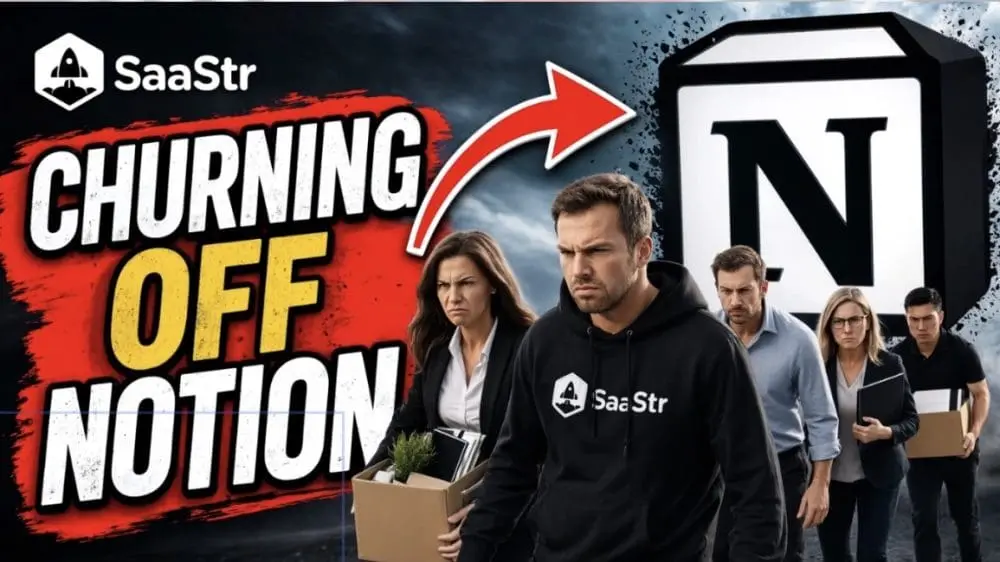
This phenomenon was recently laid bare by Jason Lemkin, founder of SaaStr, who detailed how his organization abruptly canceled its subscription to Notion after seven consecutive years of loyal usage. There was no pricing dispute, no product outage, no competitive bake-off, and no frustrated support ticket. Instead, Notion’s specialized functionality was entirely absorbed by 10K—SaaStr’s internally built AI Vice President of Revenue and Finance.
What makes this shift transformative is not merely that a major brand lost a long-term customer, but how it happened. Traditional customer success telemetry was entirely blind to the transition. Because SaaStr’s internal usage steadily narrowed until Notion was used exclusively for Monday staff meetings, and because those meetings were seamlessly migrated to an AI agent already tracking revenue, pipeline, and marketing data, the transition left no traditional data exhaust. By the time Notion’s automated re-engagement campaign reached out to alert the team of their dormancy, the decision to cancel wasn’t a matter of re-evaluating software—it was simply the administrative tidying up of a tool that had been completely superseded by machine intelligence.
This incident exposes a terrifying reality for B2B software vendors: the quietest, happiest, lowest-touch accounts are now the most vulnerable. As internal AI agents continue to swallow narrow software workloads, traditional customer health scoring models are failing, forcing an urgent, overdue reckoning for SaaS retention strategies globally.
Detailed Chronology: The Anatomy of a Seven-Year Churn
To understand how a seven-year, advocacy-level software relationship can evaporate overnight without a single warning sign, it is instructive to examine the lifecycle of SaaStr’s deployment of Notion, and its subsequent displacement.
Phase 1: Adoption and Centralization (2019)
SaaStr originally onboarded Notion around 2019, during a period of team expansion. At the time, the tool represented the cutting edge of B2B workplace productivity. Everyone across the organization utilized it; an in-house designer curated custom layouts, and the team officially migrated its crucial weekly staff meetings away from traditional Google Docs into Notion environments. Every employee maintained a personalized dashboard that they actively updated. For a growing B2B organization in 2019, Notion was the quintessential central nervous system of company knowledge and operational tracking.
Phase 2: The Narrowing of Utility
Over the ensuing years, as SaaS tools proliferated and specialized applications carved out distinct niches within the stack, SaaStr’s sprawling usage of Notion naturally winnowed down. Like many enterprise applications that start as universal platforms and slowly get demoted to point solutions, Notion was eventually relegated to a single, highly specific function: hosting and organizing the Monday staff meeting. By the end of its tenure, this weekly ritual constituted the entirety of Notion’s job description within the company.
Phase 3: The Rise of the Internal AI Agent
Concurrently, SaaStr’s internal technical capabilities evolved. A team member, Amelia, engineered 10K. What began modestly as a simple operational dashboard evolved rapidly into an AI head of marketing, and eventually matured into an autonomous AI VP of Revenue and Finance.
The team began interacting with 10K daily. Because the agent already ingested and processed real-time revenue numbers, active campaign data, the collections queue, and the sales pipeline, it naturally became the single source of truth for the company. Naturally, the Monday staff meeting—Notion’s last remaining bastion within the company—migrated to 10K. The meeting agenda, performance updates, and cross-functional reviews were now pulled directly from live data streams managed by the AI.
Notion’s final operational utility didn’t migrate to a competing note-taking app like Coda or Evernote; it was swallowed whole by an in-house agent designed for an entirely different purpose.
Phase 4: The Trigger
The technical migration was so gradual and organic that leadership barely noticed when it reached completion. The official severing of the tie was ultimately triggered by an ironic administrative mechanism: Notion’s own automated re-engagement email.
Notion’s customer success automation detected that Amelia had not logged into the platform for several months and dispatched a standard reactivation prompt. Reading the email, Amelia experienced a moment of operational clarity: she realized the team hadn’t touched the software in ages, and the subscription was dead weight. The re-engagement campaign did not win back a dormant account; it simply provided the administrative reminder needed to officially cancel it.
Supporting Context & Metrics: The Blind Spots of B2B Telemetry
The Notion case study is far from an isolated anomaly. It serves as a microscopic view of a macroeconomic shift in how businesses buy, use, and discard software.
The Inversion of Account Health Metrics
For the past two decades, SaaS customer success has operated on a foundational axiom: Unhappy customers complain; quiet customers are fine.
Account health scoring models ingest predictable telemetry:
- Login Frequency: Are users logging in daily/weekly?
- Seat Utilization: Are all purchased licenses actively assigned?
- Support Ticket Volume: Are customers experiencing friction? (Ironically, zero tickets has historically been viewed as the gold standard of product stability).
- Feature Adoption Breadth: Are customers utilizing advanced modules?
In the age of agentic software replacement, this entire telemetry architecture is inverted. Low-touch, quiet accounts used to mean a product was embedded so deeply in the workflow that it required no maintenance. Today, low-touch often means the product performs one narrow, highly specific task—and a narrow task is precisely what an autonomous LLM or custom agent can absorb with minimal friction.
The Myth of High-Usage Retention
Conversely, high usage is no longer an ironclad guarantee of loyalty either, as SaaStr discovered from the opposite perspective with enterprise software vendors like Adobe Marketo.
During a recent renewal cycle, Marketo argued that because SaaStr’s platform usage was exceptionally high, the best concession they could offer was waiving an 8% price increase. To Marketo’s account team, high usage translated directly to deep product lock-in.
In reality, SaaStr’s usage was high purely because the company’s underlying business had grown exponentially over the year—its contact list had expanded by 50% and revenue was up over 40%. High usage did not mean the team loved Marketo; it meant the software was a critical operational artery, which paradoxically motivated the team to actively evaluate superior alternatives. Once Marketo’s API experienced friction with SaaStr’s internal agents, that high usage transformed from a retention anchor into a burning justification to leave.
Low-touch accounts are already gone to agents; high-usage accounts are split between genuine brand affinity and active, covert shopping. Traditional dashboards cannot reliably distinguish between the two.
Official Insights & The Mirror Image Failure
The blind spots of modern automated business intelligence cut both ways. In a stunning twist of internal irony, while SaaStr was quietly displacing third-party SaaS tools with its own AI agents, 10K uncovered an identical operational blind spot inside SaaStr’s own billing infrastructure.
When 10K was successfully integrated with Brex and QuickBooks to act as SaaStr’s AI VP of Finance, it immediately audited incoming revenue streams and surfaced a startling reality: two legacy customers had been continuously paying $300 a month for SaaStr Pro for six full years.
SaaStr Pro was a legacy learning management product launched years prior to help CEOs train their internal sales and operational teams. When the internal champion and manager of the program departed, SaaStr quietly ceased supporting and updating the product. Management assumed the product had been fully sunsetted and that all billing streams had been naturally terminated years prior.
Instead, two loyal customers kept paying $300 monthly—totaling thousands of dollars annually—for a dormant, unsupported software product. No one complained; no one filed a support ticket; no one churned. Without an autonomous financial agent querying the raw transactional ledger, SaaStr leadership would have remained completely oblivious to the fact that they were accidentally charging clients for a ghost product.
This is the exact mirror image of Notion’s predicament: a working, quiet relationship that neither party was actively monitoring, sustained entirely by the inertia of automated billing loops and unexamined customer habits.
Future Outlook: Survival Strategies for the SaaS Era
As autonomous agents proliferate across the enterprise, SaaS companies must fundamentally rethink their go-to-market, customer success, and retention playbooks. The old playbook—relying on quarterly business reviews (QBRs), usage telemetry, and automated re-engagement sequences—is rapidly becoming obsolete.
1. Shift from "Usage" to "Indispensability" Tracking
CS teams must stop celebrating flat or rising seat logins as proof of health. Instead, they must measure how deeply integrated their product is into core business workflows that cannot be easily replicated by lightweight internal code. If a product provides raw data storage, complex transactional processing, or specialized multi-user collaboration, it is defensible. If it is merely a UI layer sitting on top of data that an internal LLM can query and display via a chat interface, it is on borrowed time.
2. Redesign Re-Engagement Campaigns
As demonstrated by the Notion cancellation, automated "We miss you, come back!" emails are dangerous double-edged swords. When targeting dormant or low-usage enterprise accounts, marketing automation platforms must cross-reference account activity with organizational maturity. Sometimes, silence isn’t a lapse in user intent; it is a permanent architectural migration away from the tool. Blindly poking sleeping accounts risks waking up clients who had quietly forgotten to hit the cancel button.
3. Build Agent-Ready APIs, Not Moats
Software vendors fighting the agentic wave cannot out-feature an AI agent built specifically to solve a company’s bespoke internal workflow. The winning strategy for modern B2B SaaS is to ensure that products do not try to wall off data, but instead position themselves as high-value, API-first infrastructure that feeds enterprise agents rather than competing with them. If your software becomes the authoritative database that an AI agent queries to run the company, you survive. If your software is just the dashboard where humans manually copy and paste numbers to run a Monday meeting, you are vulnerable to replacement by a single prompt.
The era of passive SaaS consumption is drawing to a close. In a world where every company is rapidly building its own internal workforce of AI agents, customer retention will no longer be won by dashboards that track how often humans log in, but by proving indispensable value to the artificial minds running the business.