Executive Overview
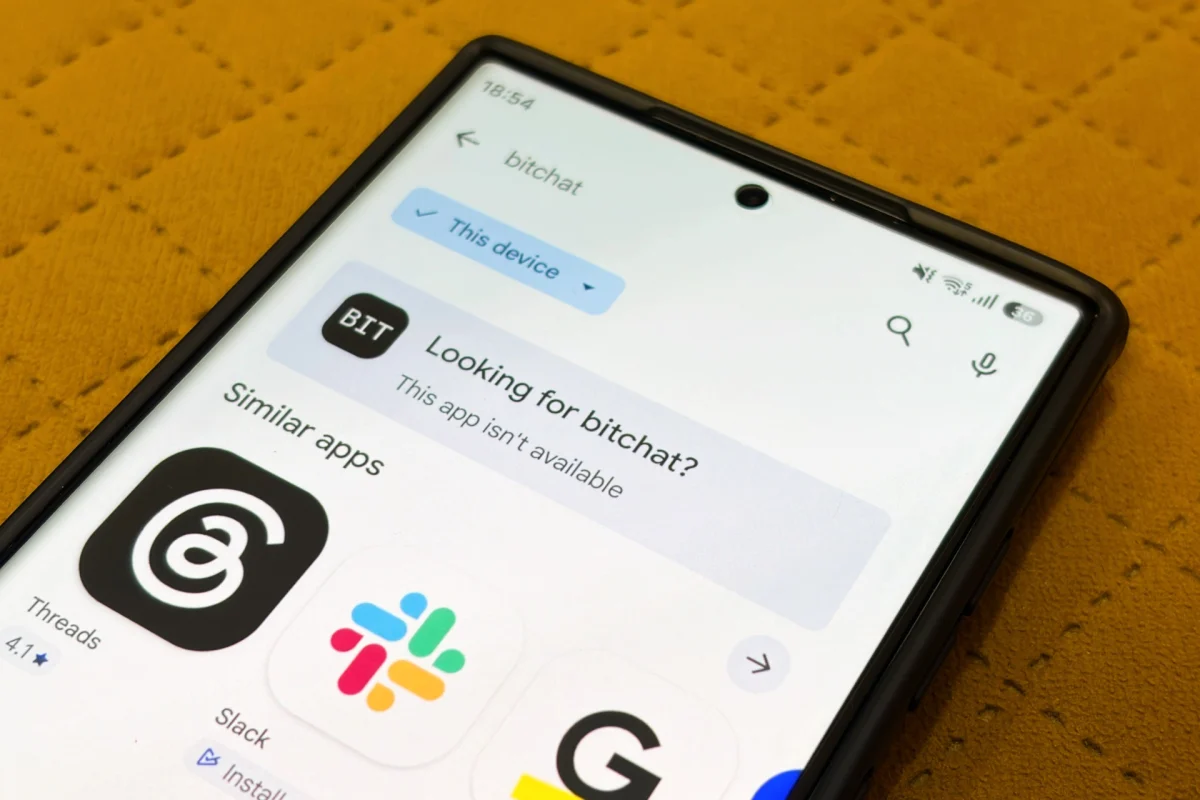
In a significant escalation of digital censorship and state-level control over communication infrastructure, the Indian government has ordered the removal of Bitchat—a decentralized, offline-capable messaging application backed by Twitter (now X) co-founder Jack Dorsey—from both Apple’s App Store and Google’s Play Store within the country.
The enforcement action, executed under the controversial Section 69A of the Information Technology Act, represents New Delhi’s latest effort to neutralize technologies that bypass traditional cellular and internet networks. Designed to operate entirely without internet connectivity or centralized servers, Bitchat utilizes Bluetooth mesh networking to allow peer-to-peer encrypted communications. This architectural resilience made it an invaluable tool for demonstrators during recent waves of state-imposed internet blackouts, triggering immediate regulatory pushback.
The ban extends beyond standard app store listings; Apple’s TestFlight beta-testing environment has also been restricted within India, and major Indian Internet Service Providers (ISPs) have blocked access to Bitchat’s official website.
Digital rights advocates, including the New Delhi-based Internet Freedom Foundation (IFF), have condemned the ban as unconstitutional, arguing that the government is overreaching by weaponizing national security provisions to suppress functional, privacy-preserving software. As India grapples with widespread, youth-led civil unrest over electoral roll modifications, the suppression of Bitchat highlights an escalating global conflict between decentralized technology protocols and state surveillance apparatuses.
Detailed Chronology: The Rise and Suppression of Bitchat
The regulatory campaign against Bitchat has unfolded rapidly over the span of fifteen months, tracing a path from technological innovation to complete state prohibition.
[July 2025] Bitchat Launches (Bluetooth Mesh Networking)
       │
       ▼
[July 2026] Indian Gov Orders GitHub Takedown of Bitchat Repositories
       │
       ▼
[July 2026] Civil Unrest: Protesters Adopt Bitchat; Indian Downloads Spike to 85% Global Share
       │
       ▼
[Oct 2026] Gen-Z Voter Roll Protests; Internet Suspended in New Delhi
       │
       ▼
[Oct 2026] MeitY Issues Section 69A Order; Apple & Google Ban Bitchat; Website Blocked by ISPs
July 2025: The Genesis of Offline Messaging
Bitchat was launched with the ambition of providing a censorship-resistant communication network. Championed by Jack Dorsey, the open-source application was engineered to address a growing vulnerability in global digital rights: the reliance of modern messaging tools on centralized servers and state-controlled telecommunications infrastructure. By leveraging local hardware, Bitchat allowed users to construct ad-hoc networks independent of the global web.
July 2026: The First Regulatory Strike
Within a year of its launch, Bitchat drew the scrutiny of Indian law enforcement and intelligence agencies. In July 2026, Jack Dorsey revealed that the Indian government had issued an order to GitHub, demanding the removal of all source code repositories associated with the application.
The government’s legal justification at the time rested on intermediary liability rules, claiming that Bitchat’s un-interceptable design facilitated anonymous coordination. Despite the repository takedown, the app’s compiled versions remained available on major mobile platforms, and the open-source community continued to distribute the software.
Mid-2026: The Catalyst of Civil Unrest
During the summer of 2026, widespread public demonstrations broke out across India. In response, authorities deployed localized internet shutdowns—a frequent tactic used by Indian administrators to control protests.
Cut off from standard platforms like WhatsApp and Signal, demonstrators turned to Bitchat and its peer-to-peer counterpart, Briar. This operational pivot triggered an unprecedented surge in adoption, with India accounting for the vast majority of Bitchat’s global installations.
October 2026: The Blanket Ban
The current phase of the crackdown occurred in early October 2026. Against the backdrop of fresh, Gen-Z-led demonstrations in New Delhi protesting changes to the national voter rolls, the Ministry of Electronics and Information Technology (MeitY) issued a final directive.
On Saturday, Jack Dorsey published a notice received from Apple, confirming that MeitY had invoked Section 69A of the IT Act to enforce an immediate, nationwide ban on the app. Simultaneously, Google purged the application from the Play Store, and local ISPs implemented DNS blocks on Bitchat’s web domain, effectively cutting off both official distribution channels and web-based access.
Supporting Context & Critical Metrics
To understand the speed of the Indian government’s intervention, one must examine the dramatic shift in Bitchat’s user demographics and the technical properties that made the app a target.
The App Store Purge and Network Blockade
The block implemented by Apple and Google is highly localized but comprehensive.
- Apple App Store: Completely unavailable within the Indian storefront. Access through TestFlight, a platform typically used by developers to distribute beta versions outside standard App Store review processes, has also been blocked.
- Google Play Store: Removed for all users with Indian IP addresses or accounts registered in the region.
- ISP-Level Blocking: Major telecom operators, including Reliance Jio, Bharti Airtel, and Vodafone Idea, implemented website blocks, rendering the primary portal for downloading raw application files (.APK files for Android) inaccessible.
The Mesh Networking Threat Vector
Bitchat’s threat to state surveillance lies in its underlying architecture. Unlike standard messaging applications that route data through centralized servers, Bitchat uses Bluetooth mesh networking.
[Centralized Messaging (WhatsApp/Signal)]
User A ───► ISP/Cell Tower ───► Central Server ───► ISP/Cell Tower ───► User B
                                (Subject to Shutdown/Interception)

[Decentralized Mesh Messaging (Bitchat)]
User A ───(Bluetooth)───► Peer Node 1 ───(Bluetooth)───► Peer Node 2 ───(Bluetooth)───► User B
                          (Completely Offline & Censorship-Resistant)
In a mesh network, every device running the software acts as a node, relaying encrypted packets to neighboring devices.
- Zero Infrastructure Reliance: Messages can travel across a city by hopping from phone to phone without ever pinging a cell tower or routing through an ISP.
- End-to-End Encryption: Because connection keys are exchanged directly between local devices, there is no central authority holding cryptographic keys, making passive wiretapping or centralized decryption impossible.
- Shutdown Resilience: During a state-ordered internet blackout, Bitchat networks remain fully operational, allowing local coordination to continue uninterrupted.
The Viral Shift: Download Metrics
Market intelligence data from Sensor Tower illustrates how quickly Bitchat evolved from an experimental utility to a mass-adopted coordination tool.
During the mid-July 2026 protests, when internet services were suspended across several states, Indian installations of Bitchat skyrocketed.
| Metric Period | India’s Share of Global Bitchat Downloads |
|---|---|
| Mid-June to Mid-July 2026 | ~1.0% |
| July 17 – July 23, 2026 | 85.0% |
This metric highlights a critical trend: offline mesh networks are no longer niche tools for privacy enthusiasts; they have become mainstream infrastructure during political crises.
Official Statements & Legal Debates
The ban has reignited a fierce constitutional debate regarding the limits of state power over software development and digital communication.
The Government’s Stance: National Security and Traceability
While MeitY, Apple, and Google declined to offer formal comments on the latest block, the government’s legal reasoning was articulated in its prior orders to GitHub.
Indian law enforcement agencies argue that Bitchat’s architecture poses an unacceptable risk to national security and public order. The state’s primary objections include:
- The Interception Deficit: Because communications do not pass through centralized gateways, state intelligence agencies cannot perform lawful interception, even with judicial warrants.
- The Anonymity Problem: The peer-to-peer nature of the protocol prevents the tracing of the "first originator" of a message—a compliance requirement mandated under India’s 2021 IT Rules.
- Subversion of State Controls: By operating during internet shutdowns, the app actively neutralizes a key administrative tool used to de-escalate civil unrest.
The Digital Rights Critique: The Weaponization of Section 69A
The Internet Freedom Foundation (IFF) has challenged the constitutional validity of the ban. The group argues that the invocation of Section 69A of the IT Act in this context represents a dangerous expansion of executive power.
"Section 69A of the IT Act is explicitly designed to block access to specific pieces of unlawful information. It was never intended to outlaw an entire category of software utility simply because that software has the capability to function offline.

By banning Bitchat, the government is not blocking illegal content; it is banning the medium of communication itself. This is akin to shutting down telephone lines across an entire nation because some callers might engage in illegal speech."
— Legal Analyst, Internet Freedom Foundation (IFF)
Furthermore, the IFF highlighted a systemic lack of transparency: neither the formal blocking order nor the specific allegations of illegal content have been made public. This secrecy prevents independent judicial review and denies citizens the opportunity to challenge the government’s security claims.
Future Outlook: The Cat-and-Mouse Game of Decentralization
The banning of Bitchat in India marks a critical milestone in the ongoing struggle between state authority and decentralized protocols. It raises fundamental questions about the future of software distribution and digital assembly in the 21st century.
Alternative Distribution Channels
While the official app store bans present a major barrier to mainstream adoption, they are unlikely to stop determined users. Because Bitchat is open-source, several alternative distribution pathways remain viable:
- Android Sideloading: Android users can bypass the Google Play Store by downloading the raw
.apkinstallation file directly from mirror sites, or sharing it peer-to-peer via local connections (such as SD cards or local Wi-Fi sharing). - Alternative App Repositories: Platforms like F-Droid, which specialize in free and open-source Android applications, continue to host Bitchat outside of Google’s control.
- The Nostr and Web3 Ecosystem: Given Jack Dorsey’s deep integration with decentralized identity protocols like Nostr, future iterations of Bitchat may utilize decentralized domain name systems (DNS) and censorship-resistant hosting, making them significantly harder for state entities to block at the ISP level.
Implications for Global Tech Companies
For multinational giants like Apple and Google, the Bitchat ban underscores the precarious nature of operating in major emerging economies. Both companies have historically complied with local censorship demands—such as the removal of VPN apps and encrypted email services—to protect their access to India’s massive consumer market. As India continues to tighten its digital sovereignty laws, these platforms will face increasing pressure to police their app ecosystems, potentially alienating users who prioritize privacy.
The Precedent for Decentralized Software
The legal and regulatory strategies honed by New Delhi in its campaign against Bitchat will likely serve as a blueprint for other nations seeking to curtail offline communication networks. As civil unrest increasingly intersects with digital clampdowns, peer-to-peer, mesh-enabled applications will remain at the very center of the struggle for free expression and assembly. The outcome of this dispute will determine whether the internet can truly be closed by state decrees, or if decentralized code will continue to outpace the reach of government regulations.