Executive Overview
The proliferation of hyper-realistic, generative artificial intelligence has fundamentally altered the landscape of digital communication. What once required Hollywood-grade visual effects studios and months of painstaking post-production can now be accomplished by a teenager with a laptop in a matter of seconds. Tools capable of rendering photorealistic imagery from simple text prompts have advanced at an exponential rate, leaving the average internet user—and the institutions designed to protect the public sphere—struggling to keep pace.
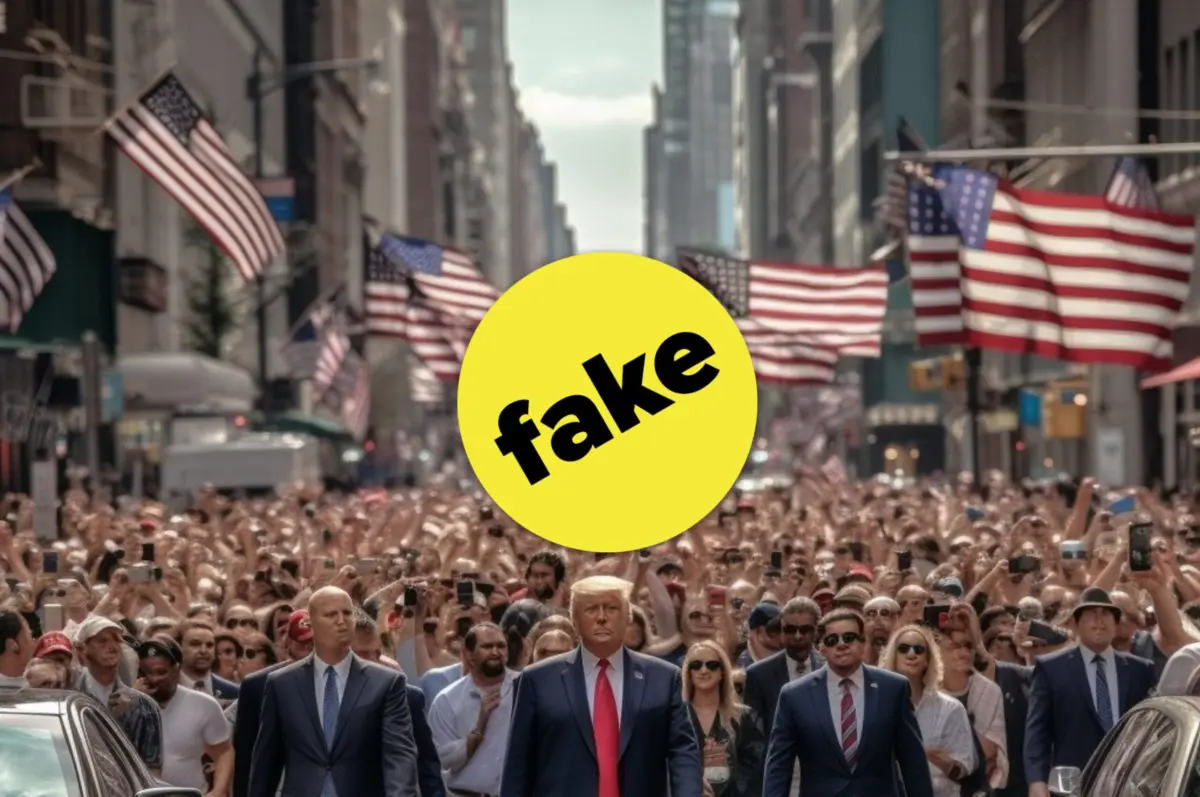
The consequences of this technological leap are profound. As the visual proof of our own eyes becomes increasingly unreliable, bad actors now possess an unprecedented capability to manufacture consensus, distort reality, and sow widespread discord. From fabricated political scandals to deepfakes of global leaders, synthetic media has transitioned from a niche novelty into a potent weapon of mass disinformation.
"It has become increasingly challenging for the average human eye to distinguish between AI-generated and real photos," warns Andrey Doronichev, CEO and co-founder of Optic.xyz, a specialized platform designed to detect machine-made imagery. "This has the potential to manipulate public opinion, undermine the credibility of news sources, and ultimately threaten the democratic process by promoting disinformation."
Compounding this crisis is the unpreparedness of major social media platforms. Despite existing policies intended to curb manipulated media, enforcement remains sporadic, inconsistent, and, in some cases, entirely abandoned. As watchdog organizations raise alarms over systemic vulnerabilities—particularly within platforms that have gutted their trust and safety teams—society finds itself at a dangerous crossroads. The authenticity of the digital record is fracturing, and the race to secure a trustworthy information ecosystem has only just begun.
Detailed Chronology: The Evolution of Synthetic Media and Detection
To understand the current crisis of digital verification, one must trace the rapid technological trajectory that brought generative artificial intelligence from academic laboratories into the mainstream public square.
Phase One: The Academic Horizon (2014–2018)
The foundation for modern generative imagery was laid in 2014 with the introduction of Generative Adversarial Networks (GANs). Pioneered by researcher Ian Goodfellow and his colleagues, GANs introduced a system where two neural networks—a generator and a discriminator—competed against one another. The generator attempted to create fake data, while the discriminator tried to spot the fakes. Through this relentless game of cat-and-mouse, the generator learned to produce increasingly convincing outputs.
During this early period, outputs were largely low-resolution, heavily distorted, and easily identifiable by digital artifacts. Faces appeared asymmetrical, backgrounds warped into abstract nightmares, and unnatural color gradients gave away the machine origin. However, the underlying architecture was improving at a staggering rate.
Phase Two: The Commercial Explosion (2019–2022)
By the turn of the decade, diffusion models—a new class of generative models inspired by non-equilibrium thermodynamics—began to supersede GANs. Technologies such as OpenAI’s DALL-E, Midjourney, and Stability AI’s Stable Diffusion shattered previous limitations. Instead of grainy, postage-stamp-sized portraits, systems could now render high-definition, complex scenes complete with text, nuanced lighting, and intricate textures based entirely on natural language prompts.
As these tools were made publicly accessible via web interfaces and open-source repositories, millions of users began experimenting with generative art. Simultaneously, bad actors realized the utility of these platforms for creating cheap, scalable propaganda and deceptive imagery.
Phase Three: The Verification Arms Race (2022–Present)
As synthetic images flooded mainstream social media channels, a secondary market emerged: detection software. Startups and cybersecurity firms rushed to build tools capable of scanning digital assets for the statistical signatures left behind by neural networks.
Platforms like Optic.xyz were established to serve as digital polygraphs for images, allowing journalists, researchers, and everyday citizens to upload files and receive a probability score indicating whether a machine or a human captured the photo. Yet, this has become a perpetual arms race. As detection algorithms improve, generative models are concurrently trained to bypass those very detectors, resulting in a technological treadmill where neither side can claim permanent victory.
Supporting Context & Metrics: The Anatomy of a Digital Deception
The proliferation of AI-generated imagery is not merely an aesthetic concern; it is a systemic shock to the global information supply chain. Quantitative data and sociological research underscore the severity of the threat.
The Limits of Human Perception
Psychological and behavioral studies consistently demonstrate that humans are remarkably poor at identifying deepfakes and AI-generated photographs unaided. When presented with a grid of mixed real and synthetic portraits, test subjects routinely fail to distinguish reality from algorithms, frequently misidentifying genuine photos as fake due to over-suspicion, while accepting hyper-realistic fakes as authentic.
While high-end detectors look for pixel-level anomalies, human observers have historically relied on heuristics—mental shortcuts—to spot fakes. Some of the most common visual tells include:
- Anatomical Inconsistencies: Historically, generative models struggled immensely with human hands and fingers, frequently rendering extra digits, fused joints, or impossible contortions.
- Facial and Textural Flaws: Asymmetrical earrings, mismatched spectacles, melting teeth, and asymmetrical backgrounds were hallmark traits of early generative engines.
- The "Too Good to Be True" Phenomenon: Cinematic lighting, emotionally charged compositions that align too perfectly with a political narrative, and flawless skin textures in high-stress environments often signal synthetic origin.
However, relying on these visual cues is becoming obsolete. Recent iterations of generative models have largely resolved issues with hands and text, producing images that withstand casual inspection and require forensic digital analysis to debunk.
The Fragility of Digital Ecosystems
The danger is magnified by the velocity at which unverified media travels across social networks. Studies in computational communication demonstrate that false or emotionally provocative information spreads significantly faster and wider than verified, nuanced truths. When an AI-generated image of a monumental news event hits platforms like Twitter or Facebook, it can achieve millions of impressions within hours—long before fact-checkers can review the asset, let alone deploy sophisticated detection tools.
Official Statements and Industry Perspectives
The inability of mainstream digital infrastructure to manage the influx of synthetic media has sparked intense debate among industry leaders, researchers, and policy analysts.
The Challenge of Algorithmic Detection
Industry pioneers readily admit that technological solutions alone will not solve the crisis. Andrey Doronichev of Optic.xyz emphasizes that detection tools are inherently probabilistic rather than absolute.
"None of these tools, including Optic, however, are foolproof," Doronichev notes. The sheer volume of daily uploads across global networks means that automated filters often miss sophisticated fabrications, while occasionally flagging genuine documentary photography as artificial. This creates a dangerous paradox: as trust in digital media erodes, the tools meant to restore that trust are themselves questioned.
The Policy Enforcement Vacuum
Compounding the technological challenge is a systemic failure of governance among social media corporations. Major platforms possess explicit policies prohibiting manipulated media intended to mislead users. However, critics argue these frameworks exist largely on paper, characterized by inconsistent application and hollow enforcement.
Kayla Gogarty, deputy research director at Media Matters for America, highlighted the alarming state of platform readiness during a recent interview with BuzzFeed News:
"As there has been a recent rise of AI-generated media, it has become clear that platforms are unprepared for this moment in which fake images and misinformation could lead to real-world harm. Particularly concerning is Twitter, as Elon Musk has abandoned much of the platform’s content moderation and it has become difficult to determine account credibility under the new checkmark policy."
The restructuring of major tech firms—marked by massive layoffs within trust and safety divisions, the dismantling of specialized research groups, and the monetization of verification badges—has dismantled the institutional firewalls that once mitigated the spread of coordinated disinformation campaigns.
Future Outlook: Navigating the Post-Truth Era
As generative artificial intelligence continues its relentless march toward indistinguishable perfection, society faces an existential question regarding the nature of truth in the digital age. Without proactive structural reforms, the integrity of public discourse faces a dark horizon.
Technological Countermeasures and Cryptographic Provenance
To combat the synthetic flood, the tech industry is shifting focus from reactive detection to proactive authentication. Initiatives such as the Coalition for Content Provenance and Authenticity (C2PA) are developing cryptographic standards to embed tamper-evident metadata directly into digital cameras and editing software. By establishing an unbroken chain of custody—a digital passport for photographs—consumers may one day be able to verify the origin and editing history of any media asset instantly.
However, adoption remains voluntary, and decentralized bad actors will continue to utilize open-source models that bypass cryptographic safeguards entirely.
Regulatory Horizons
Governments worldwide are beginning to recognize the national security and democratic risks posed by unmitigated deepfakes. Lawmakers in the European Union, the United States, and Asia are drafting legislation that would mandate clear watermarking for AI-generated content, hold platforms legally accountable for failing to remove high-impact disinformation, and criminalize malicious deepfakes designed to sway elections or commit financial fraud.
A Call for Digital Literacy
Ultimately, technology and regulation can only achieve so much. Navigating the post-truth era will require a fundamental shift in public media literacy. As the ancient maxim warns us: If an image looks too good to be true, it probably is.
Until systemic safeguards are fully realized, consumers must adopt a posture of critical skepticism. Whether evaluating dramatic photographs of political figures circulating on social media or breaking news updates shared across unverified channels, citizens are advised to run suspicious assets through detection tools or—most reliably—turn to established, accountable news organizations with rigorous editorial standards. The preservation of an objective shared reality depends upon it.