Executive Overview
The rapid, democratization-driven proliferation of generative artificial intelligence has fundamentally altered the visual landscape of the internet. Once confined to the realm of academic research and experimental computing, advanced text-to-image models—such as Midjourney, Stable Diffusion, and OpenAI’s DALL-E—are now accessible to anyone with an internet connection and a prompt.
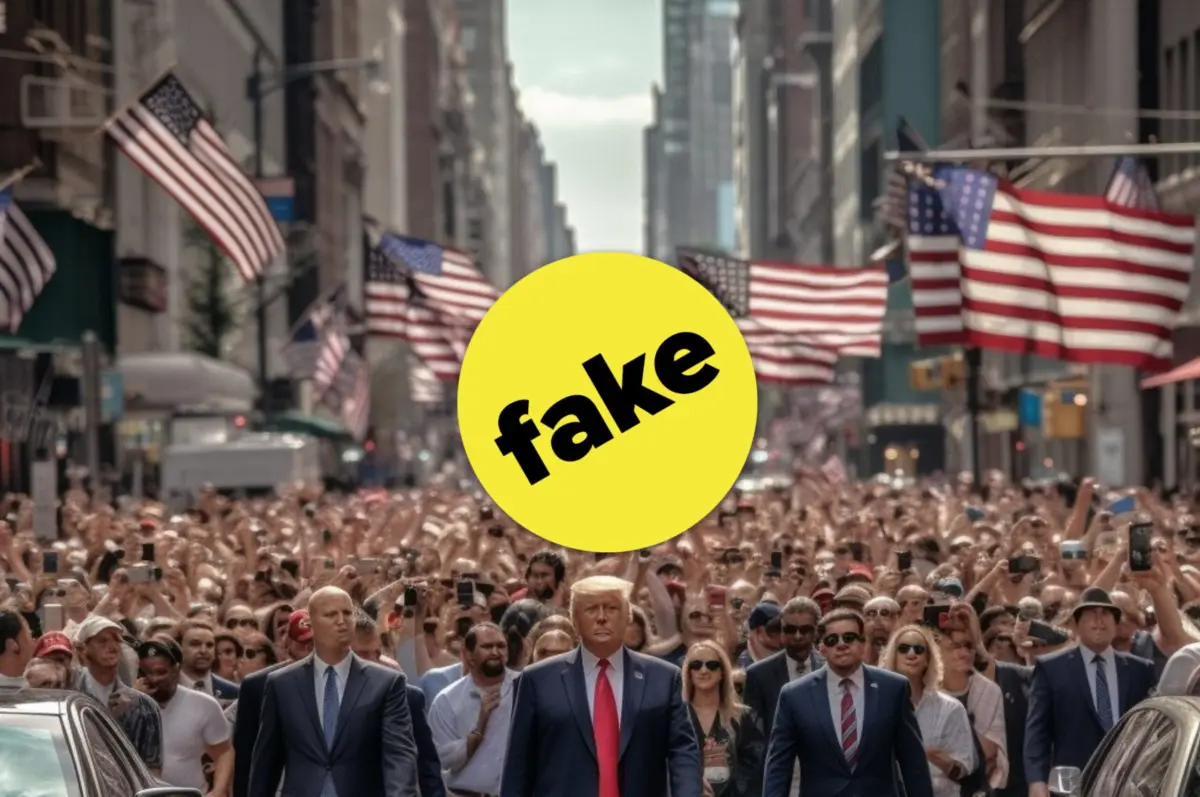
While these tools have unlocked unprecedented avenues for digital art, commercial design, and creative expression, they have simultaneously ushered in a high-stakes era of synthetic media. Today, hyper-realistic, AI-generated photographs routinely flood social media feeds, depicting events that never happened, public figures engaging in fabricated activities, and landscapes that exist only within the neural networks of machine learning algorithms.
This technological leap has precipitated a profound epistemological crisis. As the visual markers separating authentic photography from artificial synthesis continue to evaporate, society faces an alarming erosion of shared reality. "It has become increasingly challenging for the average human eye to distinguish between AI-generated and real photos," warns Andrey Doronichev, CEO and co-founder of Optic.xyz, a leading digital forensics platform designed to detect synthetic imagery.
The implications of this visual blurring extend far beyond internet hoaxes or viral memes. Industry experts, national security analysts, and media watchdogs warn that the unchecked spread of sophisticated deepfakes poses a direct and systemic threat to democratic institutions. By manipulating public opinion, undermining the credibility of established journalism, and weaponizing disinformation on an industrial scale, synthetic media threatens to destabilize public trust in foundational information networks.
Compounding this crisis is the unpreparedness of major social media infrastructure. Despite existing platform policies prohibiting manipulated media, enforcement remains sporadic, sluggish, and fundamentally reactive. Amid workforce reductions, shifting verification frameworks, and dismantled content moderation teams, digital platforms are struggling to keep pace with a tidal wave of fabricated content. As we navigate this new frontier, the imperative to develop robust detection tools, enforce accountability standards, and foster digital literacy has never been more urgent.
Detailed Chronology: The Ascent of Generative AI and the Verification Crisis
To understand the current state of digital deception, it is necessary to trace the rapid evolution of generative adversarial networks (GANs) and diffusion models over the past half-decade.
- 2018–2020: The Era of the Uncanny Valley. Early iterations of AI image generation—such as early versions of BigGAN and OpenAI’s original DALL-E introduced in 2021—produced images that were unmistakably artificial. These early outputs were characterized by bizarre artifacts, warped geometries, and a distinctly dreamlike, dream-logic aesthetic. While fascinating, they posed minimal threat to public disinformation efforts because viewers could easily spot their surreal imperfections.
- Late 2022: The Paradigm Shift. The public release of Midjourney v4, Stable Diffusion, and OpenAI’s DALL-E 2 marked a watershed moment in artificial intelligence. Resolution leaped from muddy, low-pixel approximations to crisp, photorealistic renderings complete with nuanced lighting, convincing textures, and complex compositional depth. For the first time, synthetic images began to seamlessly mimic professional photography.
- Early 2023: The Mainstreaming of Synthetic Misinformation. As access to these platforms widened, bad actors, political operatives, and pranksters weaponized the technology. The internet saw a sudden surge of viral, highly convincing fake images—ranging from fabricated scenes of geopolitical conflict to staged photographs of high-profile political figures being arrested or engaging in improbable public spectacles.
- Mid-2023 to Present: The Arms Race of Detection and Evasion. In response to the flood of synthetic media, a specialized ecosystem of forensic startups emerged, offering algorithmic detectors designed to spot pixel-level anomalies. Simultaneously, however, AI developers rapidly updated their models to eliminate these very flaws, igniting a continuous, high-stakes technological arms race between generators and detectors.
Supporting Context & Metrics: The Mechanics of Deception and Platform Vulnerability
The threat posed by AI-generated imagery is rooted in both human psychology and structural technological vulnerabilities. Human beings are inherently visual creatures, processing images significantly faster than text. Psychologically, humans possess a deep-seated cognitive bias toward trusting visual evidence—a legacy of the adage "seeing is believing." When confronted with a high-resolution photograph, viewers instinctively default to a baseline assumption of authenticity, making them uniquely susceptible to sophisticated optical deceptions.
The Forensic Toolkit: How to Spot the Synthetic
While forensic startups race to build automated detection algorithms, everyday internet users are frequently left to act as their own fact-checkers. Security researchers and digital forensics experts note that while AI models are improving exponentially, they still struggle with specific biological and physical consistencies:
- Anatomical Anomalies: Historically, AI struggled immensely with human anatomy. Early and mid-generation models routinely rendered extra fingers, fused digits, asymmetrical ears, or unnatural hand placements. While newer models have mitigated this, inspecting hands, teeth, and fingernails remains one of the most reliable diagnostic tests.
- Facial and Textural Inconsistencies: Botched jewelry, mismatched earrings, asymmetrical eyeglasses, or background anomalies—such as text on signs that resolves into gibberish or nonsensical characters—frequently betray an image’s artificial origins.
- Lighting and Shadow Logic: AI models calculate lighting on a pixel-by-pixel or token-by-token basis rather than simulating a holistic physical environment. Consequently, observant viewers can often spot conflicting light sources, impossible shadows, or missing reflections in glossy surfaces and eyes.
- The "Too Good to Be True" Rule: In public discourse, sensational, perfectly framed, and emotionally evocative images designed to immediately validate a political viewpoint or outrage a specific demographic warrant immediate skepticism. As the old adage dictates, if an image looks too convenient to be true, it almost certainly is.
The Structural Failure of Platform Moderation
Compounding the technical challenge of detection is the systemic erosion of content moderation across major social media ecosystems. According to Kayla Gogarty, deputy research director of Media Matters for America, the current digital infrastructure is woefully inadequate for the threats posed by modern synthetic media.
"As there has been a recent rise of AI-generated media, it has become clear that platforms are unprepared for this moment in which fake images and misinformation could lead to real-world harm," Gogarty stated in an interview with BuzzFeed News.
Gogarty specifically highlighted the precarious state of X (formerly Twitter). Following major corporate restructuring under Elon Musk, the platform dismantled significant portions of its dedicated trust and safety teams. Furthermore, the overhaul of the platform’s verification system—replacing the legacy identity-authentication checkmark with a paid subscription model—has profoundly compromised user autonomy. It is now exceptionally difficult for average consumers to determine account credibility, as malicious actors can easily purchase verified status to lend spurious legitimacy to fabricated visual narratives.
Official Statements and Expert Perspectives
The intersection of generative artificial intelligence, national discourse, and democratic integrity has drawn urgent warnings from cybersecurity experts, media analysts, and tech founders alike.
"It has become increasingly challenging for the average human eye to distinguish between AI-generated and real photos. This has the potential to manipulate public opinion, undermine the credibility of news sources, and ultimately threaten the democratic process by promoting disinformation."
— Andrey Doronichev, CEO and Co-founder, Optic.xyz
Doronichev’s platform represents a burgeoning industry of technical countermeasures. Optic.xyz and similar algorithmic verification engines utilize machine learning models trained to recognize the microscopic artifacts left behind by neural network renderers. However, Doronichev is quick to acknowledge the limitations of these tools. None of them—including Optic—are completely foolproof, creating a precarious environment where technological defense perpetually lags behind technological offense.
Amplifying these concerns from a regulatory and watchdog perspective, media analysts emphasize the societal dangers of institutional unpreparedness.
"Particularly concerning is Twitter, as Elon Musk has abandoned much of the platform’s content moderation and it has become difficult to determine account credibility under the new checkmark policy."
— Kayla Gogarty, Deputy Research Director, Media Matters for America
Media watchdogs argue that without coordinated regulatory frameworks, proactive platform enforcement, and systemic institutional transparency, the public square risks becoming entirely polluted by synthetic noise, drowning out verified journalism and empirical reality.
Future Outlook: Navigating the Post-Truth Digital Horizon
As generative AI models continue to evolve—incorporating real-time video generation, hyper-realistic spatial audio, and instantaneous multimodal synthesis—the challenges outlined today will multiply exponentially. The coming decade will test the resilience of democratic societies, legal frameworks, and informational institutions in unprecedented ways.
Addressing this existential challenge requires a multi-layered, collaborative approach across the public and private sectors:
1. Technological Solutions and Cryptographic Provenance
Relying solely on post-hoc detection algorithms is an unsustainable strategy. The future of visual authentication lies in proactive cryptographic provenance. Initiatives such as the Coalition for Content Provenance and Authenticity (C2PA) are working to embed tamper-evident cryptographic metadata directly into digital cameras and editing software. This "digital birth certificate" allows consumers to trace an image’s verifiable chain of custody from capture to publication, instantly unmasking synthetic manipulation.
2. Platform Accountability and Regulatory Reform
Social media corporations must be held to stringent standards regarding the dissemination of demonstrably false, high-impact synthetic media. Regulatory bodies in the European Union, the United States, and elsewhere are actively drafting legislation—such as the EU Artificial Intelligence Act—that mandates watermarking standards, clear disclosures for AI-generated content, and aggressive enforcement mechanisms against the amplification of coordinated disinformation campaigns.
3. Cultivating Digital Literacy and Media Hygiene
Ultimately, technology alone cannot solve a human crisis of trust. Educational curricula must adapt to the realities of the digital age, equipping students and citizens with the critical thinking skills necessary to evaluate media critically. Public awareness campaigns must emphasize robust media hygiene: verifying sensational imagery through trusted, established journalistic outlets rather than relying on algorithmic feeds.
As Andrey Doronichev noted, the tools to check suspicious imagery—whether running a questionable political photograph through an AI detection suite or cross-referencing breaking news with reputable journalistic institutions—are accessible today. In an era where seeing is no longer believing, cultivating intellectual skepticism and demanding rigorous informational verification is the ultimate defense for the preservation of truth in a democratic society.