Executive Overview: The Rise of AI-Generated Vertical Serials
The entertainment landscape is undergoing a silent yet aggressive transformation at the intersection of mobile-first social consumption and generative artificial intelligence. At the vanguard of this shift is Shortical, a microdrama startup that has rapidly evolved from producing low-budget, live-action mobile soap operas to deploying synthetic human avatars powered by machine learning algorithms.
Microdramas—characterized by bite-sized, vertically oriented episodes lasting around two minutes—have quietly exploded into a multi-billion-dollar global phenomenon. Traditionally reliant on sensationalist narratives, steep emotional cliffhangers, and rapid-fire pacing optimized for smartphone screens, the genre has served as a fertile testing ground for new digital monetization models.
Shortical’s operational strategy has recently reached a pivotal turning point. Rather than relying on traditional physical production setups involving cast, crew, and location shooting, the platform’s storefront is increasingly dominated by fully AI-generated content. Concurrently, the platform has launched a novel "License Your Face" initiative, encouraging actors, influencers, and everyday digital creators to lease their physical likenesses to be transformed into synthetic digital avatars.
This shift presents a profound case study in the automation of the creative arts. While platform executives frame the transition as a democratization of high-concept visual storytelling, industry labor advocates and market analysts warn that it signals an alarming acceleration of the gig-ification of acting—threatening to dismantle entry-level opportunities in traditional filmmaking while pushing unproven synthetic media onto audiences.
Detailed Chronology: From Live-Action Soap Operas to Synthetic Avatars
  Shortical Founding          Live-Action Romance Wave          AI Content Pivot            'Inevitable' Premiere & Face Licensing Launch
      (Jan 2025)               (Mid 2025 - Early 2026)             (Late 2025)                         (Recent / Current)
          |                               |                          |                                        |
          v                               v                          v                                        v
  Platform launches with        Publishes hit serials:      Homepage shifts toward      Launches meta-thriller starring digital Aki Avni;
  vertical mobile focus.        "Crossing the Line...",     cheaper, scalable AI        opens public "License Your Face" landing page.
                                "Accidentally Married..."   generative productions.
The Live-Action Foundation (January 2025–Present)
Founded in January 2025, Shortical entered a burgeoning mobile entertainment market pioneered largely by East Asian tech firms. The platform’s early catalog established its presence through high-velocity production pipelines that churned out melodramatic live-action serials designed to hook viewers within seconds.
Titles such as "Crossing the Line with My Neighbor," "Accidentally Married My Boss," and "Spoiled by My Billionaire Sugar Daddy" formed the foundation of the platform’s early revenue stream. These productions relied on real actors working on tight schedules, shooting dozens of micro-episodes over the course of a few days.
The AI Pivot and the Premiere of ‘Inevitable’
By late 2025 and early 2026, Shortical began aggressively integrating generative AI workflows into its core content supply chain. What began as experimental background renders quickly expanded into full-scale character rendering and narrative generation.
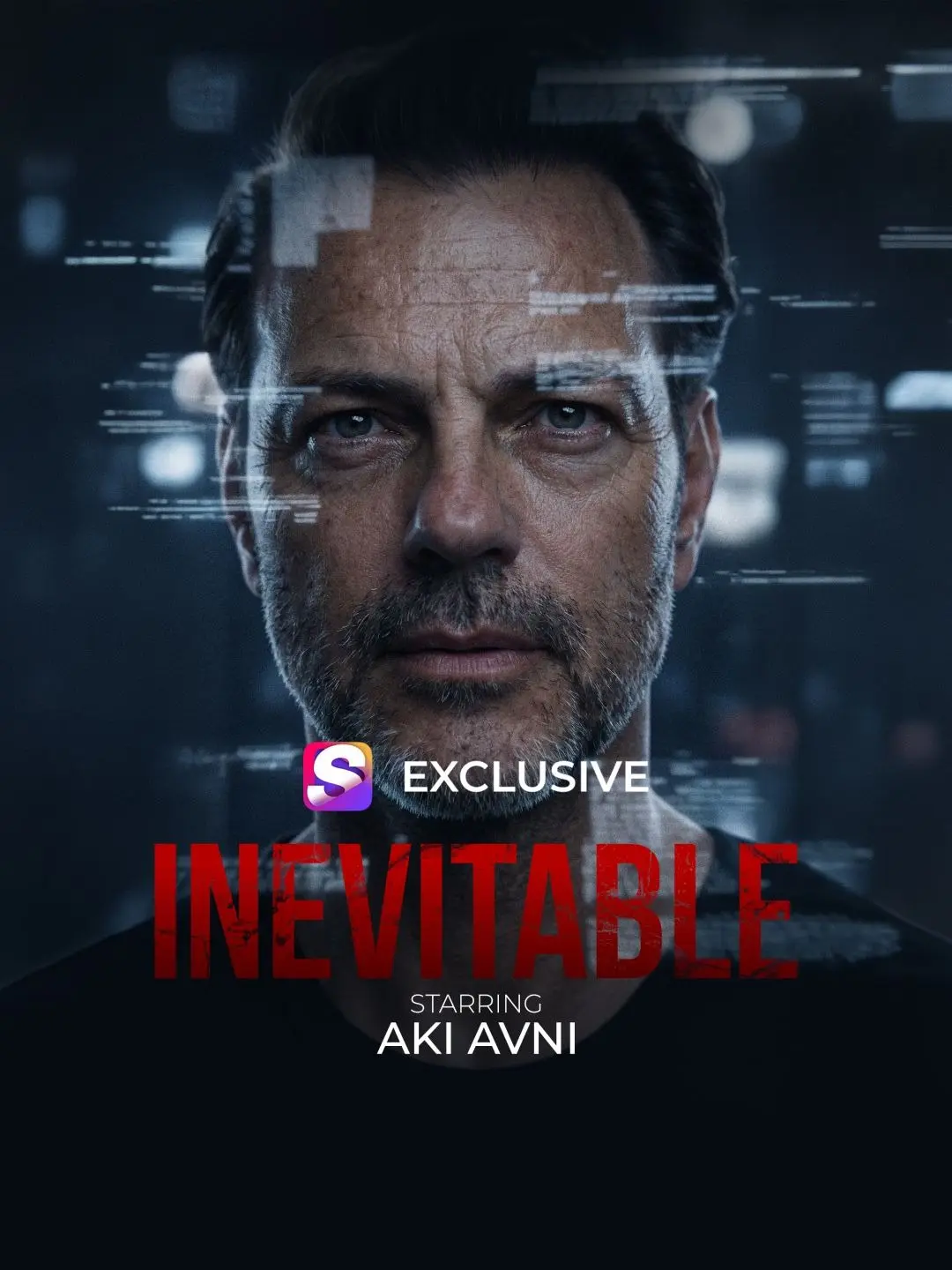
The culmination of this strategic shift manifested recently at a Los Angeles premiere for Shortical’s flagship synthetic serial, titled "Inevitable." The project marks a watershed moment for the company: a entirely AI-generated microdrama starring a digital avatar of veteran actor Aki Avni.
Avni, an Israeli film and television actor with decades of experience—including high-profile roles on American network shows such as Fox’s action thriller 24—became one of the first established Hollywood actors to formally license his likeness to a microdrama platform for an AI-generated production.
In a self-referential twist, "Inevitable" features a meta-narrative wherein Avni plays a fictionalized version of himself who licenses his face to a movie studio, unlocking a series of thriller suspense plot points. The entire show was constructed without Avni ever stepping onto a traditional physical set for principal photography; instead, his digital twin was manipulated purely through software.
Supporting Context & Industry Metrics: The Economics of Microdramas
+-----------------------------------------------------------------------------------+
|                            MICRODRAMA VALUE CHAIN METRICS                          |
+------------------------------------+----------------------------------------------+
| Demographic Focus                  | Skews heavily female; primary market: U.S.   |
+------------------------------------+----------------------------------------------+
| Episode Length                     | ~2 minutes per episode                       |
+------------------------------------+----------------------------------------------+
| Conversion Model                   | Episodes 1-7 (or 10) Free -> Monthly Sub     |
+------------------------------------+----------------------------------------------+
| Traditional Licensing Benchmarks   | $15 - $700 per face license (China baseline) |
| (Rest of World Benchmark)          |                                              |
+------------------------------------+----------------------------------------------+
| Key Strategic Benefit of AI        | Near-zero physical overhead; world-building  |
|                                    | (dragons, kingdoms) without set construction |
+------------------------------------+----------------------------------------------+
Monetization and Viewer Psychology
Shortical operates on a freemium subscription architecture common to the mobile microdrama sector:
- The Hook: The first 7 to 10 episodes of a serial are made available free of charge across social channels and within the native app.
- The Paywall: Once a user is invested in the narrative cliffhanger, continuing the series requires a monthly subscription fee that grants unlimited access to the platform’s library.
The target audience for these serials skews predominantly female, with Shortical reporting that the majority of its active consumer base is located in the United States—even as China remains the largest overall global market for vertical microdramas. Industry analysis suggests viewers utilize these bite-sized episodes primarily as nocturnal relaxation content, seeking rapid emotional payouts and minor dopamine hits before sleep.
Production Economics: Live-Action vs. Generative AI
The transition from live-action to synthetic media is fundamentally driven by unit economics. Traditional live-action microdramas, while significantly cheaper than standard network television, still incur fixed capital expenditures:
- Actor day-rates and SAG/non-union stipends
- Camera, lighting, and sound gear rentals
- On-location permit fees and physical set construction
- Post-production editing, color grading, and sound mixing
Generative AI radically collapses these cost structures. By eliminating location permits, crew logistics, and set construction, platform overhead is dramatically reduced. Concurrently, profit margins widen substantially—provided the platform can maintain baseline user retention figures.
The Global Precedent: China’s Face-Licensing Ecosystem
Shortical’s AI strategy mirrors trends already established in mainland China’s digital media ecosystem. Synthetic microdramas account for a expanding share of new platform releases in the Chinese market, where face-licensing has quickly morphed into a standardized commodity.
However, financial disclosures from international market research indicate that face-licensing is rarely lucrative for the individual licensor. According to data reported by Rest of World, Chinese microdrama production firms routinely acquire facial likeness rights for flat rates ranging between $15 and $700, offering little to no long-term residual upside for the individual whose face powers the series.
Official Statements & Stakeholder Perspectives
The aggressive rollout of synthetic actors on Shortical has drawn sharp contrasts between corporate optimism and industry anxiety.
+------------------------------------------------------------------------------------+
|                               STAKEHOLDER PERSPECTIVES                             |
+-------------------+----------------------------------------------------------------+
| Stakeholder       | Core Position / Key Quote                                      |
+-------------------+----------------------------------------------------------------+
| Guy Shimoni       | "AI enables smaller teams to produce movie-scale productions." |
| (CEO, Shortical)  | Focuses on removing budget constraints for high fantasy.       |
+-------------------+----------------------------------------------------------------+
| Aki Avni          | "AI is a new kind of art... It's always great to be the        |
| (Actor)           | pioneer." Sees synthetic licensing as an emerging medium.     |
+-------------------+----------------------------------------------------------------+
| Jennifer Cooper   | "A lot of us have either lost work to AI or can see that it's  |
| (Industry Expert) | devastated this industry." Questions genuine audience demand.   |
+-------------------+----------------------------------------------------------------+
The Executive Case: Unlimited Scale and Lower Budgets
Guy Shimoni, Chief Executive Officer of Shortical, frames the adoption of generative AI not merely as a cost-cutting measure, but as an expansion of creative scope previously denied to low-budget platforms.
"One of the things that AI does is it enables smaller teams to be able to produce these movie-scale productions," Shimoni stated. "When we were doing mobile-first live action, we were limited by budget, but now we can serve them with epic fantasies. We have kingdoms and dragons. We have superheroes. We have werewolves."
Regarding compensation structures for likeness licensing, Shimoni noted that revenue-sharing or royalty models—akin to traditional residual systems in network television—are currently evaluated on a "case-by-case basis."
A company spokesperson elaborated on the arrangement with Avni, clarifying that while Shortical declined to disclose the specific dollar figure of his contract, Avni joined the project as a strategic "partner," receiving compensation aligned with industry standards for a comparable, non-AI live-action acting assignment.
The Actor’s View: Pioneering Synthetic Performance
For Aki Avni, licensing his facial likeness to an algorithm represents a pragmatic adaptation to an evolving technological reality.
"Look, it’s a new era for artists," Avni said in an interview detailing his decision to star as a digital avatar. "AI is a new kind of art. It’s a new format. It’s always great to be the pioneer in something."
Despite admitting the experience was both "nerve-racking and exciting," Avni’s involvement serves as a high-profile proof-of-concept for Shortical as it seeks to convince mainstream talent that digital avatar licensing is a legitimate brand-expansion vector.
The Critical Counterpart: Industry Decimation and Hype-Driven VCs
Conversely, creative advocates and labor experts view the proliferation of face-licensing and AI microdramas as an existential threat to performing artists.
Jennifer Cooper, founder of the industry consultancy Vertical Drama Love and a longtime market analyst of the microdrama ecosystem, pushes back against the narrative that synthetic content is driven by organic consumer demand.
"Everyone’s been impacted by AI," Cooper warned. "A lot of us have either lost work to AI or can see that it’s devastated this industry—taking [microdramas] from something that was a rare thing in the world, that was in growth, and providing work, particularly for young people… [and now] it’s been decimated."
Cooper argues that the shift toward generative pipelines is primarily orchestrated to satisfy venture capital expectations rather than viewer preference:
"For anyone to get investment at the moment in microdramas, they’ve got to mention the word AI. It’s like AI equals gold in everyone’s eyes. Some of it does get views. A lot of it doesn’t… I think it’s being pushed on an audience more than there is an audience demand or wish for it."
Future Outlook & Strategic Implications: The Gig-ification of Screen Acting
Shortical’s public-facing "LICENSE YOUR FACE" portal marks an intriguing shift toward a creator-as-a-service model within digital media. Under this framework, hopeful actors, social media creators, and everyday users submit their social profiles and facial metrics to the platform. Shortical then audits the submissions, selectively offering contracts to synthesize approved individuals into future automated storylines.
  +-----------------------+     +-----------------------+     +-----------------------+
  |  Likeness Submission  | --> | Contract & Avatar     | --> | Gig Disbursement      |
  |  (Social Handle Audit)|     | Synthesis             |     | (Via Payouts.com)     |
  +-----------------------+     +-----------------------+     +-----------------------+
To streamline this process, Shortical recently announced a strategic partnership with Payouts.com, an enterprise financial technology management system tailored specifically for gig-economy disbursements and creator payouts. This integration points toward an operational infrastructure capable of handling micro-royalties or flat-rate payouts to thousands of likeness licensors at scale.
While a Shortical representative acknowledged that the public portal is in its infancy and has not yet yielded signed public contracts beyond direct talent outreach like Avni’s, the platform’s infrastructure is clearly built to support rapid scalability.
Key Questions for the Industry Moving Forward:
- Labor Market Displacement: Microdramas have historically functioned as an accessible sandbox for entry-level actors, directors, writers, and technicians to build credits and hone their craft outside the traditional Hollywood union system. The widespread adoption of synthetic avatars threatens to sever this foundational rung of the industry ladder.
- Consent and Intellectual Property Protections: The global microdrama sector has already faced controversy regarding unauthorized likeness usage and facial scraping. While Shortical’s explicit consent-and-license approach aims to establish clear legal boundaries, the opacity surrounding contract terms, residual structures, and perpetual rights usage leaves creators vulnerable to exploitative licensing agreements.
- Audience Saturation vs. Quality: As platforms flood mobile ecosystems with algorithmically generated storylines populated by digital avatars, they run the risk of alienating audiences through uncanny valley effects and repetitive narrative structures. The long-term commercial viability of synthetic vertical television will ultimately depend on whether consumers remain willing to pay monthly subscriptions for content generated entirely without human physical performance.
As Shortical ramps up marketing efforts for its face-licensing framework following the release of "Inevitable," the broader entertainment industry will be watching closely. Whether the venture establishes a sustainable revenue model for creators or accelerates the devaluation of performance art remains the defining question of microdrama’s synthetic era.