Executive Overview
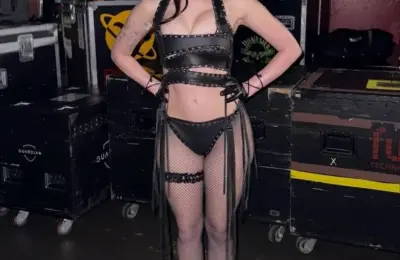
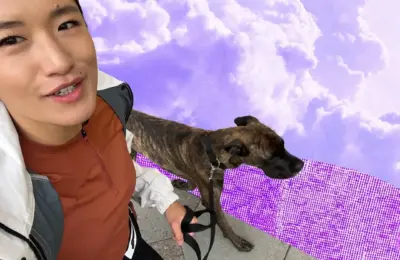
We are living through a profound epistemological shift. For generations, the adage "seeing is believing" served as a foundational pillar of human trust, journalism, and the verification of historical events. Today, that pillar is fracturing under the weight of generative artificial intelligence. The rapid democratization and sophistication of text-to-image models—such as Midjourney, Stable Diffusion, DALL-E 3, and proprietary corporate architectures—have empowered virtually anyone to fabricate hyper-realistic photographs of events that never occurred, people who do not exist, and public figures engaged in actions they never took.
The consequences of this technological leap are not merely aesthetic; they are systemic and dangerous. As Andrey Doronichev, CEO and co-founder of the AI-detection platform Optic.xyz, notes, "It has become increasingly challenging for the average human eye to distinguish between AI-generated and real photos. This has the potential to manipulate public opinion, undermine the credibility of news sources, and ultimately threaten the democratic process by promoting disinformation."
This comprehensive investigative report examines the multi-layered crisis surrounding synthetic media. We explore the technological arms race between generative AI creators and detection startups, the systemic failures of social media platforms to moderate manipulated content, the psychological vulnerabilities that make human beings susceptible to deepfakes, and the long-term implications for global democracy, journalism, and public trust.
Detailed Chronology: The Ascent of Synthetic Media
To understand how we arrived at the current precipice, it is essential to trace the rapid evolution of generative imaging technology over the past decade.
2014–2018: The Era of Generative Adversarial Networks (GANs)
The foundational breakthrough in modern synthetic image generation occurred in 2014 with the introduction of Generative Adversarial Networks (GANs) by Ian Goodfellow and his colleagues. GANs pit two neural networks against each other: a generator that creates fake data and a discriminator that evaluates it.
During this early phase, outputs were largely restricted to low-resolution, uncanny-valley portraits, such as the famous "This Person Does Not Exist" generator launched in 2019. While experts recognized the potential for misuse, the compute power required and the obvious visual artifacts kept the technology largely confined to academic laboratories and niche online communities.
2019–2021: Diffusion Models and the Democratization of Creativity
The paradigm shifted dramatically with the development of diffusion models, which generate images by starting with random static noise and gradually refining it based on textual prompts. Unlike GANs, diffusion models proved capable of rendering complex, high-resolution scenes with astonishing fidelity, capturing nuanced lighting, textures, and compositional depth.
By 2022, companies like OpenAI (DALL-E 2), Midjourney, and Stability AI (Stable Diffusion) opened their models to the public. What was once the domain of state-sponsored intelligence agencies or well-funded Hollywood visual effects studios was suddenly accessible to anyone with an internet connection and a web browser.
2022–Present: The Viral Weaponization of AI Imagery
As accessibility surged, so did malicious and viral deployment. The timeline of synthetic media crises accelerated rapidly:
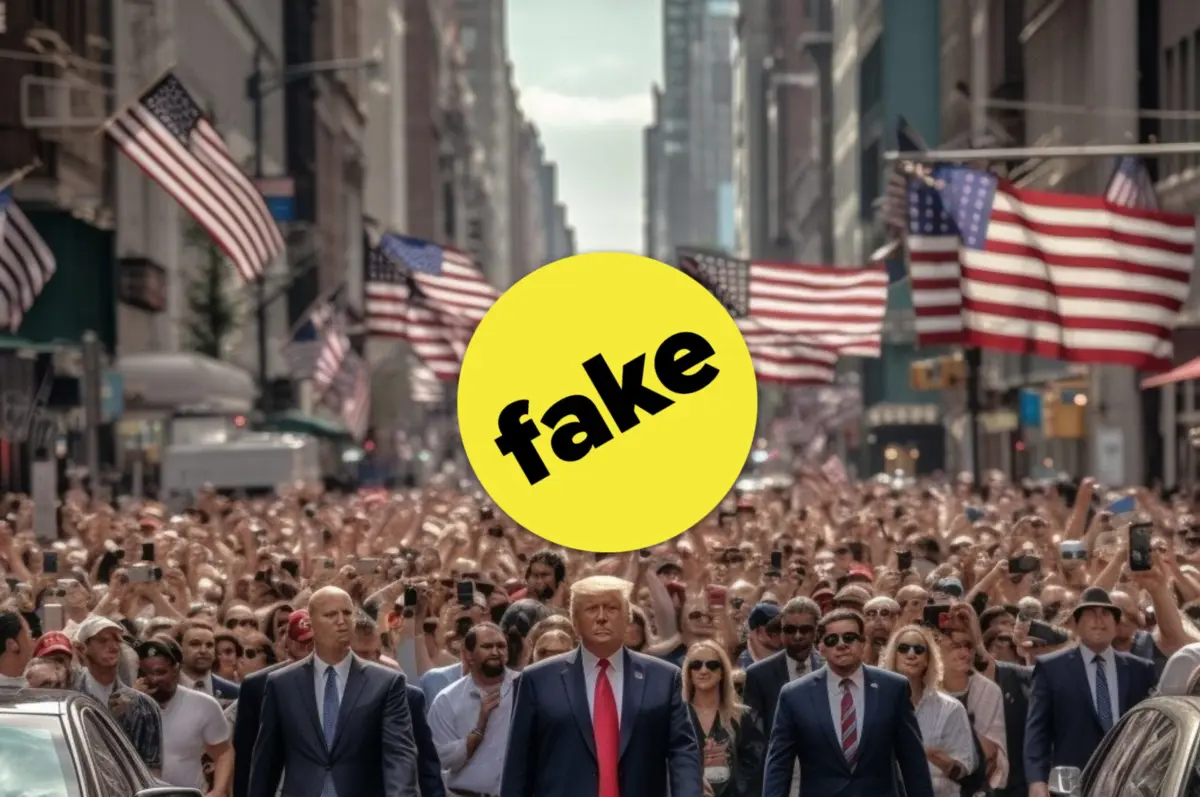
- Early 2023: A wave of hyper-realistic, AI-generated images flooded social media, depicting former U.S. President Donald Trump being violently arrested by police officers. The images went viral on Twitter, deceiving thousands of users before digital forensics experts debunked them.
- Mid-2023: Fabricated images of explosions near the Pentagon caused brief, tangible dips in the US stock market, demonstrating that synthetic media can inflict immediate financial damage alongside political confusion.
- Late 2023–Present: Electoral cycles worldwide—including in the United States, India, Argentina, and Slovakia—have been inundated with deepfakes featuring politicians making fabricated statements, distorting campaign discourses, and eroding trust in official candidate communications.
Supporting Context & Metrics: The Scale of the Threat
The proliferation of AI-generated imagery is supported by alarming empirical data regarding human perception, technological capabilities, and platform vulnerability.
The Human Perception Deficit
Psychological and computer science studies consistently demonstrate that humans are increasingly incapable of reliably spotting deepfakes. According to research from Lancaster University, participants asked to distinguish between real human faces and AI-generated portraits achieved an accuracy rate hovering near 50%—essentially the equivalent of a coin toss. Worse yet, participants often reported high confidence in their incorrect assessments, highlighting a dangerous overconfidence bias.
The Arms Race of Detection Tools
In response to this perceptual deficit, a cottage industry of detection startups has emerged. Platforms like Optic.xyz allow users to upload suspicious files to analyze pixel-level anomalies, metadata traces, and latent statistical signatures left behind by specific diffusion models.
However, none of these tools are foolproof. As generative models evolve, they learn to correct previous artifacts. While early-generation models frequently betrayed themselves through physiological errors—such as rendering botched faces, unnatural teeth, or warped, extra fingers—newer iterations have largely solved these anatomical hurdles.
Furthermore, bad actors continuously adapt by applying adversarial perturbations—subtle digital noise designed to fool detection algorithms while remaining invisible to the human eye.
The Platform Moderation Vacuum
While generative AI models have grown exponentially more powerful, the social media infrastructure tasked with policing their output has deteriorated. Major platforms, which once maintained robust trust-and-safety teams dedicated to identifying manipulated media, have undergone drastic workforce reductions and structural reorganizations.
Kayla Gogarty, deputy research director at Media Matters for America, highlighted the severity of this systemic failure in an interview with BuzzFeed News:
"As there has been a recent rise of AI-generated media, it has become clear that platforms are unprepared for this moment in which fake images and misinformation could lead to real-world harm. Particularly concerning is Twitter, as Elon Musk has abandoned much of the platform’s content moderation and it has become difficult to determine account credibility under the new checkmark policy."
Under legacy verification models, blue checkmarks provided a baseline level of institutional accountability for journalists, politicians, and public figures. The dismantling of these verification systems, combined with relaxed enforcement of manipulated media policies, has created a frictionless digital highway for hyper-partisan actors to weaponize deepfakes for maximum political disruption.
Official Statements and Industry Perspectives
The debate surrounding generative AI brings together technologists, civil rights advocates, and media watchdogs, all of whom offer starkly different assessments of our current vulnerability.
The Technologist’s Dilemma
Developers and startup founders caught in the middle of the synthetic media boom emphasize the dual-use nature of their creations. Andrey Doronichev of Optic.xyz argues that while generative AI unlocks unprecedented creative potential for artists, designers, and educators, the societal guardrails have failed to keep pace with innovation.
"We built tools to democratize imagination," industry engineers frequently argue, "but we did not build a parallel ecosystem of cryptographic verification to protect authenticity." Many developers now advocate for mandatory digital watermarking—such as the C2PA (Coalition for Content Provenance and Authenticity) standards—which embeds unalterable cryptographic metadata into an image at the moment of capture. However, open-source models make enforcing such standards practically impossible, as malicious actors can easily strip or spoof metadata.
The Watchdog Perspective: Regulatory Failure
Nonprofit watchdogs like Media Matters and civil liberties groups argue that relying on voluntary industry standards is no longer viable. They point to the total abdication of responsibility by corporate leadership at major tech firms.
When platforms actively defund moderation departments, lay off algorithmic bias teams, and dismantle verification frameworks, they effectively outsource the burden of truth onto the end user. Asking average citizens to run every piece of breaking news imagery through third-party AI detection software is an unreasonable and unsustainable standard for a healthy public sphere.
Future Outlook: Navigating the Synthetic Age
As we look toward the future, society stands at a critical crossroads. The trajectory of generative AI suggests that image generation will soon achieve total visual indistinguishability from optical reality, eventually expanding into real-time, interactive video and audio deepfakes capable of mimicking anyone on demand.
To avert a total collapse of shared objective reality, a multi-pronged defensive strategy is urgently required:
- Systemic Regulatory Action: Governments worldwide must pass robust legislation holding technology platforms accountable for the unchecked distribution of high-harm manipulated media, particularly during active electoral windows.
- Cryptographic Provenance Infrastructure: Journalism institutions, camera manufacturers, and tech platforms must adopt universal cryptographic standards (such as blockchain-based or C2PA watermarking) to verify the unbroken chain of custody for digital media from the moment of capture to publication.
- Media Literacy and Education: Educational curricula must be modernized to include digital forensics, visual literacy, and deepfake identification training starting at the K-12 level, equipping future generations with the critical thinking skills required to navigate a synthetic world.
- A Return to Legitimate Journalism: In an era where visual evidence can no longer be trusted at face value, the value of traditional, rigorously vetted journalism increases exponentially. As industry experts advise, when confronted with sensational or emotionally charged social media imagery, citizens must bypass viral feeds and return to verified, accountable news sources.
The age of synthetic media is no longer an impending horizon—it is the reality we inhabit today. Whether our democratic institutions and public discourse survive this era of artificial illusion will depend entirely on our collective willingness to demand accountability, verify our sources, and re-establish truth as a non-negotiable public good.