Executive Overview
On November 1st, 2026, at approximately 12:50 p.m. Eastern Time, the tranquil skies above Palm Beach County, Florida, were shattered by a catastrophic aviation disaster. A Bombardier Learjet 60 private business jet, operating a routine cross-country flight from Texas to the Bahamas, experienced an unprecedented and catastrophic structural and aerodynamic failure, plunging into a densely populated residential sector near West Palm Beach. The resulting impact left a devastating physical footprint, obliterating residential structures, snapping utility poles, and carving a massive crater into the earth near Military Trail between Cresthaven Boulevard and 10th Avenue North.
The tragedy claimed the lives of all nine individuals aboard the aircraft. Among the victims were 55-year-old Captain Jeff Gregory, 20-year-old First Officer Nathalia Gadelha Filgueiras—a promising young aviator who had earned her commercial license at the remarkably tender age of 17—alongside prominent tech entrepreneur Adam Robinson, members of his immediate family, and close personal friends. In the annals of modern business aviation, the incident has been grimly cataloged as the deadliest accident involving a Learjet 60 variant in the history of the airframe.
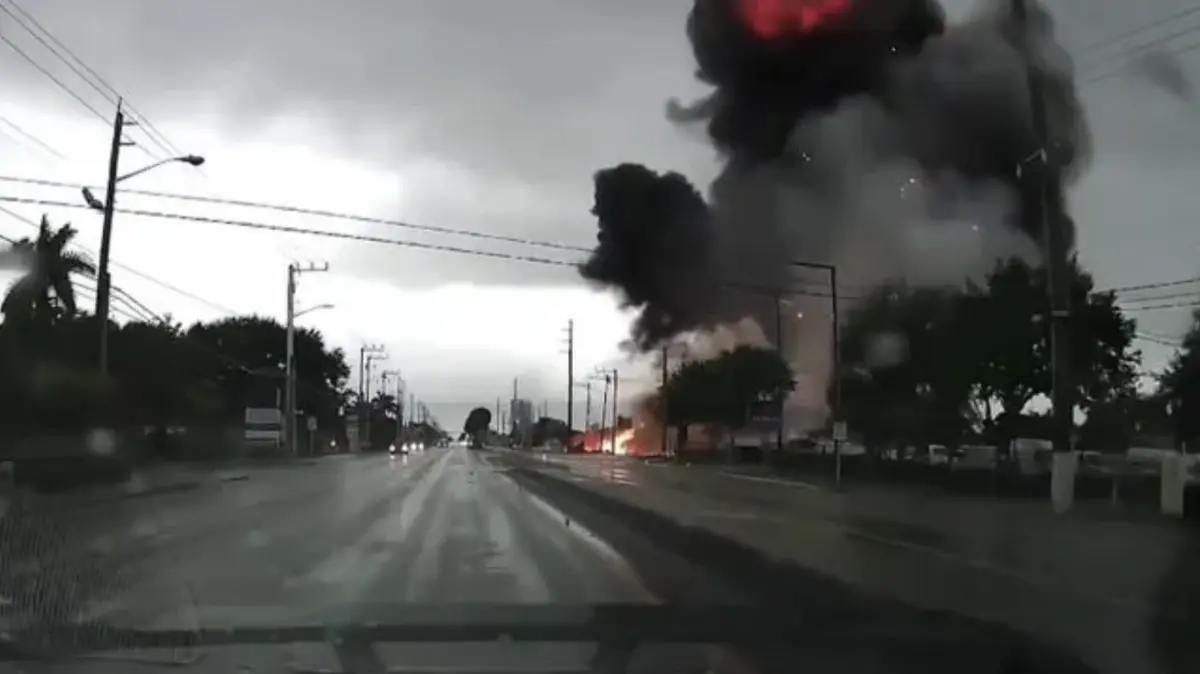
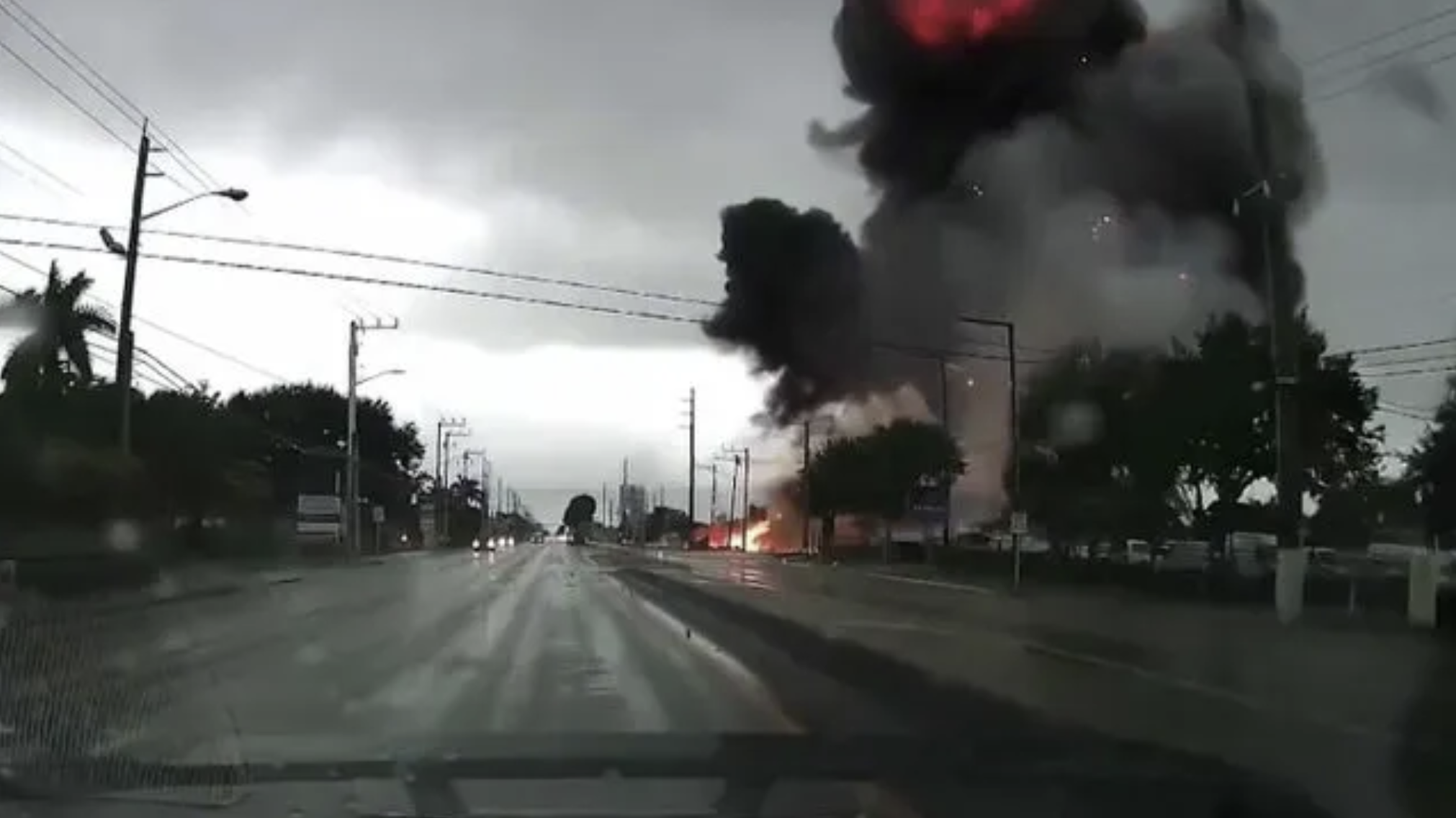
Almost instantaneously, the disaster transcended local news to become a global digital phenomenon. Within minutes of the crash, harrowing dashcam footage capturing the aircraft’s terrifying, high-speed vertical descent flooded social media networks like X (formerly Twitter), TikTok, and YouTube. Air traffic control (ATC) audio recordings capturing the desperate final moments of the flight crew quickly circulated online, amassing tens of millions of views. As the scale of the tragedy became clear, the digital ecosystem responded with a mixture of profound grief, deep investigative curiosity, and, inevitably, a wave of baseless internet conspiracy theories suggesting missile strikes, military shootdowns, or elaborate cover-ups.
This comprehensive report examines the background of the flight, the terrifying sequence of events during its final minutes, the mechanics of its descent, the extensive social media reaction, and the ongoing efforts by federal authorities to determine the root cause of one of the most shocking aviation accidents of the decade.
Detailed Chronology: From Austin to the Palm Beach Impact
The Departure and Flight Profile
The doomed aircraft was a mid-size cabin Bombardier Learjet 60, originally manufactured in 2004 and registered to an undisclosed Delaware-based limited liability company. Known for its performance capabilities and twin Pratt & Whitney Canada PW305A turbofan engines, the aircraft was widely utilized for corporate and private charter operations.
On the morning of November 1st, 2026, the jet departed from Austin-Bergstrom International Airport (AUS) in Austin, Texas, bound for an international destination in the Bahamas. The flight plan was standard, and the initial legs of the journey proceeded without incident. The cockpit crew consisted of Captain Jeff Gregory, an experienced pilot tasked with managing the flight deck, and First Officer Nathalia Gadelha Filgueiras, whose aviation career—though young—had already earned her widespread respect within regional piloting circles for her exceptional technical aptitude and dedication to flight safety.
Cruising Altitude and Environmental Hazards
As the Learjet cruised eastward at an altitude of approximately 35,000 feet, atmospheric conditions across the southern United States and the Florida peninsula began to deteriorate rapidly. Meteorological data and preliminary flight telemetry indicate that the aircraft encountered severe weather systems, characterized by heavy precipitation, intense convective activity, and strong thunderstorms.
Crucially, the aircraft entered a sector marked by significant atmospheric icing conditions and moderate-to-severe turbulence. Transcripts and preliminary reports from air traffic control communications reveal that the flight crew was actively grappling with these adverse environmental factors. At one point prior to the emergency, a crew member radioed ATC to explicitly state that they were "managing the ice" accumulating on the airframe’s exterior surfaces and aerodynamic control points—a critical challenge for swept-wing business jets operating in supercooled liquid water environments.
The Fatal Descent
Shortly after communicating concerns regarding weather and icing, the situation on the flight deck escalated from a standard operational challenge to an immediate life-or-death emergency. The crew requested permission from air traffic control to climb to a higher altitude, likely seeking to bypass the turbulent storm cells or escape unfavorable icing levels.
However, before the maneuver could be successfully executed or stabilized, the Learjet underwent a catastrophic breakdown in flight parameters. Telemetry data suggests the aircraft experienced a sudden and violent loss of controlled flight, entering an extreme, vertical or near-vertical nose-down attitude.
The descent rates recorded by flight tracking systems were staggering, ranging from an initial 10,000 feet per minute to catastrophic spikes estimated between 20,000 and 30,000 feet per minute. To put this in perspective, the aircraft lost approximately 27,000 feet of altitude in roughly 60 seconds.
During this harrowing plunge, air traffic control recordings captured frantic, adrenaline-fueled mayday transmissions from the cockpit. A female voice—subsequently identified as First Officer Gadelha—can be heard urgently reporting that the aircraft was severely overspeeding and plummeting uncontrollably toward the earth. In her final recorded words, she declared with stark finality, "We are going to crash into the ground," immediately followed by a sharp scream before the transmission was abruptly cut off by the impact.
The Crash Site
At approximately 12:50 p.m. ET, the Learjet 60 impacted the ground in a residential zone near Military Trail, nestled between Cresthaven Boulevard and 10th Avenue North in unincorporated Palm Beach County. The site lies within the densely populated suburban communities of Greenacres and Cresthaven, roughly seven miles southwest of West Palm Beach.
Due to the extreme vertical velocity and kinetic energy of the aircraft upon impact, the destruction was absolute. The jet carved a deep, smoking crater into the earth, severing local power lines, reducing a nearby residential mobile home and surrounding structures to rubble, and igniting fierce localized fires. Miraculously, despite the proximity to populated homes and vehicular traffic—including a car that narrowly avoided the falling debris path—ground casualties were successfully averted, though all nine occupants of the aircraft perished instantly.
Supporting Context & Metrics: Digital Virality and Public Impact
The Social Media Explosion
Within hours of the disaster, the Palm Beach County Learjet crash became one of the most heavily discussed topics globally across multiple social media platforms. The unprecedented nature of the tragedy, combined with the sudden availability of visual evidence, drove unprecedented engagement metrics.
- X (formerly Twitter): On November 1st, 2026, user @FearedBuck published dashcam footage showing the Learjet’s final descent and impact into the Palm Beach mobile home park. The post detailed the massive crater and extensive property damage, rapidly accumulating over 11.2 million views and nearly 72,000 likes within its first 24 hours online. High-profile quote-posts—such as one by user @bigbusiness expressing shock that gained over 6 million views, and another by @bagtaIk highlighting a civilian vehicle that narrowly escaped the disaster zone—further amplified the footage to a global audience.
- TikTok: Short-form video platforms became the primary vector for human-interest stories and biographical tributes to the victims. A post by the official Daily Mail TikTok account detailing the life and career of 20-year-old First Officer Nathalia Gadelha Filgueiras went viral within hours, pulling in an astonishing 7.5 million views and over 756,000 likes in just four hours. Aviation commentators, emergency preparedness influencers, and independent news channels also published explainers that drew millions of cumulative views.
- YouTube: In-depth technical breakdowns and news reports dominated the platform. Channels such as @HeadingUnknownDocs published detailed forensic timelines of the flight path within 24 hours, garnering over 319,000 views, while broadcast partners like @KCENNews generated massive engagement through continuous news updates.
Misinformation and Conspiracy Theories
As is common with high-profile disasters captured on low-quality or distant dashcam video, the vacuum left by the initial lack of official investigative findings was quickly filled by online speculation and conspiracy theories.
Numerous digital commentators and anonymous accounts propagated outlandish claims regarding the nature of the crash. Some users asserted that the aircraft had not suffered a mechanical or weather-related failure, but had instead been intentionally shot down by domestic air defense systems or struck by a stray military missile. Others pointed to the visual fragmentation of the aircraft in the video, arguing that the lack of recognizable fuselage pieces immediately visible in amateur footage indicated a staged event or a cover-up.
Rational digital creators swiftly pushed back against these fringe theories. Content creators like @junkmotherjess published viral explainers pointing out fundamental principles of aerodynamics and physics—noting that an aircraft plunging from high altitude at supersonic or near-supersonic speeds will naturally undergo catastrophic structural disintegration upon impact, mimicking the visual profile of a high-speed missile strike. Furthermore, aviation experts emphasized that the total vaporization of lightweight composite and aluminum airframe components under such high-energy impacts is a standard forensic reality, not evidence of foul play.
Official Statements and Regulatory Response
In the wake of the disaster, federal and local agencies mobilized a massive coordinated response.
- The NTSB Investigation: The National Transportation Safety Board (NTSB), alongside the Federal Aviation Administration (FAA), immediately dispatched a multidisciplinary go-team to the Palm Beach County crash site. Investigators established a temporary command center to secure the debris field, recover the aircraft’s flight data recorder (FDR) and cockpit voice recorder (CVR)—colloquially known as the "black boxes"—and map the trajectory of the descent.
- Aviation Authorities and Safety Warnings: Initial NTSB briefings highlighted the extreme atmospheric conditions reported by the crew prior to the loss of control. Investigators are currently focusing heavily on the compound effects of severe in-flight icing, potential pitot-static system blockage leading to erroneous airspeed indications (instrument failure), and high-altitude aerodynamic stall characteristics unique to swept-wing business jets operating in severe convective weather.
- Victim Advocacy and Memorials: The aviation community, alongside the families of Captain Gregory and First Officer Gadelha, issued heartfelt statements mourning the loss of the crew and passengers. Tributes poured in from flight schools and regional aviation associations celebrating Gadelha’s pioneering spirit as a young female pilot who achieved her lifelong dream of commanding commercial aircraft before turning 21.
Future Outlook: Lessons and Legacy
The Palm Beach County Learjet 60 disaster stands as a stark, sobering reminder of the unforgiving nature of aviation physics when combined with severe environmental hazards. As the NTSB continues its meticulous forensic reconstruction of the flight, the final findings are expected to yield critical safety recommendations for the private aviation sector.
Key areas of ongoing scrutiny include:
- In-Flight Icing Protocols: Re-evaluating the operational guidelines and automated warning systems for mid-size business jets encountering rapid atmospheric icing at high cruise levels.
- Crew Resource Management (CRM) in Crisis: Analyzing how flight decks manage extreme, high-stress scenarios involving sudden instrument overspeed indications and rapid descent profiles.
- Weather Avoidance Technology: Enhancing real-time onboard radar capabilities and ground-based meteorological datalinks for private charter operators navigating complex storm corridors.
While the digital noise and conspiracy theories surrounding the November 1st tragedy have gradually subsided, the human cost of the disaster remains profound. The legacy of the flight will live on not only through the ongoing safety reforms driven by federal investigators, but through the enduring memory of the crew and passengers whose lives were cut tragically short in the skies over Florida.