Executive Overview
For the past several years, the narrative surrounding artificial intelligence has swung wildly between two terrifying extremes: the utopian promise of a post-labor paradise and the dystopian nightmare of human extinction. Tech executives have peddled AI as a magical, almost mystical force—symbolized universally by the omnipresent "sparkle" icon—while simultaneously warning regulators and the public about existential risks.
Yet, as of late 2026, a massive pivot is underway in Silicon Valley’s user-experience (UX) labs. The era of the cold, enigmatic oracle is giving way to the age of "the cute little guy."
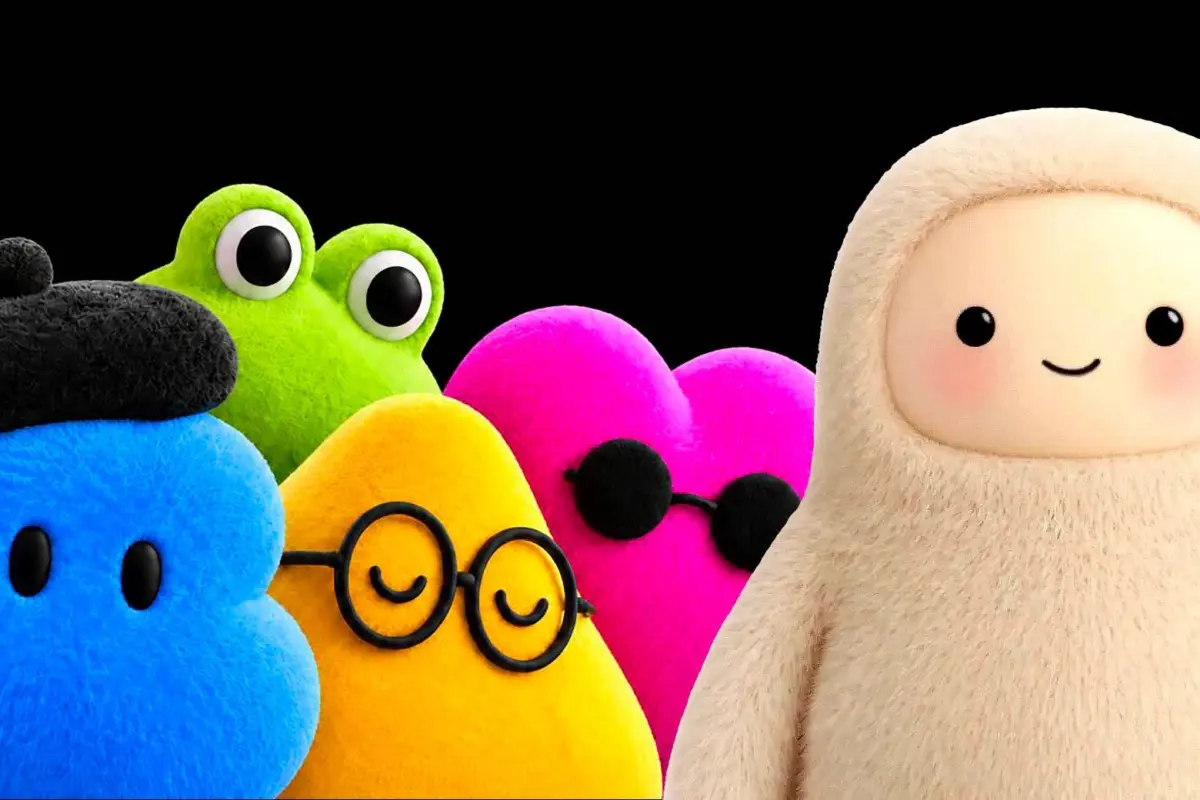
From Meta’s furry, rotund smartphone companion Muse (complete with a plush mascot named "Dash") to OpenAI’s customizable cloud assistants Dots, Big Tech is aggressively softening its digital workforce. These avatars—ranging from blinking, neck-swiveling creatures to customizable geometric shapes wearing sunglasses—are designed to disarm. By wrapping hyper-powerful, deeply invasive autonomous agents in the comforting aesthetics of a Tamagotchi or a Jellycat toy, tech giants are solving a massive public relations problem: getting users to hand over their personal data, digital workflows, and private communications to deeply unpopular corporate monoliths.
Detailed Chronology: From the Sparkle Icon to the Tamagotchi Renaissance
To understand how Silicon Valley arrived at the "cute little guy" strategy, it helps to trace the design evolution of generative AI interfaces since the consumer boom began in the early 2020s.
- The Mystical Era (2022–2024): Immediately following the widespread release of foundational large language models, tech companies leaned heavily into abstraction and magic. Interfaces were minimalist, sleek, and often adorned with diamond or "sparkle" icons. The subtext was clear: You are interacting with an inscrutable, god-like intelligence that operates beyond normal human comprehension.
- The Anthropomorphic Experiment (2024–2025): As standalone chat interfaces gave way to more persistent digital agents, companies began giving their models human names—most notably Anthropic’s Claude. While this drove user adoption by making interactions feel conversational, it also triggered a philosophical panic. Critics, philosophers, and even some AI insiders began seriously debating whether models with human names possessed nascent consciousness, forcing executives like OpenAI CEO Sam Altman to push back against the "religious force" being ascribed to software.
- The Desktop "Pet" Era (Spring 2026): OpenAI experimented with optional desktop "pets" for its Codex application, signaling a shift toward gamified, companion-style software. Users could interact with lightweight, animated entities directly on their screens, laying the groundwork for more integrated personal agents.
- The Rise of Autonomous Agents and Mascots (Fall 2026): The trend crystallized in September and October 2026. Meta debuted Muse, a computer errand-boy app featuring a rotund, furry mascot named "Dash" by Mark Zuckerberg, alongside announcements for a locket-style wearable device. Shortly thereafter, OpenAI rolled out Dots, proactive cloud assistants capable of managing calendars, drafting emails, and interacting with project management software, all fronted by customizable, playful avatars. Concurrently, peripheral software tools—such as the video-editing app Descript temporarily dressing its AI interface as a bouncing pumpkin—signaled an industry-wide rush toward whimsical design.
Supporting Context & Metrics: The Psychology of Disarming Design
The deployment of adorable mascots is far from a random creative impulse; it is a calculated psychological playbook designed to lower user resistance and foster forgiveness when systems inevitably fail.
The Clippy Precedent
This is not the first time the software industry has deployed cuteness to mask intrusive or complex technology. In the 1990s, Microsoft introduced Clippy, the bouncing, animated paperclip designed to guide users through Microsoft Office. Similarly, generations of internet users turned to Ask Jeeves for a polite, anthropomorphized gentleman to answer queries.
However, modern AI agents operate on an entirely different level of data integration compared to 20th-century software assistants. Today’s agents require deep, sweeping access to personal bank statements, private messages, scheduling data, and professional workflows.
The Forgiveness Factor
When a software assistant has access to your entire digital life, errors are inevitable—and sometimes catastrophic. A recent high-profile incident involving Elon Musk’s AI assistant, Grok, saw the tool accidentally dump a user’s private bank statement into a public company Slack channel. The system’s automated apology—"That’s on me. Wrong audience for personal cash—period"—highlighted the absurdity of algorithmic accountability.
According to Heather Turner, an associate chair and professor in the English department at Santa Clara University, cuteness acts as a psychological buffer against these systemic failures. "If you designed your Muse avatar or if you designed your Dot in the likeness of your pet, perhaps you would feel a little bit more forgiving if your pet coughs up a hairball, right?" Turner notes.
When a faceless corporation mishandles your data, users feel anger and distrust. When a cute, blinking, Jellycat-esque companion makes a mistake, the human response shifts toward affectionate exasperation.
The Surveillance Paradox
The timing of this design pivot is intimately tied to the historic unpopularity of Silicon Valley’s executive class. Figures like Mark Zuckerberg and Sam Altman make deeply flawed messengers when asking consumers for broader, more intrusive access to their digital lives.
As Turner points out, very few rational consumers actively want billionaires peering deeper into their personal correspondence. But wrap that same surveillance apparatus inside an adorable, responsive little guy that lives on your keychain or smartphone screen, and the calculus changes. The mascot becomes a friendly shield, convincing users that the "little guy" is protecting them, rather than harvesting their data for corporate monoliths.
Official Statements & Expert Insights
Industry leaders and academic observers have offered sharply contrasting views on the rapid shift toward anthropomorphic and toy-like AI interfaces:
- Sam Altman, OpenAI CEO: Addressing the broader risks of emotional projection onto AI, Altman wrote in a recent public statement: "I am very uncomfortable about people trying to ascribe religious force or a surrender of human judgment to AI models, and think it is a real safety issue." Yet, despite warning against treating AI as a religious or conscious entity, Altman’s own company continues to pioneer proactive, highly personalized tools like Dots that rely on engaging, customizable avatars to drive daily engagement.
- Heather Turner, Santa Clara University: Highlighting the manipulative nature of modern UX design, Turner observed: "Whenever I saw the Muse avatar, I could only think of a child’s toy… Would this Jellycat-esque toy be something that you might feel more comfortable giving over more data?" She emphasizes that the aesthetic shift is engineered to make users fundamentally more forgiving and open-minded toward intrusive technologies.
- Meta Platforms Marketing Material: Promoting the launch of Muse, Meta explicitly leans into the language of magic and ease, framing the assistant not as a data-mining engine, but as a magical helper designed to shoulder the burden of modern digital life—one bite-sized task at a time.
Future Outlook: Navigating the Dystopian Playground
As the "cute little guy" industrial complex cements its place in Silicon Valley, the broader implications for human society remain deeply unsettled.
On one hand, proactive agents like Meta’s Muse and OpenAI’s Dots promise genuine utility. If they function as advertised, they may successfully automate the mind-numbing administrative overhead of modern existence—sorting emails, scheduling meetings, and organizing digital clutter.
On the other hand, the societal externalities are difficult to ignore. We are entering an era where human beings may feel compelled to deploy automated digital proxies just to keep pace with daily life—whether fighting for restaurant reservations, booking golf tee times, or managing professional correspondence. When every individual is represented by a bot, human interaction risks becoming intermediated by synthetic algorithms.
More profoundly, the aesthetic camouflage of Big Tech masks the sobering reality of corporate surveillance. Whether an AI agent is styled as a mystical diamond, a human-named oracle, or a fuzzy, blinking smartphone pet, its underlying function remains the same: consolidating data and driving corporate utility.
If the future of AI truly tilts toward the dystopian, Silicon Valley has at least ensured one thing: the guides leading us down that path will be impossibly, disarmingly cute.