Executive Overview
The evolution of social media from a decentralized playground of self-expression into an optimized, hyper-capitalist attention economy represents one of the most profound cultural shifts of the twenty-first century. What began as an experimental digital frontier designed to foster connection, serendipity, and unfiltered creativity has largely curdled into a transactional landscape governed by algorithms, metrics, and relentless monetization.
For generations that grew up alongside the internet—transitioning from MSN Messenger and early forums to MySpace, Facebook, and eventually the hyper-visual domains of Instagram and TikTok—the promise of the digital age was clear: a democratization of voice and community-building unbound by physical geography. Yet, as modern platforms matured, an insidious transformation took place. Genuine human interaction was systematically re-engineered into engagement metrics, and individual creativity was co-opted by commercial interests.
Today, millions of users experience a paradox of hyper-connectivity paired with unprecedented levels of social isolation. The expectation to broadcast every facet of daily life—turning hobbies, relationships, and quiet moments into performative content—has exhausted a generation of digital natives. This investigative analysis explores the structural commodification of online spaces, the psychological toll of algorithmic capitalism, and the burgeoning counter-movement: a conscious retreat into the private, un-monitized analog world.
Detailed Chronology: From Digital Playgrounds to Algorithmic Marketplaces
To understand the current state of digital malaise, one must trace the trajectory of social media from its nascent days to its current corporate iteration. The transformation can be categorized into four distinct evolutionary phases:
Phase 1: The Incubation Era (Late 1990s – Mid-2000s)
In the era of MSN Messenger, ICQ, and early message boards, the internet existed primarily as an alternate dimension. Users spent hours crafting pseudonyms, designing rudimentary away messages, and interacting within niche communities. There was no overarching corporate mandate to monetize personal identity. The value derived from these platforms was intrinsic—rooted in curiosity, anonymity, and the sheer novelty of communicating across distances without physical constraints.
Phase 2: The Social Graph and the Move to the Public Square (Late 2000s – Early 2010s)
With the advent of Friendster, early blogs, SchülerVZ, MySpace, and subsequently Facebook, the internet shifted from anonymous exploration to identity validation. Networks were built around the "social graph"—connecting with actual peers, classmates, and family members. During this era, micro-blogging and early video platforms like YouTube emerged as fertile ground for grassroots subcultures.
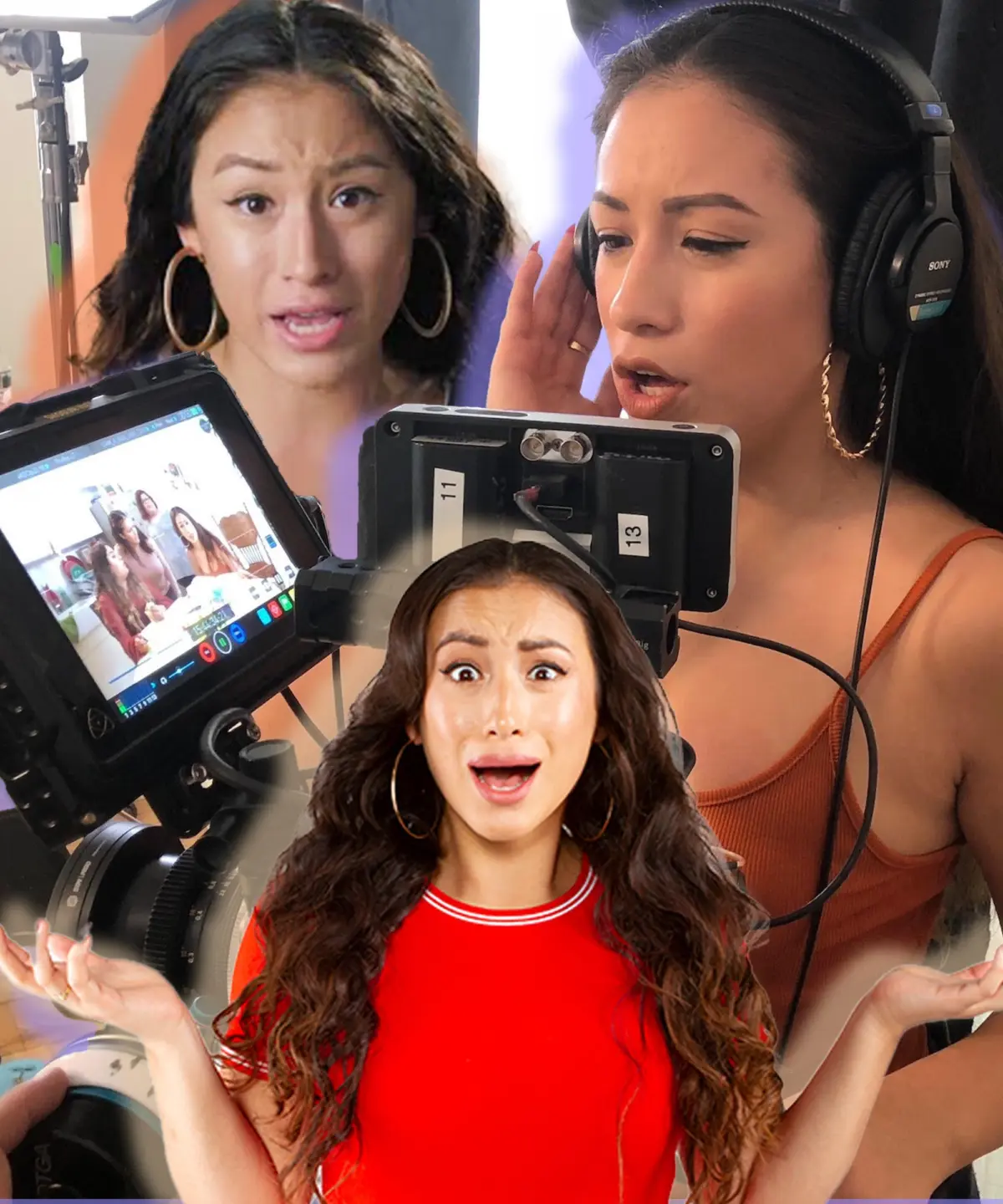
As a college student in the late 2000s, creator and documentary producer Kat Lazo launched her first YouTube channel, utilizing the medium as a canvas for cultural critique. Her work—spanning humorous, feminist commentary on media tropes, such as a breakout video dissecting the casual sexualization of everyday acts—was born not out of a desire for corporate sponsorship or viral fame, but from a genuine impulse to process cultural absurdities and connect with like-minded peers. It was an era where a niche video could build a loyal, empathetic community without the heavy hand of algorithmic curation.
Phase 3: The Professionalization of Content (Mid-2010s)
As venture capital flooded Silicon Valley, tech platforms required business models to justify their astronomical valuations. The solution was advertising, and subsequently, influencer marketing. The casual creator was systematically incentivized to professionalize.
This period saw the birth of the modern "influencer" economy. Algorithms shifted away from chronological timelines to engagement-driven feeds designed to maximize "time on site." Creativity began to bend to the will of metric optimization. Content creators discovered that vulnerability, art, and personal milestones could be converted into currency. While this era provided legitimate career pathways for many—propelling raw digital aptitude into professional video production, tech careers, and mainstream media ventures—it fundamentally altered the psychology of posting.
Phase 4: The Attention Economy and Exhaustion (Present Day)
Today, social media platforms operate as frictionless marketplaces. Every brunch, home renovation, and human interaction is viewed through the lens of potential content. The lines between authentic sharing and brand sponsorship have dissolved entirely. Users are no longer participants in a social network; they are unpaid laborers feeding an insatiable algorithmic engine designed to harvest attention for corporate advertisers.
Supporting Context & Metrics: The Crisis of Digital Isolation
The psychological fallout of this hyper-commercialized digital landscape is well-documented by behavioral scientists and public health researchers. Despite boasting thousands of followers and instantaneous access to global networks, modern users report unprecedented levels of loneliness.
The Quantifiable Cost of Connectivity
- The Isolation Correlation: A landmark 2017 study published in the American Journal of Preventive Medicine established a direct correlation between increased social media consumption and heightened feelings of social isolation among young adults. Rather than bridging gaps, intensive platform use often exacerbates feelings of exclusion by presenting curated, hyper-idealized versions of others’ lives.
- The "Performativity Trap": Sociological assessments indicate that when social interaction is mediated exclusively through metrics (likes, shares, views), users develop heightened self-monitoring behaviors. The self is split into two entities: the experiencing self and the performing self. This constant state of self-surveillance suppresses genuine spontaneity and emotional vulnerability.
- The Commodification of Leisure: Hobbies that once served as restorative sanctuaries—cooking, painting, gardening, home improvement—have been co-opted by the content machine. If an activity is not documented, edited, and published, its cultural and personal validity is quietly undermined in the minds of digital consumers.
Official Statements and Cultural Commentary
The growing disillusionment with modern platforms has prompted prominent cultural figures, creators, and digital ethicists to speak out against the toxic mechanics of the attention economy.
"We are all navigating social media daily, yet these platforms are hardly social anymore. Instead of engaging in artistic exchanges about shared human experiences, we are bombarded with posts from influencers attempting to sell a product or a lifestyle to maximize revenue. They feel loud, transactional, and exhausting."
— Kat Lazo, Documentary Producer and Creator
Lazo’s critique underscores a central tenet of modern digital criticism: capitalism’s unique capacity to absorb counter-cultural energy and convert it into extraction machinery.
"The problem with platform capitalism is its efficiency at identifying authentic talent, genuine art, and organic communities, and transforming them into exhausting extraction engines. When we tether our creativity to commercial imperatives, we impose strict boundaries on human expression. If we do not perform in ways that maximize financial return, we are penalized by the algorithm."
— Digital Media Ethics Symposium, Academic Consensus Statement
Industry observers note that this dynamic stifles genuine cultural innovation. When millions of creators cater to the same opaque algorithms, the resulting content homogenizes. The digital ecosystem risks collapsing into an endless loop of derivative, hyper-polished advertisements masquerading as personal expression.
Future Outlook: Reclaiming the Analog Sanctuary
As the fatigue surrounding performative digital culture reaches a tipping point, a quiet counter-revolution is underway. Across demographics, individuals are consciously opting out of the constant broadcasting cycle.
The Shift Toward Intentional Privacy
The future of personal fulfillment online appears to lie in deliberate retrenchment. Rather than abandoning the internet entirely—an impractical solution for those whose careers depend on digital literacy—many are redefining their boundaries. Social media is being relegated to a utilitarian tool rather than a primary stage for identity validation.
Key indicators of this cultural pivot include:
- The Rise of "Dark Social" and Private Channels: Users are migrating away from public feeds toward encrypted, closed-group communication channels (such as Signal, WhatsApp groups, and private Discord servers) where they can interact without public surveillance.
- De-commodify Hobbies: A conscious effort to engage in creative pursuits—such as carpentry, painting, analog photography, and community building—strictly for personal enrichment rather than public consumption. The metric of success is no longer view counts, but personal joy.
- Redefining Digital Existence: Challenging the internalized anxiety of the phrase, "If I don’t post about it, did it even happen?" Users are learning to let moments exist solely in the memories of those who experienced them firsthand.
Conclusion: A Balanced Horizon
Social media will undoubtedly remain a fixture of modern civilization, serving vital functions in communication, entertainment, and professional networking. However, the unchecked era of the all-consuming personal brand is facing a well-deserved reckoning. By recognizing the structural forces that commercialized our interpersonal spaces, individuals are reclaiming their autonomy.
Ultimately, the most meaningful human memories—the shared meals, the quiet artistic endeavors, the unrecorded laughter around a dinner table—do not require an audience, an algorithm, or a monetization strategy to possess value. They belong exclusively to those who live them.