Executive Overview
The landscape of tabletop role-playing games (TTRpGs) is experiencing its most significant structural evolution in over a decade. When industry luminaries Chris Perkins and Jeremy Crawford—the principal architects behind modern Dungeons & Dragons fifth edition (5e) and its incremental update, 5.5e—announced their departure from Wizards of the Coast to join Critical Role’s publishing imprint, Darrington Press, the announcement sent seismic shockwaves through the tabletop gaming community.
Tasked with expanding and supporting Daggerheart, a system whose foundational mechanics they did not author, Perkins and Crawford have pivoted from maintaining the world’s most ubiquitous fantasy RPG to charting entirely new creative territory. Rather than merely cloning the mechanics of their past work, these veteran designers are leveraging Daggerheart to fundamentally alter the relationship between Game Masters (GMs), players, and the narrative itself.
By building collaborative storytelling mechanics directly into the game’s core DNA—allowing players to actively steer the campaign narrative and world-build in real-time—Daggerheart is positioning itself not just as an alternative to Dungeons & Dragons, but as a transformative blueprint for the entire TTRPG industry.
Detailed Chronology: The Migration of TTRPG Royalty
To understand the weight of Perkins and Crawford’s move to Darrington Press, one must examine the institutional history they left behind. For the better part of the last twenty years, their names have been synonymous with the editorial and mechanical identity of Dungeons & Dragons.
The Wizards of the Coast Era
- The 5th Edition Boom (2014): As lead designers, Perkins, Crawford, and their contemporaries engineered the 5th edition rulebooks—the Player’s Handbook, Monster Manual, and Dungeon Master’s Guide. Their mandate was clear: lower the barrier to entry while retaining enough tactical depth to satisfy veteran players. The gamble paid off, fueling the cultural explosion of actual-play shows like Critical Role and revitalizing the hobby globally.
- Mastering Adventure Design: Beyond core rulebooks, Chris Perkins authored and oversaw some of the most critically acclaimed and commercially successful modules in TTRPG history. Most notably, he penned Curse of Strahd (2016), which remains the best-selling published adventure of the modern era, setting the benchmark for gothic horror in the medium.
- The 5.5e Evolution: Through the late 2010s and early 2020s, Crawford spearheaded the rules revisions that culminated in the updated core rulebooks, attempting to modernize player options, streamline rules arbitration, and clean up decades of legacy wording.
The Darrington Press Transition (2025–2026)
- The Defection: In 2025, the industry was rocked when both designers severed ties with Wizards of the Coast to join Critical Role’s Darrington Press. The move signaled a maturation of the actual-play giant into a bona fide publishing superpower.
- Stepping Into Daggerheart: Unlike their previous roles, where they inherited decades of institutional history and legacy mechanics tracing back to Gary Gygax, Perkins and Crawford stepped into a nascent system: Daggerheart. Built from the ground up by Critical Role’s internal design teams, the system utilized unfamiliar mechanics, distinct resolution loops (such as the Hope and Fear dice system), and unique narrative structures. Rather than finding the transition jarring, both designers embraced the creative liberation it offered, diving headfirst into expanding the game’s product lines, campaign frames, and adventures.
Supporting Context & Metrics: The Evolution of Mechanics and Industry Rivalry
For decades, the TTRPG market has been defined by a simple market reality: Dungeons & Dragons sat at the apex of the industry, while all other systems functioned in specialized niches. However, the convergence of shifting corporate priorities at Hasbro/Wizards of the Coast, the soaring popularity of independent game engines (like Powered by the Apocalypse and Forged in the Dark), and the rise of production-backed publishing houses like Darrington Press have fundamentally altered market dynamics.
Mechanical Evolution: Codifying the "House Rule"
One of the most fascinating aspects of Daggerheart‘s design is its willingness to take informal, organic table traditions—commonly referred to as "house rules"—and bake them directly into the rulebook.

For instance, consider the Syndicate Rogue feature known as "Well-Connected." In traditional D&D circles, players and DMs frequently relied on the unofficial "I know a guy" rule, allowing characters to leverage background contacts dynamically without needing exhaustive prior documentation. In Daggerheart, this informal concept is codified as an explicit mechanical feature.
This philosophy extends far beyond individual character classes. By observing how millions of players actually interact with TTRpGs at their kitchen tables—prioritizing narrative pacing, emotional character arcs, and cinematic action over granular grid-based tactical combat—Daggerheart synthesizes decades of community-driven evolution into a cohesive, modern rule set.
A True Market Rivalry
While industry veterans often downplay notions of corporate warfare, the structural realities cannot be ignored. With two tentpole product releases scheduled annually, Darrington Press has established a reliable, aggressive publishing cadence. By securing the talents of Perkins and Crawford, Critical Role has acquired institutional knowledge that cannot be bought: the collective expertise of the men who literally wrote the book on modern dungeon mastering.
The TTRPG market is no longer a monopoly. It is a competitive arena where innovative design philosophies are actively challenging legacy frameworks, forcing the entire industry to rethink how rulebooks, monster manuals, and campaign settings are constructed.
Official Statements: Insights from the Lead Designers
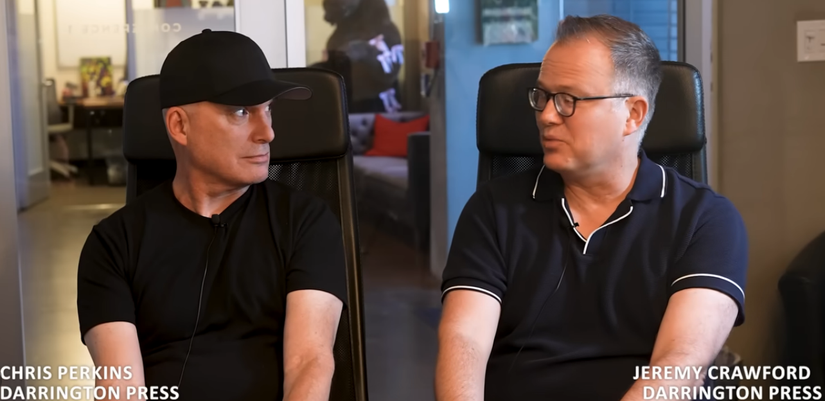
In recent video interviews, both Chris Perkins and Jeremy Crawford opened up about the psychological and creative shifts required to transition from the monolithic world of D&D to the agile, narrative-first design space of Daggerheart.
Reflecting on the ease of transitioning to a new system, Chris Perkins noted:

"For me, it was super easy. Even working on D&D, we were building on the work of previous editions and the labors of the people who made those editions. It’s not like we were creating a game out of nothing."
Jeremy Crawford echoed this sentiment, emphasizing the sheer creative real estate available within the new system:
"For me, it’s actually been a delight. Daggerheart is such a fun system to not only play in, but to work on. It has enough flexible parts to take and use to build new things, but it is also a new enough system that there’s actually a lot of design space that we’re exploring for future products."
Crawford also highlighted the collaborative ethos that binds the broader TTRPG design community together, noting that Daggerheart acts as a sponge for decades of collective experimentation:
"There is continuity, but it is far larger than just those two games. So many different RPGs inspired the Daggerheart design team. The broader RPG community is constantly exploring—no matter what they’re playing—different ways to play and to build worlds. One of the amazing things that the Daggerheart design team did is that they managed to capture the lightning in a bottle of the things that many different design teams and groups have been exploring, and they synthesized it into this game."
Perhaps the most radical departure from traditional design philosophy involves how adventures and campaigns are structured. Traditionally, published adventures provide a rigid linear or branching path for the Dungeon Master to execute. Daggerheart, however, operationalizes shared world-building.
Perkins elaborated on this fundamental shift in adventure design:
"In the Daggerheart campaign frames, there are points where the player is addressed directly, or the GM is told to basically go to the players and have them add something to the setting. As we create more adventures for Daggerheart, we’re finding ways to bake that into the adventure design, so there are points in every adventure where the players are actually steering the ship. This is a fun shift for me as someone who has spent a literal lifetime working on adventure content. It’s a fundamental shift."
Future Outlook: The Next Era of Tabletop Gaming
As the TTRPG industry looks toward the horizon, the impact of Perkins and Crawford’s work at Darrington Press is poised to ripple across every tier of publishing.
Breaking Free from Codified Constraints
For Chris Perkins, who is currently spearheading a massive anthology encompassing over 100 Daggerheart adventures, the experience mirrors the pioneering days of the late 1970s. When Gary Gygax and his contemporaries drafted the classic modules that defined early fantasy gaming, there were no established rules for what a published adventure "had" to look like. They were inventing the medium in real-time.
"It’s exciting to think about just what a Daggerheart adventure is," Perkins reflects. "We literally only have one or two adventures out there in the universe. It’s a delightful thought exercise, and one I’ve never been part of, because D&D adventures are kind of established and codified. Here, we’re starting right at the outset with carte blanche, and we are going to take some chances, experiment a little, and see what lands."
Upcoming Releases and Expansions
While Perkins reinvents adventure anthologies, Jeremy Crawford is turning his attention to the darker, more visceral corners of dark fantasy. Currently developing a new, "spooky" campaign setting for Daggerheart, Crawford promises a world designed to entice even players who typically shy away from traditional horror.
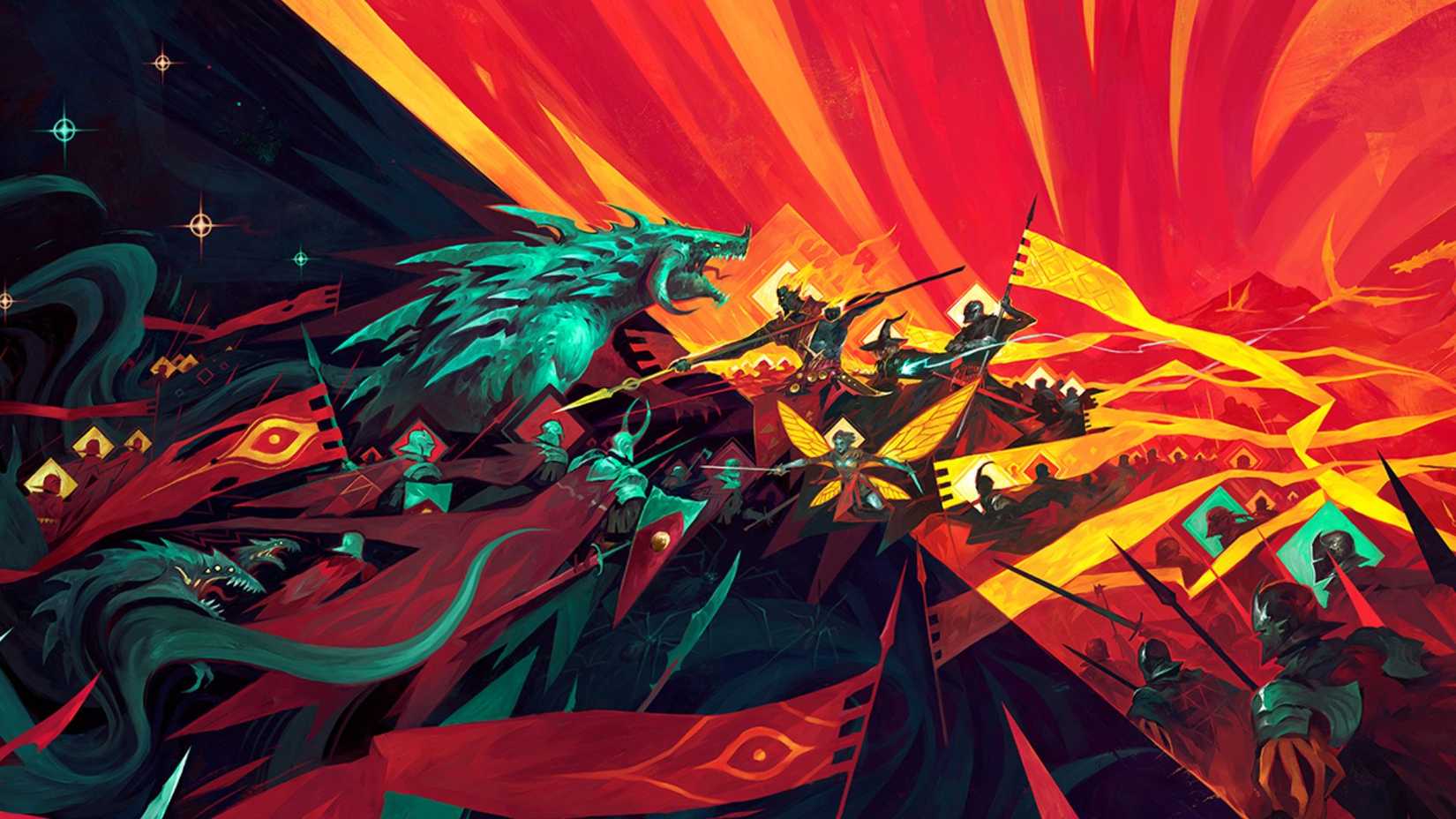
- New Mechanics and Classes: Building upon teasers involving the Blood Hunter and Summoner classes, this upcoming setting will integrate seamlessly with existing expansions like Daggerheart: Hope & Fear.
- Actual-Play Synergy: Elements of this dark fantasy realm have already been subtly seeded in actual-play broadcasts, such as Matt Mercer’s recent Age of Umbra: Sallowlands series, demonstrating a sophisticated cross-media release strategy that bridges live-play entertainment with tabletop product development.
A Unified Vision for the Art Form
Ultimately, both designers view this industrial evolution not as a bitter corporate war, but as a net positive for the artistic medium of role-playing games as a whole. While fandom rivalry often highlights competition between systems, the creative minds driving the industry see themselves as collaborators in a shared artistic endeavor.
As Crawford aptly summarizes:
"In the vast community of RPG players, we’re all in this together, experimenting with how we can move this art form forward. Sure, there are individual systems, but the older I get, the more I get concerned about just the art form as a whole. The art form of role-playing games is so precious and such a unique way for people to connect with each other and entertain each other that I am excited when I see the art form moving forward in any way in any game."
By handing the steering wheel directly to the players, fostering genuine mechanical innovation, and rethinking how stories are structurally built at the table, Perkins, Crawford, and Darrington Press are ensuring that the next decade of tabletop gaming will be defined not by adherence to legacy, but by the boundless potential of collaborative creation.