Executive Overview
The desk accessory market has long faced a design challenge: how to expand the capabilities of Apple’s ultra-compact desktop lineup without disrupting its minimalist aesthetic. With the recent release of the redesigned Mac mini—powered by cutting-edge M5 and M5 Pro silicon—users are demanding peripheral hardware capable of keeping pace with unprecedented data throughputs, demanding display setups, and massive internal storage requirements. Enter the Satechi Thunderbolt 5 CubeDock, a meticulously engineered hub designed specifically to match the physical footprint and raw processing potential of Apple’s latest hardware ecosystem.
Priced at a premium $399.99 and available now on Amazon, the CubeDock is not an accessory aimed at the casual web-surfer. Instead, it targets power users, creative professionals, and developers who require desktop-tier flexibility via a single-cable connection. Featuring an astounding 120Gbps of bidirectional Thunderbolt 5 bandwidth, eight versatile input/output ports, a dedicated M.2 NVMe SSD enclosure supporting up to 8TB of high-speed storage, and robust thermal management, Satechi has crafted what may be the definitive desktop docking station of the current hardware generation.
This comprehensive review examines how the CubeDock functions in daily workflows, evaluates its performance metrics, analyzes its design compromises—including notable thermal behavior and cost—and explores what this peripheral means for the future of desktop connectivity.
Detailed Chronology & Product Evolution
The Shift to Thunderbolt 5 and the Mac Mini Redesign
The evolution of desktop computing over the past few cycles has been defined by miniaturization coupled with massive leaps in I/O bandwidth. When Apple introduced the radical redesign of the Mac mini—shrinking its physical footprint further while packing in the M5 and M5 Pro architectures—it created an immediate demand for modern peripherals. Legacy USB-C hubs and Thunderbolt 4 docks, while capable, quickly hit bottlenecks when paired with professionals driving multi-monitor 6K workflows and transferring multi-terabyte project files in real time.
Recognizing this industry shift, peripheral manufacturer Satechi began developing a hardware solution tailored to the new aesthetic and technical specifications of Apple’s flagship compact desktop. The result of this development cycle is the Thunderbolt 5 CubeDock, which made its debut alongside the newest generation of Mac minis.
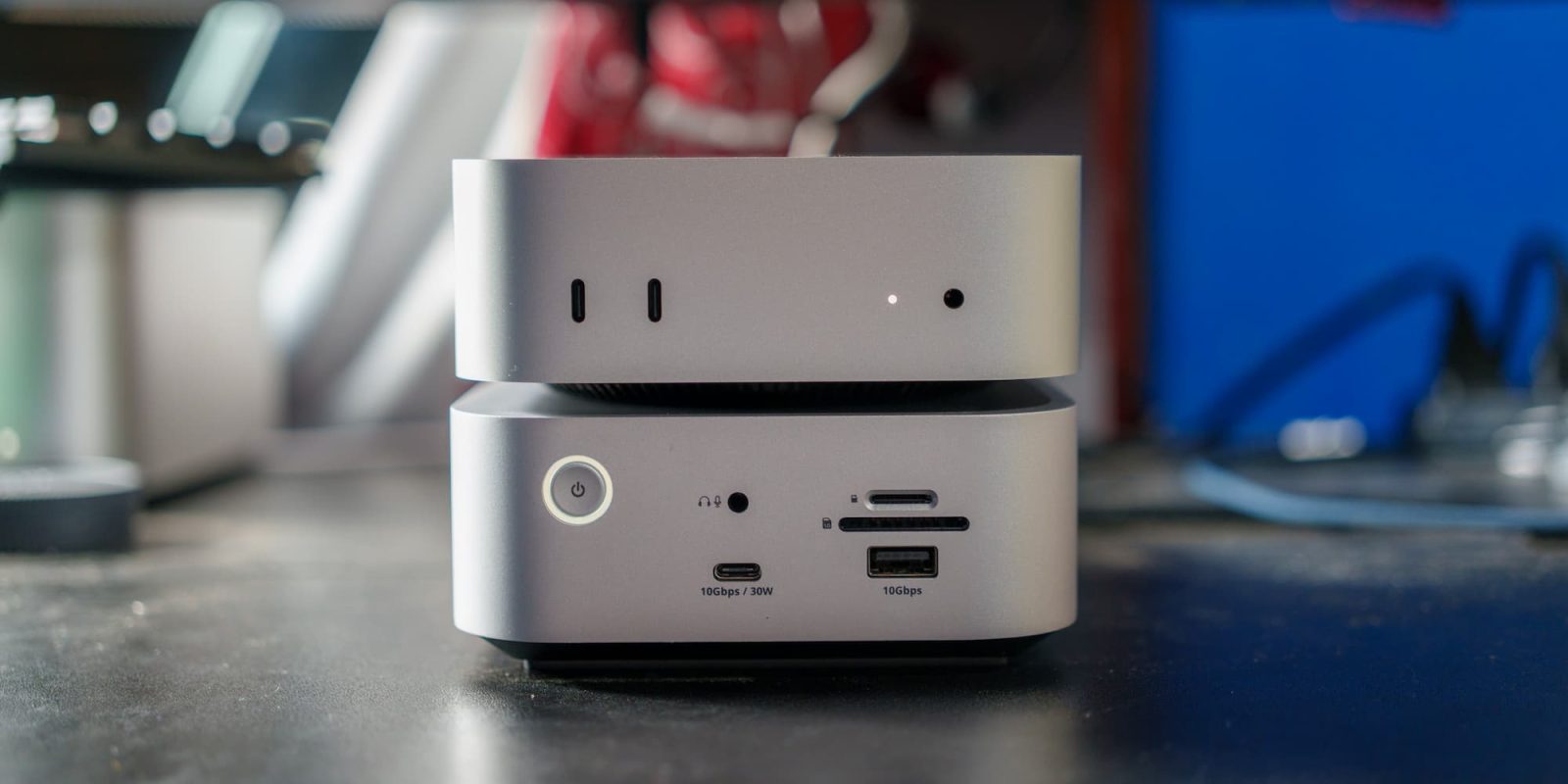
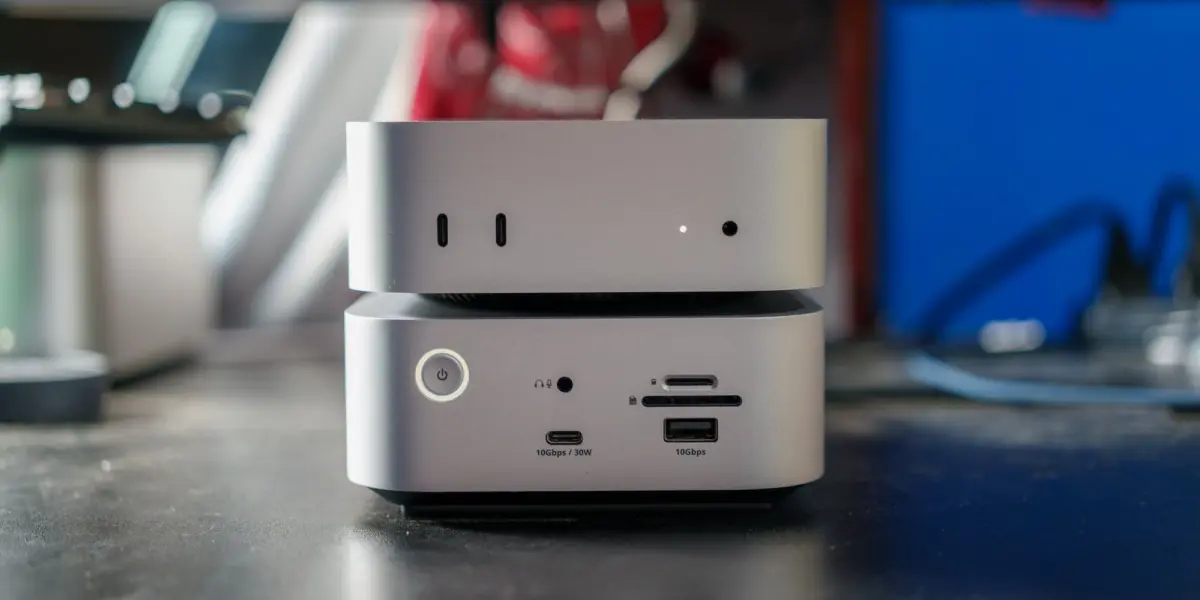
Rather than adopting the traditional, flat, horizontal brick design common to legacy docks, Satechi opted for a vertical geometry that mirrors the square, compact chassis of the Mac mini. This allows users to either stack the units vertically to maintain a minimal desk footprint or place them side by side as an integrated desktop suite. The chronological progression from simple port multipliers to intelligent, storage-integrated Thunderbolt 5 powerhouses highlights how far desktop accessories have matured in just a few short years.
Technical Specifications, Performance Metrics, & Capabilities
Unprecedented Bandwidth: The Power of Thunderbolt 5
The defining characteristic of the Satechi CubeDock is its adoption of Intel’s Thunderbolt 5 protocol. Where Thunderbolt 4 maxed out at 40Gbps of bidirectional bandwidth (with a boost mode reaching 80Gbps for video), Thunderbolt 5 delivers a staggering 120Gbps of bandwidth using Bandwidth Boost technology.
In real-world terms, this immense throughput redefines what is possible over a single cable connected to a Mac mini:
- Display Support: When paired with an M5 Pro-equipped Mac mini, the CubeDock allows users to drive up to three distinct displays at 6K resolution running at 60Hz, or dual displays at a fluid 4K resolution running at 144Hz. Standard M-series chipsets can comfortably drive up to two displays simultaneously.
- Host Charging: While primarily designed for desktop setups where the Mac mini supplies its own power, the CubeDock is fully backward-compatible with laptops, capable of delivering up to 140W of Power Delivery (PD) host charging, making it an exceptional hybrid desktop-and-laptop workstation dock.
Comprehensive Port Selection
Satechi did not sacrifice physical connectivity in pursuit of minimalism. The CubeDock comes equipped with a carefully curated array of ports designed to eliminate dongle clutter:
- USB-C & USB-A: Two dedicated USB-C ports and two USB-A ports, all operating at blazing-fast 10Gbps speeds, ensuring legacy peripherals and fast external drives connect without throttling.
- Networking: A built-in 2.5G Ethernet port provides ultra-reliable, high-speed wired local network and internet access—vital for video editors pulling massive files from network-attached storage (NAS).
- Media Management: Front-facing SD and microSD card slots, both fully supporting UHS-II speeds, allowing photographers and videographers to ingest high-bitrate media files instantly.
- Audio: An additional 3.5mm combo audio jack, ensuring users have immediate access to wired headphones or microphones right on the desktop surface.
Integrated M.2 NVMe SSD Enclosure
Perhaps the most celebrated feature of the CubeDock is its internal storage expansion. Unlike standard docks that relegate SSD bays to slim, specialized drives lacking proper cooling, Satechi engineered the CubeDock’s internal M.2 NVMe SSD bay to accommodate full-sized drives complete with built-in heatsinks.

The bay fits standard 2230, 2242, 2260, and 2280 drive sizes, supporting massive storage configurations up to 8TB. Operating at speeds reaching up to 6,000 MB/s, the internal drive bay integrates seamlessly into the enclosure without expanding the physical footprint of the dock, effectively turning your Mac mini setup into a high-capacity media powerhouse.
Supporting Context & Practical Observations
Design, Build Quality, and Thermal Dynamics
True to Satechi’s form factor ethos, the CubeDock features a premium space-gray aluminum chassis that aesthetically matches Apple’s modern hardware language. It looks native sitting next to a Mac mini, creating a cohesive, professional workstation appearance.
However, high performance invariably generates heat. During intensive tasks—such as simultaneous multi-display output, heavy data transfers over the 10Gbps USB ports, and sustained read/write operations on an installed NVMe SSD—the CubeDock gets noticeably warm to the touch. While thermal dissipation is handled efficiently via the aluminum exterior acting as a heatsink, the temperatures do reach a level where you will immediately notice the heat if you handle the unit during heavy workloads. In a static desktop environment, this thermal output remains well within safe operational parameters and poses no structural risk, but it is an important consideration for users who prefer cool-to-the-touch peripherals.
Pricing, Value, and Market Positioning
At $399.99, the Satechi Thunderbolt 5 CubeDock occupies the absolute peak of the consumer docking market. For the average user who only connects a mouse, keyboard, and single monitor, this price point is difficult to justify.
However, for power users who want a single-cable docking solution that combines next-generation display routing, high-speed networking, extensive legacy port integration, and up to 8TB of integrated NVMe storage matching the aesthetic of their computer, the price reflects the cutting-edge silicon and engineering required to build it. To sweeten the initial investment, Satechi has introduced a promotional bundle on Amazon allowing buyers to add a braided Thunderbolt 5 cable ($39.99 value) and unlock a 10% discount on their total order, effectively making the secondary cable free.

Future Outlook & Industry Implications
The release of the Satechi Thunderbolt 5 CubeDock signals a broader industry transition toward Thunderbolt 5 as the baseline for professional desktop accessories. As M-series silicon continues to push the boundaries of computational power, unified memory bandwidth, and graphical rendering, the peripherals feeding data to these machines must evolve concurrently.
We can expect to see wider adoption of Thunderbolt 5 across external storage arrays, multi-display adapters, and enterprise-grade workstations over the coming years. Satechi’s early entry into this space establishes a high benchmark for rival manufacturers, proving that form and function do not need to be mutually exclusive. For Mac mini owners looking to future-proof their desktop workflows for the next half-decade, the CubeDock represents a visionary glimpse into the ultimate single-cable workstation environment.